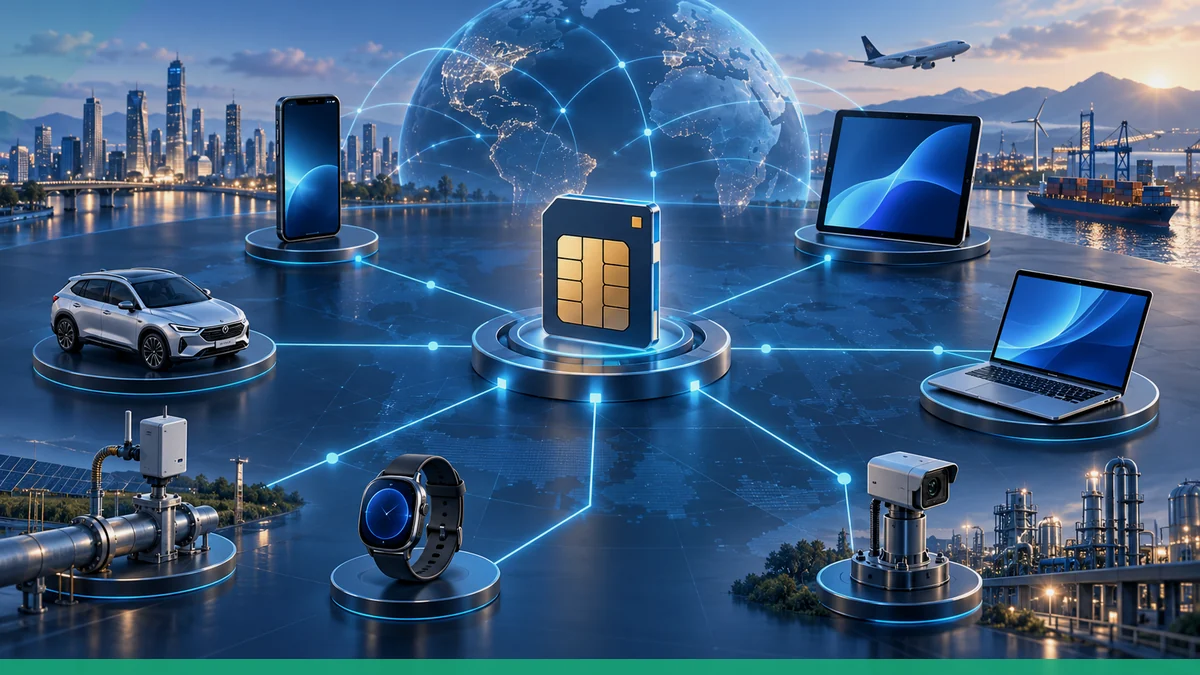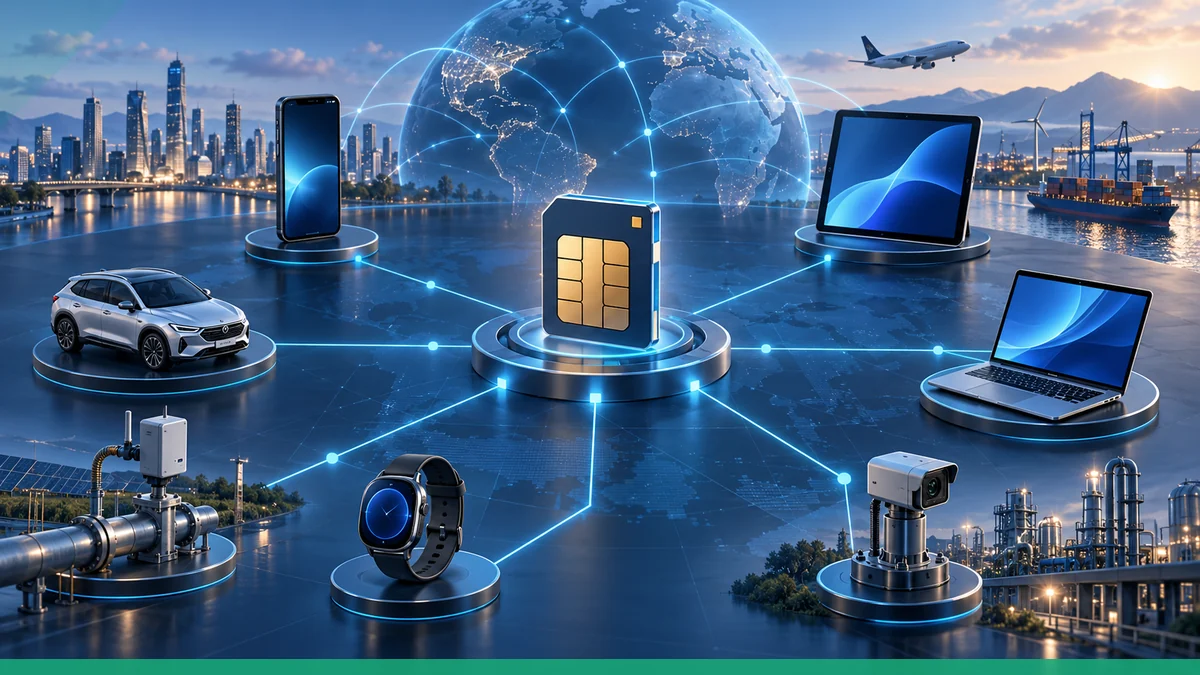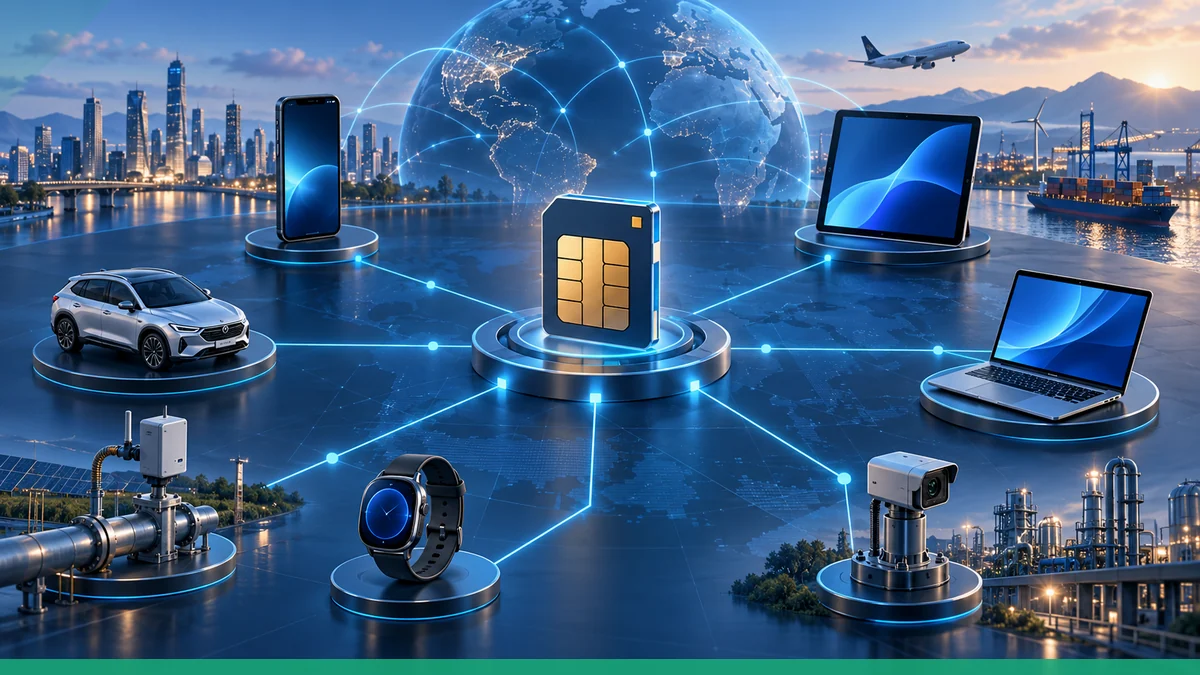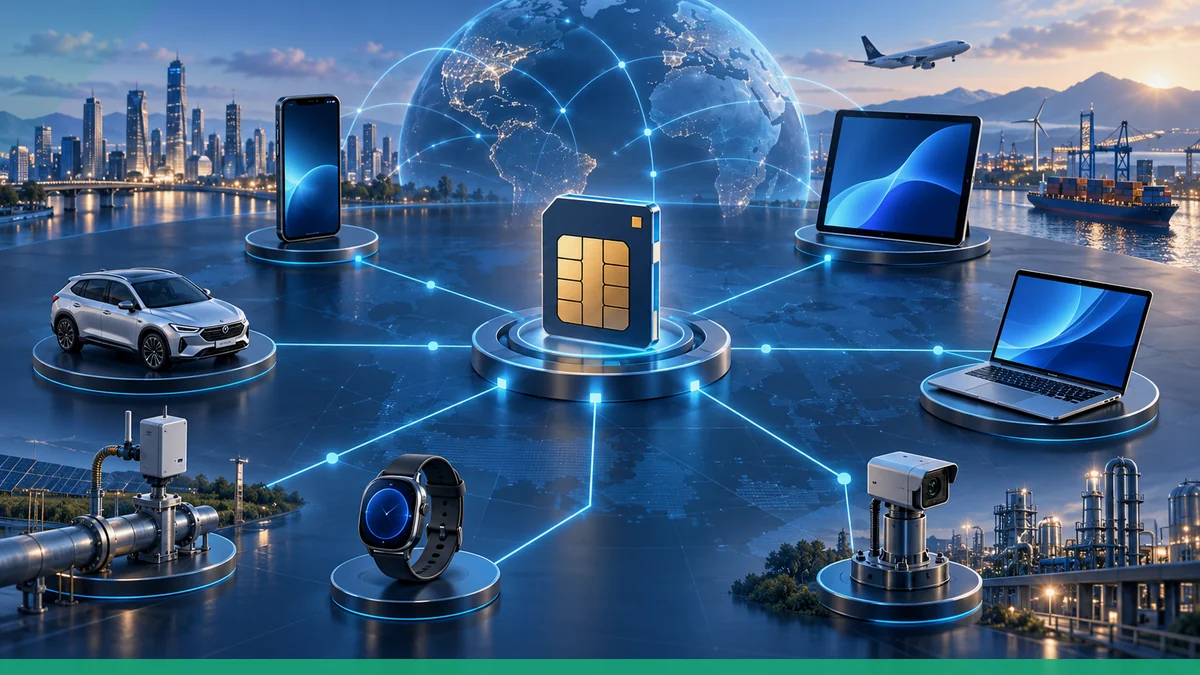
eSIM changes enterprise and IoT device provisioning by moving connectivity management from physical card handling to remote profile control, which changes how fleets are procured, shipped, activated, and governed. In GSMA's eSIM overview, the IoT architecture is explicitly designed for devices that are network-constrained or user-interface constrained, with an eIM that can remotely enable, disable, delete profiles, and trigger profile downloads for a single device or a fleet.
What eSIM changes in fleet provisioning
For fleet operators, the operational shift is simple: devices can be shipped without a pre-inserted removable SIM and still receive connectivity later through remote profile management. GSMA describes this as an eIM-centric architecture where the remote manager holds control of profile state operations, rather than relying on a local user to swap cards or navigate setup screens.
The practical effect is that provisioning becomes a lifecycle process, not a one-time physical step. That matters for enterprise rollouts, embedded deployments, and remote assets where a technician cannot reasonably touch every device after installation.
Remote profile management and lifecycle control
GSMA says the eIM can remotely enable, disable, delete profiles, and trigger profile downloads. That makes lifecycle operations part of the connectivity stack itself, which is important when devices change owners, move between regions, or need to be retired from service.
- Remote profile download is supported in the IoT architecture described by GSMA.
- Remote profile enable and disable are supported in the same architecture.
- Remote profile deletion is also part of the model GSMA documents.
- The eIM can manage a single device or a fleet of IoT devices.
This is the core governance change: connectivity becomes centrally controlled and auditable at the fleet level instead of being locked to a plastic card installed on day one. For organizations with many device variants or long refresh cycles, that reduces dependency on field labor and local inventory handling.
Procurement and distribution implications
For procurement teams, eSIM reduces the need to tie hardware distribution to a fixed carrier card at the point of manufacture or warehouse packing. GSMA’s model supports remote profile operations after deployment, which means the logistics plan can separate device shipment from connectivity activation.
That separation affects how fleets are bought and distributed. Devices can be staged, stored, and assigned connectivity later, which is useful when deployment timing is uncertain or when the final network choice depends on geography, operator availability, or contract terms.
The consumer-facing uPhone page, eSIM technology facts, describes eSIM as an embedded chip activated without a physical card and without a store visit. While that page is framed for consumer use, the basic hardware property is the same: the SIM is embedded, so the provisioning workflow is digital rather than card-based.
Governance, roles, and operating economics
In the GSMA model, the eIM is a remote manager component used by an IoT OEM to manage devices. That places connectivity governance closer to platform operations and supplier management, rather than leaving it only with the carrier or field technician.
That governance shift has direct operating implications. It can reduce the need for physical SIM inventories, manual swaps, and per-site intervention, while making profile control part of fleet policy and change management. It also creates a cleaner separation between device hardware, connectivity entitlement, and operational ownership.
- Fleet management is centralized through the eIM in GSMA’s IoT architecture.
- Profile state changes are remote operations, not on-device user actions, in the GSMA model.
- The architecture is intended for devices with limited interfaces or limited network capability.
Where eSIM fits, and where it does not
GSMA’s documentation is clear that the IoT specification is designed for network-constrained or user-interface constrained devices. That makes it relevant for industrial endpoints, trackers, sensors, gateways, and similar deployments where unattended operation is normal.
It should not be treated as a consumer travel product repackaged as a fleet platform. The enterprise value comes from remote profile control, lifecycle operations, and centralized governance, not from prepaid roaming convenience or ad hoc one-off activation flows.
Operational takeaways for enterprise and IoT fleets
eSIM changes the provisioning model by making connectivity programmable across the device lifecycle. Instead of treating the SIM as a fixed shipping-time component, fleet operators can manage it as a remotely controlled profile governed through a central eIM.
That supports more flexible procurement, cleaner distribution, and stronger lifecycle control for deployed devices. It also raises the bar for governance, because the organization must manage who can trigger profile download, enablement, disablement, and deletion across fleets.
In short, the business case is not consumer convenience. It is fleet-scale control over connectivity state, shipment logistics, and device lifecycle operations.
More eSIM resources: Browse our eSIM guides and troubleshooting resources for compatibility, setup, travel-data and account-safety advice.
\nRelated reading: The Travel eSIM Market: Carriers, Resellers and Digital Distribution, Corporate Roaming vs Travel eSIM: Total Cost for Distributed Teams, and How eSIM Distribution Is Changing Mobile Carrier Economics.