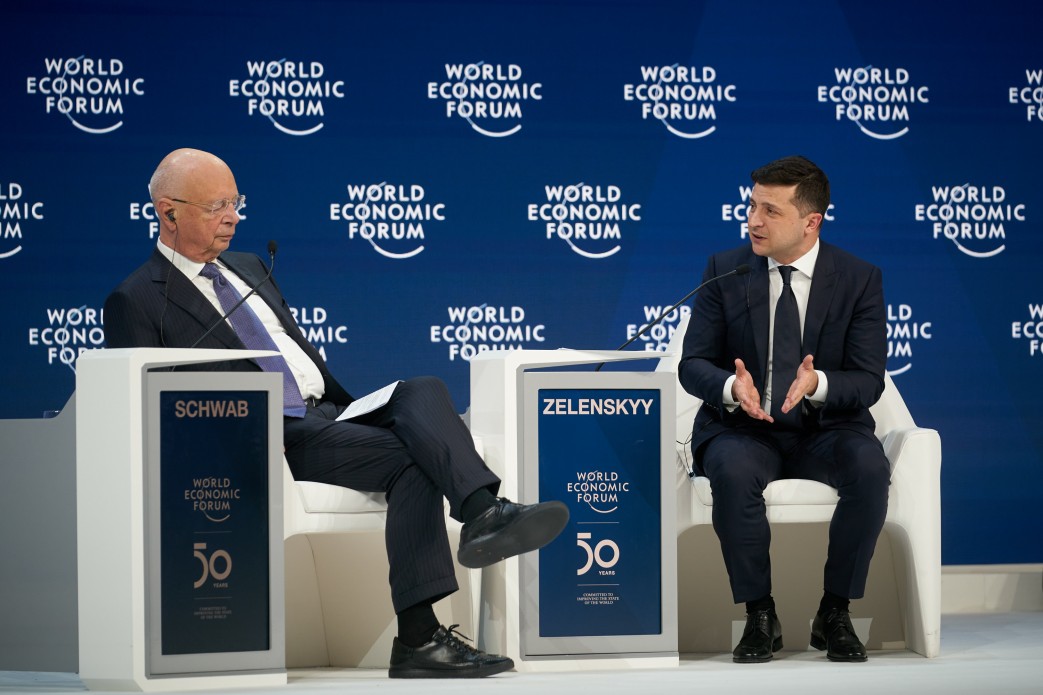
The World Economic Forum's Young Global Leaders programme spots people under 40 and brings them in for a fixed five-year term. Klaus Schwab, the Forum's founder and executive chairman, launched it in 2004. The stated mission: build a network of exceptional young leaders who would tackle global challenges together and inject fresh thinking into the institution's work.
Each year, roughly 100 to 120 new participants are chosen. A foundation board under Swiss law governs the programme, which is headquartered in Cologny, Switzerland, alongside the Forum. By the early 2020s, the alumni community numbered over 1,400 people.
Notable alumni include Jacinda Ardern, former Prime Minister of New Zealand; Emmanuel Macron, President of France; and Mark Zuckerberg, CEO of Meta. The programme draws recurring public scrutiny over its influence and the career paths of its participants.

Selection criteria and the five-year term
The core rule is age. Candidates must be under 40 at the time of nomination. The programme inducts roughly 100 to 120 new participants each year. Membership is not indefinite. It runs for a fixed five-year term, after which individuals become alumni. They are no longer active YGLs but stay part of the wider network.
The selection process stresses geographic and sectoral breadth. The programme aims to draw from every region and from government, business, civil society, academia, and the arts. This spread is meant to ensure the cohort mirrors the range of challenges the Forum addresses. The exact nomination criteria are not published as a scoring system, but the foundation board under Swiss law oversees the process.
What happens after the five years
Once the term ends, participants become alumni. They lose access to active-member events and the annual summit. The alumni community remains large and well connected. Many alumni go on to hold senior positions in government and business, which fuels both the programme's reputation and the scrutiny it attracts.
Relationship to the World Economic Forum and Klaus Schwab
The Young Global Leaders programme sits inside the World Economic Forum. Klaus Schwab founded it in 2004, a decade after establishing the Forum itself. It operates under the same Swiss legal framework and is based in Cologny. Schwab's involvement gave the project immediate credibility and access to the Forum's existing networks of global leaders and corporate partners.
The programme's structure mirrors the Forum's broader approach. It brings together leaders from different sectors for dialogue and collaboration. YGLs attend Forum events and take part in initiatives. Over time, the programme has been woven into the institution's wider leadership communities. It is not a standalone entity. It is one of several leadership programmes run by the Forum, though it is the most prominent aimed at younger leaders.
Notable alumni: heads of state, CEOs, and cultural figures
The YGL alumni list includes three people who became heads of state or government. Jacinda Ardern, Prime Minister of New Zealand from 2017 to 2023, was a YGL. Emmanuel Macron, President of France since 2017, was also a participant. Mark Zuckerberg, CEO of Meta, is another notable alumnus. These three names are the most frequently cited in discussions of the programme's reach and influence.
Other alumni include senior executives, policymakers, and leaders from civil society. The programme has produced a number of Fortune 500 CEOs and cabinet ministers. The Forum does not publicly track a single figure for how many alumni have held such posts, but the concentration is high enough that the programme is sometimes described as a pipeline for future global leadership. Critics argue it functions as an elite network that provides access and opportunities unavailable to outsiders.

Transition to the Forum of Young Global Leaders foundation structure
In its early years, the programme operated as a direct World Economic Forum initiative. Over time, it was formalised into a separate legal entity: the Forum of Young Global Leaders, governed by a foundation board under Swiss law. This shift gave the programme greater autonomy while keeping it closely tied to the Forum. The board oversees the selection process, the annual summit, and the budget.
The transition also allowed the programme to accept donations and sponsorships from external sources, including corporations and philanthropists. This has drawn controversy. Critics question whether corporate sponsorship influences the choice of participants or the programme's agenda. The Forum states that the selection process is independent and based on merit and diversity criteria. The foundation structure is meant to provide governance and accountability, but it also insulates the programme from direct oversight by the Forum's membership or the public.
Public controversies and criticisms
The Young Global Leaders programme has drawn scrutiny for several reasons. One recurring criticism is that it functions as an elite networking club that gives participants access to influential people and opportunities. Critics point to the high number of alumni who go on to hold powerful positions as evidence that the programme creates an advantage unavailable to outsiders.
Another line of criticism concerns ties to corporate sponsors. Some argue the selection process may favour candidates from industries or countries well represented among the Forum's partners. The programme has also been criticised for a lack of transparency. The exact selection criteria are not published in detail. The foundation board's deliberations are private. The Forum has not released data on the demographic breakdown of cohorts beyond broad geographic and sectoral categories.
There are no documented cases of participants being expelled or resigning due to scandal, but the programme's reputation is periodically affected by the actions of its alumni. When a YGL alumnus is involved in controversy, the programme receives renewed attention. The Forum does not comment on individual conduct outside the programme.
The annual summit and meeting structure
Active YGLs are expected to attend an annual summit. This multi-day event includes workshops, plenary sessions, and networking. It rotates to different locations around the world each year. The summit is the main formal gathering of the cohort. It is separate from the World Economic Forum's annual meeting in Davos, though many YGLs also attend Davos.
The summit is designed to foster collaboration on projects and initiatives. Participants work in groups on specific challenges such as climate change, education, and public health. The programme also organises regional events and online forums. After the five-year term ends, alumni are invited to alumni events but are not required to participate in the annual summit. The programme does not publish attendance figures, but the summit is understood to be a high priority for active participants. Missing multiple summits can affect a person's standing.
\nRelated reading: Sheikh Mansour builds $1B global portfolio.