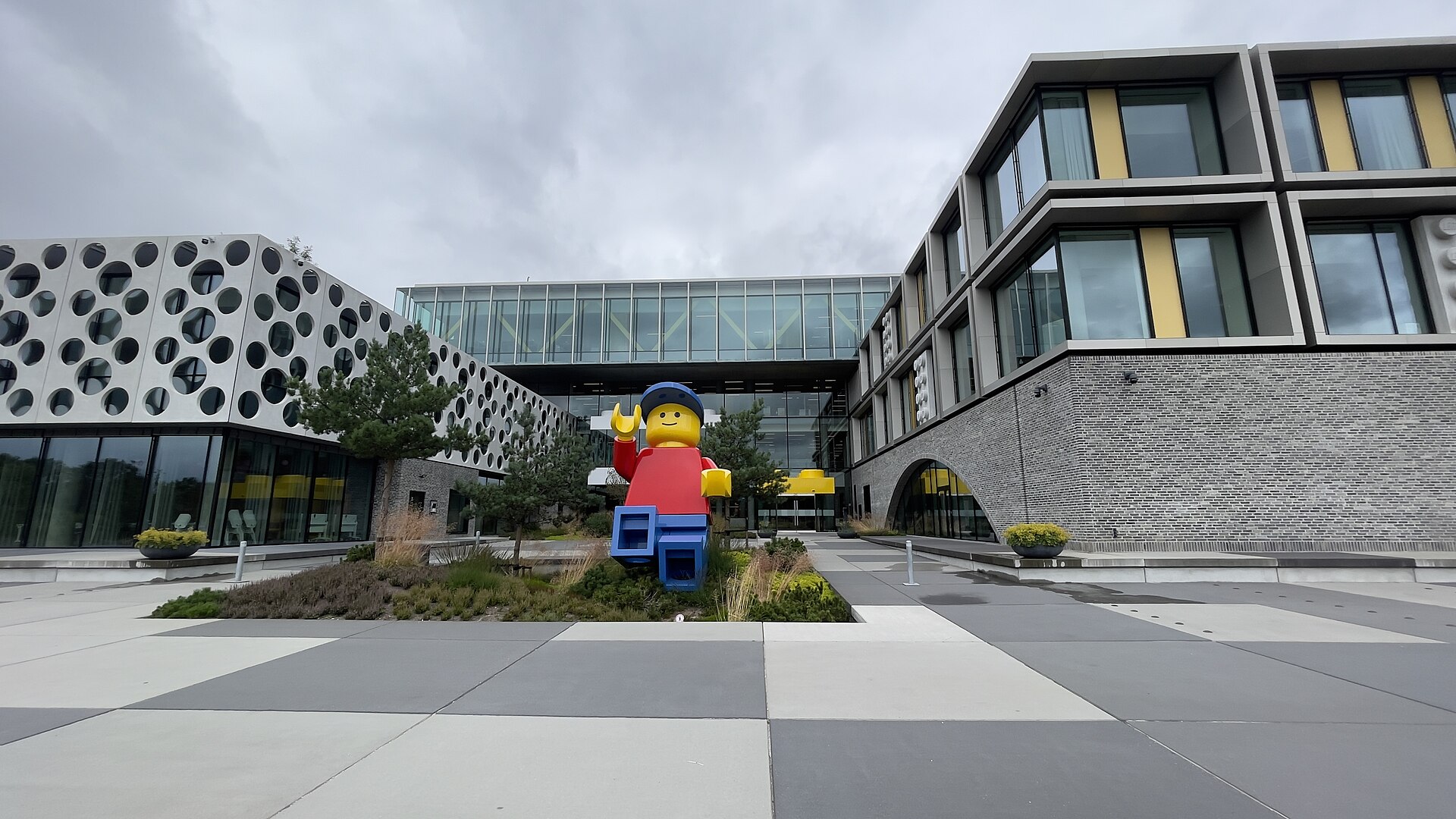
Niels B. Christiansen took the helm of the LEGO Group on October 1, 2017, stepping into a business already ranked as the world's largest toymaker by revenue. His watch has been defined by a pandemic-era sales surge, a deliberate push into digital play, and a costly bet on China. Christiansen arrived from Danfoss, a Danish industrial firm, and inherited an enterprise still owned by the founding Kirk Kristiansen family. He kept headquarters in Billund, Denmark, and focused on expanding the brand without diluting the brick.
Under Christiansen, LEGO posted strong double-digit revenue growth in 2020 and 2021 as lockdowns drove families toward building sets. The group channeled that cash into new retail stores, particularly in China, and into a sustainability pledge worth up to $400 million over three years, announced in 2020. Christiansen has also had to answer a question every toy executive faces: how do plastic bricks compete with screens? His answer has been to integrate digital experiences directly into the physical product, not to fight them.

From Danfoss to Billund
Christiansen spent most of his career at Danfoss, a maker of industrial components such as valves and drives. He became its chief executive in 2008 and led the firm through the financial crisis, restructuring operations and expanding into emerging markets. The LEGO board recruited him in 2017 to replace Jorgen Vig Knudstorp, who had been CEO for 13 years and moved to become chairman of the group. Christiansen was not a toy industry insider. He was an industrial engineer who had run a business that sold to other businesses, not to children. That background mattered because LEGO's challenges in 2017 were operational: supply chain complexity, rising raw material costs, and a need to professionalize production without losing the creative culture.
Christiansen kept the family ownership structure intact and did not take LEGO public. The Kirk Kristiansen family has owned the operation since 1932. Private status let Christiansen invest in long-term projects, such as China retail expansion and sustainable materials, without quarterly earnings pressure.
Pandemic-era growth and its limits
Demand that outpaced supply
In 2020 and 2021, LEGO posted strong double-digit revenue growth. Families stuck at home bought sets in volumes the business had not seen before. The toy industry overall benefited from pandemic lockdowns, but LEGO outperformed most peers because its product appealed across age groups and required no screen. The group produced billions of bricks annually and had to scramble to keep factories running during global supply chain disruptions. Christiansen told reporters at the time that the biggest problem was not demand but production capacity.
Cost pressures and a factory push
The growth came with cost pressures. Raw material prices for polymers rose, and shipping container rates spiked. Private ownership gave LEGO flexibility to absorb those costs rather than pass them all to retailers. The group also accelerated investment in automation and new factories, including a facility in Vietnam announced in 2021. By early 2024, the post-pandemic normalization had set in, and LEGO faced a tougher comparison period, but Christiansen had already used the boom years to build a larger and more efficient manufacturing base.
Digital as an extension of the brick
Apps that need a physical set
Christiansen's strategy for digital play has been to make apps and augmented reality features that require a physical LEGO set to function. The Hidden Side line, launched before his tenure, used AR to let children scan physical sets with a phone and see ghost characters on screen. Christiansen expanded that approach with LEGO Super Mario, where an interactive Mario figure reacts to physical bricks, and with LEGO Builder, an app that provides 3D instructions. The group also invested in video game licenses, producing LEGO titles based on Star Wars, Harry Potter, and other franchises.
Why the brick stayed central
The goal was not to compete with Fortnite or Minecraft on their own terms. Christiansen argued that children still want tactile play, but they expect digital features as part of the experience. LEGO's digital investments have been relatively small compared to its core brick business. The group did not pivot to become a game studio. It used digital to make the brick more valuable, not to replace it. That distinction mattered to parents who worried about screen time, and it kept LEGO's products in the physical toy aisle even as the brand developed a digital presence.
The China bet
Hundreds of stores in untested cities
LEGO opened hundreds of new branded retail stores under Christiansen, with a significant portion in China. The group saw the country as the largest untapped market for construction toys, with a growing middle class that valued educational play. LEGO invested in local manufacturing, marketing, and store formats tailored to local consumers. The expansion was expensive. Real estate in Chinese cities is costly, and LEGO had to compete with domestic toy brands that understood regional tastes better.
Adapting sets for a local audience
Christiansen committed to the strategy despite trade tensions and the economic slowdown that began in 2022. The group opened stores in lower-tier cities where Western toy brands had limited presence. LEGO also adapted its product range, releasing sets tied to local festivals and landmarks. The bet was that parents would pay a premium for a brand associated with creativity and learning. As of April 2024, LEGO had not disclosed whether the stores were profitable on a store-by-store basis, but the group continued to open new locations, signaling that Christiansen saw the investment as necessary for long-term growth.

The sustainability pledge
Packaging, bricks and the recycled-PET prototype
In 2020, LEGO announced plans to invest up to $400 million over three years, a figure set by the group's leadership, in sustainability initiatives. The most visible goal was to eliminate single-use material from its packaging and to develop bricks made from sustainable sources. The group had already replaced the plastic bags inside sets with paper bags and was testing bricks made from recycled PET bottles. A prototype brick made from recycled content was announced in 2021, but its commercial fate was uncertain as of early 2024. LEGO said the prototype did not meet its quality standards for clutch power and durability.
The limits of a long-term bet
The pledge covered a range of projects: renewable energy in factories, carbon offset programs, and research into new materials. Christiansen acknowledged that switching to a sustainable brick would take years and might never be possible at the same quality level. The group continued to produce billions of bricks annually, and the vast majority were still made from ABS derived from oil. Christiansen framed the sustainability work as a long-term investment, not a quick fix. LEGO also faced criticism from environmental groups who argued that a toy maker built on petroleum-based polymers could never be truly sustainable, no matter how much it spent.
Competing for attention in a screen-first world
Leisure time, not just toys
Christiansen has said publicly that LEGO does not see video games and streaming as direct competitors. The group's research showed that children who play digital games also build with bricks. The real competition is for a finite amount of leisure time. LEGO's strategy has been to make building faster and more rewarding, with sets that can be completed in a single session and then displayed or rebuilt. The group also leaned into licensed themes from popular movies and games, such as Harry Potter, Star Wars, and Minecraft, to stay culturally relevant.
Resilience as a leadership principle
Christiansen's leadership philosophy emphasized resilience and long-term thinking. He told employees that the group's purpose was to inspire and develop the builders of tomorrow, not to maximize quarterly sales. That message resonated with the Kirk Kristiansen family and with LEGO's retail partners, but it also set a high bar. The business had to invest in digital, China, and sustainability simultaneously while maintaining the quality of its core product. Christiansen's tenure showed that a privately held toymaker could navigate disruption by staying close to its physical product, even as the rest of the industry chased digital trends.
Key facts about Niels B. Christiansen and LEGO
- Became CEO: October 1, 2017
- Previous role: CEO of Danfoss
- Ownership: Privately held by the Kirk Kristiansen family
- Headquarters: Billund, Denmark
- Pandemic growth: Strong double-digit revenue growth in 2020 and 2021
- Sustainability pledge: Up to $400 million over three years, announced 2020
- China strategy: Opened hundreds of branded retail stores, many in China
Frequently asked questions
When did Niels B. Christiansen become CEO of LEGO?
He became CEO on October 1, 2017.
Is LEGO publicly traded?
No. LEGO is privately held and owned by the Kirk Kristiansen family.
How did LEGO perform during the COVID-19 pandemic?
LEGO reported strong double-digit revenue growth in 2020 and 2021.
What is LEGO doing about sustainability?
In 2020, LEGO pledged up to $400 million over three years for sustainability initiatives, including eliminating single-use plastic packaging and researching sustainable brick materials.
How is LEGO expanding in China?
The group opened hundreds of new branded retail stores, with a significant portion in China, and adapted products for the local market.
\nRelated reading: AI Redefines Leadership for Industry 4.0, Web Summit 2020 Went Online After Lisbon Event Was Cancelled, and COVID-19 compressed 10 years of digital change into months.