Digital transformation in manufacturing is the convergence of information technology and operational technology. IT is enterprise resource planning, customer databases, and corporate networks. OT is programmable logic controllers, robotic arms, and conveyor belts that speak Modbus, Profibus, and OPC-UA. When those two worlds connect, a factory can do what neither could do alone: predict its own breakdowns, reconfigure production lines for custom orders, and report real-time energy consumption to the grid.
This is not the same as upgrading a laptop. Industry 4.0 originated from a German government initiative to computerize manufacturing, and it captures the scale of that change. A 2021 McKinsey survey found that 94% of companies reported the technologies kept their operations running during the COVID-19 pandemic. The global market for digital twins in manufacturing alone was valued at roughly $6.5 billion in 2022 by MarketsandMarkets.
The core difference from general IT upgrades is that manufacturing digital transformation alters physical outcomes. A new ERP system might accelerate accounting. A digital twin linked to IIoT sensors can tell an engineer that a motor bearing will fail in 72 hours, before the line halts.

IIoT, Digital Twins, and the Sensor Data Pipeline
Why the Industrial Internet of Things matters
The Industrial Internet of Things is the layer that makes everything else possible. Sensors on motors, conveyors, presses, and pumps generate continuous streams of vibration, temperature, and current readings. That data feeds a digital twin: a virtual replica of the physical asset that refreshes in near real time. Operators can test a speed change on the twin before applying it to the actual hardware. Engineers can compare the twin's predicted wear against sensor readings to spot anomalies early.
Beyond design simulations
Digital twins are not simulations that run once during design. They are live models that stay synchronized with the factory floor for the entire life of the equipment. The MarketsandMarkets valuation of $6.5 billion for digital twins in manufacturing in 2022 reflects adoption beyond pilot projects. Automotive, aerospace, and electronics manufacturers now build twins for entire production lines, not just individual assets.
Bridging the OT-IT architecture gap
The data pipeline from sensor to twin to decision demands careful architecture. OT systems were never designed to push high-frequency data to the cloud. Many factories still rely on serial connections and proprietary fieldbuses. Bridging that gap with edge gateways that normalize data before sending it upstream is a prerequisite for any IIoT deployment.
Predictive Maintenance and AI on the Factory Floor
Breaking the reactive-versus-scheduled tradeoff
Traditional upkeep is either reactive, where equipment runs until it breaks, or scheduled, where parts are replaced on a calendar regardless of condition. Both are expensive. A 2017 Deloitte analysis found that predictive approaches can cut downtime by 30% to 50% and extend equipment life by 20% to 40%.
How the models flag trouble
The method uses machine learning trained on historical sensor data. When a motor's vibration signature shifts outside the normal pattern, the model flags it. The system can then order a replacement part automatically and schedule the repair during a planned shift change rather than a crisis shutdown.
Where inference lives: cloud versus edge
The AI that powers these predictions is typically trained in the cloud but deployed at the edge. Latency is the reason. A cloud round trip of even 200 milliseconds is too slow for a press that cycles every few hundred milliseconds. Edge inference runs the model on a local gateway or a programmable automation controller, so the alert arrives in real time. The cloud handles retraining and fleet-wide analytics.
Barriers: Legacy Machines, Skills, and Security
The installed-base problem
The biggest barrier to digital transformation in manufacturing is the installed base. A factory built in 1995 may run equipment on Windows NT controllers that cannot execute modern software and use protocols that no IT team knows how to configure. Replacing them costs millions. Retrofitting them with sensors and edge gateways is cheaper but still complex, requiring protocol translation, signal conditioning, and careful grounding.
The hybrid-worker gap
The workforce dimension is equally difficult. A plant that adds IIoT needs people who understand both the physical equipment and the data model. Veteran maintenance technicians know how to rebuild a gearbox but not how to read a Python script. Data scientists know the model but not the asset. The solution is a new role sometimes called a digital blue-collar worker, someone trained in both domains. Retraining existing staff is slower than hiring, yet the pool of candidates with hybrid skills remains small.
Cybersecurity multiplies with every connection
Industrial control systems were historically air-gapped, meaning they had no network link to the outside world. Connecting them to the internet for remote monitoring or cloud analytics exposes them to ransomware, malware, and unauthorized access. A compromised OT system can cause physical damage, not just data loss. Manufacturers must segment networks, patch systems that were never designed to be patched, and monitor for threats continuously. The cost of security is often underestimated until an incident occurs.
Siemens Amberg: A Factory That Runs Itself
75 percent autonomous operation
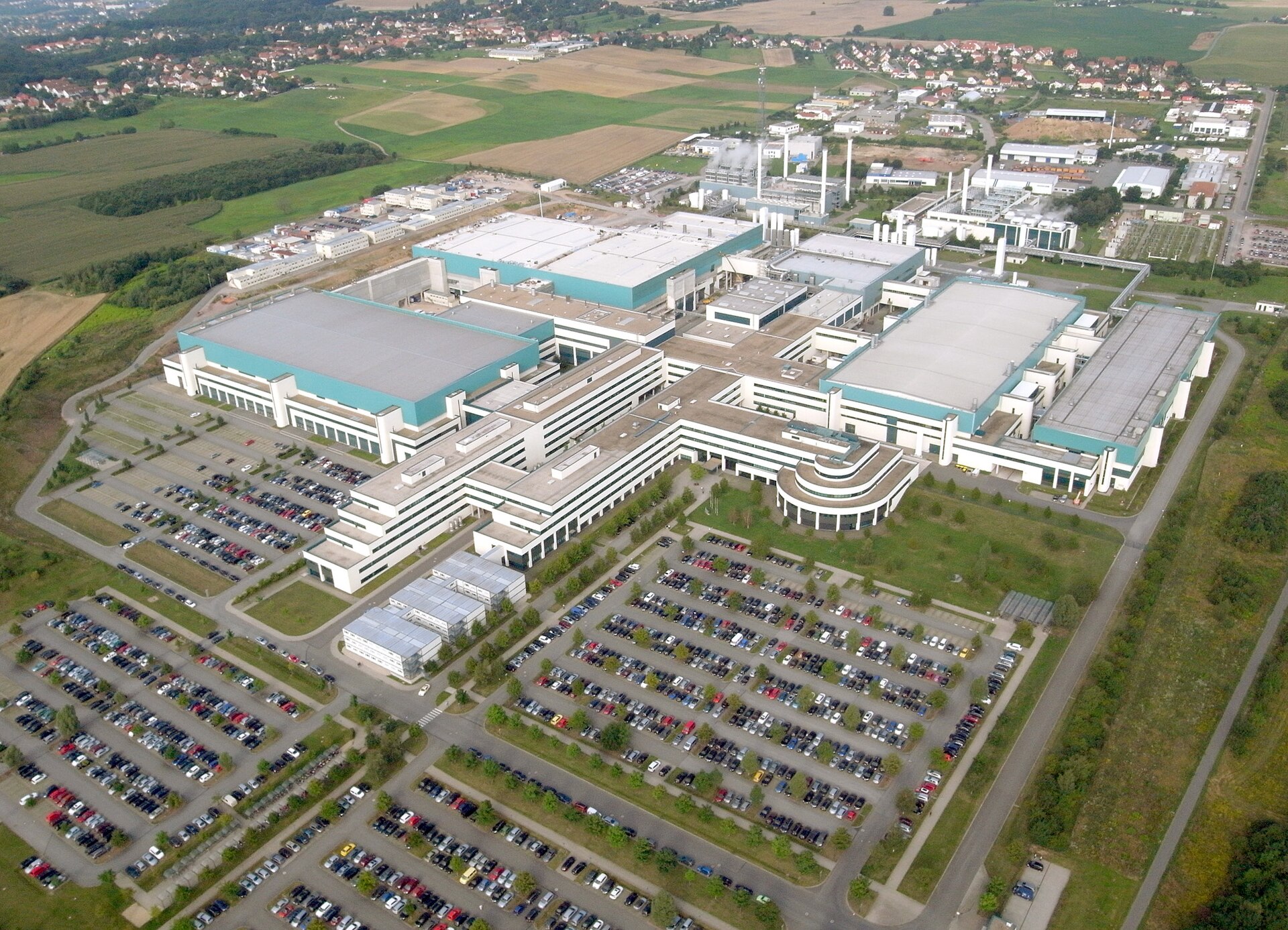
Siemens operates a highly automated factory in Amberg, Germany, that serves as a proof point for what digital transformation can achieve at scale. The plant produces programmable logic controllers, the same devices at the heart of factory automation everywhere. Machines and computers handle 75% of the value chain autonomously. Human workers manage the remaining 25%, concentrating on process design, exception handling, and quality assurance.
Digital twins from raw material to shipment
The Amberg factory deploys digital twins extensively. Every finished product carries a digital twin that captures its complete production history. If a customer reports a defect, Siemens can trace that specific unit to the exact equipment, operator, and batch of raw materials. The factory also applies predictive maintenance on its own production assets, which contributes to a defect rate of fewer than 12 parts per million.
Scaled output without more floor space
Amberg demonstrates that digital transformation is not a pilot that stalls. It is a fully scaled operation running for years. The factory's output has tripled over two decades without a corresponding increase in floor space or headcount. That outcome, not the technology itself, is why Industry 4.0 continues to draw investment from manufacturers worldwide.
Key Facts
- Industry 4.0 origin: German government initiative to promote computerization of manufacturing
- Pandemic resilience: 94% of companies said Industry 4.0 helped operations during COVID-19 (McKinsey, 2021)
- Predictive maintenance impact: Reduces downtime by 30-50%, increases machine life by 20-40% (Deloitte, 2017)
- Digital twin market: Approximately $6.5 billion globally in manufacturing in 2022 (MarketsandMarkets)
- OT protocols: Modbus, Profibus, OPC-UA differ from standard IT network protocols
- Siemens Amberg automation: Machines and computers handle 75% of the value chain autonomously