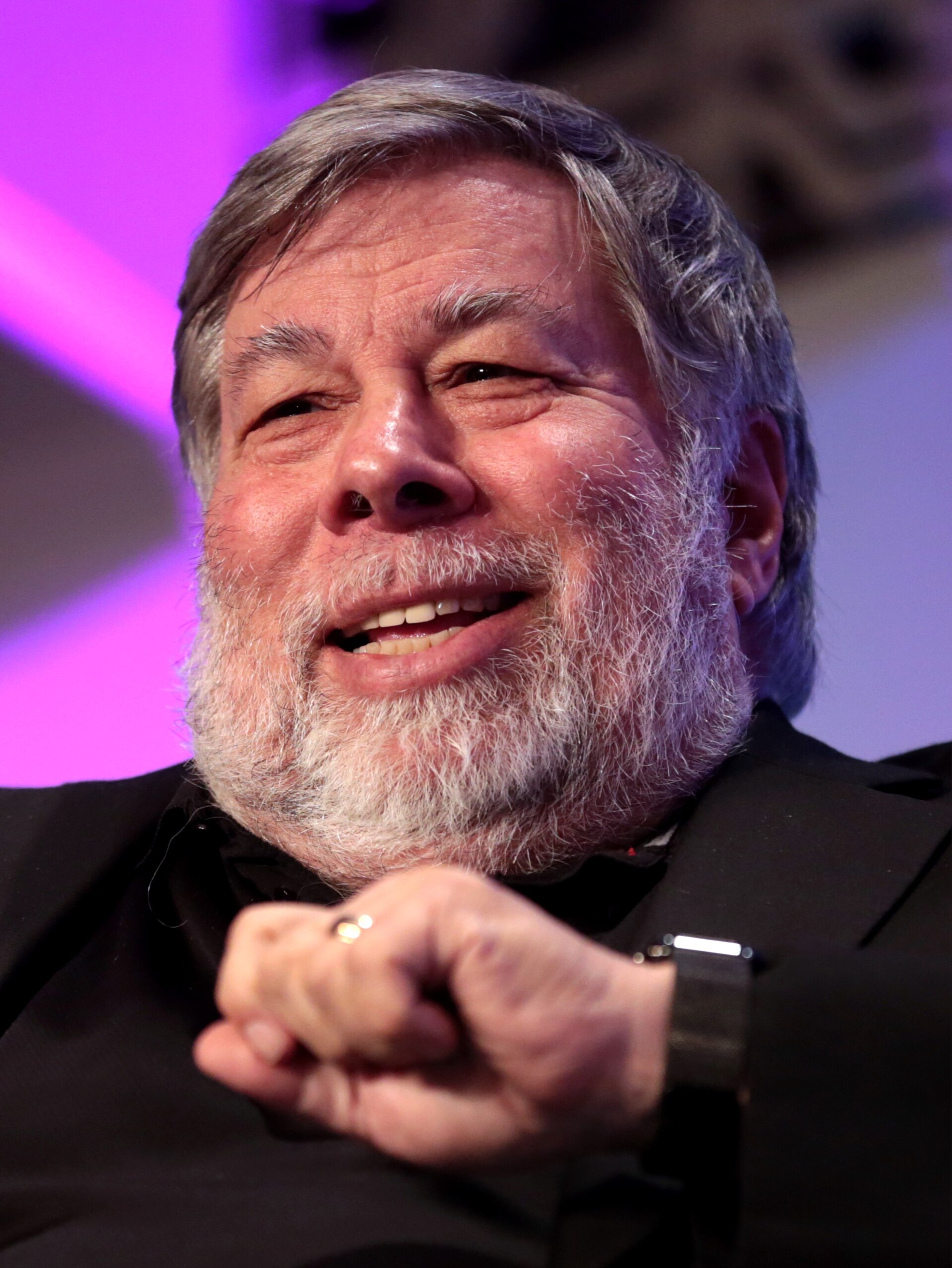
Steve Wozniak co-founded Apple Computer with Steve Jobs and Ronald Wayne on April 1, 1976. He single-handedly designed the Apple I and the Apple II, the machines that gave the company its first revenue and created the personal computer market. Today, Forbes and outlets like it peg his net worth at roughly $100 million to $140 million. Those figures are estimates, not audited numbers, and Wozniak’s actual position moves with markets and private investments. Check the latest range directly at Forbes; a price is a snapshot, not a permanent fact. Either way, the tally places him among Silicon Valley’s wealthier engineers but well outside the billionaire class that dominates the tech industry.
The gap is not a mystery. It traces directly to choices Wozniak made about his Apple stock right after the company went public on December 12, 1980. He sold a significant slug of his holdings early and handed shares to early employees who had been left out of the stock option plan. No tax play, no expectation of return. Those transfers shrank his stake at the very moment Apple was gathering the momentum that would turn it into one of history’s most valuable enterprises.

How Wozniak and Jobs Took Different Paths After 1985
Wozniak ended full-time employment at Apple in 1985. He remains a ceremonial employee pulling in a nominal stipend, which means he did not pile up extra equity from the company’s subsequent run. The result is a fortune large by everyday measures but tiny next to the enterprise he helped launch. Jobs also sold his Apple shares when he left in 1985, but he found a second act: he used the proceeds to grab a majority stake in Pixar. When Disney bought the animation studio in 2006, that stake made him a billionaire. Wozniak had no equivalent asset.
After Apple, Smaller Bets
Wozniak’s post-Apple ventures never generated returns on that scale. In 1985 he started CL 9, the outfit behind the first programmable universal remote control. The product was clever but never delivered Pixar-sized outcomes. He was inducted into the National Inventors Hall of Fame in 2000, a nod to his engineering accomplishments rather than his business wins.
Where the Estimate Comes From
For years, the same wealth band has shown up across reporting from Forbes and comparable outlets. The number hasn’t climbed sharply because his assets aren’t hitched to a fast-growing private company or a concentrated equity position. What sits behind the estimate is a diversified portfolio built mainly on the Apple proceeds he retained, plus income from speaking and consulting. Nothing in it is tied to a rocket ship.
Wozniak's Philosophy on Wealth and Giving
Wozniak has said plainly that he doesn’t tally success by net worth. He calls money a tool, not a scoreboard.
His gift of Apple shares to early employees was a personal call made when those shares were already worth real money. His giving since has stuck to that same direct style. He has backed science and tech education programs, funded computer labs and scholarships, and donated to museums and public institutions. Instead of founding a large private foundation of the kind many tech billionaires use to structure their philanthropy, he writes project-specific checks.
The Counterfactual Wealth
The contrast with other early Apple hands is stark: many who simply held their stock ended up wealthy far beyond any practical need. Wozniak gave away a slice and sold another slice early, which left him with less. He has said he doesn’t regret it. The wealth he kept covers his lifestyle and his giving. He keeps working on engineering projects that interest him, not on piling up more.
What Wozniak's Wealth Figure Does and Does Not Include
The $100 million-to-$140 million band from Forbes is an estimate, not a filing. No public record shows exactly how many Apple shares he still holds. The calculation relies on known holdings, real estate, and reasonable portfolio assumptions.
What’s Left Out
The tally doesn’t assign a value to any private startups Wozniak may have backed, because those marks don’t exist in public. It doesn’t capture his undisclosed annual income from speaking and appearances. It reflects no cryptocurrency the engineer might hold, and it doesn’t incorporate the terms of his divorce settlement, which have stayed private.
What the Shape Tells You
What the range does capture is the contour of his position. He is a multimillionaire who could have been a billionaire. The difference isn’t bad luck or shoddy investing. It is what happens when someone deliberately caps how much they accumulate and leaves equity on the table for others.
Why the Comparison to Jobs Misses the Point
Practically every story about the Apple co-founder’s wealth stacks it against Steve Jobs’s fortune, which was pegged above $10 billion at his death in 2011. The comparison is easy, but it buries the sharper question: does Wozniak’s wealth fit the role he actually played?
He designed the machines that made Apple possible. Jobs built the commercial engine that scaled them. Two different contributions, two different payoff curves. A net worth in the broad band of $100 million to $140 million still places the designer of the Apple II in a tiny sliver of the global population. It only looks modest next to founders who held every share, who built multiple companies, or who rode high-growth assets. Wozniak did none of that. He designed computers, handed out equity, and moved on to other engineering work.
As of October 2023, his wealth sat in the same ballpark outlets have cited for years. It hasn’t rocketed upward because it’s not lashed to a single high-growth bet. The number is stable, spread out, and sufficient for what he says matters. That outcome follows squarely from the moment in 1980 when he chose to sell and give shares away instead of clutching them for decades.
Key Facts About Steve Wozniak's Wealth
- Co-founded Apple: April 1, 1976, with Steve Jobs and Ronald Wayne
- Primary technical contribution: Single-handedly designed the Apple I and Apple II computers
- Apple IPO date: December 12, 1980
- Left full-time Apple employment: 1985, though remains a ceremonial employee with a nominal stipend
- Post-Apple venture: Founded CL 9 in 1985, which made the first programmable universal remote control
- Reported net worth range: Roughly $100 million to $140 million, per Forbes and similar outlets; consult Forbes for the latest estimate
- Hall of Fame induction: National Inventors Hall of Fame, 2000
Frequently Asked Questions
Why is Steve Wozniak not a billionaire?
He sold a significant slice of his Apple stock after the 1980 IPO and gave shares to early employees who had no stock options. He didn't keep a large equity stake through the company's growth, unlike Jobs, who became a billionaire via a majority stake in Pixar when Disney bought it in 2006.
How much Apple stock did Wozniak own at the IPO?
The precise figure isn't public. It is known that he sold a large portion shortly after the IPO and gave shares to early employees, substantially reducing his holdings.
What is Steve Wozniak's net worth in 2024?
Outlets such as Forbes have historically reported a band in the neighborhood of $100 million to $140 million. The exact amount moves with markets and his private investments and is not an audited tally.
Does Steve Wozniak still work at Apple?
He stopped full-time employment in 1985 but stays on as a ceremonial employee collecting a nominal stipend.