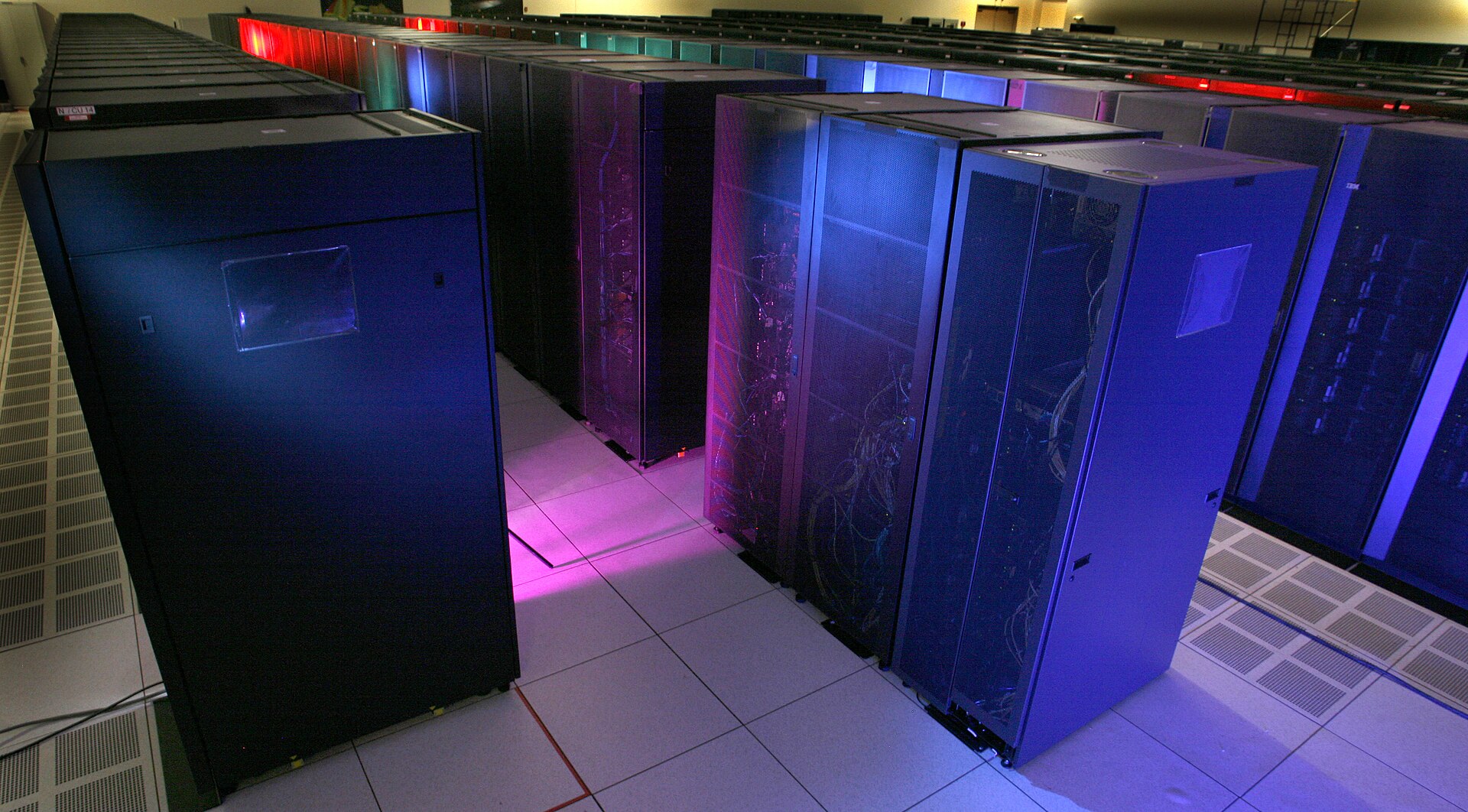
IBM permanently decommissioned the Roadrunner supercomputer at Los Alamos National Laboratory on March 31, 2013. The machine had been the first to break the petaflop barrier, reaching 1.026 petaflops in June 2008. Its hybrid design, pairing 6,948 dual-core AMD Opteron chips with 12,960 IBM PowerXCell 8i accelerators, had no direct successor. The institutional knowledge built during the project was partially dispersed through staff attrition and IBM's 2014 sale of its x86 server business to Lenovo for $2.1 billion.
Some expertise was retained and redirected into the OpenPOWER and CORAL programs. The unique engineering culture around the Cell processor lineage was not preserved intact.
The PowerXCell 8i derived from the Cell Broadband Engine, originally developed by Sony, Toshiba, and IBM for the PlayStation 3. That commercial failure in consumer electronics, combined with the absence of a follow-on HPC contract for Roadrunner-style hybrids, led IBM to pivot away from custom silicon entirely. The company's subsequent HPC strategy relied on commercial Power chips paired with NVIDIA GPU accelerators. That bet paid off when the U.S. Department of Energy's CORAL procurement in 2014 selected IBM's Power9/NVIDIA design for the Summit and Sierra supercomputers, delivered in 2018.

The Roadrunner Architecture That Led Nowhere
Roadrunner's hybrid design was a one-off engineering achievement that never became a platform. The machine used 12,960 PowerXCell 8i chips as accelerators, a product that was already niche by the time Roadrunner reached the TOP500. The Cell Broadband Engine had been built for the PlayStation 3, which sold over 80 million units, but as a general-purpose HPC building block it proved too difficult to program and too specialized for most workloads. IBM produced no follow-on to the PowerXCell 8i, and no subsequent IBM supercomputer reused the hybrid Cell/Opteron topology.
Blue Gene steps in, then exits
The company's next major HPC delivery, the Blue Gene/Q-based Sequoia at Lawrence Livermore National Laboratory in 2012, used an entirely different architecture: 1.6 million PowerPC A2 cores in a highly energy-efficient layout. Sequoia was the world's fastest supercomputer at the time, but this design also had no direct successor. IBM discontinued the Blue Gene line after the Q series.
Exiting the custom silicon race
By 2014, IBM had effectively exited the business of building custom HPC chips for the TOP500 race, selling its x86 server division to Lenovo and focusing on Power platforms for the remaining high-end contracts.
The Team Disperses
The engineering team that designed and built Roadrunner at Los Alamos did not stay intact. The project cost approximately $100 million and involved a mix of IBM researchers, hardware engineers, and software specialists embedded at the national laboratory.
Reassignment and attrition
After decommissioning, many of those staff were reassigned within IBM's Systems and Technology Group, which was itself being restructured ahead of the Lenovo deal. The sale of the x86 server business transferred a portion of the workforce, including some who had worked on Roadrunner's Opteron integration. Others moved to national laboratories or competitors. The exact numbers are not public, but the effect was a net loss of institutional memory within IBM's HPC division.
What IBM kept
IBM retained a core group of Power platform engineers who later worked on the CORAL program. That group drew on expertise from the Blue Gene project and from IBM's Austin Research Laboratory, not directly from Roadrunner. The Cell chip's programming model and system software stack, which had required substantial investment in compilers and libraries, were largely abandoned. Open-source efforts developed for Roadrunner, such as the Parallel Operating System, were not maintained after 2013. The remaining knowledge was tacit, carried in the heads of individuals who had left or changed roles.
The CORAL Revival and What It Preserved
The U.S. Department of Energy's CORAL procurement in 2014 gave IBM a second chance in high-end HPC. The contracts for Summit at Oak Ridge National Laboratory and Sierra at Lawrence Livermore, both delivered in 2018, used IBM Power9 CPUs with NVIDIA Volta GPU accelerators. This was a fundamentally different approach from Roadrunner: the accelerators were NVIDIA GPUs, not Cell chips, and the interconnect was IBM's own. The institutional knowledge that IBM brought to CORAL came primarily from the Blue Gene program and from its Power server lineage.
The Cell chip's failure to gain traction in HPC meant the company had already moved on before Roadrunner was even decommissioned.
OpenPOWER opens the door
IBM founded the OpenPOWER Foundation in 2013, opening the Power instruction set to third-party developers and licensees. That move was partly a response to the loss of x86 revenue after the Lenovo sale and partly an attempt to build an ecosystem around Power for HPC and cloud. The foundation allowed national laboratories and other partners to design custom Power chips, preserving some of the collaborative engineering culture from the Roadrunner and Blue Gene projects. But the open-source approach was a departure from the proprietary, vertically integrated model that had produced the Cell processor.
Impact on Los Alamos and the TOP500
Los Alamos National Laboratory lost its flagship IBM platform when Roadrunner was decommissioned. The laboratory's next major supercomputer, Trinity, was a Cray XC40 with Intel Xeon chips and NVIDIA GPUs, delivered in 2015. That represented a shift away from IBM as a primary HPC vendor at Los Alamos. The gap was not catastrophic, but it meant Los Alamos was not among the first users of the next generation of IBM HPC platforms.
IBM's TOP500 arc
IBM's position on the TOP500 list declined after Roadrunner's removal. The company had held the top spot with Blue Gene/L in 2004, with Roadrunner in 2008, and with Sequoia in 2012. After 2013, its highest-ranked machines were the CORAL systems Summit and Sierra, which reached number one and number two respectively in June 2018. But those deployments used a commercial architecture that IBM did not own exclusively: NVIDIA provided the GPUs, and the Power9 CPU was the result of a joint development agreement.
A capability allowed to dissipate
The era of IBM building a supercomputer entirely from its own custom silicon, as it had done with the Cell chip and Blue Gene, was over. The institutional memory of how to design a hybrid compute engine for HPC had been allowed to dissipate, and the company chose not to rebuild it.
Key Facts
- Roadrunner decommissioned: March 31, 2013
- First petaflop milestone: 1.026 petaflops in June 2008
- Hybrid architecture: 6,948 dual-core AMD Opteron processors and 12,960 IBM PowerXCell 8i processors
- Development cost: Approximately $100 million
- IBM x86 server sale: Sold to Lenovo in 2014 for $2.1 billion
- CORAL contracts awarded: 2014, for Summit and Sierra (delivered 2018)
- Blue Gene/Q Sequoia delivered: 2012 to Lawrence Livermore National Laboratory
IBM's Major HPC Systems and Their Architecture Legacy
| System | Year | Architecture | Direct Successor |
|---|---|---|---|
| Blue Gene/L | 2004 | Custom PowerPC 440 | Blue Gene/P, /Q |
| Roadrunner | 2008 | Cell/Opteron hybrid | None |
| Sequoia (Blue Gene/Q) | 2012 | PowerPC A2 | None |
| Summit | 2018 | Power9 + NVIDIA GPU | None (IBM exited custom HPC) |
FAQ
Did IBM ever reuse the Cell processor in another supercomputer?
No. The PowerXCell 8i was used only in Roadrunner. IBM discontinued the Cell processor line after the PlayStation 3 generation, and no subsequent HPC system used it.
What happened to the Roadrunner team members?
Some were reassigned within IBM, others moved to national laboratories or competitors. The x86 server sale to Lenovo in 2014 transferred a portion of IBM's workforce, including some who had worked on Roadrunner. Exact numbers are not public.
Did IBM's HPC expertise benefit the CORAL program?
Partially. The CORAL contracts used Power9 CPUs and NVIDIA GPUs, drawing on IBM's Power platform expertise from Blue Gene and its server division, not from Roadrunner's Cell-based design.