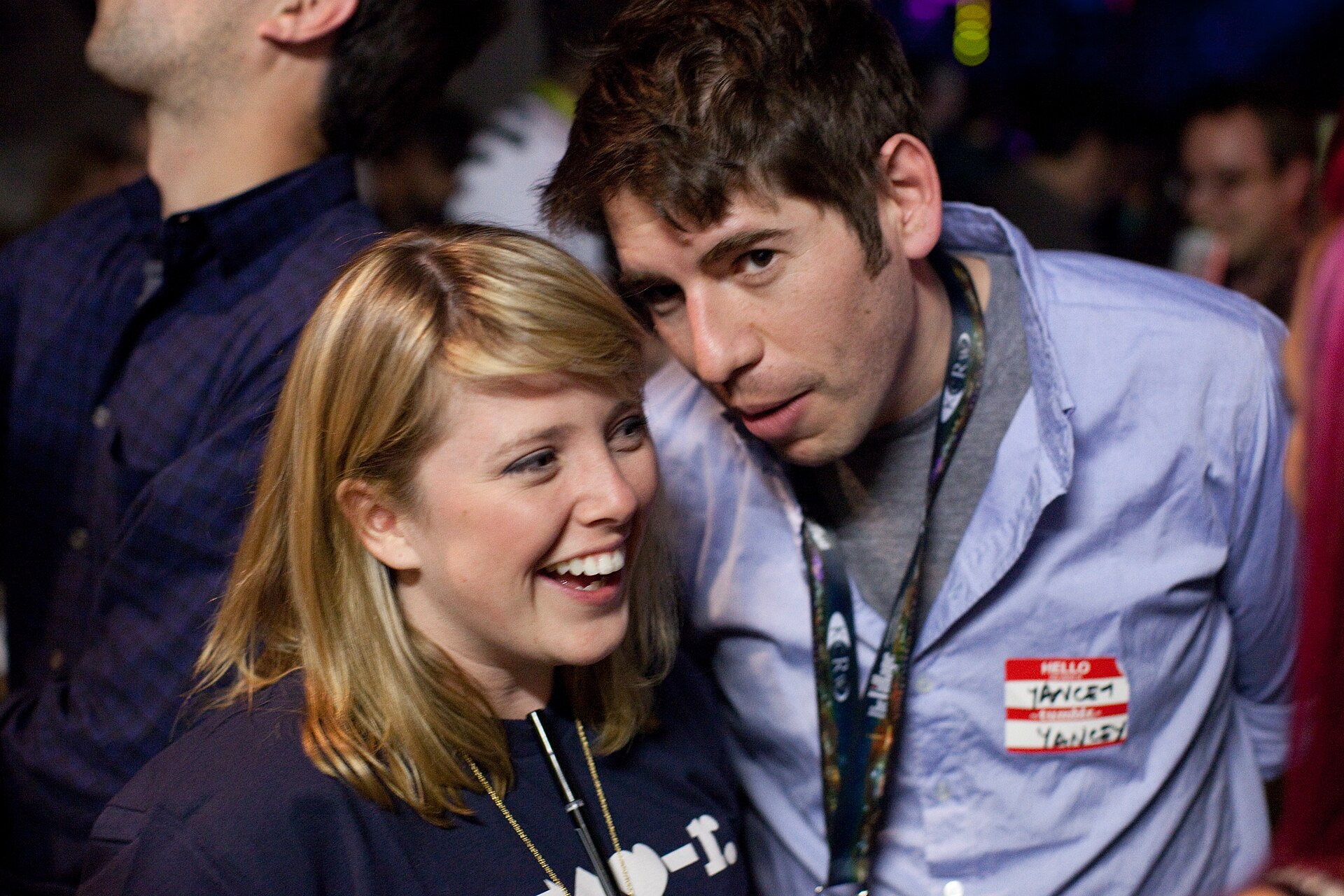
Yancey Strickler, the co-founder and former CEO of Kickstarter, built a decision-making framework he calls Bentoism. It asks people and organizations to weigh every choice across four dimensions: Now Me, Future Me, Now Us, and Future Us. The model is named after the Japanese bento box, a compartmentalized meal that keeps different foods separate but present in the same container. Strickler argues that most economic and individual choices optimize only the Now Me compartment, and that the other three are systematically undervalued.
Strickler introduced Bentoism in a 2019 essay and book project, roughly four years after Kickstarter reincorporated as a Public Benefit Corporation in September 2015. That conversion was one of the earliest high-profile moves by a technology firm to legally embed a social mission alongside shareholder return. Bentoism is the philosophical extension of the same logic: a formal attempt to expand what counts as a legitimate interest in a choice.
The framework has since been discussed in business and self-development contexts, though no Fortune 500 enterprise has adopted it as a formal governance tool. Strickler continues to write and speak about the concept as of early 2024, and the four-compartment model circulates among individuals looking for a structured alternative to pure utility maximization.

The Four Compartments as a Decision Tool
Bentoism maps every choice onto a two-by-two grid. The horizontal axis separates self from others. The vertical axis separates present from future. The resulting compartments are: Now Me (immediate self-interest), Future Me (long-term self-interest), Now Us (immediate collective interest), and Future Us (long-term collective interest).
Strickler argues that standard economics and mainstream business practice treat only the Now Me compartment as real. Future Me is discounted. Now Us gets labeled altruism, a separate category from rational behavior. Future Us barely registers. Bentoism asks the decision-maker to name what each compartment wants in a given situation and then weigh the four preferences together. The goal is not to equalize the compartments, but to ensure none stays silent.
Mechanism, Not Morality
The framework is not a moral system. It does not prescribe that Future Us should always win. It is a reminder that a person or organization has multiple authentic interests that are not in competition with each other the way private profit and charitable giving are often framed. Strickler presents the bento box as a visual constraint: if you can see all four sections, you are less likely to fill only one.
From Kickstarter to the Bento Box
Strickler co-founded Kickstarter in 2009 and served as its CEO until 2017. In September 2015, the business reincorporated as a Public Benefit Corporation, a legal structure that lets directors consider stakeholders beyond shareholders when making choices. At the time, the move was covered as a rebuke to the growth-at-all-costs ethos of venture capital. Strickler said the shift came from the organization's experience mediating between creators, backers, and its own workforce, a set of relationships that a standard corporation had no formal mechanism to balance.
Bentoism, introduced in essay form in 2019, is Strickler's attempt to build a general-purpose framework from that experience. He has described the model as a way to formalize the intuition that led to the PBC conversion. The name comes from the bento box, which Strickler uses as a metaphor for compartmentalized attention. In a typical bento meal, rice, fish, and vegetables share a container without mixing. The framework treats the four compartments the same way: they coexist, and the container is the choice.
What Bentoism Critiques in Economics and Philosophy
The framework targets a specific assumption embedded in rational choice theory: that the individual is the only unit of account and that future preferences should be discounted at a constant rate. Bentoism does not reject self-interest. It expands the definition of the self to include future versions of the same person and the groups that person belongs to.
This places Bentoism in a tradition of critiques of narrow utility maximization that includes behavioral economics, stakeholder theory, and certain strands of Buddhist economics. Strickler does not claim originality in the critique. The novelty is in the packaging: a simple visual grid that anyone can use at the moment of a choice. The framework does not require a change in values, only a change in the range of values considered.
Where It Differs from Altruism
Altruism typically asks an individual to sacrifice Now Me for Now Us or Future Us. Bentoism does not. It asks the individual to recognize that Future Me and Now Us are also versions of self-interest, not separate categories. A move that protects Future Us is not a donation, in this model; it is an investment in a self that includes the group. This distinction is central to Strickler's argument that Bentoism is a framework for expanded self-interest, not for selflessness.

Adoption and Reception Since 2019
Bentoism has spread primarily through Strickler's own writing and speaking. He published the original essay in 2019 and has since developed the concept in talks, interviews, and a subsequent book project. The framework has been picked up by a small number of business school curricula and self-development workshops, but it has not been formally studied or validated in peer-reviewed research.
No Fortune 500 enterprise has publicly adopted Bentoism as a governance or strategy tool. Strickler has not registered it as a trademark or incorporated a formal non-profit entity around it. The framework remains, as of early 2024, a personal project sustained by its author's reputation as a thoughtful counterweight to Silicon Valley's default growth logic. Its reach is wider than its formal institutional footprint suggests, because the four-compartment model spreads easily in slide decks and short-form writing.
Criticism and Limits
The most common criticism is that Bentoism is too vague to bind a real choice. A board considering a layoff can name what each compartment wants, but the framework does not provide a method for adjudicating between them. Strickler has acknowledged this limit, describing Bentoism as a lens, not a calculator. The model is designed to surface omitted interests, not to solve the trade-offs that appear once those interests are visible.
Strickler's Trajectory After Kickstarter
Strickler stepped down as CEO of Kickstarter in 2017. He remained on the board until 2019 and has since worked as an author, speaker, and advisor. His post-Kickstarter career has been defined by the ideas he developed during his tenure, not by a new venture or product. Bentoism is the most visible of those ideas.
Strickler has not returned to an operating role in a technology firm. As of early 2024, he describes himself as an author and continues to write about the intersection of business, culture, and decision-making. His public presence is that of a former founder who has chosen to work on the intellectual infrastructure of a different kind of capitalism rather than on another startup. This positions him as an unusual figure in the founder ecosystem, where the norm is to build again.
Kickstarter's PBC Conversion as a Precedent
Kickstarter's reincorporation as a Public Benefit Corporation in September 2015 was a landmark event in the corporate governance world. The organization was one of the first venture-backed technology firms to adopt the structure, which had existed in Delaware law only since 2013. The conversion meant that Kickstarter's directors could legally prioritize mission over profit maximization, and that shareholders could not sue them for doing so.
Strickler has said that the PBC conversion was a direct response to the tensions that Kickstarter's platform created. The business mediated between creators who wanted to fund projects, backers who wanted to support art and invention, and employees who wanted to work on something meaningful. A standard corporation had no way to formalize those multiple commitments. The PBC structure provided one. Bentoism, in Strickler's telling, is the same logic applied to individual judgment: a way to formalize multiple commitments that a person or team already has but rarely names.

How Bentoism Compares to Other Frameworks
Bentoism occupies a specific niche in the landscape of decision-making models. It is simpler than stakeholder theory, which requires mapping every affected party. It is more structured than mindfulness or values-based approaches, which lack a visual or analytical component, and it overlaps with the Ikigai concept from Japanese culture. But Ikigai is a life-purpose framework, while Bentoism is a decision-by-decision tool.
Its closest relative in the business literature is the Balanced Scorecard, which also uses multiple dimensions to evaluate performance. The Balanced Scorecard is designed for organizational strategy and includes financial, customer, internal process, and learning metrics. Bentoism is designed for individuals and small teams and uses time and social scope as its axes. The Balanced Scorecard is normative. Bentoism is descriptive. It asks what you already want, not what you should want.
What Bentoism Does and Does Not Deliver
Bentoism delivers a structured moment of reflection. It forces the decision-maker to articulate what each compartment wants before acting. That act of articulation is the mechanism. The framework does not guarantee better outcomes, and it does not resolve trade-offs. What it does is make the trade-offs visible to the person making them.
Strickler has been clear that Bentoism is not a substitute for ethics, regulation, or collective action. It is an individual and organizational practice designed to counteract the automatic priority that Now Me receives in most decision environments. The framework is small. That is its strength and its limit. It fits on a page, it can be taught in ten minutes, and it can be forgotten just as quickly. Whether it persists as a useful tool or becomes a footnote in the history of post-Silicon Valley thinking depends on whether people who try it find that the compartments change their behavior.
Key Facts
- Creator: Yancey Strickler, co-founder and former CEO of Kickstarter
- Framework introduced: 2019, via essay and book project
- Core model: Four-compartment grid: Now Me, Future Me, Now Us, Future Us
- Origin inspiration: Kickstarter's 2015 reincorporation as a Public Benefit Corporation
- Status as of April 2024: Ongoing personal project; no formal trademark, non-profit, or peer-reviewed validation
Bentoism Four Compartments
| Compartment | Axis | Question it asks |
|---|---|---|
| Now Me | Self, Present | What do I want right now? |
| Future Me | Self, Future | What will I want later? |
| Now Us | Others, Present | What do we need right now? |
| Future Us | Others, Future | What will we need later? |
Frequently Asked Questions
Is Bentoism the same as altruism?
No. Strickler presents Bentoism as expanded self-interest, not selflessness. Future Me and Now Us are treated as legitimate forms of self-interest, not as sacrifices of self-interest.
Has any company formally adopted Bentoism?
No Fortune 500 enterprise has publicly adopted Bentoism as a governance or strategy tool. Adoption has been limited to individuals and small teams.
Does Bentoism tell you which compartment to choose?
No. The framework surfaces the interests of all four compartments but does not prescribe how to resolve conflicts among them. Strickler calls it a lens, not a calculator.