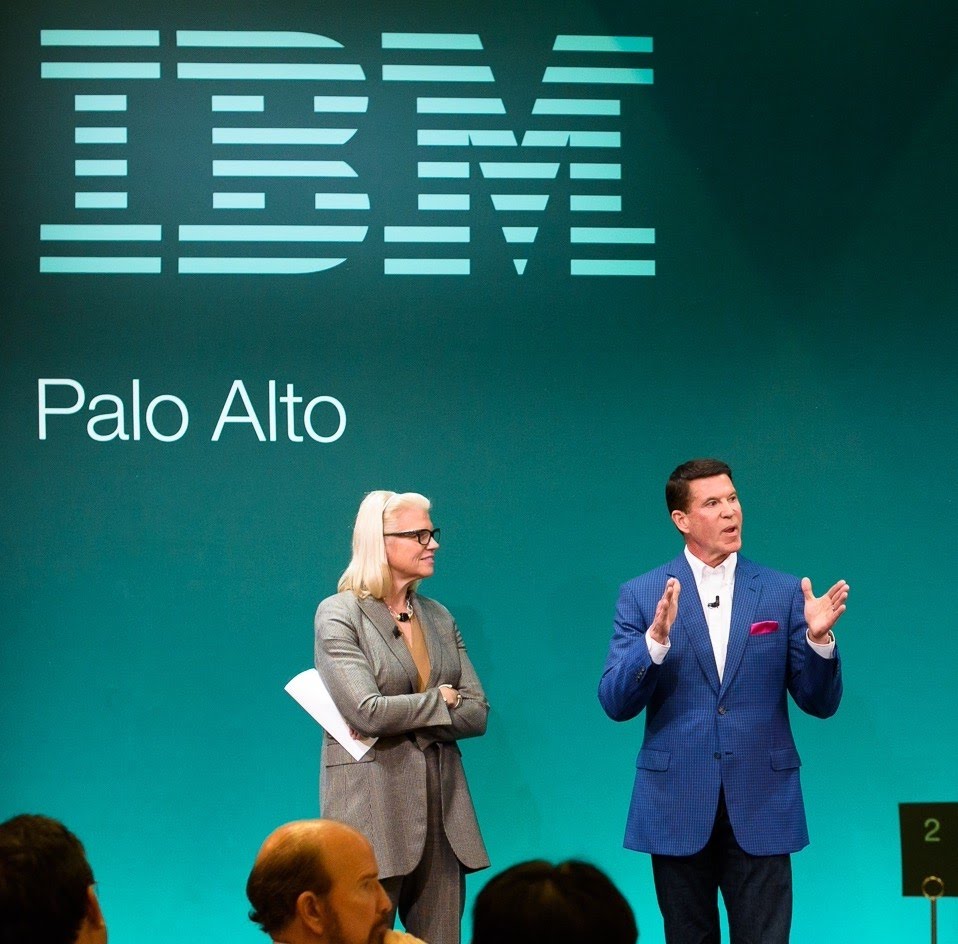
In 2018, IBM Chairman and CEO Ginni Rometty took the stage at a major industry event to argue that trust had become the most important currency in the digital era. Companies that failed to earn it, she said, would lose access to the data they needed to compete. Her remarks landed as regulators and consumers began questioning how large technology firms handled personal information, and Rometty positioned IBM as the responsible alternative.
Rometty served as IBM's CEO from 2012 to April 2020. During her tenure, she made data stewardship and ethical AI central to the company's public identity. The specific event where she laid out her trust framework was a keynote at the Consumer Electronics Show in Las Vegas, one of the largest technology conferences of the year. There she introduced what IBM called its Principles for Trust and Transparency, a set of commitments that she said would govern how the company handled client data and built artificial intelligence systems.
By April 2020, Rometty had stepped down and was succeeded by Arvind Krishna. IBM's Principles for Trust and Transparency remain published, but the company's AI strategy has since evolved under Krishna with a heavy focus on Watsonx and enterprise AI deployment. The trust agenda Rometty championed did not disappear. It became one component of a broader product-led strategy rather than the central message of the CEO.
Trust as a Competitive Differentiator
Rometty argued that trust was neither a compliance issue nor a public relations exercise. She described it as a competitive differentiator in the age of data and AI. Her reasoning was straightforward: organizations that could demonstrate responsible data handling would attract more customers, earn deeper access to proprietary information, and build AI systems that performed better because they were trained on richer datasets.
She contrasted this with what she called the extractive model used by some competitors. In that model, a company collects user data, derives insights, and monetizes them without the user's explicit ongoing consent. Rometty said that approach was unsustainable. Regulators and customers, she predicted, would eventually reject it. IBM's bet on openness and client control would prove to be the better long-term strategy.
Her argument was not purely philosophical. Rometty tied trust directly to IBM's business model. She said that IBM's enterprise accounts, particularly in regulated industries like banking, healthcare, and government, needed assurances that their data would not be used to train models that could later compete against them. By offering those assurances, IBM could charge a premium for its cloud and AI services.
Data Ownership Versus Data Responsibility
One of the central distinctions Rometty drew was between data ownership and data responsibility. She stated plainly that companies do not own client data. Instead, they are stewards of that data, and any insights derived from it belong to the client. This was a direct challenge to the prevailing practice among large consumer technology firms, which often treated user data as a corporate asset to be exploited.
Rometty argued that the stewardship model created a different set of incentives. If a company cannot claim ownership of the data it processes, it must invest in systems that protect that data, limit its use to agreed purposes, and give customers the ability to audit how their information is being handled. She said IBM had built its cloud and AI platforms with those tenets in mind.
This position also had implications for how IBM structured its contracts. Rometty said the company would not use client data to improve its own models unless explicitly authorized. That commitment set IBM apart from rivals that routinely trained their algorithms on customer interactions. For enterprise buyers, this was a meaningful distinction.
The Principles for Trust and Transparency
The Three Core Commitments
In 2018, IBM published its Principles for Trust and Transparency. Rometty used her keynote to walk through the three core commitments. First, IBM said it would be open about the purpose of data collection and use. Second, it promised that insights derived from data would belong to the client, not to IBM. Third, it committed to giving customers control over how their data was used, including the ability to withdraw consent.
These precepts were not aspirational. Rometty said they were embedded in IBM's product development processes and contract terms. She pointed to IBM's cloud platform, which included tools for data governance and access control, as evidence that the commitments were being operationalized. She also said that IBM would not sell client data or use it for purposes beyond those specified in the contract.
Internal Governance and Review
The Principles for Trust and Transparency were part of a broader set of ethical guidelines that IBM had been developing internally. Rometty said the company had created an internal review board to evaluate new products and services for compliance with these standards. She described this as a necessary investment, not a cost.
Precision Regulation of Artificial Intelligence
Regulating the Use Case, Not the Technology
Rometty used the event to lay out IBM's position on AI regulation. She called for what she described as precision regulation. The idea was that regulators should focus on the use case of an AI system rather than the underlying technology. A facial recognition system used for law enforcement surveillance, she argued, raised different questions than the same technology used to verify a smartphone user's identity.
She said that broad bans on AI technologies would stifle innovation without addressing the specific harms that concerned the public. Instead, she proposed that regulators identify high-risk use cases and apply tailored rules to those applications. This approach, she argued, would allow beneficial uses of AI to flourish while protecting individuals from abuse.
Algorithmic Disclosure Requirements
IBM also advocated for openness requirements for AI systems. Rometty said that companies should be required to disclose when a decision was made by an algorithm rather than a human, and to explain the factors that influenced that decision. She positioned IBM as willing to accept regulation that competitors might resist, because she believed it would create a level playing field where trust became a market advantage.

Products and Initiatives Announced
AI Explainability and Cloud Controls
During her keynote, Rometty announced several new IBM products and services designed to support the trust agenda. The most significant was a set of tools for what IBM called AI explainability. These tools were intended to help enterprises understand how their AI models reached decisions, a prerequisite for meeting the disclosure standards Rometty had outlined.
She also announced updates to IBM's cloud platform that gave customers more granular control over data access. These included audit logs that recorded every interaction with client data, and policy engines that could enforce data usage rules automatically. Rometty said these features were the result of direct feedback from IBM's largest enterprise accounts, who had made clear that they would not move sensitive workloads to the cloud without them.
Partner Certification Program
Additionally, IBM introduced a certification program for its business partners. The program required partners to adhere to the same data stewardship tenets that IBM had adopted. Rometty said this was necessary because customers needed to trust not just IBM but the entire ecosystem of organizations that touched their data.
Critique of Competitors and Legacy
Rometty did not name specific competitors in her keynote, but her critique of industry data practices was clear. She described a model where companies collected vast amounts of user data, derived insights from it without explicit consent, and then used those insights to build products that competed with their own customers. This was a reference to the business models of major consumer platforms, which IBM saw as fundamentally incompatible with enterprise trust.
She argued that the extractive model created a conflict of interest. A company that both operates a marketplace and sells AI services to the businesses on that marketplace, she said, has an incentive to use the data from one side of its business to benefit the other. IBM, by contrast, had committed to keeping those functions separate.
Rometty retired as CEO of IBM in April 2020. Her successor, Arvind Krishna, shifted the company's emphasis toward Watsonx and enterprise AI deployment. The Principles for Trust and Transparency remain part of IBM's public commitments, but the trust agenda that Rometty championed as a CEO-level message has been absorbed into a broader product strategy. Her argument that trust is a competitive differentiator, not a compliance checkbox, continues to influence how IBM positions itself in the market.
Key Facts
- Speaker: Ginni Rometty, Chairman, President, and CEO of IBM
- Tenure: 2012 to April 2020
- Event: Keynote at Consumer Electronics Show in Las Vegas, 2018
- Key Framework: IBM Principles for Trust and Transparency, published 2018
- Data Stewardship Principle: Companies do not own client data; insights belong to the client
- AI Regulation Stance: Precision regulation: regulate the use case, not the technology
- Successor: Arvind Krishna, CEO from April 2020
- Post-Rometty AI Strategy: Watsonx and enterprise AI deployment
Frequently Asked Questions
What were IBM's Principles for Trust and Transparency?
IBM published three core commitments in 2018: openness about the purpose of data collection and use; that insights derived from data belong to the client; and that customers have control over how their data is used, including the ability to withdraw consent.
Did Ginni Rometty name competitors in her trust speech?
She did not name specific companies, but she criticized the extractive data model used by major consumer platforms, where companies collect user data and monetize it without explicit ongoing consent.
What happened to IBM's trust agenda after Rometty left?
The Principles for Trust and Transparency remain published, but under CEO Arvind Krishna, IBM's AI strategy has evolved with a focus on Watsonx and enterprise AI deployment. The trust agenda became one component of a broader product-led strategy.