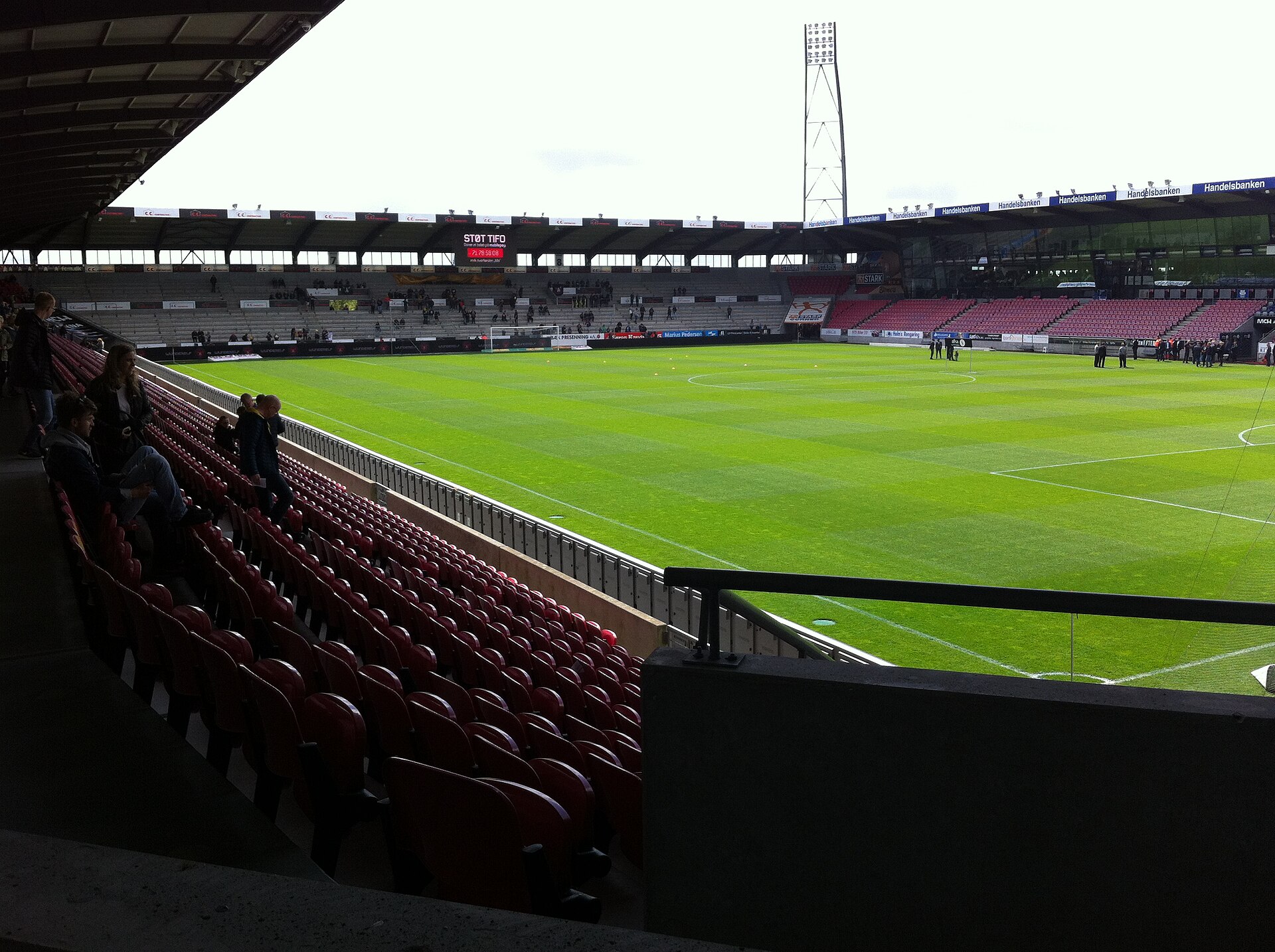
FC Midtjylland won its first Danish Superliga title in the 2014-15 season, less than a year after Matthew Benham became majority owner. The club, based in Herning and Ikast, had never finished higher than third. The title was not a spending spree. It was the result of a deliberate analytical strategy that treated player recruitment, set pieces, and even throw-ins as statistical problems.
Rasmus Ankersen, then chairman, embedded that culture. The model worked well enough that Ankersen later took the same philosophy to Brentford FC as co-director of football and then to Southampton FC as CEO of the investment group that bought the club. But the outcomes were not uniform. Southampton was relegated from the Premier League in the 2022-23 season, a reminder that data does not guarantee survival against much larger budgets.

The Analytical Foundation: Expected Goals and Undervalued Players
Why xG mattered more than scouting reports
FC Midtjylland built its recruitment around Expected Goals (xG), a metric that estimates the probability a shot will result in a goal based on its location, angle, and type of assist. Traditional scouting often overvalued players who scored from low-probability positions or relied on teammates creating high-quality chances. xG stripped that noise away.
The club targeted players whose underlying numbers suggested they were creating or converting chances at a rate their goal tally did not reflect. That let Midtjylland sign talent that bigger Danish clubs had overlooked. It could find strikers in lower leagues whose xG numbers matched those of players costing five times as much. Benham, a professional gambler before he became a football owner, understood the edge that came from pricing inefficiencies. He had seen the same pattern in betting markets.
Throw-Ins as Set Pieces: A Neglected Phase of Play
The statistical case for the long throw
Most football clubs treat throw-ins as a routine restart. FC Midtjylland treated them as an attacking opportunity.
The data showed that a throw-in deep in the opponent's half produced a shot attempt roughly as often as a corner kick, yet almost no team practiced them systematically. Midtjylland hired a dedicated coach, practiced specific delivery patterns, and used player positioning to maximize the chance of a headed shot or a second-ball recovery. Danish journalists wrote stories about the club's "long throw obsession." Opponents complained it was unsporting. The club did not care. The numbers said the tactic created goals, and the 2014-15 title run included several matches where a throw-in led directly to a goal. The strategy was not a gimmick. It was a marginal gain that larger clubs had ignored because they assumed these restarts did not matter.
Shared Ownership, Shared Philosophy: Benham and Brentford
Two clubs, one model
Matthew Benham bought FC Midtjylland in July 2014. He already owned Brentford FC in England. The two clubs shared a scouting database, a statistical framework, and a willingness to sell players for profit when the data said their value had peaked. Rasmus Ankersen served as the bridge between them. After the Danish title, Ankersen moved to Brentford as co-director of football, where he helped the club reach the top flight using the same xG-driven recruitment.
The model was not secret. Other clubs could see what Midtjylland and Brentford were doing. But replicating it required an owner who trusted the data more than the scouts and a chairman who could sell the philosophy to a dressing room. Most clubs had neither. The two-club structure also gave Midtjylland a pipeline. Players who developed in Denmark could move to Brentford, and the sale proceeds funded the next round of analytical signings.
The Moneyball Label and What It Missed
Media coverage and the limits of the comparison
The press called FC Midtjylland's philosophy "Moneyball for football," a reference to the Oakland Athletics baseball team that used sabermetrics to compete against richer rivals. The comparison was useful but imprecise. Baseball is a sport of discrete, independent events: a pitch, a swing, an out. Football is fluid. A player's xG number depends on teammates, opposition shape, and game state in ways that baseball statistics do not. Midtjylland's model worked not because it copied baseball, but because it found inefficiencies that other football clubs had not exploited.
Rasmus Ankersen left Brentford in December 2021 to become CEO of Sport Republic, a sports investment group. In January 2022, Sport Republic bought a controlling stake in Southampton FC. The data philosophy followed him there, but the Premier League is a different financial environment. Southampton was relegated in 2022-23. As of January 2024, the club remained in the Championship. The Midtjylland model proved that analytics can help a small club win a domestic title. It did not prove that the same philosophy can keep a top-flight club from relegation.
Key Facts
- Club: FC Midtjylland (Herning and Ikast, Denmark)
- Majority owner (from July 2014): Matthew Benham (also owner of Brentford FC)
- Chairman during title win: Rasmus Ankersen
- First Danish Superliga title: 2014-15 season
- Core metric: Expected Goals (xG) for recruitment and performance
- Notable tactical innovation: Data-driven optimization of throw-ins as set pieces
- Ankersen's next role: Co-Director of Football at Brentford FC
- Subsequent move: CEO of Sport Republic (Dec 2021); acquired Southampton FC (Jan 2022)
- Outcome at Southampton: Relegated from Premier League in 2022-23 season
Three Clubs, One Analytical Philosophy
| Club | Owner/Key figure | Analytical focus | Major achievement under model |
|---|---|---|---|
| FC Midtjylland | Matthew Benham (owner), Rasmus Ankersen (chairman) | xG, throw-in optimization, undervalued recruitment | First Danish Superliga title (2014-15); multiple titles and European qualification |
| Brentford FC | Matthew Benham (owner) | xG-driven recruitment, player trading for profit | Promotion to Premier League; sustained top-flight status |
| Southampton FC | Sport Republic (owner), Rasmus Ankersen (CEO) | Data-driven recruitment and performance | Acquired Jan 2022; relegated 2022-23 |
Frequently Asked Questions
What is Expected Goals (xG) and how did FC Midtjylland use it?
Expected Goals (xG) estimates the probability that a shot becomes a goal based on factors like shot location and assist type. FC Midtjylland used xG to identify undervalued players whose underlying performance was stronger than their goal tally suggested, allowing the club to sign talent that bigger rivals had missed.
Why did FC Midtjylland focus on throw-ins?
The club's data showed that a throw-in deep in the opponent's half created a shot attempt roughly as often as a corner kick. Most teams did not practice throw-ins systematically. Midtjylland hired a throw-in coach and treated the restart as a set piece, which generated goals during their title-winning season.
How are FC Midtjylland and Brentford FC connected?
Matthew Benham owns both clubs. They share a scouting database, statistical models, and a philosophy of selling players when data suggests their value has peaked. Rasmus Ankersen served as chairman at Midtjylland and later became co-director of football at Brentford.
Did the data-driven model work at Southampton?
Rasmus Ankersen became CEO of Sport Republic, which bought Southampton in January 2022. The club was relegated from the Premier League in the 2022-23 season. The model that won a Danish title did not prevent relegation in a league with much larger budgets.