Kinect Hub was a proposed digital health platform designed to marry Microsoft's Kinect motion-tracking device with blockchain technology. The concept hinged on the Kinect's ability to capture body movements in three dimensions for remote monitoring, physical therapy and fitness assessment, while a distributed ledger stored, verified and secured the resulting biomechanical data. The idea surfaced during a period when blockchains were being pitched for nearly every sector, and when Kinect sensors, though already discontinued, still offered a relatively cheap way to capture skeletal tracking outside a clinic.
The health problem Kinect Hub wanted to solve was verifying that a person actually performed prescribed physiotherapy exercises correctly at home. Without direct supervision, clinicians rely on self-reporting, which is notoriously unreliable. The platform's promise was that the Kinect could measure range of motion and count repetitions, and the ledger could timestamp that stream and render it tamper-proof, giving insurers and providers a trustworthy record of adherence. The same mechanism was also aimed at general fitness tracking, where the immutability of the chain could underpin premium discounts inside a health plan or a corporate wellness scheme.
By October 2023, the status of the Kinect Hub initiative was unknown. No public record exists of a working prototype, a submission to regulators, a token sale, or a commercial launch. The effort may have been a research concept, a startup that failed to secure funding, or an internal Microsoft skunkworks venture that never saw daylight. What is known is that the device at its center, the Microsoft Kinect, stopped being manufactured in October 2017, meaning any platform dependent on new units would have faced an immediate supply bottleneck.

How the System Was Supposed to Work
The motion-capture pipeline
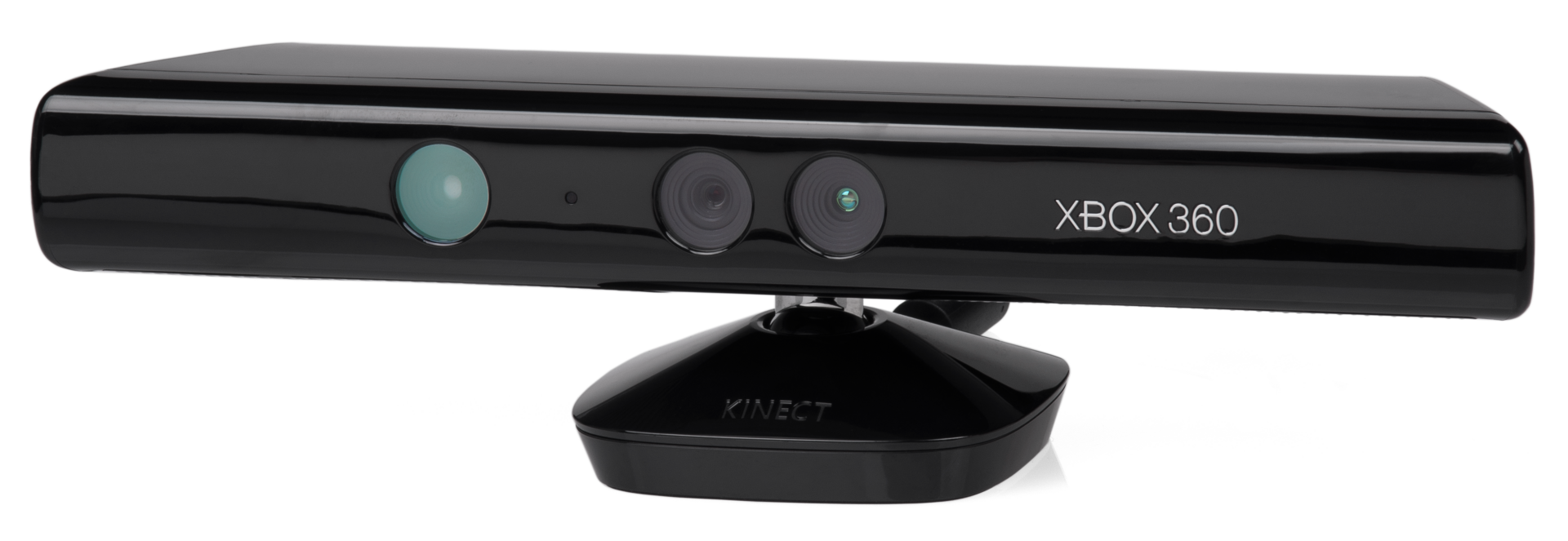
The technical integration at the heart of Kinect Hub involved the Kinect's depth-sensing camera and skeleton-tracking software. The Kinect, originally built for the Xbox console, could map a user's joints in real time without requiring body-worn sensors or markers. In a clinical context, that meant an individual could stand in front of the peripheral at home and have their squats, shoulder presses or balance exercises recorded as a stream of data points: joint angles, velocity and shifts in center of gravity.
Why the chain mattered
The blockchain component was meant to solve a data-integrity challenge. Once the Kinect captured a therapy session, the movement record would be hashed and written to a distributed ledger. The hash acted as a cryptographic fingerprint proving that a specific set of motion data existed at a specific time and had not been altered since. This is distinct from storing the actual video or skeletal data on-chain, a step that would be prohibitively expensive and slow. Instead, the raw footage would likely have been kept off-chain, with the chain serving as a verifiable index. The intended benefit: a physiotherapist or insurer could later check the hash against the ledger to confirm the subject's report was genuine, without having to watch hours of video.
Data type and control
The health data captured would have been biomechanical measurements, not diagnostic images or lab results. This is lower-risk material from a privacy standpoint, but still falls under health-data rules in most jurisdictions. The platform would have needed to decide who held the private keys to the records, how individuals could revoke access, and what would happen to the ledger if the company behind Kinect Hub ceased operations.
The Developers and Commercial Backing
Unknown origin
No one has publicly claimed development of Kinect Hub. The effort could have been an official Microsoft initiative, a third-party startup, or a university research thesis that never progressed beyond a white paper. No company names, founder identities or investment sums are publicly linked to the name. That vacuum is itself telling: most blockchain healthcare ventures that raised venture capital or conducted an initial coin offering left a public trail of press statements, token listings or filings with authorities. Kinect Hub left none.
Microsoft's mixed relationship with Kinect health tools
Microsoft itself had an uneven history with healthcare uses of the Kinect. The company encouraged developers to use the device for non-gaming applications through its Kinect for Windows program, launched in 2012. Researchers deployed the widget for stroke rehabilitation, fall detection in older adults and surgical navigation. Yet Microsoft never released a first-party blockchain platform for health data built on the Kinect. The company's later healthcare AI work, such as its partnership with Epic Systems and its investment in the C2PA content-credentialing coalition, took different technical paths that relied on neither blockchains nor Kinect units.
No sponsor, no supply
With no known sponsor, it is impossible to say whether the venture had the resources to steer through regulatory approval, build a secure data pipeline or acquire the devices it would have needed. The hardware's discontinuation in 2017 would have forced any commercial operation to either stockpile remaining inventory, pivot to a different depth sensor or abandon the concept. The absence of any pivot announcement suggests the effort did not survive that decision point.
Regulatory Status and Data Privacy
No evidence of clearance
There is no record of Kinect Hub receiving clearance from any health authority, such as the U.S. Food and Drug Administration or the European Medicines Agency. Any platform that captures, stores or transmits personal health data would ordinarily need to comply with rules like the U.S. Health Insurance Portability and Accountability Act or the European Union's General Data Protection Regulation. For a blockchain-based system, that compliance gets thorny. The immutability of a public chain conflicts with the right to erasure under GDPR, because data baked into a block cannot be easily deleted. A private or permissioned ledger could ease that tension, but it also dilutes the trust advantage of a decentralized system.
On-chain versus off-chain decisions
The Kinect Hub concept would have needed to decide whether to store any personally identifiable details on-chain or to keep all identifying material off-chain and only write hashes. In the latter case, the oversight burden shifts to the off-chain storage layer, a more conventional problem. But if the project aimed for a token-based incentive mechanism, the token itself might be classified as a security or a medical device, adding another layer of legal risk. None of these questions were publicly resolved because no submissions to regulators, privacy impact assessments or data-processing contracts were published under the Kinect Hub name.
Unresolved privacy promises
Data privacy was a stated priority in many blockchain healthcare proposals from the 2017-2019 window. The typical answer was to use zero-knowledge proofs or homomorphic encryption, methods that allow verification without exposing the underlying information. Whether Kinect Hub adopted any of these techniques is unknown. The project's silence on its regulatory plan suggests it never reached the stage where those specifics would have been made public.
What Happened to Kinect Hub
No verified outcome
The ultimate fate of Kinect Hub is not established. As of October 2023, there is no evidence that the venture fielded a working prototype, carried out a clinical trial, or raised outside funding. It did not pivot to a different sensor, nor did it announce a shutdown. The concept may have been abandoned at the whiteboard stage, or it may exist as a dormant repository on a code-hosting service that has drawn no attention. The absence of a digital footprint is itself a finding: a blockchain effort that generates no press, no GitHub commits and no token transactions is one that likely never achieved product-market fit or even a minimum viable build.
The hardware cliff
The discontinuation of the Kinect device in 2017 was a material event for any undertaking that depended on it. Microsoft stopped making the sensor, and while used stock remained available, a clinical tool intended for provider-grade or insurance-grade use would have needed a guaranteed pipeline of new, calibrated equipment. No successor depth sensor was announced under the Kinect Hub name. The project's silence after 2017 is consistent with an effort that could not source its core component.
A representative ghost of the hype cycle
Kinect Hub remains an example of a class of proposals that surfaced during the blockchain hype cycle: technically plausible, aimed at a genuine problem, but lacking the organizational backing, the regulatory pathway and the equipment sustainability to reach deployment. The question that drew inbound links to this page was whether such a platform ever existed. The answer is that a concept by that name was described, yet it never produced a verifiable outcome.
Key Facts
- Hardware: Microsoft Kinect motion-sensing input device
- Hardware Status: Discontinued by Microsoft in October 2017
- Intended Use Cases: Remote patient monitoring, physical therapy verification, fitness tracking
- Core Technology Stack: Kinect depth-sensing plus blockchain for data integrity
- Developers / Sponsors: Unknown
- Regulatory Clearance: None publicly recorded
- Outcome: Unknown as of October 2023; no evidence of launch or working prototype
- Token or ICO: Unconfirmed