Augmented reality and virtual reality have moved past the pilot phase in a handful of clinical settings, but the gap between what the technology promises and what the evidence supports remains wide. The FDA cleared the first prescription VR therapy for a chronic condition in November 2021, when it authorized AppliedVR's EaseVRx for chronic lower back pain. That clearance gave the field a regulatory anchor. It did not open the reimbursement floodgates. As of October 2023, no permanent, dedicated reimbursement codes for general VR therapy exist beyond specific pilot programs. Long-term clinical outcomes for most AR and VR interventions are not yet established by large-scale longitudinal studies.
Multiple analyst firms projected the AR and VR healthcare market would reach multi-billion dollar figures in the 2020s, with compound annual growth rates often cited above 25 percent. Those projections rest on a real foundation: surgical planning, clinical instruction, pain management, and mental health therapy all have demonstrated uses for immersive technology. But the same projections depend on assumptions about cost reduction, device comfort, and data privacy that have not fully materialized.

Surgical Planning and Navigation
How Surgeons Use Mixed Reality
Microsoft's HoloLens 2 mixed reality visor has been used for surgical planning and clinician education. Surgeons overlay CT or MRI data onto a patient's body, seeing the location of tumors, blood vessels, and organs without looking away at a separate screen. The technology is most mature in neurosurgery, orthopedics, and reconstructive surgery, where spatial relationships matter more than in procedures that follow a fixed path.
VR Rehearsal and Orthopedic Modules
Surgical Theater and PrecisionOS provide VR-based surgical planning and instruction platforms. Surgical Theater's platform lets surgeons rehearse a procedure using a 3D model built from the patient's own scans. PrecisionOS focuses on orthopedic modules that residents can use on a standalone VR device. The advantage over cadavers or plastic models is repeatability: a trainee can run the same procedure 20 times and get objective performance data each time.
The Cost Barrier
The limitation is cost. A HoloLens 2 unit retails for roughly $3,500, and the software integration required to pull patient data into the visor often demands additional IT work. For a large health system that already owns a PACS system and has in-house developers, the marginal cost is manageable. For a community facility, it is not.
Clinical Instruction and Remote Education
The Pandemic Pivot
The global COVID-19 pandemic, declared in March 2020, accelerated the adoption of VR for remote clinical instruction and telehealth. Schools and residency programs that had relied on in-person simulation labs suddenly needed alternatives. VR platforms filled part of that gap, allowing students to practice procedures from home using consumer-grade devices.
Evidence and Limits
PrecisionOS, for example, reported increased demand from orthopedic residency programs during 2020 and 2021. The company's modules cover procedures such as hip replacement and fracture fixation, with haptic feedback through the controller and real-time metrics on angle, force, and duration. Studies comparing VR-trained residents to those taught with conventional methods have shown comparable or slightly better performance on procedural checklists. Sample sizes are small and follow-up periods short.
The Hardware Mismatch
The shift to remote instruction exposed a device problem. Consumer VR units are designed for gaming, not for hour-long sessions. Battery life, weight, and heat buildup all affect the user's ability to complete a full module. Enterprise-focused visors such as the HoloLens 2 address some of those issues but at a price that limits scale.
Pain Management and Mental Health Therapy
A Prescription VR Milestone
AppliedVR's EaseVRx received FDA clearance in November 2021 for chronic lower back pain. The system uses cognitive behavioral therapy principles delivered through a VR device, guiding patients through breathing exercises, relaxation techniques, and pain-distraction scenarios. The clearance was based on a randomized controlled trial that showed a statistically significant reduction in pain intensity compared to a sham VR program.
Exposure Therapy and Workflow
VR exposure therapy for post-traumatic stress disorder, anxiety, and phobias has been studied for more than two decades. The mechanism is straightforward: a therapist controls a virtual environment that gradually exposes the patient to the feared stimulus, from spiders to combat scenarios, while the patient practices coping techniques. The evidence base is stronger for phobias and PTSD than for generalized anxiety. The main barrier to adoption is not efficacy but workflow. Most therapists do not own a VR unit, do not know which software to use, and have no billing code that covers the equipment cost.
Rehabilitation and Remote Monitoring
Physical rehabilitation is another active area. VR systems can gamify repetitive exercises, giving patients real-time feedback on range of motion and timing. Stroke patients can use a VR game that requires them to reach for virtual objects, and the system logs every movement. The data can be shared with a physical therapist remotely, which became important during the pandemic when in-person visits were restricted.
The Role of Major Technology Companies
Meta's Long Bet
Meta acquired Oculus VR in 2014 for approximately $2 billion, a bet that virtual reality would become a mainstream computing platform. Meta has since positioned the Quest line as both a consumer gaming device and a tool for enterprise instruction, including healthcare. The company has not disclosed healthcare-specific revenue. Its focus on the metaverse has not translated into dedicated clinical products in the way that Microsoft's HoloLens has.
Apple's Unproven Entry
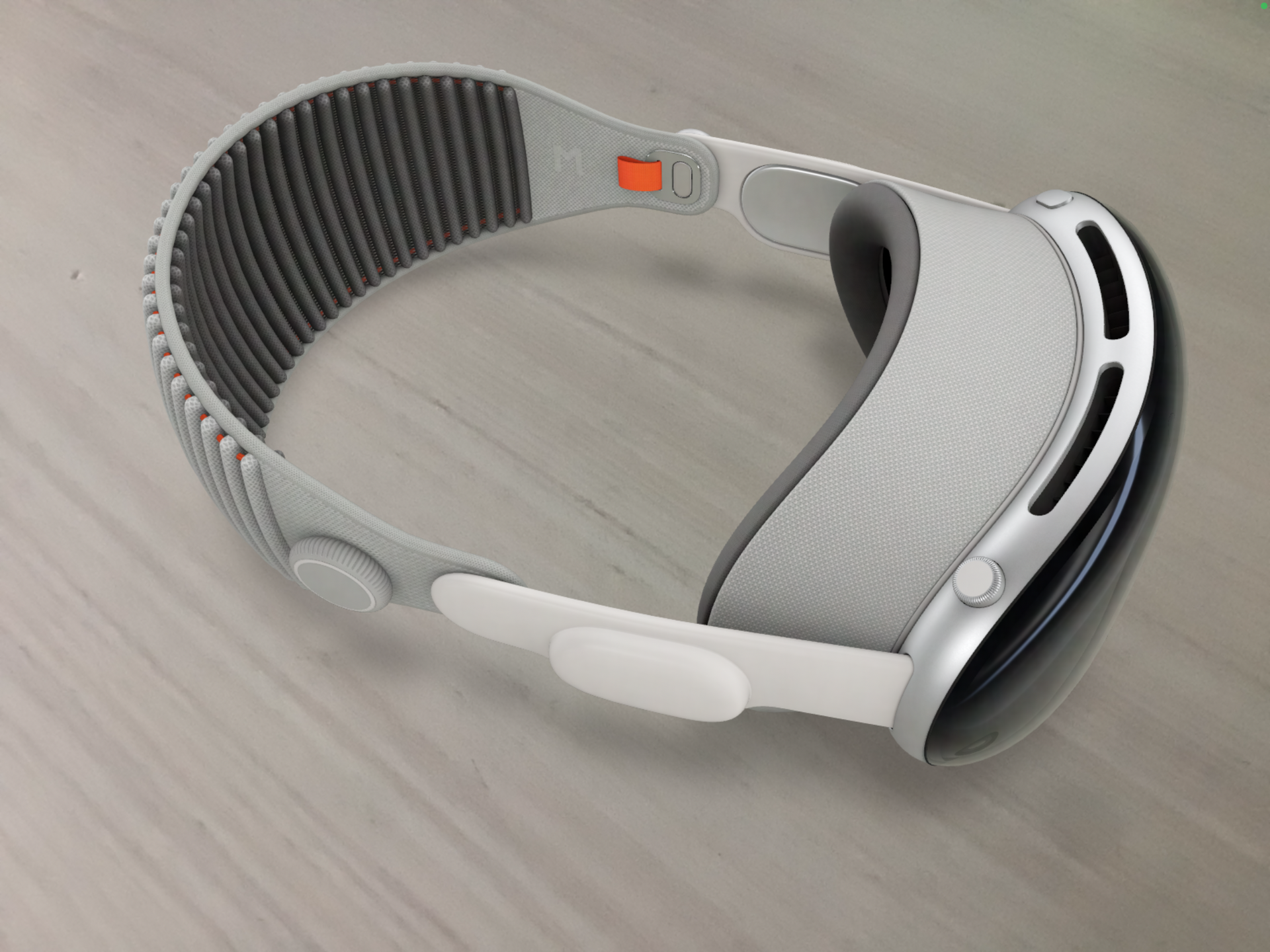
Apple announced the Vision Pro in June 2023, a mixed reality device priced at $3,499. As of October 2023, the product had not shipped, and no healthcare applications had been cleared by the FDA. Apple's history with health features on the Apple Watch suggests the company will pursue FDA clearance for specific use cases. The timeline and clinical targets are not yet public.
Specialist Versus Scale
Dedicated clinical device firms such as Surgical Theater and PrecisionOS operate in a different regulatory and commercial environment than the consumer hardware giants. Their products are designed from the start as regulated instruments, with clinical validation, FDA clearance, and institutional procurement processes built into the business model. They do not have the scale or brand recognition of Meta or Apple. They do not need to sell a million units to be viable.

Key Facts
- First prescription VR therapy for a chronic condition: AppliedVR's EaseVRx for chronic lower back pain, FDA cleared November 2021
- Major hardware platform for surgical planning: Microsoft HoloLens 2, used for overlaying CT/MRI data during surgery
- Meta's entry into VR: Acquired Oculus VR in 2014 for approximately $2 billion
- Pandemic catalyst: COVID-19 pandemic, declared March 2020, accelerated remote instruction and telehealth VR adoption
- Key VR surgical instruction companies: Surgical Theater and PrecisionOS
- Projected market growth: Multiple analyst firms projected multi-billion dollar market with CAGR above 25% in the 2020s
Regulatory Pathways and the FDA
Clearance and Gaps
The FDA has cleared VR-based therapeutic devices, including AppliedVR's EaseVRx, but the regulatory framework for AR and VR instruments is still being built. Most cleared devices fall under the 510(k) pathway, meaning they are substantially equivalent to an existing legally marketed device. That works well for hardware that replaces a conventional monitor or for software that delivers established therapy protocols in a new format. It works less well for novel interventions that do not have a predicate device.
Guidance Without a Database
The FDA issued guidance in 2020 on the use of digital health technologies for remote data acquisition in clinical trials, and it has a pre-certification pilot program for software as a medical device. As of October 2023, the precise number of FDA-cleared AR and VR instruments changes frequently. No single public database tracks them comprehensively. Companies must navigate a case-by-case process that depends on the device's risk classification, its intended use, and the quality of the clinical evidence.
The Reimbursement Wall
The absence of permanent reimbursement codes from CMS and most private insurers is the biggest barrier to scale. A facility that buys a VR system for pain management cannot bill for the device itself, only for the therapist's time. That makes the business case depend on volume and on indirect savings, such as reduced opioid prescribing or shorter stays, which are harder to measure and harder to claim.
Limitations: Cost, Cybersickness, and Data Privacy
Hardware and Integration Expense
The cost of equipment and software integration remains the most frequently cited barrier to adoption. A single HoloLens 2 unit costs about $3,500, and a facility that wants to deploy VR instruction across a residency program needs multiple units, a dedicated space, and IT support. Consumer devices such as the Meta Quest are cheaper, around $500, but they lack the enterprise features, warranty, and support that a clinical setting requires.
The Cybersickness Problem
Cybersickness, a form of motion sickness triggered by a mismatch between visual motion and physical stillness, affects a minority of users but is hard to predict. It can cause nausea, dizziness, and disorientation that persist after the visor is removed. Studies report cybersickness rates between 5 and 30 percent depending on the hardware, the software, and the user's susceptibility. For a clinical setting where the patient is already in distress, a 1 in 10 chance of making them feel worse is a serious problem.
Privacy and Attack Surface
Data privacy and cybersecurity add another layer. AR and VR systems collect detailed biometric data, including eye movement, head position, and hand tracking. That data is valuable for research, but it also creates a larger attack surface than a conventional instrument. Facilities must ensure that the data is encrypted, stored in compliance with HIPAA, and not shared with the hardware manufacturer without explicit patient consent. Not all consumer VR platforms are built with that level of data governance.
Integration With Digital Twins and AI Diagnostics
Simulation Before Incision
The next phase of AR and VR in healthcare involves integration with other digital health tools. Digital twins, which are virtual replicas of a patient's anatomy or physiology built from real-time data, can be rendered in VR or AR to allow clinicians to explore a patient's condition before making a treatment decision. A surgeon could simulate different incision paths on a digital twin of a patient's heart, then use AR to overlay the chosen path during the actual procedure.
AI-Driven Image Labeling
AI-driven diagnostics feed into this workflow by automating the segmentation and labeling of scans. Instead of a radiologist manually tracing a tumor boundary, an AI model can generate the 3D model that the AR system displays. That reduces the time between scanning and surgery, and it removes a source of human variability. It also introduces a new failure mode: if the AI model mislabels a structure, the surgeon sees the wrong information in the visor.
The Integration Gap
The combination of AR, VR, digital twins, and AI is technically feasible today, but it is not routine. Each component requires separate validation, separate regulatory clearance, and separate procurement. A health system that wants to deploy an integrated system must coordinate across multiple vendors and internal departments. As of October 2023, the integrated workflow exists in academic centers and a few large systems. It has not reached community facilities or outpatient clinics at scale.