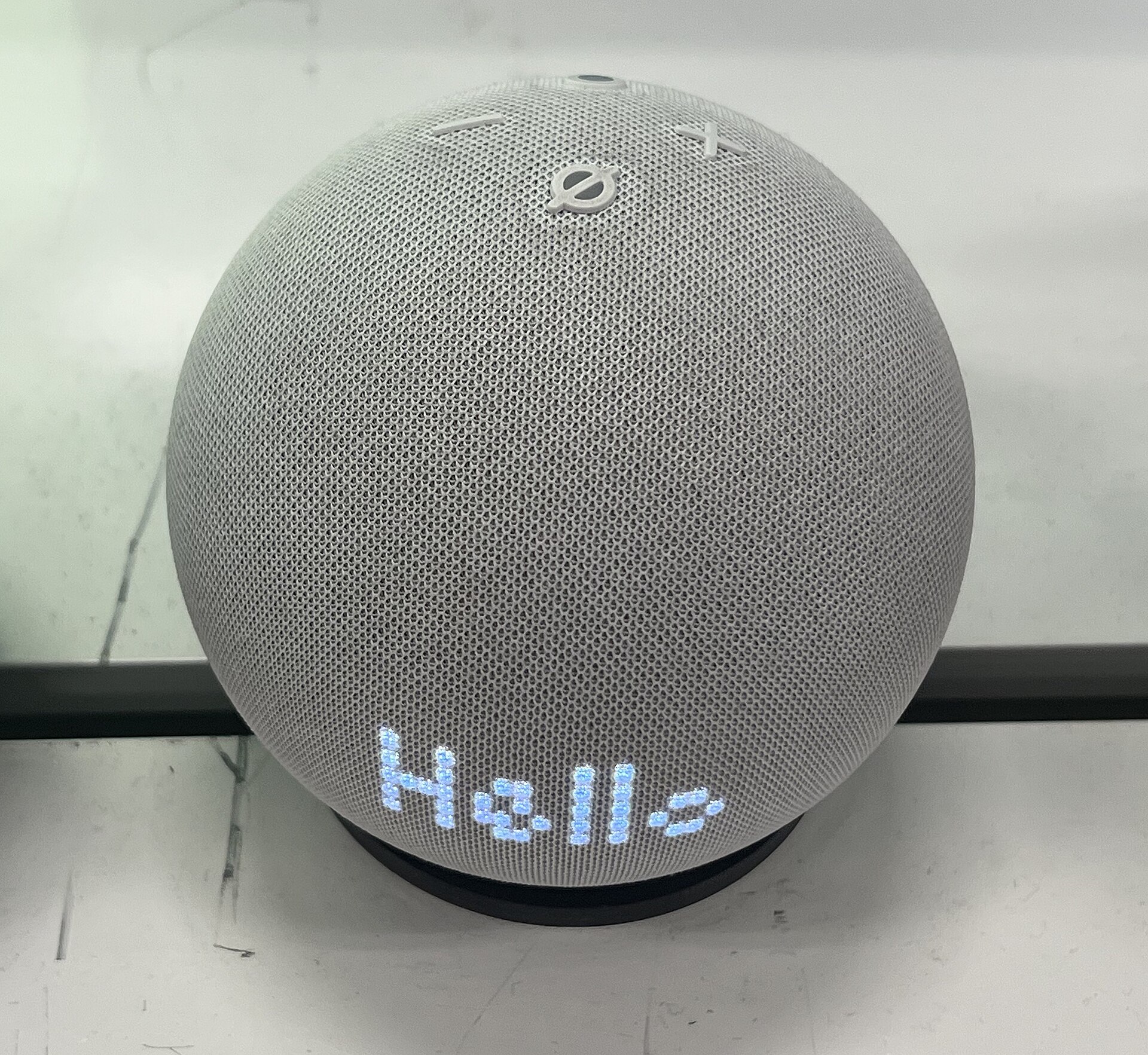
Amazon has not abandoned Alexa. It has radically restructured the organization behind it, cutting thousands of jobs, replacing longtime hardware chief Dave Limp with Panos Panay, and pivoting the product's technical foundation to generative AI. A preview of a new LLM-powered Alexa arrived in September 2023. A commercially viable business model, however, remains unproven.
The trajectory of Alexa illustrates how a consumer technology reaching tens of millions of households can still fail to generate sustainable revenue. The Echo smart speaker launched in 2014 and sparked a wave of adoption that made voice assistants a fixture in American homes. By 2022, internal documents reported by the Wall Street Journal showed Amazon's Worldwide Digital unit, heavily tied to Alexa, posted an operating loss of over $3 billion in the first quarter alone. The company responded by cutting more than 27,000 corporate roles across the entire organization, with the Devices and Services group hit particularly hard.
Now the question is whether large language models can solve the problem that natural language understanding never could: turning ambient voice commands into a profitable operation.

The Consumer Adoption Curve That Outran the Business Model
A Device Without a Profit Engine
The Echo reached consumers in 2014 at a moment when the smartphone market was saturated and the next computing platform was undefined. Amazon priced the device aggressively, often near cost, to achieve household penetration. It succeeded. By 2020, Alexa was embedded in millions of homes, and the brand became a verb for voice commands.
That adoption curve created a problem. Amazon expected voice shopping to be the primary revenue driver. A user who said 'Alexa, order paper towels' would generate a transaction from which Amazon could take a cut. In practice, consumers used Alexa for timers, weather checks, and music playback. They did not trust voice payments for anything beyond low-cost repeat purchases. The skills ecosystem, which Amazon encouraged third-party developers to build, produced thousands of novelty apps but almost no durable revenue. The company subsidized gadgets and cloud infrastructure for a service that generated thin margins from a narrow set of use cases.
$3 Billion Lost in One Quarter
By early 2022, the gap between adoption and monetization had become a chasm. The $3 billion quarterly loss reported in the Wall Street Journal leak was no surprise to industry analysts, but the scale was stark. Amazon lost more money on Alexa in three months than many public companies generate in annual revenue.
Layoffs and Leadership Change at Amazon Devices
The Deepest Cuts Hit the Alexa Team
Amazon announced major layoffs in its Devices and Services organization, which houses Alexa, in November 2022. The cuts continued into 2023 and ultimately exceeded 27,000 corporate roles across the entire company. For the Alexa team specifically, the reductions hit hardware engineering, product management, and the Alexa Skills Kit team that supported third-party developers.
A Microsoft Veteran Takes Over
In August 2023, Dave Limp, the SVP who had led Devices and Services since 2010, announced his retirement. Panos Panay, the executive who built Microsoft's Surface hardware business, joined Amazon in September 2023 to replace him. The leadership change signaled that Amazon recognized the group needed a different strategic direction. Panay's background is in premium hardware and software integration, not in voice-first ambient computing.
From Standalone Platform to Business Enabler
The restructuring meant Alexa was no longer treated as a standalone platform that Amazon would subsidize indefinitely. It became a feature to be integrated into other Amazon services. The question inside the firm shifted from 'how do we get Alexa into more homes' to 'how does Alexa make the rest of Amazon's business more valuable.'
Why the Original Alexa Architecture Could Not Keep Up
The Limits of Intent-Based Understanding
The original Alexa relied on natural language understanding systems built on intent classification and slot filling. A developer defined a fixed set of intents, such as 'SetTimer' or 'PlayMusic', and mapped them to specific actions. The system could handle commands that fell inside those predefined slots. It could not handle novel phrasing, follow-up questions, or ambiguous requests without explicit developer effort.
How Generative AI Differs
Large language models work differently. They generate responses probabilistically from training data, which allows them to interpret a much wider range of phrasing without manual configuration. They can maintain context across multiple turns of conversation. The difference is between a voice assistant that requires every command to be written in advance and one that can infer meaning from a sentence it has never seen.
A Risky Engine Swap Across Millions of Gadgets
Amazon unveiled a new Alexa powered by a large language model at its September 2023 Devices and Services event. The demonstration showed the assistant handling complex, multi-step requests such as writing and sending an email based on a vague instruction. The technical architecture was fundamentally different from the one in place since 2014. The shift required replacing the core natural language engine that millions of devices depended on, a risky migration that could break existing skills and user habits.
Generative AI as a Second Chance for Voice Computing
An Industry-Wide Monetization Failure
Amazon is not alone in facing this monetization problem. Google Assistant and Apple Siri have both struggled to generate meaningful revenue from voice interactions. Google has reduced investment in Assistant-specific hardware, and Apple has positioned Siri primarily as a device feature rather than a profit center. The entire category of standalone voice assistants has failed to find a business model that justifies the infrastructure cost.
Can Amazon Charge for What It Once Gave Away?
Generative AI changes the calculus because it makes voice assistants capable of tasks that consumers might pay for. A voice assistant that can draft documents, control complex smart home routines, and retrieve information from personal data stores is more valuable than one that sets timers. Amazon's challenge is whether it can deliver that capability reliably and whether consumers will pay a subscription fee for a service they have received for free for a decade.
As of October 2023, Amazon had not announced pricing for the new LLM-powered Alexa. The company had not disclosed whether the generative features would require a paid tier. The outcome of this pivot is not yet established. What is clear is that the old model of selling hardware at cost and hoping for voice commerce margins has been abandoned. The new model, whatever it ends up being, will be built on generative AI or it will not be built at all.
Key Facts
- Echo launch year: 2014
- Alexa division quarterly loss (Q1 2022): Over $3 billion (reported by WSJ)
- Amazon corporate layoffs (2022-2023): Over 27,000 roles
- Dave Limp retirement announced: August 2023
- Panos Panay joined Amazon: September 2023
- Generative AI Alexa preview: September 2023
Voice Assistant Monetization Challenges Across Platforms
| Platform | Primary revenue model | Monetization outcome |
|---|---|---|
| Amazon Alexa | Voice shopping and skills | Over $3 billion quarterly loss |
| Google Assistant | Advertising and hardware bundling | Reduced investment in standalone hardware |
| Apple Siri | Device ecosystem lock-in | No direct revenue, positioned as feature |
Frequently Asked Questions
Is Amazon discontinuing Alexa?
No. Amazon has restructured the division, cut costs, and replaced leadership, but the product continues. The company launched a preview of a new generative AI powered Alexa in September 2023.
How much money did Alexa lose?
Internal documents reported by the Wall Street Journal in 2022 showed Amazon's Worldwide Digital unit, heavily tied to Alexa, had an operating loss of over $3 billion in the first quarter of 2022.
Will the new Alexa be a paid subscription?
Amazon had not announced pricing or a subscription model as of October 2023. The company has not confirmed whether the generative AI features will require a paid tier.