In October 2008, a person or group using the name Satoshi Nakamoto published a nine-page white paper titled Bitcoin: A Peer-to-Peer Electronic Cash System. The paper proposed a way to transfer value across the internet without a bank, a payment processor, or any central authority. That proposal became the Bitcoin network, which went live on January 3, 2009, with the mining of its first block, the genesis block. The technology underneath is a blockchain, a type of distributed ledger that has since been repurposed for supply chains, identity systems, trade finance, and the broader vision of Web3.
A blockchain is a decentralized, distributed digital ledger. In a traditional centralized database, one entity controls the master copy. Users must trust that entity not to alter records, delete data, or grant access improperly. A blockchain spreads identical copies of the ledger across many participants, each operating independently. No single participant owns the data. Changes must be accepted by a majority of the network, and the rules for making changes are embedded in code, not in organizational policy.
What follows explains the mechanisms that make blockchains work: the structure of blocks and chains, cryptographic hashing, consensus protocols, and smart contracts. It also distinguishes between public, private, and consortium ledgers, surveys business applications beyond cryptocurrency, and addresses the technology's main limitations.

Blocks, Chains, and Cryptographic Hashing
The name blockchain describes the data structure. Transactions are grouped into blocks. Each block contains a batch of transfers, a timestamp, and a reference to the block that came before it. That reference is a cryptographic hash, a fixed-length string of characters produced by running the block's data through a hash function. Changing even one character in a previous block changes its hash, which breaks the chain since the next block still points to the old hash. The network rejects the mismatch.
A blockchain is a chain of these hash pointers, each block locked to its predecessor. To alter a transfer in an earlier block, an attacker must recalculate the hash for that block, then every subsequent block all the way to the most recent one. On a large system like Bitcoin, that recalculation requires computing power equal to or greater than all the honest miners combined. The practical effect is immutability: not that data cannot be changed, but that tampering is so expensive no rational actor attempts it.
The distributed ledger structure differs from a centralized database in two important ways. First, there is no single point of failure or control. Second, every participant holds a copy of the entire chain, so no participant can claim a different history than the one the network agrees on.
Consensus Protocols: Proof of Work and Proof of Stake
In a centralized system, the database administrator decides which transfers are valid. In a decentralized one, the participants must agree. That agreement is called consensus. Two consensus algorithms dominate: Proof of Work (PoW) and Proof of Stake (PoS).
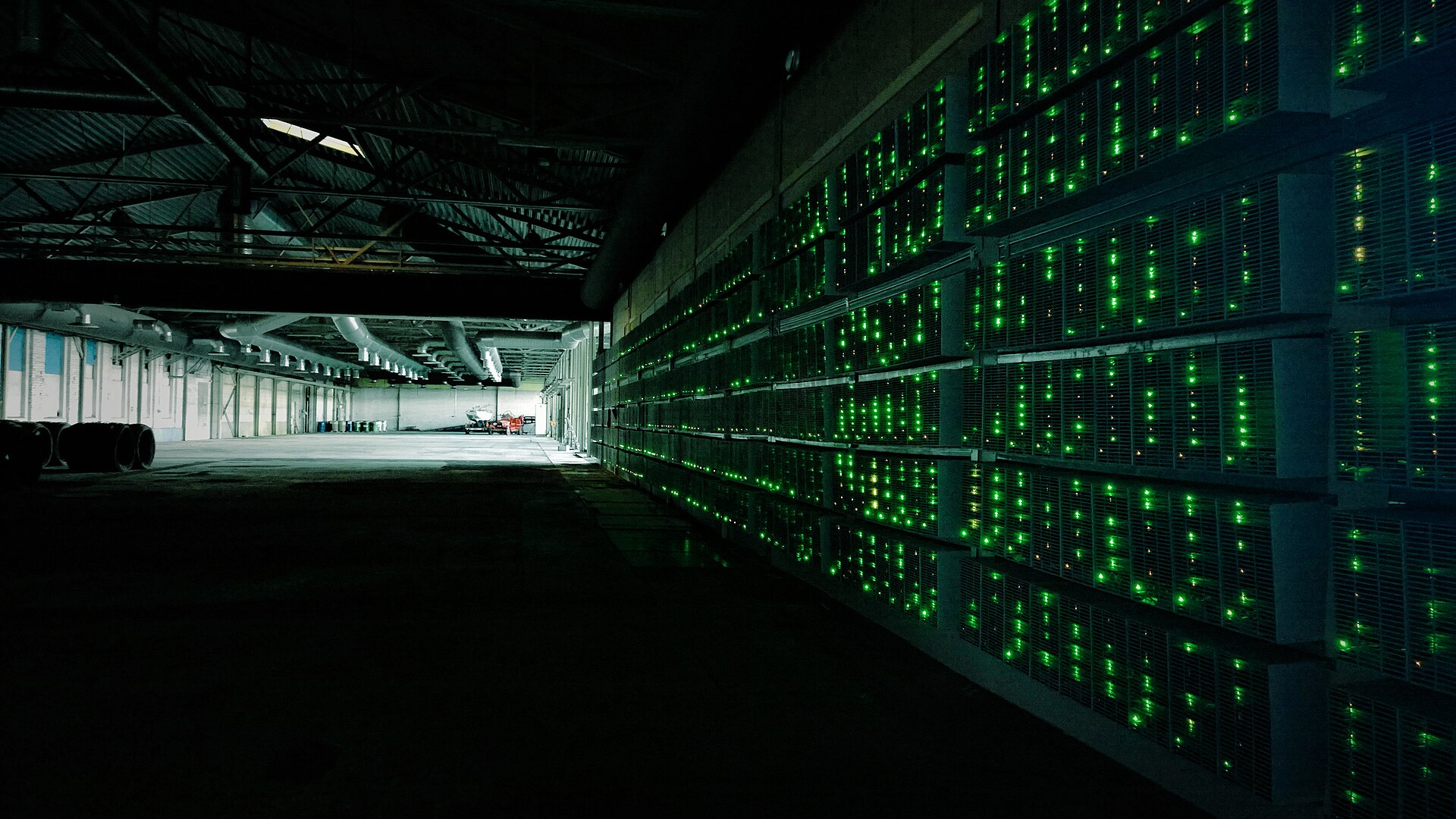
Proof of Work, used by Bitcoin, requires participants called miners to solve a computational puzzle. The puzzle is designed to be difficult to solve but easy to verify. The first miner to find a valid solution broadcasts their block to the network. If other miners accept it, they add the block to their own copies and start working on the next one. The cost of electricity and hardware ensures that a miner cannot cheaply rewrite history. PoW is energy intensive by design. That is a feature, not a bug, but it has drawn criticism as Bitcoin's electricity consumption grew.
Proof of Stake, used by Ethereum since its transition in September 2022, replaces computational work with a financial stake. Participants called validators lock up a quantity of the network's native cryptocurrency as collateral. The protocol selects a validator to propose a new block based partly on the size of their stake. If the validator behaves dishonestly, their stake is forfeited. PoS consumes far less energy than PoW and can process transfers more quickly, though both protocols are slower than centralized payment systems like Visa or Mastercard.
Trustless Agreement
Both mechanisms achieve what is called trustless agreement. Participants do not need to know or trust each other. They trust the rules encoded in the protocol. If a miner or validator breaks the rules, the network ignores their work and, in a PoS system, punishes them financially.
Public, Private, and Consortium Blockchains
Not all blockchains are open to anyone. The design space includes three main types: public, private, and consortium.
Public ledgers, such as Bitcoin and Ethereum, allow anyone to read the ledger, submit transfers, and participate in consensus. They are permissionless. No one needs approval. The trade-off is speed. Public chains process only a few dozen transfers per second since every participant must check every one.
Private blockchains restrict read and write access to a single organization. They are permissioned. A company can run a private chain for internal record keeping, but the point of a blockchain is to remove the need for a central authority. A private blockchain controlled by one entity is essentially a centralized database with expensive cryptography. The term is often misleading. Most enterprise use cases that claim to be private blockchains are better understood as distributed databases with Byzantine fault tolerance.
Consortium blockchains sit between the two extremes. Multiple organizations share control. Each runs a node, and consensus requires approval from a majority of the consortium members. The Hyperledger project, founded by the Linux Foundation in December 2015, is a prominent framework for building consortium chains. Consortium chains are faster than public ones due to having fewer validators, and they preserve some of the trust properties of a distributed system. They are the most common architecture for enterprise applications such as supply chain tracking and trade finance.

Smart Contracts and the Platforms That Run Them
Smart contracts are self-executing programs that run on a blockchain when predetermined conditions are met. The term was coined by cryptographer Nick Szabo in 1994, long before blockchain existed. Szabo envisioned a vending machine: the customer inserts money, the machine dispenses a product. No third party is needed since the agreement is embedded in the machine. Blockchain smart contracts extend that idea to digital agreements that cannot be altered once deployed.
Ethereum, proposed by Vitalik Buterin in late 2013 and launched on July 30, 2015, was the first blockchain designed specifically for smart contracts. Unlike Bitcoin, which has a limited scripting language, Ethereum provides a Turing-complete virtual machine. Developers can write programs that hold funds, enforce deadlines, trigger payments, and interact with other programs. The code is visible on the blockchain, so anyone can audit it.
Smart contracts have enabled decentralized finance, non-fungible tokens, and automated escrow services. They also introduce risk. A bug in a contract can be exploited by anyone who reads the code, since the code is public and the terms cannot be changed. The DAO hack on Ethereum in June 2016, in which an attacker drained about a third of a pooled investment fund, was the result of a smart contract flaw. The Ethereum community responded by creating a new version of the chain, a hard fork, that reversed the theft. The original chain, Ethereum Classic, continued with the transaction history intact.
Enterprise Applications Beyond Cryptocurrency
Supply chain management is the most cited enterprise use case. Multiple parties, such as a raw material supplier, a manufacturer, a logistics provider, and a retailer, share data on a consortium blockchain. Each party writes data only about its own operations but can read the full product history. Disputes about provenance, custody, or timing are resolved by inspecting the shared record rather than reconciling separate spreadsheets. Walmart, for instance, used Hyperledger Fabric to track leafy greens from farm to store, reducing the time needed to trace a product's origin from seven days to 2.2 seconds. (That figure comes from Walmart's own reported trial.)
Digital identity is another active area. A blockchain-based identity system lets individuals control access to their personal data. Instead of logging into a website using a username and password stored on the site's server, a user presents a cryptographic credential that proves an attribute, such as being over 21, without revealing the underlying data. The credential is issued by a trusted authority and verified on chain. No central database holds the user's information, so there is no single point of compromise.
Trade finance uses blockchains to connect importers, exporters, banks, and customs authorities. Letters of credit and bills of lading can be digitized as smart contracts. When a shipping container passes a GPS checkpoint, the smart contract automatically triggers payment. The process, which today can take days or weeks of manual paperwork, is compressed to near real time. Adoption is slow because banking systems are heavily regulated and integration with existing infrastructure is costly.
Limitations and Challenges
Blockchain technology has three widely recognized limitations: scalability, energy consumption, and regulatory uncertainty.
Scalability is the hardest technical problem. Public blockchains process far fewer transfers per second than centralized systems. Bitcoin handles roughly seven transfers per second. Ethereum, before its shift to Proof of Stake, handled about 15. Visa processes around 1,700 on average and can handle far more during peak loads. Solutions such as sharding, which splits the network into parallel chains, and layer-2 protocols, which process transfers off the main chain and settle only the final result, exist but introduce complexity and new security risks.
Energy consumption is a political and environmental concern. Proof of Work blockchains consume electricity proportional to the value of the cryptocurrency they secure. The Bitcoin network at its peak was estimated to use as much electricity as some small countries. Proof of Stake eliminates most of that consumption, but the networks that use PoS today, such as Ethereum after the Merge, are still a small fraction of the total blockchain market cap.
Regulatory uncertainty affects every blockchain application that touches financial services. Securities laws, anti-money laundering rules, and tax treatment vary by jurisdiction and change frequently. As of May 2024, the European Union had adopted the Markets in Crypto-Assets Regulation, but the United States had no comprehensive federal framework. Companies building on blockchain must navigate conflicting guidance from regulators and the risk that a project deemed compliant today could be noncompliant tomorrow. Adoption does not fail because the technology does not work. It fails because the legal and operational cost of uncertainty outweighs the benefit.