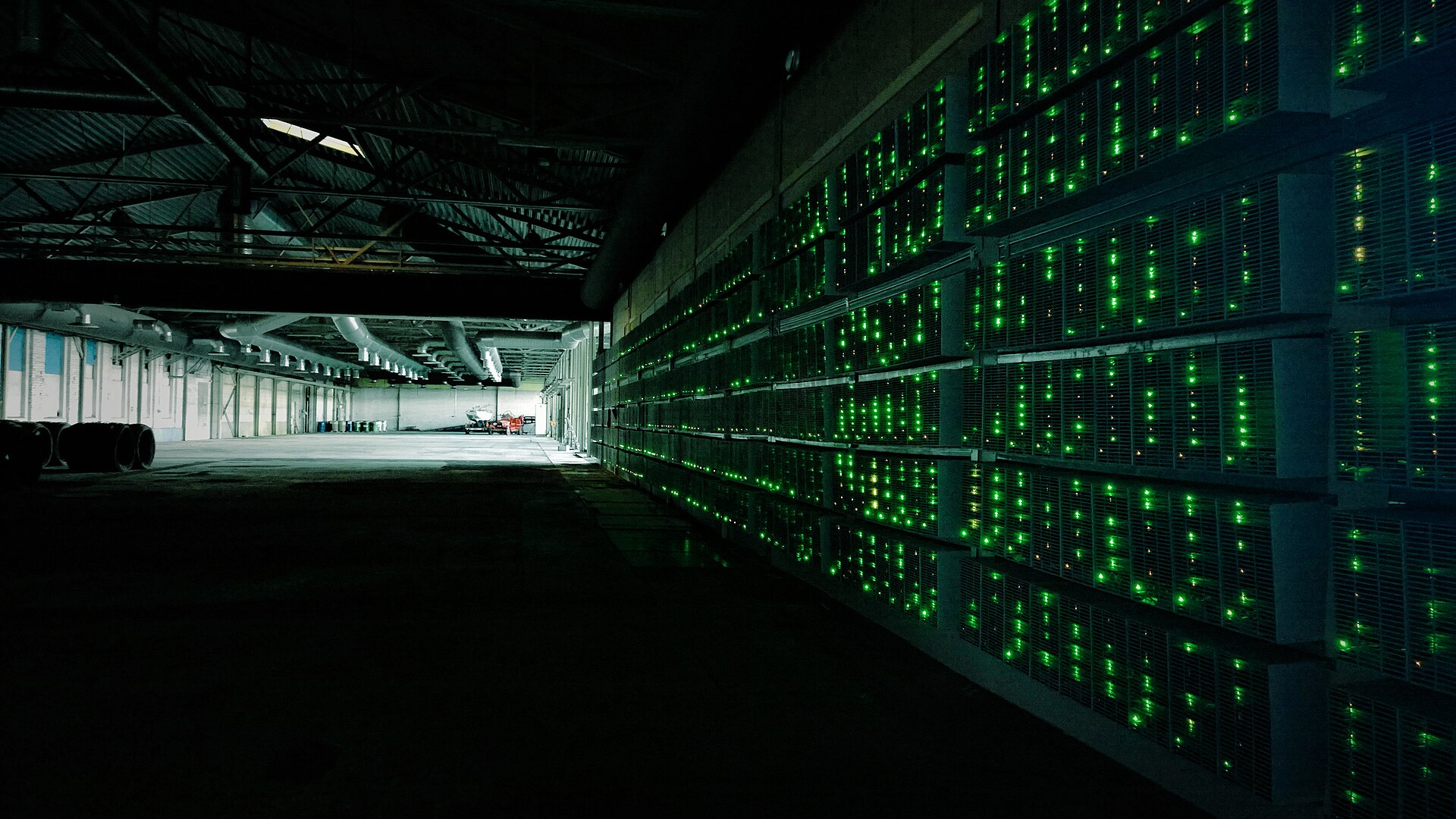
In 2020, blockchain and crypto moved from a story of survival after the 2018-2019 crash to one of institutional validation, regulatory confrontation, and the birth of a new financial layer called decentralized finance. The year ended with a U.S. securities lawsuit against Ripple Labs, a major corporate treasury bet on Bitcoin by MicroStrategy, and a Chinese central bank racing to pilot its e-CNY. Each of these developments had a known outcome by early 2025.
The SEC sued Ripple Labs on December 22, 2020, alleging that XRP was an unregistered security. That case concluded in July 2023 when a summary judgment ruled that XRP is not a security when sold on public exchanges, but is a security when sold to institutional investors. The SEC dropped charges against Ripple executives in October 2023, and the court ordered Ripple to pay a civil penalty in August 2024. The penalty, set by the court, ranged around $125 million; consult the final judgment for the exact figure. MicroStrategy, which announced on August 11, 2020 that it had adopted Bitcoin as its primary treasury reserve asset with a purchase of 21,454 BTC, continued buying aggressively. The company disclosed the acquisition cost in a band near $250 million; see its SEC filings for precise amounts. It rebranded to Strategy in February 2025 and held over 499,000 BTC as of March 2025. PayPal's cryptocurrency service, announced on October 21, 2020, expanded and eventually led to the launch of its own PayPal USD stablecoin on Ethereum in August 2023.

The DeFi Summer and the Explosion of Total Value Locked
Decentralized finance was the defining growth story of 2020. The concept of lending, borrowing, and trading assets through smart contracts rather than intermediaries existed before, but it reached an inflection point in June 2020 when Compound launched its COMP governance token and began distributing it to users who supplied or borrowed assets. That mechanism, known as liquidity mining, triggered a cascade of similar token launches from protocols including Uniswap and MakerDAO.
By the end of December 2020, the total value locked in DeFi protocols had reached approximately $15 billion. That figure was effectively zero 18 months earlier. The growth came with risks: smart contract bugs, price oracle manipulation, and the collapse of poorly designed protocols occurred throughout the year. But the aggregate number signaled that capital was willing to trust code over counterparties, at least in small enough increments. The DeFi summer also strained the Ethereum network, pushing transaction fees to levels that made small trades uneconomical and sharpening the urgency around Ethereum 2.0.
Ethereum 2.0 and the Proof-of-Stake Chain Launch
Ethereum's transition from proof-of-work to proof-of-stake began in earnest on December 1, 2020, with the launch of the proof-of-stake chain. This was the first phase of Ethereum 2.0, a multi-year upgrade intended to improve the network's scalability, security, and energy efficiency. The new chain introduced proof-of-stake as a separate layer that would eventually merge with the Ethereum mainnet.
That merger, known as The Merge, was completed in September 2022. It reduced Ethereum's energy consumption by roughly 99.9% and ended the era of GPU mining for the network's native asset, Ether. In 2020, the proof-of-stake chain launch was largely symbolic. It did not change how users interacted with Ethereum. But it established the technical foundation for the transition and gave the community a concrete milestone after years of delays. The event was closely watched by institutional investors who had cited proof-of-work's energy profile as a barrier to allocating capital to on-chain assets.
PayPal Brings Crypto to Its User Base
PayPal's October 21, 2020 announcement that it would allow US account holders to buy, hold, and sell Bitcoin, Ethereum, Bitcoin Cash, and Litecoin directly from their accounts was arguably the single most important signal of mainstream adoption that year. PayPal operated a vast active account base. The service did not initially allow users to withdraw their crypto to external wallets, meaning PayPal acted as a custodian rather than a true on-ramp to self-sovereign ownership.
That limitation drew criticism from crypto purists, but the practical effect was to put a buy button for virtual assets in front of a mass audience that had never used an exchange. PayPal's entry also put pressure on traditional banks and payment processors to offer similar services. The company later expanded the service and in August 2023 launched its own PayPal USD stablecoin on Ethereum, built in collaboration with Paxos. The stablecoin represented a full-circle moment: the payment giant that had helped popularize crypto buying now issued its own blockchain-based dollar token.
Enterprise Blockchain: Hyperledger Besu and the EEA Restructuring
While public blockchain networks captured headlines, enterprise blockchain consortia continued to evolve in 2020. Hyperledger Besu, an Ethereum client designed for enterprise use, matured as a project under the Linux Foundation's Hyperledger umbrella. Besu allowed organizations to run private Ethereum networks with permissioned access while maintaining compatibility with the public Ethereum ecosystem. It was adopted by several financial institutions for trade finance and settlement trials.
The Enterprise Ethereum Alliance underwent a restructuring in 2020 to refocus its efforts on technical specifications and interoperability standards rather than marketing and membership growth. The EEA had launched in 2017 with broad ambitions and dozens of corporate members, but by 2020 the consortium had lost momentum as many of its largest members shifted resources to private blockchain projects or abandoned the technology altogether. The restructuring was an acknowledgment that enterprise blockchain had not lived up to its 2017-2018 hype. The technology found niche uses in supply chain tracking and interbank settlement, but the vision of replacing corporate databases with distributed ledgers had not materialized at scale.

The OCC Opens the Door for Bank Crypto Safekeeping
The US Office of the Comptroller of the Currency published an interpretive letter on July 22, 2020 that clarified national banks and federal savings associations could provide cryptocurrency safekeeping services for their customers. The letter did not create new regulation. It interpreted existing authority under the National Bank Act to cover virtual assets, treating crypto safeguarding as a form of safekeeping akin to physical asset storage.
Immediate Impact on Banks
The practical effect was immediate. Banks that had been hesitant to touch cryptocurrency due to regulatory uncertainty now had a clear signal from their primary federal regulator that safekeeping was permissible. Several large banks, including Bank of New York Mellon, subsequently announced crypto safeguarding initiatives. The OCC letter was part of a broader trend under the Trump administration's OCC leadership, which also included guidance on stablecoin reserves and bank partnerships with fintech companies.
Competitive Shift in the Safekeeping Market
Critics argued that the interpretive letter did not go far enough because it did not address whether banks could hold crypto on their own balance sheets or lend against it. But for the safekeeping market, which was dominated at the time by specialist firms like Coinbase Custody and BitGo, the OCC's action represented a significant competitive shift.
China's E-CNY Pilots and the Global CBDC Race
China's e-CNY moved from theory to practice in 2020. The People's Bank of China launched its first major public pilot program in Shenzhen in October 2020, distributing 10 million e-CNY to 50,000 residents through a lottery system. Participants could spend the digital currency at designated merchants using a mobile wallet application. The pilot was not a full launch. It was a controlled test designed to assess the technology's performance under real transaction volumes.
Centralized Architecture and Surveillance
China's approach to its central bank digital currency differed from the decentralized ethos of cryptocurrency. The e-CNY is a liability of the central bank, not a permissionless asset. The government can track all transactions, and the system is designed to give the People's Bank of China visibility into spending patterns that cash does not provide.
Global Pressure and the Western Response
By the end of 2020, China had extended its pilots to several other cities and expanded the list of participating merchants. The speed of China's progress put pressure on other central banks, particularly the European Central Bank and the Federal Reserve, to accelerate their own CBDC research. No major Western economy had launched a retail CBDC pilot by the end of 2020, but China's head start reshaped the global conversation about the future of money.
Key Facts from 2020
- PayPal crypto announcement: October 21, 2020: US users could buy, hold, and sell Bitcoin, Ethereum, Bitcoin Cash, and Litecoin
- OCC custody letter: July 22, 2020: National banks permitted to provide cryptocurrency custody services
- SEC v. Ripple filed: December 22, 2020: SEC alleged XRP was an unregistered security
- MicroStrategy Bitcoin purchase: August 11, 2020: 21,454 BTC as primary treasury reserve
- DeFi total value locked: Approximately $15 billion by end of December 2020
- China digital yuan pilot: October 2020: 10 million e-CNY distributed to 50,000 residents in Shenzhen
- Ethereum 2.0 proof-of-stake chain: December 1, 2020: Proof-of-stake chain went live
- FTX growth: Founded 2019; became a major derivatives platform in 2020
How the Major 2020 Stories Ended
| Event | Year | Outcome |
|---|---|---|
| SEC v. Ripple | 2020 | July 2023: XRP not a security on public exchanges, is a security to institutions. SEC dropped executive charges Oct 2023. Penalty set by court Aug 2024; see final judgment for amount. |
| MicroStrategy Bitcoin strategy | 2020 | Company rebranded to Strategy Feb 2025. Held over 499,000 BTC as of March 2025. |
| PayPal crypto service | 2020 | Expanded; launched PayPal USD stablecoin on Ethereum Aug 2023. |
| Ethereum proof-of-stake chain | 2020 | Merged with mainnet Sep 2022; completed proof-of-stake transition. |
| FTX growth | 2020 | Collapsed Nov 2022. Founder Sam Bankman-Fried convicted Nov 2023, sentenced to 25 years Mar 2024. |
Frequently Asked Questions
What was the total value locked in DeFi at the end of 2020?
Roughly $15 billion. Different data aggregators used varying methodologies, so the precise figure on any single day is not reliably established.
Did the SEC win its case against Ripple?
Partly. In July 2023 a court ruled that XRP is not a security when sold on public exchanges, but is a security when sold to institutional investors. The SEC dropped charges against Ripple executives in October 2023, and the court ordered Ripple to pay a civil penalty in August 2024. The penalty was set in a band near $125 million; consult the final judgment for the exact figure.
Could users withdraw crypto from PayPal in 2020?
No. The initial service allowed users to buy, hold, and sell crypto within PayPal but did not permit withdrawal to external wallets. That limitation was later relaxed.