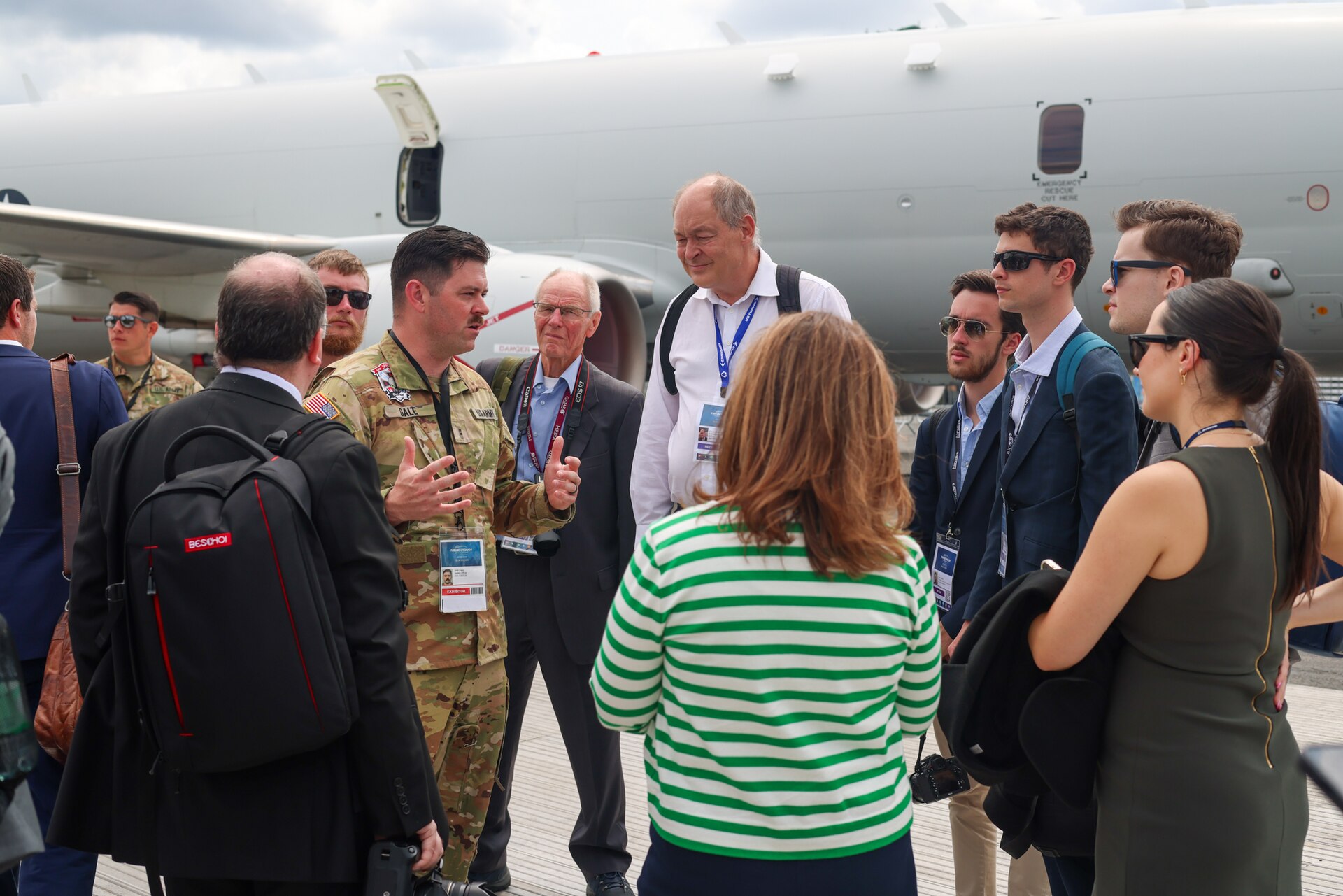
The 2024 Farnborough International Airshow, held from 22 to 26 July at Farnborough Airport in Hampshire, closed with a quieter order book than the 2022 edition, which racked up over USD 93 billion in disclosed commitments. Supply chain bottlenecks across the industry kept many would-be buyers on the sidelines. Even so, the week yielded a handful of significant commercial orders, a cluster of sustainable aviation fuel (SAF) offtake agreements, and a hydrogen fuel cell development partnership that will shape the UK aerospace sector for the next decade.
Boeing secured a notable commitment for the 777X freighter, reinforcing its bet on cargo growth. Airbus disclosed further increases to A350 build rates. The UK government confirmed continued backing for the Aerospace Technology Institute (ATI) programme, which funds net-zero airliner technology. The event did not match the 2022 frenzy, but it clarified where the industry is placing its long-term money: sustainable propulsion, freight variants, and stable output.

Headline Aircraft Orders and Deal Values
Boeing Bets on Freight
The 2024 show lacked the blockbuster airline orders that dominated previous cycles. Boeing disclosed a firm order for the 777X freighter, a variant that has drawn cargo operators seeking higher payload and better fuel efficiency than older freighters. The deal was one of the largest single-type commitments of the week.
Airbus Signals Confidence
Airbus responded by stating it would raise A350 build rates, a signal that the manufacturer sees enough demand to justify increasing output despite the supply bottlenecks that have constrained deliveries across the industry.
Leasing Firms and Regional Carriers Step In
A handful of smaller orders came from leasing companies and regional carriers, but the total dollar value across all commercial announcements fell well short of 2022. Industry analysts at the show noted that many airlines are still absorbing jets ordered before the pandemic and are reluctant to commit to new delivery slots that stretch into the 2030s. The UK aerospace supply chain, which employs over 100,000 people directly according to ADS Group, will benefit more from the build-rate increases on existing programmes than from new launch customers.
Sustainable Aviation Technologies and Net-Zero Initiatives
SAF Offtake Deals Proliferate
Sustainable aviation fuel, hydrogen propulsion, and electric flight were the dominant technology themes of the 2024 show. A number of airlines and fuel producers disclosed SAF offtake agreements, committing to purchase specified volumes of sustainable fuel over multi-year periods. These deals are intended to give SAF producers the revenue certainty needed to scale output, which remains a fraction of global jet fuel consumption.
Hydrogen Fuel Cell Partnership Takes Centre Stage
The most significant technology partnership revealed at the show involved a major hydrogen fuel cell development programme. The collaboration, which includes aerospace manufacturers and energy companies, aims to produce a hydrogen-electric propulsion system that could power regional aircraft.
Rolls-Royce and ATI Chart the Path
Rolls-Royce Holdings was active in this area, presenting progress on its own hydrogen combustion engine tests and small modular reactor concepts for aviation. The UK Aerospace Technology Institute, which receives government funding, will coordinate a number of these net-zero technology development streams. The institute's programme is designed to keep the UK at the centre of next-generation airframe design, particularly for wing and propulsion systems.
Government Role and Defence Aerospace Developments
Whitehall Backs Low-Carbon Technology
The UK government used the airshow to confirm continued funding for the ATI programme, which backs research into low-carbon airliner technology. No specific grant amounts were disclosed at the event, but the commitment signals that Whitehall views aerospace as a strategic manufacturing sector worth protecting. The UK is a major manufacturing base for Airbus wings, designed and built at Filton and Broughton, and the government wants to ensure those factories produce components for hydrogen or hybrid-electric planes rather than becoming obsolete.
Defence Takes a Prominent Role
Defence aerospace also featured prominently. Several military programmes were discussed, including upgrades to existing platforms and new unmanned systems. The UK Ministry of Defence used the show to highlight progress on the Global Combat Air Programme, though no new contracts were confirmed. Defence contractors emphasised the need for sovereign manufacturing capability in areas such as engines and avionics, arguing that supply chain resilience matters as much as unit cost. The discussions reflected a broader theme of the 2024 show: the tension between near-term output constraints and long-term investment in new technologies.
Engine Programmes, eVTOL Concepts, and Supply Chain Realities
Engine Makers Show Breakthroughs, Not Launches
Engine manufacturers used Farnborough to present technological breakthroughs rather than new product launches. Rolls-Royce showcased progress on its UltraFan demonstrator, a geared turbofan design that promises double-digit fuel burn improvements over current engines. The company also discussed its work on hydrogen combustion and electric propulsion, positioning itself as a supplier for multiple future airframe architectures rather than betting on a single technology.
eVTOL Sector Tempers Expectations
Urban air mobility and electric vertical take-off and landing (eVTOL) concepts were present, though with less fanfare than at previous airshows. A handful of eVTOL developers displayed mock-ups and revealed partnerships with infrastructure providers, but no major build orders were signed. The sector's timeline for commercial service remains uncertain, and the industry discussions at Farnborough reflected a more cautious tone than in 2022.
Supply Chain Constraints Dominate the Halls
Supply chain challenges dominated conversations in the exhibition halls. Aerospace manufacturers reported that labour shortages and component delays continue to limit build rates. The UK aerospace workforce, which ADS Group numbers at over 100,000, is struggling to recruit enough engineers and technicians to meet demand. The 2024 show made clear that the industry's biggest constraint is not orders but the ability to build what has already been sold.
Key Facts
- Event: Farnborough International Airshow 2024
- Dates: 22 to 26 July 2024
- Location: Farnborough Airport, Hampshire, UK
- Frequency: Biennial, alternates with Paris Air Show
- UK aerospace employment: Over 100,000 direct jobs (ADS Group)
- 2022 show deal total: Over USD 93 billion
- Outcome: Concluded 26 July 2024. Lower order volume than 2022 due to supply chain constraints. Key deals: Boeing 777X freighter order, Airbus A350 production rate increase, hydrogen fuel cell partnership, SAF offtake agreements, UK government ATI programme funding confirmed.