The next generation of electric vehicle charging does not involve a cable. Inductive pads, megawatt-level connectors for trucks, and bidirectional systems that let cars feed power back to buildings and grids are all in active development or early deployment. Each solves a problem the standard plug does not: convenience, speed for heavy transport, and energy storage at grid scale.
The technical principles are established. SAE International published the J2954 standard for wireless power transfer for light-duty EVs in October 2020, covering power levels up to 11 kW. CharIN formed the Megawatt Charging System (MCS) task force in 2018 to develop a standard for heavy-duty trucks at up to 3.75 megawatts. And the Nissan Leaf, one of the first mass-market EVs, offered vehicle-to-grid (V2G) capability using the CHAdeMO protocol, which supported two-way power flow from its inception.
Commercial readiness varies. No major automaker has definitively committed to factory-installed wireless charging on a mass-market car. Megawatt charging faces connector and infrastructure battles. V2G is caught in regulatory and utility proceedings that, outside California, have not resolved interconnection standards. Here is the state of play as of May 2024.

How Wireless Charging Works and Where It Falls Short
The basic physics
Inductive charging uses a magnetic field to transfer energy between a ground pad and a receiver pad on the car. The SAE J2954 standard specifies a maximum ground clearance of 250 mm and a maximum misalignment tolerance of 100 mm in the direction of travel and 150 mm laterally. The driver must park reasonably close to the pad, though the system does not require millimeter precision.
Power and efficiency
The power ceiling is 11 kW, comparable to a typical Level 2 home unit. Real-world efficiency versus wired Level 2 charging is not established in the public literature with confidence. The 90 to 93 percent figures often cited come from lab settings. Actual performance depends on alignment, ground clearance, and pad design.
Factory commitment is missing
WiTricity, a US company, has licensed its technology to several automakers including Hyundai and General Motors. No major automaker has yet announced a specific model year for a factory-fitted wireless option on a mass-market vehicle. The technology is available. The commercial timeline for passenger wireless charging as a factory option remains uncommitted.
Megawatt Charging for Trucks: The MCS Standard and Its Hurdles
The target
Charging a heavy-duty electric truck at 3.75 megawatts would add roughly 200 miles of range in 30 minutes, the pace diesel fleets expect. CharIN's MCS task force, formed in 2018, is working on a connector and communication protocol to make that possible. The final ratified power ceiling of the standard is not yet public.
A shifting connector landscape
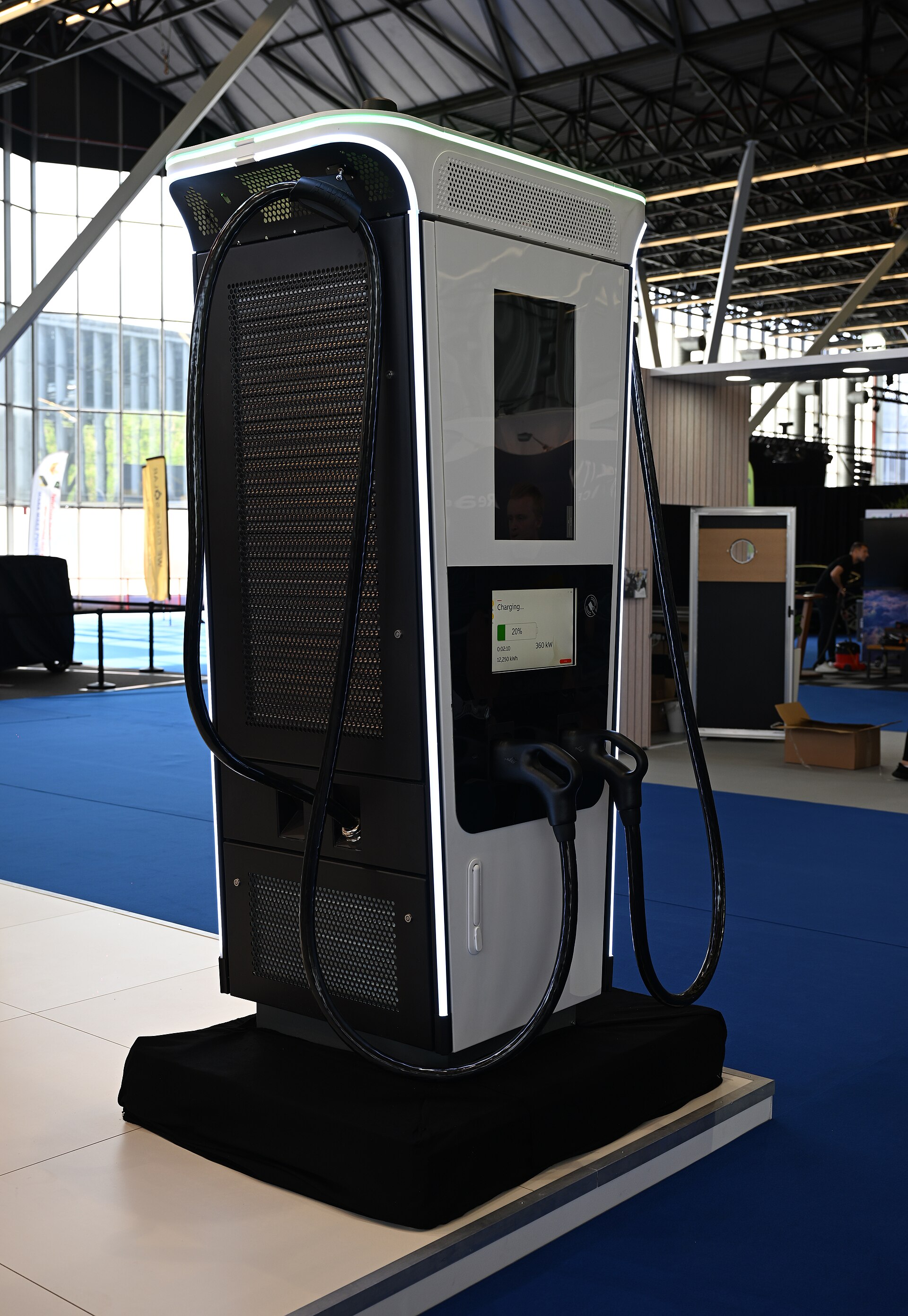
In 2023, Tesla announced it would adopt the North American Charging Standard (NACS), leading many other automakers to follow. That reshapes expectations for passenger vehicles but does not directly affect MCS, which targets heavy-duty transport. ABB E-mobility introduced the Terra 360 in 2022, a modular unit capable of delivering up to 360 kW. That is an order of magnitude below MCS but still among the fastest commercially available hardware for cars.
The semiconductor advantage
Silicon carbide (SiC) and gallium nitride (GaN) semiconductors are the enabling components. They shrink hardware size and increase power density compared to traditional silicon IGBT-based designs. The specific dollar-per-kilowatt cost premium for SiC-based units versus silicon IGBT-based units in 2024 is not publicly available in a reliable form, but the direction of travel is clear: SiC and GaN let manufacturers fit higher power into smaller enclosures, which matters for both megawatt hardware and onboard vehicle electronics.
Bidirectional Charging: V2G, V2H, and V2L Are Not the Same Thing
Three distinct modes
Vehicle-to-grid (V2G) sends power from the car battery back to the utility grid, typically in response to a price signal or grid-balancing request. Vehicle-to-home (V2H) powers a building, often through a transfer switch that isolates the home from the grid during an outage. Vehicle-to-load (V2L) supplies power to external devices via an onboard outlet and requires no grid interconnection. They are not interchangeable.
Vehicles that deliver
The Ford F-150 Lightning, introduced in 2022, features Ford's Intelligent Backup Power system, enabling V2H at up to 9.6 kW. That is enough to run a typical home for days if the load is managed. The Nissan Leaf has offered V2G via CHAdeMO since its early generations, though the protocol's limited adoption outside Japan and parts of Europe constrained its real-world use.
Regulation lags the hardware
The European Union's Alternative Fuels Infrastructure Regulation (AFIR), adopted in 2023, mandates minimum charging speeds and payment methods for public infrastructure. It does not directly mandate V2G capability, but it pushes toward smarter, more connected units that could support two-way flows. The precise number of V2G-capable public stations deployed globally is not reliably known. Regulatory proceedings in individual US states outside California have not resolved interconnection standards, which slows utility approval and tariff design.
Pilot Projects and the Road Ahead
Dynamic wireless on public roads
The most visible wireless pilot is Electreon's 1.6 km stretch of road in Detroit, Michigan, opened in 2023. It is a dynamic system embedded in public asphalt: vehicles equipped with receivers can charge while driving. Electreon, an Israeli company, has deployed multiple similar projects elsewhere. Whether dynamic wireless will ever be commercially viable for private passenger cars as opposed to fixed-route commercial fleets is not established.
Static wireless in fleet depots
Taxi fleet trials have tested static wireless charging at depots. The convenience of no cable and no moving parts appeals to operators who cycle vehicles through shifts. But the cost premium for the ground pads and receivers, plus the lack of a committed factory fit, keeps deployment small.
What each technology needs next
The practical timeline for mass deployment is not a single date. Wireless needs an automaker to commit to a model year. Megawatt needs a ratified standard and the build-out of corridor infrastructure. V2G needs regulatory clarity and utility business models that compensate vehicle owners for battery wear. As of May 2024, all three remain in the transition between pilot and product.
Charging Technologies Compared
| Technology | Standard or Protocol | Max Power | Current Status |
|---|---|---|---|
| Wireless inductive (light-duty) | SAE J2954 (Oct 2020) | 11 kW | Standard published; no factory-fit commitment from major automaker |
| Megawatt (heavy-duty) | MCS (CharIN task force 2018) | Up to 3.75 MW (final ceiling not ratified) | Standard in development; connector landscape shifting with NACS adoption |
| V2G (bidirectional) | CHAdeMO (early support); CCS bidirectional standard emerging | Varies by vehicle; Ford F-150 Lightning V2H at 9.6 kW | Regulatory and utility interconnection standards unresolved outside California |
Key Facts
- SAE J2954 wireless standard published: October 2020, power up to 11 kW, max ground clearance 250 mm, misalignment tolerance 100 mm longitudinal / 150 mm lateral
- MCS task force launched: 2018 by CharIN, targeting up to 3.75 MW for heavy-duty EVs
- ABB Terra 360 launched: 2022, modular charger delivering up to 360 kW
- Ford F-150 Lightning V2H: 2022 model year, Intelligent Backup Power at up to 9.6 kW
- Electreon Detroit dynamic wireless road: 1.6 km stretch opened 2023
- Tesla NACS adoption announced: 2023, leading many automakers to adopt the North American Charging Standard
Frequently Asked Questions
Is wireless EV charging as efficient as plugging in?
Lab tests often cite 90 to 93 percent efficiency for wireless systems, but real-world figures depend on alignment, ground clearance, and pad design. The exact efficiency compared to wired Level 2 charging in everyday conditions is not established with confidence in public data.
Which automakers offer bidirectional charging today?
Ford offers V2H on the F-150 Lightning. Nissan offered V2G via CHAdeMO on the Leaf. Hyundai and General Motors have licensed wireless charging technology from WiTricity but have not announced production vehicles with factory-fitted wireless or bidirectional capability.
When will megawatt charging be available for trucks?
The MCS standard is still under development. CharIN's task force launched in 2018, and the final power ceiling has not been ratified. Infrastructure build-out will follow ratification.