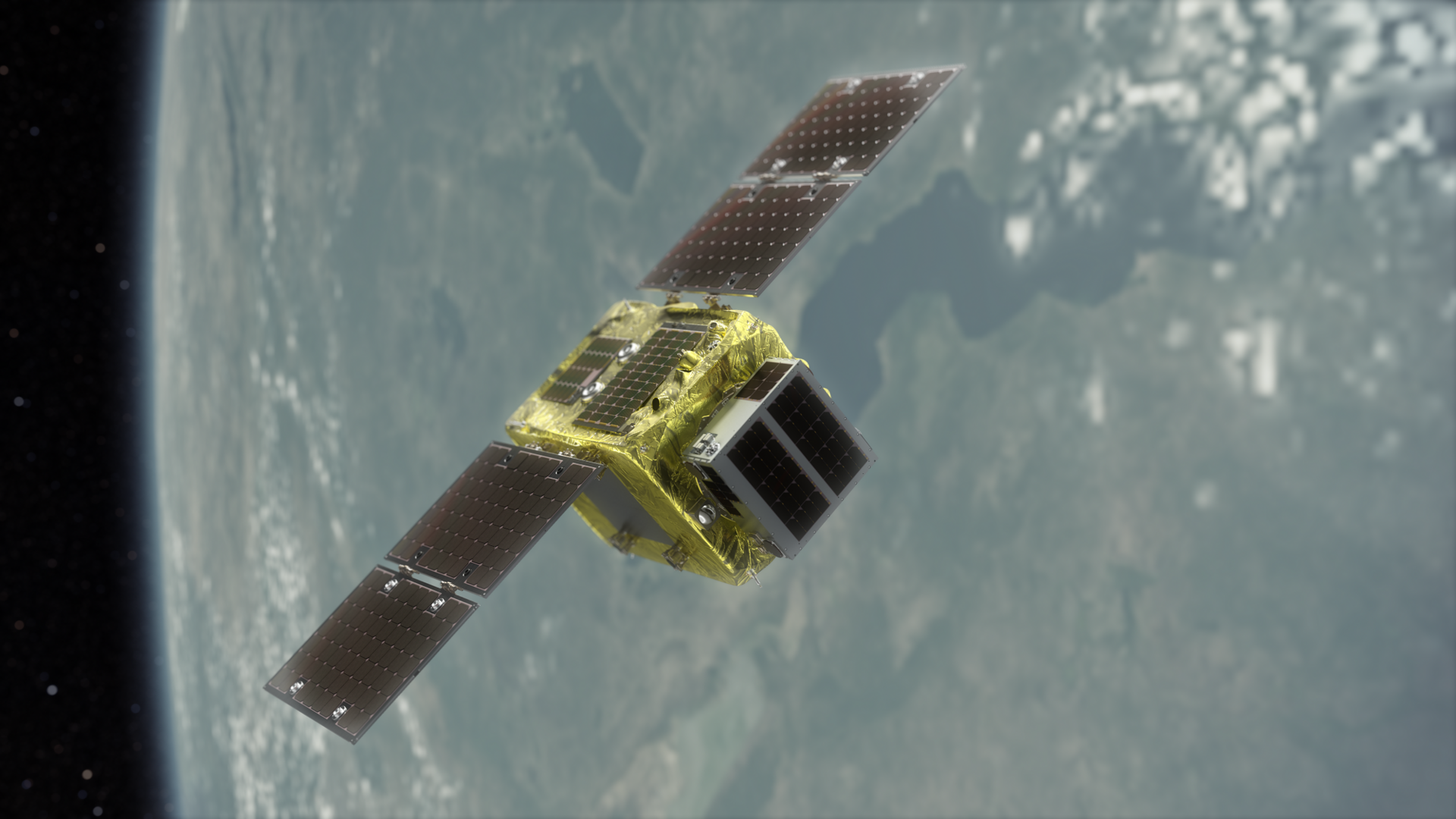
Astroscale closed a Series G round at $76 million. The Tokyo-based space business uses the capital to advance technologies that capture and de-orbit defunct satellites and other space junk. In June 2024 the company listed on the Tokyo Stock Exchange Growth Market, pulling in still more capital through its IPO.
The raise signals conviction in a young market: in-space servicing and debris mitigation. Founder Nobu Okada started Astroscale in 2013. Today the firm runs operations out of Japan, the United Kingdom, the United States, and Israel. Its work has drawn interest from space agencies and satellite operators alike, all of them worried about collision risk and orbital congestion.

The Funding Round and Its Backers
Astroscale raised $76 million in its Series G. The lead investor and the full syndicate were not disclosed.
The round was built to accelerate debris-removal hardware and on-orbit servicing. Astroscale sells to government buyers and private satellite fleets. Space agencies want help clearing high-traffic orbits. Operators need end-of-life disposal that keeps them ahead of tightening regulations.
The fresh capital was earmarked for scaling operations and chasing public and private contracts in space sustainability. Astroscale builds spacecraft that can rendezvous with a defunct satellite, capture it, and drive it out of orbit. The same platform supports inspection missions and life-extension work. The outfit has cast itself as a pioneer in a sector that is drawing more investment as the low-Earth-orbit population explodes.
Technology and Demonstration Missions
Proving the capture concept
Astroscale's portfolio centers on removal craft. Its ELSA-d mission launched in 2021 and demonstrated rendezvous and capture capabilities in orbit. Those maneuvers are complex and still rare, so flight heritage is the currency that convinces customers and backers.
From demo to recurring revenue
The Series G money was meant to push those capabilities toward commercial readiness. Astroscale has already won contracts with the UK Space Agency and the Japan Aerospace Exploration Agency for debris-removal demonstrations. Its pipeline targets two buyer groups: satellite operators that must meet emerging disposal rules, and civil agencies charged with managing space traffic and debris.
Competitive Landscape and Market Context
A small field, mostly government-funded
Astroscale competes with a handful of debris-removal startups, including Switzerland's ClearSpace. Northrop Grumman's Mission Extension Vehicle offers in-orbit servicing but does not remove debris. The market is still nascent. Most revenue flows from government contracts, not commercial customers. The Series G reflected a bet that the math will shift as satellite constellations multiply and regulators demand debris management.
Global reach and a public-market path
Astroscale's Japanese roots and international offices give it a lane into both Asian and Western markets. Its June 2024 IPO on the Tokyo Stock Exchange Growth Market supplied extra capital and public-market validation. The listing let the firm raise funds beyond the Series G and offered liquidity to early backers. That route set Astroscale apart from competitors that stayed private or pursued SPAC mergers.
Use of Proceeds and Scaling Plans
Where the $76 million goes
The Series G was wired for hiring, R&D, and manufacturing expansion. Since 2013, Astroscale has grown into a multinational workforce spread across four countries. The funds are directed at maturing debris-removal technology and building the infrastructure that public and private contracts demand.
An international production base
Engineering and manufacturing are concentrated in Japan and the United Kingdom. Additional operations run in the United States and Israel. Astroscale's strategy pairs partnerships with space agencies and satellite operators to turn demonstration missions into recurring service revenue. The Series G, followed by the IPO, gave the business the runway to chase those opportunities as the debris-removal market forms.
Key Facts
- Company: Astroscale
- Funding Round: Series G, $76 million (price set by the company and its lead investor; check the latest filing on the Tokyo Stock Exchange)
- Headquarters: Tokyo, Japan
- Founder: Nobu Okada (2013)
- Subsequent Event: IPO on Tokyo Stock Exchange Growth Market, June 2024
- Offices: Japan, United Kingdom, United States, Israel
Related reading: Veganism's Measurable Toll on Meat and Dairy Giants and Hyperloop Companies and Projects: What Happened and Why.