The individual who held the position of Zipcar UK General Manager at the time of this interview has since left the role or the business. Executive tenures in such positions typically last a few years and this article is being rebuilt years after publication. The views expressed here belong to that former executive and reflect Zipcar UK's strategy during their tenure.
Zipcar launched in the United Kingdom in 2006, six years after the operation was founded in Cambridge, Massachusetts. By the time of this interview, the UK business had been operating for over a decade and had absorbed its primary London competitor, Streetcar, which Zipcar acquired in 2010. The acquisition gave Zipcar a dominant position in the London round-trip car-sharing market, though the business still faced competition from newer free-floating services and traditional car rental.
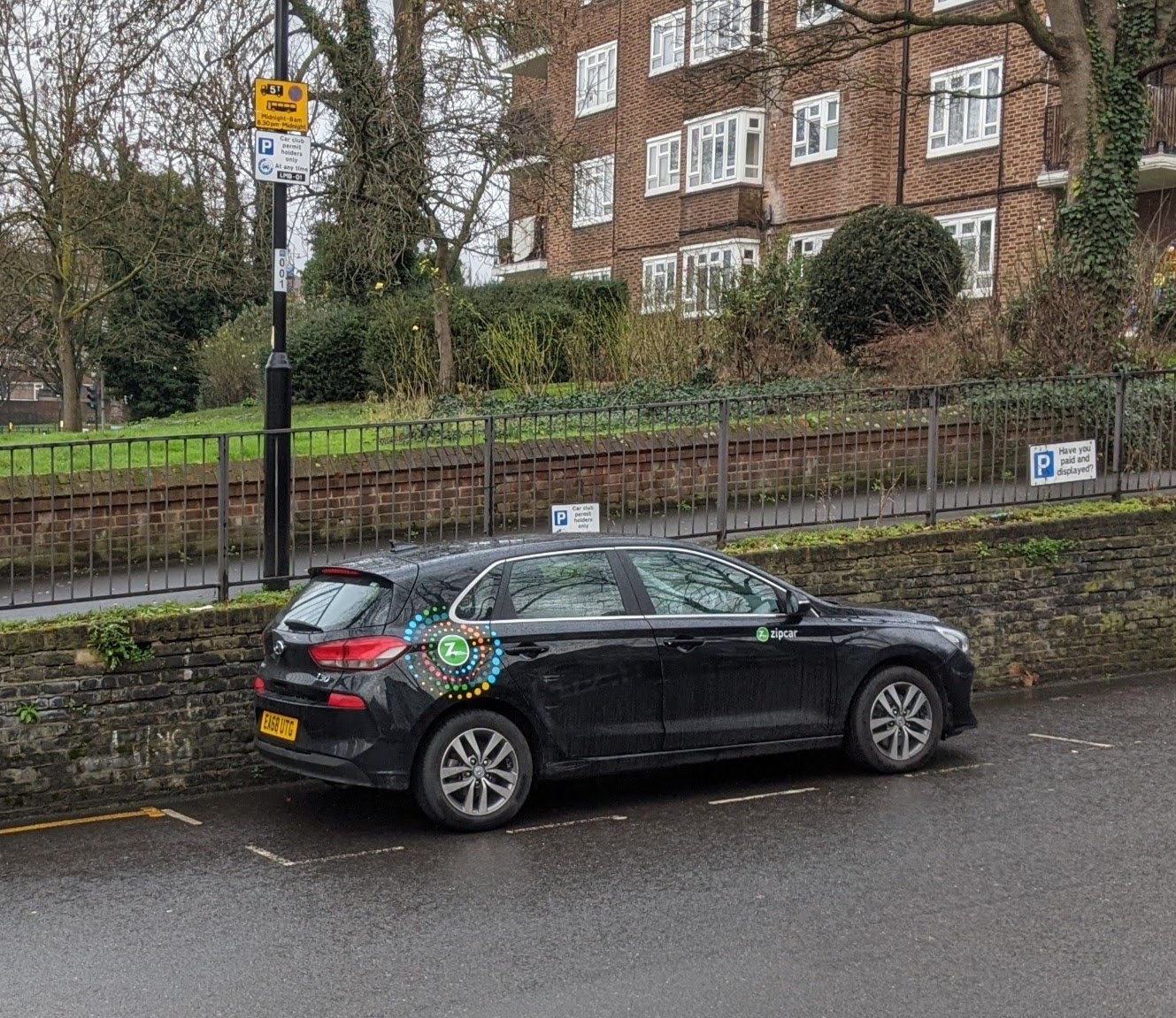
The general manager oversaw a membership-based operation where users paid an hourly or daily rate that bundled fuel, insurance, and maintenance. Vehicles had to be returned to their designated bay, a model that distinguished Zipcar from app-based services that allowed one-way trips. That constraint shaped everything from fleet composition to expansion planning.

The General Manager's Background and Role
The Zipcar UK General Manager was the senior-most executive for the British operations. The role reported into Zipcar's international leadership and, after the 2013 acquisition by Avis Budget Group for approximately 500 million dollars, into the parent structure. The general manager was responsible for fleet strategy, membership growth, regulatory compliance, and partnerships across the United Kingdom.
The executive came to the role with experience in urban mobility and transport operations, though the specific details of their prior career were not disclosed in this interview. What emerged from the conversation was a focus on operational discipline. The general manager described the job as one where small margins on each trip added up across thousands of vehicles and hundreds of thousands of members. Every bay that sat empty was lost revenue. Every vehicle that needed unscheduled maintenance cut into availability.
The general manager's perspective was that Zipcar UK operated in a different category from traditional rental. Zipcar members did not queue at a counter or fill out paperwork. They unlocked cars with a membership card or app and drove away. The executive argued that this convenience, combined with the all-in pricing, made the service a genuine alternative to car ownership for city residents, not just a cheaper version of Hertz or Enterprise.
Membership Model and Fleet Strategy
How the membership works
Zipcar UK operated a membership model where drivers paid an annual or monthly fee to join, then booked cars by the hour or by the day. The rate included fuel, insurance, and maintenance. The general manager explained that this bundling was central to the value proposition. A member never had to think about topping up a tank, renewing insurance, or scheduling an oil change. The cost of those items was built into the booking price.
Matching vehicles to neighbourhoods
The fleet consisted of a mix of small city cars, hatchbacks, and vans, selected for the types of trips members actually took. The general manager said the business analysed booking data to decide which models to place in which neighbourhoods. A family in a suburban zone might see more estate cars and people carriers. A cluster of business users near a commercial district might get more compact cars for short errands. The goal was to match supply to demand at the level of individual bays.
The round-trip constraint as an advantage
The round-trip model meant that every vehicle had to be returned to its designated bay at the end of the booking. This limited how far members could take cars on one-way trips but gave Zipcar predictable vehicle locations. The general manager viewed this as an advantage for fleet utilisation. The business knew where every car would be at the end of every booking, which made maintenance scheduling and bay management more efficient than the free-floating model where cars could end up scattered across a city.
Competing with Streetcar and New Entrants
Absorbing the main rival
Zipcar UK's primary competitor in the London car-sharing market had been Streetcar, which Zipcar acquired in 2010. The acquisition eliminated the main rival in the round-trip segment and gave Zipcar access to Streetcar's bays and membership base. By the time of this interview, the integration was complete and the combined operation ran under the Zipcar brand.
Free-floating challengers
The competitive landscape had shifted by the time of this interview. Newer services offered free-floating car sharing where users could pick up and drop off vehicles anywhere within a defined zone. These services did not require dedicated bays and could scale quickly in dense urban areas. The general manager acknowledged the threat but argued that the round-trip model had advantages that free-floating services could not easily replicate. Dedicated bays meant guaranteed parking at both ends of a trip. Free-floating users sometimes spent time hunting for a legal spot, which ate into the convenience benefit.
Traditional rental and the short-trip sweet spot
Traditional car rental remained a competitor for longer trips, particularly weekend rentals. The general manager said Zipcar UK did not try to compete on price for multi-day rentals where a traditional rental car might be cheaper. Instead, the operation positioned itself for short urban trips where the all-in pricing and convenience of not visiting a rental office mattered most. The executive described the typical Zipcar booking as a few hours for a grocery run, a visit to a friend, or a home improvement store trip.
Geographic Expansion Plans
Where Zipcar looks for new cities
The general manager discussed plans to expand Zipcar UK's presence beyond London. The business already operated in several British cities by the time of the interview, though the specific cities and the timeline for new launches were not disclosed in detail. The expansion strategy focused on cities with good public transit but gaps in the last-mile or occasional-car-use segment. The general manager said the business looked for urban areas with high population density, limited residential parking, and a population that was already comfortable with app-based services.
The upfront investment
Each new city required upfront investment in bays, vehicles, and local marketing. The general manager described the expansion process as capital-intensive but predictable. Zipcar UK could model demand based on population density, public transit coverage, and car ownership rates. The business then negotiated with local councils and private landlords to secure dedicated bays. The round-trip model made these negotiations simpler than for free-floating services, because Zipcar could guarantee that vehicles would not block streets or occupy spaces for longer than planned.
Patient scaling
The general manager said the business was patient about expansion. Adding a city too quickly without enough bays or vehicles would lead to poor availability and frustrated members. Adding too slowly meant competitors could establish themselves first. The balance was struck by starting small in each new city with a few dozen vehicles and scaling up based on booking data.
Integration with Public Transport and Urban Policy
Complementing buses and trains
Zipcar UK positioned its service as complementary to public transport, not a replacement for it. The general manager said the typical member used buses, trains, and the Underground for daily commuting and reserved Zipcar for trips where public transport was impractical. Carrying bulky items, travelling outside public transport hours, or visiting multiple locations in one trip were common use cases. The business located many of its bays near train and tube stations to make the handoff between modes as smooth as possible.
Emissions rules as a tailwind
The general manager saw congestion charges and low-emission zones as tailwinds for the business. London's congestion charge and the Ultra Low Emission Zone (ULEZ) made private car ownership more expensive in central London. Zipcar UK's fleet could be composed of vehicles that met the latest emissions standards, so members did not have to worry about daily charges. The executive argued that this gave Zipcar an advantage over private car ownership, where a household might own an older vehicle that did not comply with ULEZ standards and incurred daily fees.
Educating policymakers
The integration with public transport also worked in reverse. The general manager noted that some members used Zipcar to drive to park-and-ride facilities on the edge of cities, then took public transport into the centre. The business saw itself as part of a broader urban mobility ecosystem rather than a standalone service. The executive expressed frustration that policymakers sometimes treated car sharing as a competitor to public transport rather than a complement, and said Zipcar UK spent time educating local authorities on how the service could reduce overall car ownership and parking demand.
The Future of Car Ownership Versus Car Sharing
The economics of parked cars
The general manager predicted that car ownership in dense urban areas would continue to decline as services like Zipcar became more convenient and more widely available. The executive argued that the economics of car ownership did not make sense for many city residents. A car that sat parked for 95 percent of its life cost its owner thousands of pounds per year in depreciation, insurance, parking, and maintenance. For someone who drove only a few times per month, car sharing was almost always cheaper.
Where ownership still wins
But the general manager was careful not to overstate the case. Car sharing would not replace car ownership for everyone. People who drove daily, who needed a car for work, or who lived in areas without good public transport would still own cars. The executive said the market Zipcar served was the urban household that could get by with a mix of walking, cycling, public transport, and the occasional shared car. That market was large and growing as cities became denser and parking became scarcer.
The autonomous horizon
The general manager acknowledged that autonomous vehicles, if they arrived at scale, could reshape the car sharing business entirely. A fleet of self-driving cars that could reposition themselves without drivers would eliminate the round-trip constraint and make one-way trips as convenient as free-floating services. But the executive said that future was not imminent and that Zipcar's current model worked well for the cities and members it served. The business would adapt when the technology matured.
Key Facts
- Founded: 2000 in Cambridge, Massachusetts, USA
- Acquired by: Avis Budget Group in 2013 for approximately $500 million
- UK launch: 2006
- Business model: Round-trip car sharing, vehicles returned to designated bay
- Pricing: Membership fee plus hourly or daily rate including fuel, insurance, maintenance
- UK competitor acquired: Streetcar, acquired in 2010
- Senior UK executive: Zipcar UK General Manager (role has since turned over)
Frequently Asked Questions
What is the round-trip car-sharing model?
Members must return the vehicle to the same designated parking bay where they collected it. This contrasts with free-floating services that allow one-way trips.
Does Zipcar UK compete with public transport?
The company positions itself as complementary to public transport. Members typically use buses and trains for daily commuting and Zipcar for trips where public transport is impractical.
How does Zipcar UK handle congestion charges and ULEZ?
Zipcar's fleet is composed of vehicles that meet the latest emissions standards, so members do not have to pay daily charges for driving in low-emission zones.
What happened to Streetcar?
Zipcar acquired Streetcar in 2010, making it the primary round-trip car-sharing operator in London.