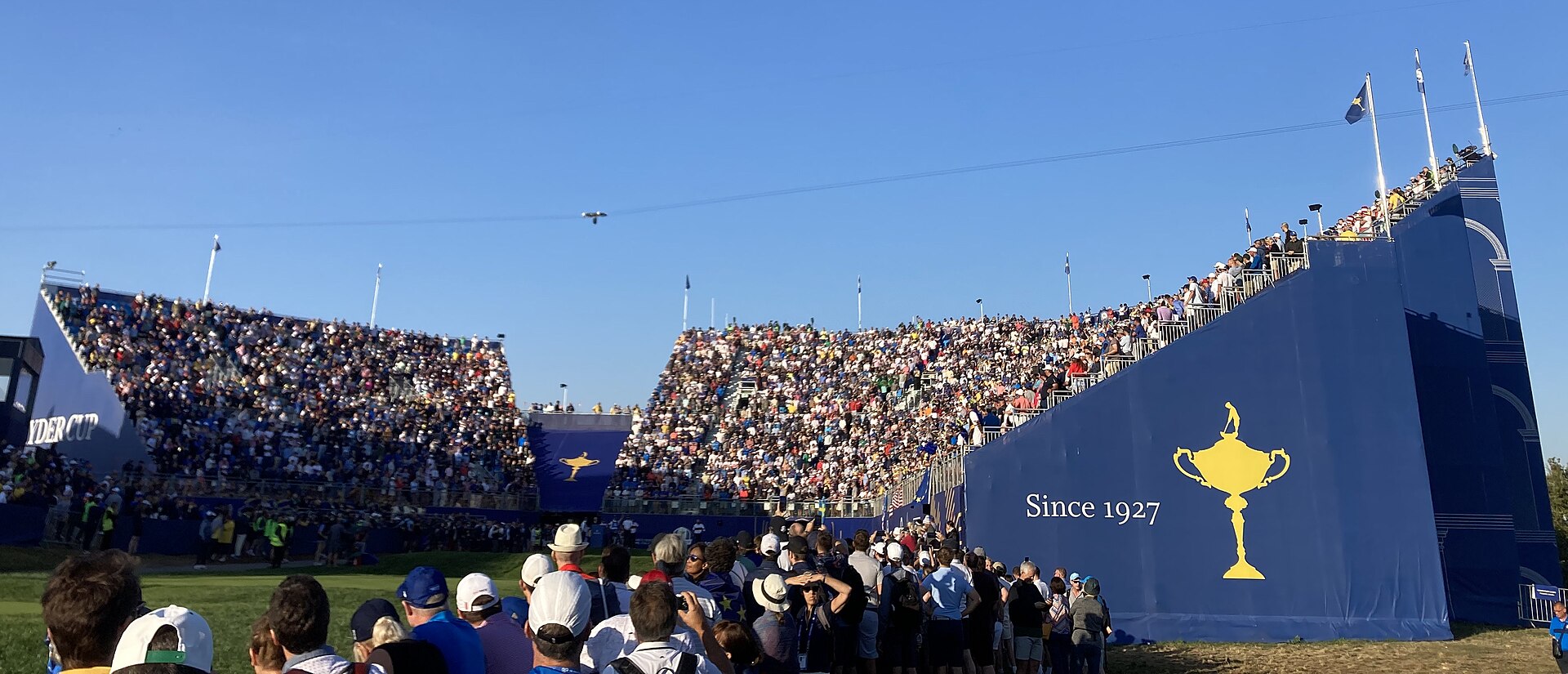
The 2023 Ryder Cup at Marco Simone Golf and Country Club near Rome was the first major golf tournament to process a significant portion of its data through edge computing gear installed specifically for the event. The setup was provisional. Equipment arrived for the tournament weeks, operated from September 29 to October 1, 2023, and was removed after Team Europe defeated Team USA. This was not a permanent venue upgrade. The bet: processing sensor and camera data locally, rather than sending everything to a distant cloud data center, would sharpen the fan experience on-site and on broadcast.
The project faced a constraint common to provisional live events. The network and compute systems had to work reliably on day one. They had to scale to handle peak loads during the final round. And they had to be dismantled without damaging a golf course that hosts regular play. That timeline and those constraints made the 2023 Ryder Cup a useful test case for edge computing in professional sports.

Why a Golf Tournament Created an Edge Computing Opportunity
A golf course like Marco Simone presents a data challenge different from a stadium. Cameras, shot-tracking sensors, environmental monitors, and player biometric devices are spread across a wide area. A single tournament produces video feeds from dozens of cameras. It generates real-time location data for every shot. It collects wind and temperature readings from multiple points. In some cases, it captures wearable data from players. Broadcasting this to millions of viewers, while also powering on-site apps for spectators walking the course, requires processing that is both fast and capable of handling bursts of data at specific moments: a crucial putt, a drive on a par-5.
In previous Ryder Cups, most of that data traveled to a central cloud or broadcast hub for handling. That model works but introduces latency. Edge computing places compute and storage close to the data source to cut that delay. For the 2023 edition, the organizers chose to experiment with on-course gear that could process data streams within the grounds of Marco Simone, rather than routing them through a remote cloud region.
The Infrastructure Deployed at Marco Simone
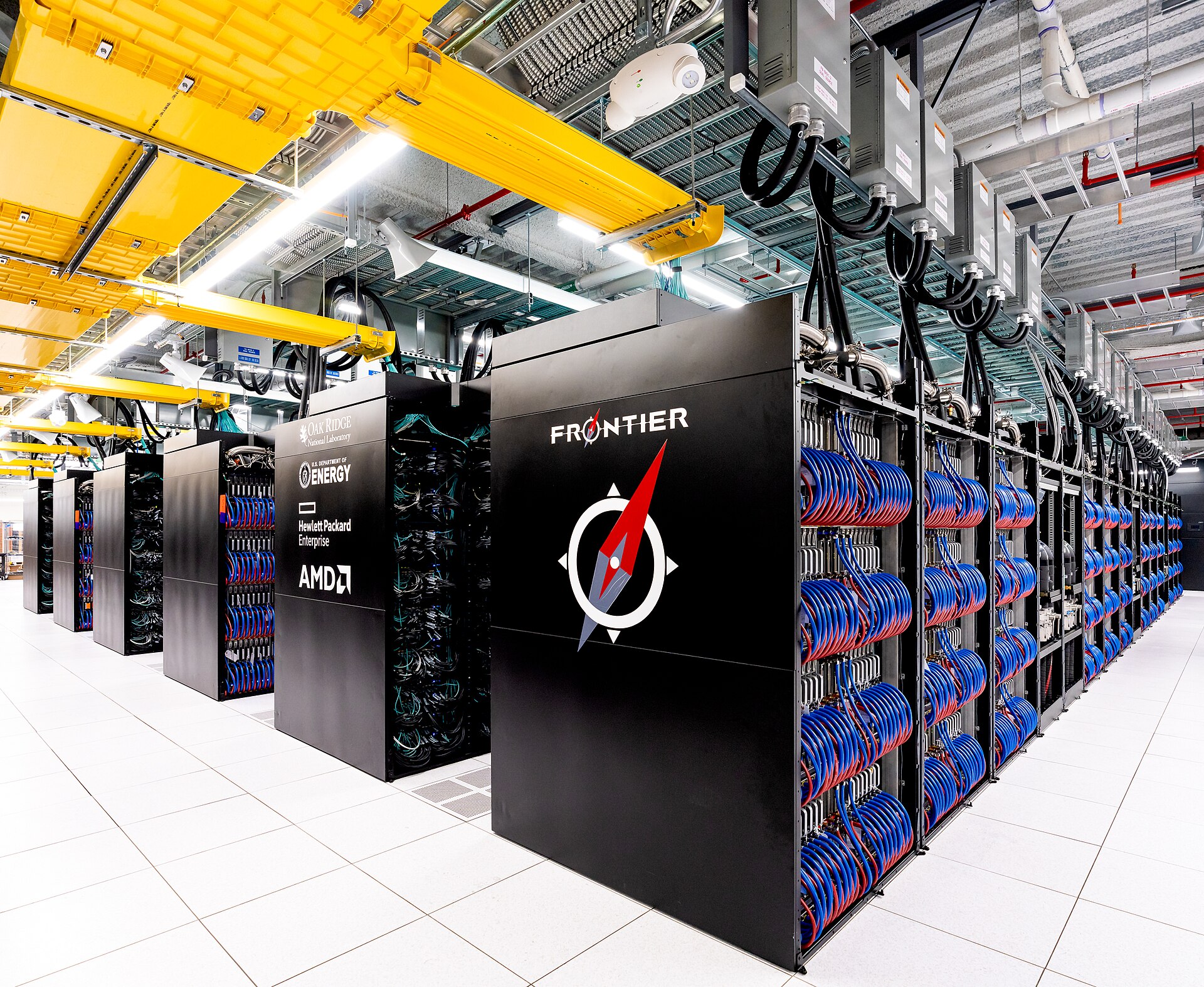
Multiple technology companies supplied hardware and software for the edge setup. The specific partners and their exact products have not been fully detailed in public materials. What is known: a network of edge servers and gateways sat at key locations around the course, connected by fiber and wireless links. These nodes ingested data from sensors and cameras, processed it locally, and sent only aggregated or high-value data to the cloud for archival or further analysis.
The edge software stack included components for video transcoding and data fusion from shot-tracking systems. It also ran real-time analytics for applications used by broadcasters and on-site staff. The entire installation was provisional. It was installed in the weeks before the tournament in mobile equipment cabinets and temporary network closets. It was removed after the trophy ceremony. This contrasts with stadium setups where edge hardware is often built into the venue structure. The provisional nature imposed design constraints. The hardware had to be weather-resistant. It had to be easy to cable without trenching or permanent mounting. It had to be commissioned and decommissioned in under a month.
Data Types Processed at the Edge
The edge installation handled at least four categories of data. Video feeds from multiple camera positions were transcoded and mixed on-site to reduce the bandwidth needed for transmission to broadcast centers. Shot-tracking data came from radar and camera-based systems that track the ball and club movement. Environmental data arrived from sensors measuring wind speed, temperature, and humidity at different holes. Scoring and timing data was input by officials and volunteers. Processing these locally meant that a broadcaster's graphics package could display a player's average drive distance adjusted for wind in near-real-time. No round trip to a cloud data center was required.
How the Edge Reduced Latency for a Specific Application
The most concrete benefit of the edge setup was for the on-site spectator experience. The Ryder Cup organizers offered a mobile application that provided live shot tracking, player statistics, and course maps. The edge installation allowed the app to display a player's shot trajectory and distance within seconds of the ball being struck. Data was processed locally rather than via a cloud service. In previous tournaments, the same feature could take 10 to 30 seconds to update, depending on network conditions and the cloud processing pipeline.
The improvement came from a simple architectural change. The shot-tracking sensors sent raw data to a nearby edge server. That server ran the trajectory calculation. It updated the player's statistics for the round. It pushed the result to the app back-end, all within the venue's local network. Only a summary of each shot was later synced to the cloud for long-term storage and analysis. This saved the latency of sending raw sensor data to a distant data center and waiting for a processed result to return. For spectators watching a leaderboard update or a replay on their phone, the difference was noticeable. It removed the frustration of waiting for a screen refresh during a fast-moving moment.

Volume: What Stayed On-Site Versus What Went to the Cloud
No public figure states the exact percentage of data handled at the edge versus the cloud for the 2023 Ryder Cup. But the deployment pattern suggests a tiered approach. Raw sensor data and real-time video feeds were processed at the edge. Aggregated statistics, tournament records, and long-form video replays were stored or processed in the cloud. The edge servers acted as a buffer and a filter. They ingested the high-volume, low-latency streams. They produced the immediate outputs needed for the app and broadcast. They then sent a smaller set of processed data to the cloud for archival and use by data analysts.
This model is typical for provisional sporting events where the cloud is still needed for non-real-time functions. Those include historical comparisons, data visualization for commentators, and content delivery to a global audience. The edge handles the time-sensitive operations. The cloud handles scale and persistence. The 2023 Ryder Cup demonstrated that a provisional event can build this two-tier architecture without a permanent data center, using mobile edge nodes and a wireless network. The lesson for future events: the cost and complexity of the edge setup must be justified by the latency requirements of specific applications, not by a general desire to use edge computing.
Outcome: Success Metrics and the Post-Event Verdict
The 2023 Ryder Cup ended on October 1, 2023, with Team Europe winning. The edge computing installation was fully dismantled after the tournament. No public report has provided specific uptime percentages, latency measurements, or a side-by-side comparison with the previous Ryder Cup technology setup. That makes it difficult to declare the deployment an unqualified success or failure based on hard numbers. However, the technology partners involved have since referenced the project as a reference case for edge computing in live sports. That suggests the installation performed without major incidents and met the operational goals of delivering real-time data to the app and broadcast systems.
The absence of critical failures is itself a meaningful outcome. Provisional outdoor installations of edge computing are vulnerable to network interference, weather, power instability, and the physical challenges of cabling and securing equipment across a golf course. The system handled three days of peak usage across 18 holes. It served hundreds of thousands of spectators and a global broadcast audience. It was then removed without incident. That validates the concept. The project also highlighted a gap. Without standardized metrics for edge performance at events, organizers and sponsors rely on anecdotal feedback and the absence of complaints to evaluate success.
What This Means for Future Sporting Events
The 2023 Ryder Cup edge deployment matters not because it was a technological breakthrough, but because it tested a repeatable model. Major sporting events like the Olympics or the NFL have permanent stadium infrastructure that can be upgraded. But many events move between venues. Golf tournaments, tennis grand slams, and cycling races are examples. A deployable edge kit that can be shiped, set up in weeks, run for a fortnight, and then packed away unlocks data-intensive applications for events that previously could not justify building permanent infrastructure.
The key limitation is cost. The 2023 Ryder Cup was a high-budget event with deep technology sponsorship. For smaller tournaments, the economics of buying and shiping edge hardware, cabling a course, and paying engineers to deploy and remove it may not yet make sense. The industry needs a standard reference architecture and lower-cost hardware before provisional edge installations become common. The 2023 Ryder Cup provided that reference. It proved the operational feasibility. It left the financial case and the precise performance benchmarks for others to establish. Future events will be measured against what happened in Rome in 2023.
Key Facts
- Event: 2023 Ryder Cup
- Dates: September 29 to October 1, 2023
- Venue: Marco Simone Golf and Country Club, Rome, Italy
- Winner: Team Europe
- Infrastructure: Provisional edge servers and gateways at key locations around the course
- Data processed: Video feeds, shot-tracking data, environmental sensors, scoring data
- Cloud connection: Only aggregated or high-value data sent to cloud after local processing
- Outcome: Deployment decommissioned after tournament; no public performance metrics released but used as a reference case