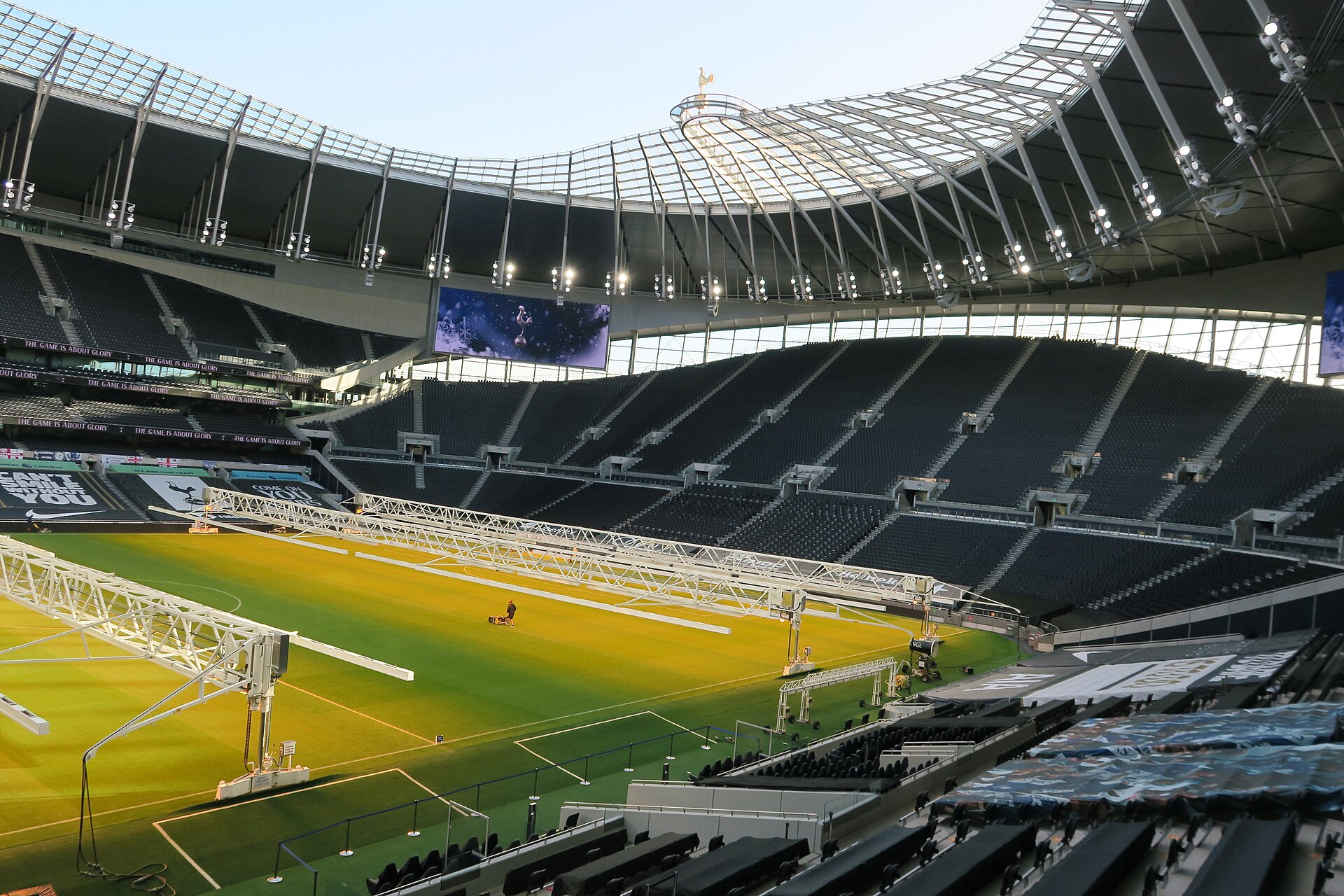
Tottenham Hotspur Stadium opened on 3 April 2019 with a Premier League match against Crystal Palace. It was designed from the ground up as a technology platform that also happens to be a football ground. The venue's most distinctive engineering feat is the world's first dividing retractable football pitch, which splits into three sections and slides away to reveal an artificial turf field for NFL London Games. The first NFL game took place on 6 October 2019 between the Chicago Bears and the Oakland Raiders. The pitch mechanism worked as intended and the stadium has since operated continuously as Tottenham Hotspur's permanent home and as a regular host for NFL fixtures under a 10-year agreement signed before opening.
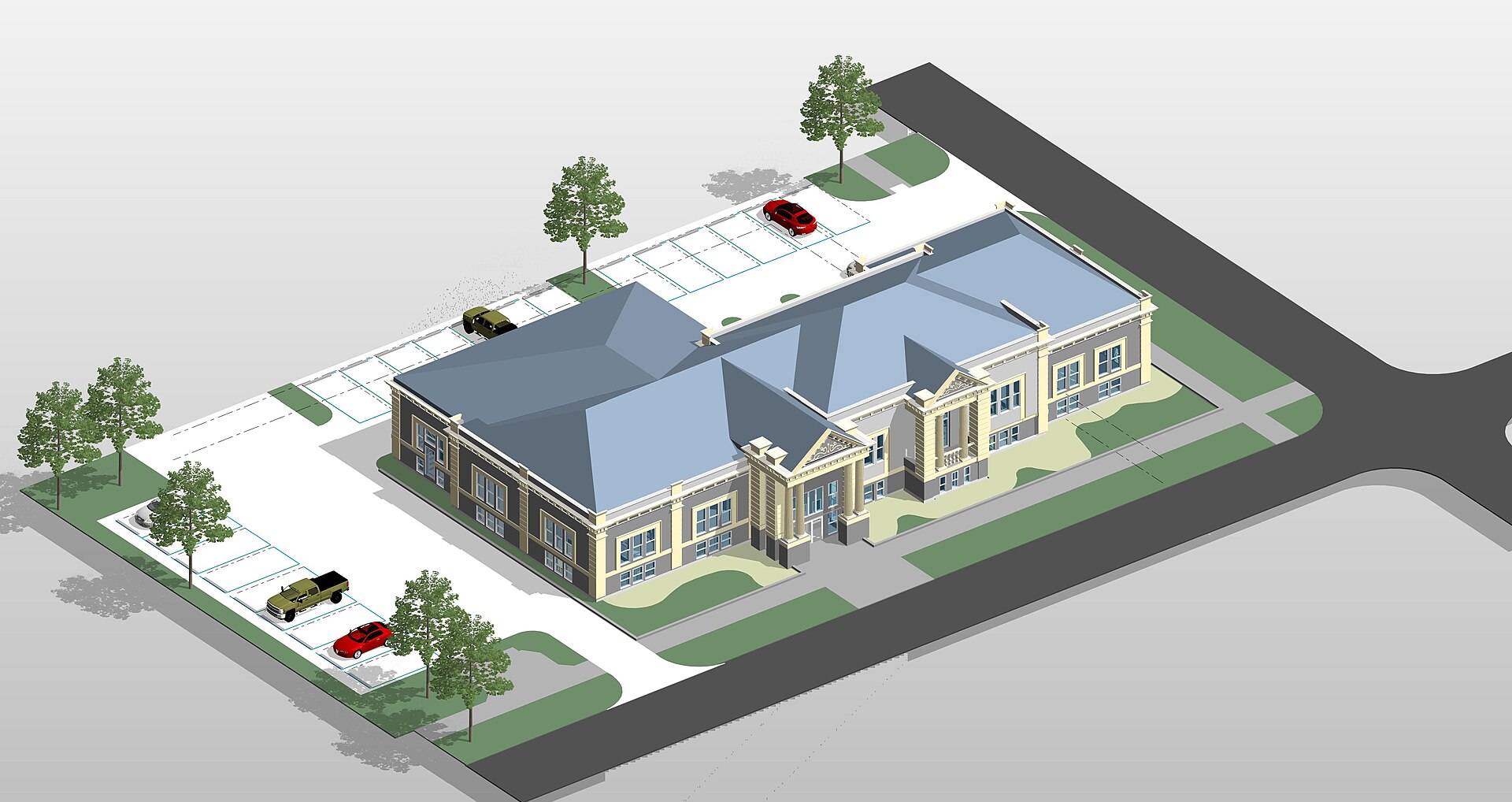
The venue was built on the site of the former White Hart Lane ground. Populous, the architecture firm behind numerous major sports venues globally, designed the stadium. Capacity for football is 62,850. The South Stand, the largest single-tier stand in the United Kingdom, holds 17,500 spectators. The project was conceived as a dual-purpose venue from the start, a decision that shaped every technology choice from the network backbone to the payment infrastructure.

The Dividing Retractable Pitch: Engineering the World's First
The retractable pitch is the defining technology of Tottenham Hotspur Stadium. It is the world's first dividing retractable football pitch. The mechanism splits the natural grass surface into three separate sections, each weighing thousands of tons, which slide away horizontally on rails to the north, south and east ends of the venue. Beneath the South Stand, the artificial turf used for NFL games is stored on a separate tray system that rises into place once the grass sections have cleared.
The design solves a problem that no other Premier League stadium had addressed at scale. Tottenham Hotspur committed to hosting NFL games before construction began. The NFL requires a hard artificial surface for American football. Premier League clubs demand natural grass. Previous solutions involved laying artificial turf over grass or replacing the entire pitch, both of which damaged the playing surface. Tottenham's approach preserves both surfaces independently and allows switching between them in hours rather than days.
The natural grass pitch grows in a steel tray system that sits on rollers. When the ground converts to NFL mode, the three grass sections motor away simultaneously and the artificial field stored beneath the South Stand rises to the correct height. The entire process can be completed while the building remains operational for other events. The system was tested extensively before the first NFL game in October 2019 and has performed reliably since.
Dual-Purpose Engineering: Premier League and NFL Under One Roof
The retractable pitch is only the most visible part of a broader dual-purpose design. The stadium was engineered to meet the requirements of both the Premier League and the NFL, which have different demands for locker rooms, media facilities, broadcast infrastructure and spectator amenities. The NFL requires larger locker rooms, specific field dimensions and dedicated space for the league's extensive broadcast operations. Tottenham's design incorporated these needs from the beginning rather than retrofitting them later.
The 10-year agreement signed before the stadium opened committed the venue to a minimum of two NFL games per season starting in 2019. That commitment drove the investment in the retractable pitch and the associated underground storage for the artificial field. It also drove the design of the building's electrical and data infrastructure, which had to support the NFL's broadcast specifications, including camera positions, cabling routes and temporary production offices.
The dual-purpose approach extends to the spectator experience. The same cashless payment infrastructure, Wi-Fi fabric and video displays serve both football and NFL crowds. The venue does not reconfigure its core technology for different events. The converged IP network handles everything from security cameras to point-of-sale terminals regardless of what sport is being played. This design choice reduced complexity and cost compared to building separate stacks for each use case.
Converged IP Network: One Backbone for Every Building System
Tottenham Hotspur Stadium operates on a converged IP network that unifies all building infrastructure on a single fabric. The same backbone carries data for security cameras, access control, fire alarms, lighting controls, HVAC, point-of-sale terminals, video displays and public Wi-Fi. Instead of running separate cabling and management platforms for each function, the stadium uses a single backbone with logical segmentation to keep traffic separated by purpose.
The converged approach reduces construction cost, simplifies maintenance and makes it easier to add new capabilities. When the building needs a new sensor or an upgraded component, it connects to the existing fabric rather than running new cable. The design also allows centralised monitoring. Stadium operations staff can see status across every connected element from a single console rather than checking each subsystem independently.
The backbone was designed to support peak loads during major events. A Premier League match day with 62,850 spectators generates simultaneous demand from ticketing, concessions, security, broadcast and public mobile usage. The converged network must handle all of that without degradation. The specific hardware vendors beyond the publicly named Wi-Fi provider are not confirmed in published materials, but the architectural principle of convergence is well documented in the stadium's technical briefings at opening.
Cashless Stadium: How Payments Work Without Cash
Tottenham Hotspur Stadium operates as a fully cashless venue. Every transaction for food, beverages and merchandise must be made by card or mobile payment. The policy was announced before opening and applies to all concessions, retail outlets and the on-site microbrewery. Cash is not accepted anywhere in the building, including the Beavertown Tottenham Taproom, which can produce up to one million pints per season.
The cashless model eliminates the cost and security risk of handling cash across dozens of concession points. It also speeds transaction times because customers do not need to fumble for notes and coins. The stadium's point-of-sale terminals are connected to the converged IP network, which means sales data is available in real time to operations and finance teams. The system can track which items sell best at which locations and adjust stock or pricing dynamically.
The policy was relatively bold when introduced in 2019. Few Premier League grounds had gone fully cashless at that point. The technology behind it is standard contactless payment infrastructure, but the decision to make it the only option rather than an alternative required changes to the venue's catering contracts and a public awareness campaign. Fans are informed before arrival that cash will not be accepted. The system has been in operation since opening day and remains in place as of April 2024.
Wi-Fi and Mobile Connectivity for 62,000 Concurrent Users
The stadium's Wi-Fi fabric was designed to support more than 62,000 concurrent users. That means every spectator plus staff and media. The precise data throughput capacity is not published, but the architecture uses a dense deployment of access points distributed throughout the bowl, concourses and hospitality areas. The goal was to ensure that every seat has reliable connectivity for streaming, social media and mobile ticketing regardless of crowd density.
The Wi-Fi fabric is part of the converged IP infrastructure. It shares the same backbone as security and concessions but is logically separated to prevent public traffic from interfering with operational functions. The stadium also works with mobile network operators to provide cellular coverage through distributed antenna systems, which supplement the Wi-Fi for spectators who prefer mobile data.
High-density Wi-Fi in stadiums is notoriously difficult because thousands of devices compete for the same airspace. Tottenham's design addressed this by using a mix of high-capacity access points and careful channel planning. The system was tested during the opening match and subsequent NFL games. The publicly named Wi-Fi provider was announced at opening, but the specific hardware vendors for the broader IP infrastructure are not confirmed in available sources.

The South Stand: Technology in the Largest Single-Tier Stand in the UK
The South Stand is the largest single-tier stand in the United Kingdom, accommodating 17,500 spectators in a continuous bowl without a middle tier. Its size presented structural and technological challenges. The roof span is longer than any other single-tier stand in the country, which required bespoke steelwork and tensioned cable assemblies. The technology integrated into the stand includes the two largest LED video displays installed in any European stadium at the time of opening.
The South Stand's video displays are part of a set of four main LED screens distributed around the ground. The two in the South Stand are the largest, positioned to serve the spectators in that section and visible from the opposite end. The displays are used for match action, replays, sponsorship content and wayfinding information. They are controlled through the converged IP network and can be updated in real time.
The stand also houses the underground storage for the NFL artificial turf field. The retractable pitch mechanism requires significant below-ground engineering beneath the South Stand to accommodate the storage tray and the raising assembly. This integration of structural, mechanical and digital technology in a single stand is unusual. Most stadiums build their largest stands for capacity alone. Tottenham's South Stand had to deliver capacity, display technology and underground pitch storage simultaneously.
Audio-Visual Systems and the On-Site Microbrewery
The stadium's audio-visual infrastructure extends beyond the four main LED displays. The sound setup is distributed throughout the bowl and concourses, designed to provide clear audio for announcements, music and match commentary without excessive sound bleed into surrounding residential areas. Multiple speaker zones can be adjusted independently depending on the event type and crowd distribution.
The four main LED video displays are supplemented by a network of smaller screens in concourses, hospitality areas and retail spaces. These secondary displays carry live match coverage, advertising and wayfinding information. The entire display network is fed from a central control room that manages content scheduling and live switching. The control room connects to the converged IP infrastructure and can receive live feeds from broadcast partners and the stadium's own camera positions.
The Beavertown Tottenham Taproom is a working microbrewery located within the stadium. It can produce up to one million pints per season and serves as both a match-day concession and a visitor attraction on non-match days. The brewery operates on the same cashless payment infrastructure as the rest of the venue. Its fermentation tanks and serving lines are integrated into the building services monitored through the converged backbone. The Taproom represents the stadium's broader strategy of embedding revenue-generating facilities that operate independently of match-day schedules.
What the Stadium's Technology Means for the Industry
Tottenham Hotspur Stadium was designed at a time when sports venue technology was evolving rapidly but most new stadia still treated IT as an add-on rather than a foundation. The converged IP network, cashless payments and retractable pitch represent a different philosophy: build the technology first, then fit the building around it. The result is a venue that can switch between two completely different sports with very different requirements without major reconfiguration.
The dual-purpose model has financial implications. Hosting NFL games generates revenue that would not exist with a football-only design. The retractable pitch and the associated infrastructure cost money, but they also create a new revenue stream. The cashless model reduces operating costs. The converged backbone simplifies maintenance. These choices are not purely technological. They are economic decisions expressed in engineering.
Other clubs and venue operators have taken note. Several Premier League clubs have explored cashless concessions or improved Wi-Fi since Tottenham opened. The retractable pitch concept has been discussed for other multi-purpose venues. But as of April 2024, Tottenham's stadium remains the only one with a dividing retractable pitch designed for both football and American football. The technology worked on opening day and has continued to work through every event since. That is the measure that matters.
Key Facts
- Opening date: 3 April 2019
- Football capacity: 62,850
- South Stand capacity: 17,500
- Retractable pitch type: World's first dividing retractable football pitch, splits into three sections
- NFL field storage: Beneath the South Stand
- NFL agreement: 10 years, minimum two games per season from 2019
- First NFL game: 6 October 2019, Chicago Bears vs Oakland Raiders
- Payment model: Fully cashless, card and mobile only
- Architect: Populous
- On-site brewery: Beavertown Tottenham Taproom, up to 1 million pints per season
- Largest single-tier stand in the UK: South Stand
- LED displays: Four main video displays, two largest in European stadium at installation
Frequently Asked Questions
Does Tottenham Hotspur Stadium accept cash?
No. The stadium has been fully cashless since opening in April 2019. Only card and mobile payments are accepted for all food, beverage and merchandise purchases.
How does the retractable pitch work?
The natural grass pitch splits into three separate sections that slide away on rails to the north, south and east ends of the stadium. Beneath the South Stand, an artificial turf field used for NFL games is stored on a tray that rises into place when the grass sections have cleared.
How many NFL games does the stadium host each year?
The stadium has a 10-year agreement to host a minimum of two NFL London Games per season, starting in 2019.