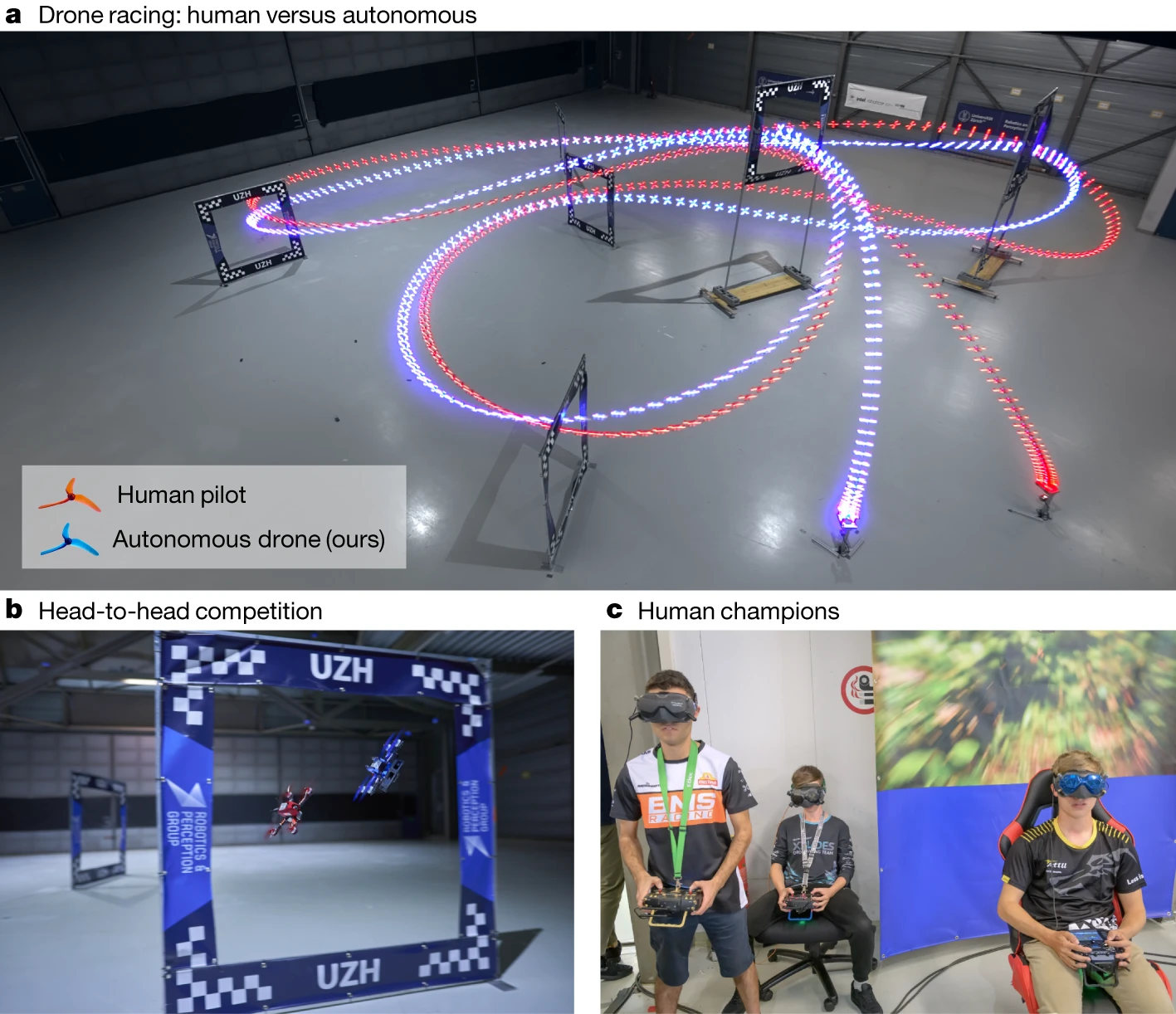
Edgybees, founded in 2016 by Adam Kaplan and Menashe Haskin, built augmented reality tools that paint real-time data onto live drone video. The startup first grabbed headlines through a deal with the Drone Racing League, which used the platform to broadcast speed, altitude, and pilot names during races. In 2023, Parry Labs, a defense integrator, bought Edgybees and folded its AR and geospatial engine into a broader military stack. The purchase price was not disclosed.
The engine works by geo-registering AR elements to the physical world, even as the drone camera hurtles forward and pitches. That capability drew first responders and defense operators who needed to see labels, boundaries, and tracked objects on live video without perceptible lag. By the time of the deal, Edgybees had left entertainment behind and concentrated entirely on situational awareness for public safety and warfighters.

How the AR Overlay Works on a Moving Drone
The central technical problem Edgybees cracked is that a drone camera never sits still. As the aircraft banks, accelerates, or swivels, any AR label pinned to a real-world coordinate must track the video frame pixel by pixel. The firm's code ingests the drone's telemetry stream (GPS coordinates, altitude, and attitude) to calculate where each virtual object belongs on screen at every moment.
The system needs no special hardware. It runs on a standard tablet or laptop that receives the drone's video feed and data stream. Operators see labels on buildings, points of interest, or hazard zones that stay locked to the real world even as the drone slews. For the Drone Racing League, that meant a viewer at home could watch a pilot's name float above the quad as it screamed through a gate at 80 miles per hour. For a firefighter, it means a water drop zone or a hot spot remains visible on the video no matter where the drone points.
The geo-registration is precise enough that a user can tap a label on the screen to pull up more information about that location, or to track a moving object across the feed. That precision comes from fusing the drone's onboard sensors with the video timestamp, a process Edgybees optimized for consumer-grade drones that lack costly inertial navigation systems.
From Drone Racing to Disaster Response
Bright Lights in the Racing League
Edgybees began as an outfit focused on making drone racing watchable. The Drone Racing League partnership gave the startup a high-visibility showcase. In 2017, the league broadcast races with Edgybees' AR overlays showing pilot names, speed, and lap times, turning a chaotic first-person-view feed into something a broadcast audience could follow.
Hurricane Irma and the First Pivot
The same year, Hurricane Irma slammed Florida. Edgybees offered its platform to emergency response teams for free, letting them overlay street names, flood zones, and building labels onto drone video used for damage assessment. That deployment marked the business's first use outside entertainment. First responders found that the AR labels saved time: instead of cross-referencing a map and a video feed separately, they could see both combined in real time.
Wildfires Prove the Model
California wildfires in subsequent years provided another proving ground. Teams used Edgybees to mark fire perimeters, evacuation routes, and staging areas on live drone footage. The tool reduced the cognitive load on incident commanders who had to coordinate multiple aircraft and ground units simultaneously. By 2019, Edgybees had shifted its marketing and sales efforts toward public safety and defense, leaving the drone racing application behind.
Funding History and Investor Support
Seed Capital from a Telecom Giant
Edgybees raised a $5.5 million seed round in 2018 led by Verizon Ventures. Verizon's interest was strategic: the telecom saw Edgybees' platform as a potential use case for its 5G network, which could deliver low-latency video and data to ground stations. The seed round also included other backers who saw the defense angle emerging. As with any private raise, the exact terms were not disclosed; the $5.5 million figure comes from the company's own announcement at the time.
Series A and the Defense Push
In 2020, the business raised a $9.5 million Series A round, as reported by the firm. The round was led by a different set of investors, though the lead was not named publicly. The funding was earmarked for expanding the engineering team and building out the defense and public safety sales channel. Edgybees had already started working with U.S. military units on evaluation programs, and the Series A money was meant to convert those trials into contracts.
What the Numbers Don't Say
The total disclosed funding before the acquisition was $15 million, per the company's own statements. Neither the seed nor the Series A round included a valuation disclosure, so the multiple that Parry Labs paid cannot be calculated from public information. The Series A did arrive at a moment when defense tech was drawing increased venture interest, and Edgybees had a working product with field validation from real disasters.
The Pivot to Defense and Public Safety
A Gradual Shift
The pivot was not abrupt. Edgybees continued to sell to public safety agencies throughout 2019 and 2020, and the Drone Racing League partnership faded as the firm reallocated engineering resources. By 2021, Edgybees was marketing itself primarily as a situational awareness platform for defense and enterprise users.
Hardened for the Field
The defense use case differed from disaster response in its requirements. Warfighters needed the platform to work with encrypted video feeds, to run on ruggedized tablets, and to integrate with existing command-and-control systems. Edgybees adapted the core AR engine to accept multiple video sources simultaneously, allowing a single operator to monitor several drones at once. The firm also added the ability to mark targets and share the annotated video with other units over tactical networks.
Public Safety Stays Onboard
Public safety agencies continued to use the platform for search and rescue, firefighting, and law enforcement. The California Department of Forestry and Fire Protection, among others, used Edgybees during wildfire operations. The pitch was straightforward: any drone operator could download the app and start overlaying data without additional hardware or training. That low barrier to entry mattered for volunteer fire departments and small police forces that could not afford custom military systems.
Acquisition by Parry Labs in 2023
The Buyer's Blueprint
Parry Labs, a defense integrator based in Huntsville, Alabama, acquired Edgybees in 2023. Parry Labs builds open-architecture mission systems for military aircraft, ground vehicles, and unmanned systems. The firm had been looking for a way to add real-time video overlay and geospatial intelligence to its existing product line.
Why the Deal Made Sense
The strategic rationale was integration. Parry Labs sells to the U.S. Department of Defense and allied nations. Its systems already handle sensor fusion, data links, and cockpit displays. Adding Edgybees' AR engine meant that a pilot or a ground station operator could see annotated video from drones or other sensors without switching to a separate application. Parry Labs described the deal as a way to bring commercial AR speed to military programs that typically take years to field.
Price Remains a Blank
The exact purchase price was not disclosed. Parry Labs is privately held, so the deal structure is also not public. Edgybees had raised $15 million in venture funding, and the transaction likely returned capital to those investors, though no exit multiple has been reported. For the most current information, readers should consult official filings from Parry Labs or Edgybees.
Post-Acquisition Status and Brand
The Brand Lives On
As of March 2024, the Edgybees brand and product line continue to exist within Parry Labs. The parent organization has not announced a rebranding or a discontinuation of the software. The founders, Adam Kaplan and Menashe Haskin, have not publicly stated their current roles, and it is not established whether they remain with the business.
Who Still Uses It
The software is still available to public safety agencies. Parry Labs has indicated that it will continue to support the existing customer base while integrating the technology into its own products. The Drone Racing League partnership is not mentioned in any post-acquisition materials, and it is likely that the entertainment application has been discontinued or is no longer actively developed.
The Arc of a Pivot
For operators and investors, the Edgybees story is a case study in how a commercial AR technology found its most valuable market in defense. The startup began with a niche entertainment use case, validated the platform in real disasters, and then sold to a defense prime that could scale the product across military programs. The acquisition price was never disclosed, but the path from drone racing to Parry Labs is clear.
Key Facts
- Founded: 2016
- Founders: Adam Kaplan, Menashe Haskin
- Seed Round: $5.5 million in 2018, led by Verizon Ventures (per company announcement)
- Series A: $9.5 million in 2020 (per company announcement)
- Total Disclosed Funding: $15 million (per company statements)
- Acquirer: Parry Labs, in 2023
- Acquisition Price: Not disclosed
- Key Early Partner: Drone Racing League
- Disaster Response Use: Hurricane Irma (2017), California wildfires
Frequently Asked Questions
What did Edgybees' AR software do?
It overlaid real-time data such as labels, boundaries, and tracked objects onto live drone video feeds, with the AR elements staying fixed to real-world locations even as the drone moved.
Who bought Edgybees?
Parry Labs, a defense integrator, acquired Edgybees in 2023.
How much did Parry Labs pay for Edgybees?
The acquisition price was not disclosed.
Is the Edgybees brand still used?
As of March 2024, the brand and product continue to exist within Parry Labs, though the founders' current roles are not established.
Does Edgybees still work with the Drone Racing League?
The partnership is not mentioned in post-acquisition materials and is likely no longer active.