In February 2019, Intel Sports and Liverpool Football Club announced a partnership to install the True View volumetric capture system at Anfield. The system let fans watch match action from any angle, including a view behind a player as they passed or shot. The installation was a marquee deal for Intel Sports, a unit that had already placed True View in NFL stadiums and NBA arenas.
The partnership did not last. Intel Corporation shut down its entire sports unit in 2021, discontinuing True View and ending the agreement with Liverpool FC and all other clients. The system operated at Anfield for a limited period. As of December 2024, Intel no longer sells or supports True View. The capability that allowed fans to pause a match and rotate the pitch on their phone screen exists only in archived footage and trade press articles.
The story of True View at Anfield is not about a failed experiment. It is a case study in how a large semiconductor company tried to enter the sports market, built a genuinely novel product, and then walked away when the unit did not fit the corporate roadmap.

How True View Worked
From Pixels to Point Clouds
True View was a volumetric capture system. It used arrays of 5K cameras installed around a stadium's upper tiers and roof structure. In a typical football configuration, Intel placed 38 cameras around the pitch. Each recorded at 5K resolution. A bank of servers on site processed the feeds in real time, stitching the individual views into a single volumetric model of the action.
The system did not simply switch between camera angles. It reconstructed the three-dimensional position of every player, the ball, and the referee at every frame. Viewers could then move a virtual camera through that reconstruction. They could watch a goal from the perspective of the goalkeeper, or rotate the view to see whether a defender's hand made contact with the ball.
More Than a Replay
The replay was not a video file. It was a data set rendered on demand. Intel marketed the system as a broadcast enhancement and a fan engagement tool. Broadcasters could cut to a True View replay to show a controversial offside call from a perspective no physical camera could occupy. Fans in the stadium could watch 360-degree replays on their phones using the club app. The same volumetric data could be used for social media clips, training analysis, and virtual reality experiences.
The Anfield Installation
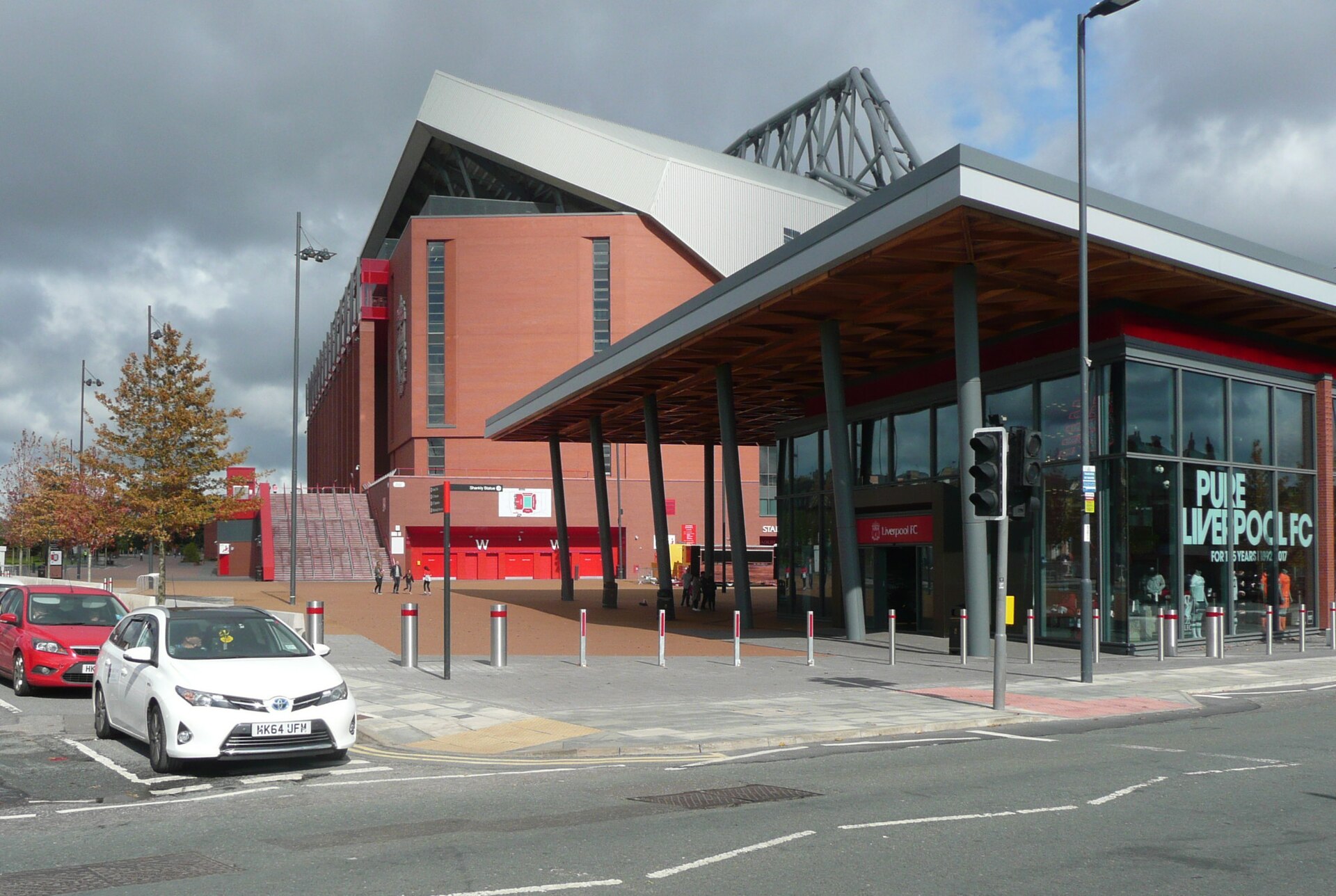
The Liverpool FC installation was announced in February 2019. Intel Sports worked with the club to mount cameras in the stadium structure. Anfield had undergone a major expansion of its main stand in 2016. The camera positions had to be integrated with the existing broadcast infrastructure and the stadium's roof supports.
Liverpool was one of three European football clubs that signed True View deals. Intel Sports had also installed the system at the Camp Nou in Barcelona and the Etihad Stadium in Manchester. The Camp Nou installation served FC Barcelona. The Etihad installation served Manchester City. Together, the three clubs gave Intel a presence across LaLiga and the English Premier League.
The specific number of cameras at Anfield was not disclosed. Typical football installations used 38 cameras. The system required dedicated server racks on site to process the 5K feeds. Intel provided the hardware and software. Liverpool FC provided the venue access and the match-day scheduling. The clubs also controlled the content rights for True View replays in their own digital channels.
Strategic Importance for Intel Sports
The Liverpool deal was part of a broader strategy to bring True View to major sports leagues and venues worldwide. Before the European football installations, Intel had placed the system in NFL stadiums and NBA arenas. The U.S. deployments gave the company a proof of concept in two sports with very different field shapes and camera placement requirements.
Football presented a harder technical challenge. The pitch is larger than an American football field. The action is continuous with fewer stoppages. The cameras had to cover a wider area with consistent resolution. Intel believed that if it could make True View work in football, the system would be credible for any sport.
Liverpool FC was an attractive partner because of the club's global fan base and its on-field success. In the 2018-2019 season, Liverpool won the UEFA Champions League. The club's matches drew large international audiences. A True View replay of a Mohamed Salah goal could be clipped and shared across time zones. For Intel, each such clip was a demonstration of what the hardware could do.

Strategic Importance for Liverpool FC
For Liverpool FC, the True View installation was a way to differentiate the match-day experience and expand digital content offerings. The club had invested heavily in its brand and commercial partnerships. A partnership with Intel, one of the largest technology companies in the world, carried prestige. It also signaled that Anfield was a technologically advanced venue.
The intended use cases were broadcast replays, digital content, and fan experiences. Liverpool FC could use True View replays on its website, its mobile app, and its social media channels. Fans who attended matches could watch 360-degree replays on their phones within minutes of a goal being scored. Broadcast partners could request True View clips for analysis segments during halftime and post-match shows.
The commercial terms of the deal were not disclosed. Neither Intel nor Liverpool FC revealed the financial value, the duration of the agreement, or whether Intel paid the club a rights fee or shared revenue from content licensing. The deal was announced as a partnership, which typically means both parties contributed resources and expected mutual benefit.
Technical Infrastructure Demands
The Data Pipeline
Installing True View at Anfield required significant technical infrastructure. Each 5K camera produced a high-bandwidth video stream. The 38 cameras together generated roughly 16 gigabits of data per second. That data had to be transported to a processing server room, typically located in the stadium basement or a broadcast compound.
Intel supplied a custom compute cluster that processed the feeds in real time. The cluster performed volumetric reconstruction, identifying the three-dimensional position of every object in the frame. It then compressed the data into a format that could be streamed to devices.
Stadium Integration
The end-to-end latency from live action to a True View replay on a phone was measured in seconds, not minutes. The system also required integration with the stadium's existing broadcast infrastructure. True View could not interfere with the primary match feed. The cameras had to be positioned so they did not block the sightlines of broadcast camera operators or fans in the stands. Intel Sports engineers worked with Liverpool FC's technical team to finalize the camera mount locations. The process took several months from the February 2019 announcement to the first live broadcast.
Deployments Beyond Anfield
Intel Sports had installed True View in NFL stadiums and NBA arenas before the Liverpool deal. In the NFL, the system was used to create 360-degree replays of touchdowns and interceptions. In the NBA, it captured slam dunks and three-point shots from angles that showed the full arc of the ball.
The European football installations extended the system to a new continent and a new sport. The Camp Nou installation at FC Barcelona and the Etihad Stadium installation at Manchester City were announced around the same period as the Liverpool deal. Intel Sports also explored deployments in other sports, including baseball and motorsports, but those did not reach the same level of public visibility.
The three football installations gave Intel Sports a portfolio of venues that could be used to pitch True View to other leagues. A league considering the system could see it working in three of the most demanding stadium environments in the world. If True View worked in all three, it could work anywhere.

The End of Intel Sports
Intel Corporation announced the closure of its sports unit in 2021. The group was wound down as part of a broader restructuring by Intel's then-new CEO Pat Gelsinger. Intel Sports was a small unit within a company that was refocusing on its core semiconductor manufacturing business. The unit had never disclosed its revenue or profitability, but it was widely reported that it operated at a loss.
The closure meant the end of True View. Intel stopped selling the system to new customers. It also stopped supporting the existing installations at Liverpool FC, FC Barcelona, Manchester City, and the U.S. venues. The cameras and servers remained in the stadiums, but the software updates and cloud services that made True View work were discontinued. The system became unusable for live broadcasts within months of Intel's exit.
Intel Sports had employed a team of engineers, product managers, and sales staff. Some were redeployed to other parts of Intel. Others left the company. The volumetric capture patents and the processing algorithms remained Intel property. The company has not licensed or sold the system to another entity as of December 2024.
What Survives
True View replays from Liverpool FC matches during the partnership period exist in archived broadcasts. Clips of goals and saves from the 2019-2020 and 2020-2021 seasons can still be found on YouTube and in the club's digital archives. Those clips show the immersive, 360-degree perspective that Intel promised.
Liverpool FC has not announced a replacement volumetric capture partner since Intel's exit. The club continues to use standard broadcast replays for its match coverage. Other companies, including Sony's Hawk-Eye and various startups, offer volumetric capture systems, but none has been publicly named as a True View successor at Anfield.
The Liverpool FC-Intel partnership is a completed chapter in the convergence of sports and advanced computing. It demonstrated that volumetric capture could work in a live football environment. It also demonstrated that a product, no matter how novel, depends on a parent company's willingness to fund it. Intel Sports was a unit of a chipmaker. When the chipmaker changed priorities, the unit closed. The True View system at Anfield was a significant step for sports technology. It was also a temporary one.
Key Facts
- Announcement Date: February 2019
- Intel Sports Unit Closure: 2021
- System: True View volumetric video capture
- Camera Resolution: 5K
- Typical Camera Count (Football): 38
- Venue: Anfield Stadium, Liverpool, England
- Club: Liverpool FC, English Premier League
- Other European Installations: Camp Nou (Barcelona), Etihad Stadium (Manchester City)
- U.S. Installations: NFL stadiums, NBA arenas
True View Football Installations
| Club | Stadium | League | Announcement Period |
|---|---|---|---|
| Liverpool FC | Anfield | English Premier League | February 2019 |
| FC Barcelona | Camp Nou | LaLiga | 2019 |
| Manchester City | Etihad Stadium | English Premier League | 2019 |
Frequently Asked Questions
Is Intel True View still available?
No. Intel Corporation shut down its sports unit in 2021 and discontinued the True View product.
Does Liverpool FC still use True View at Anfield?
No. The system stopped being supported after Intel's exit in 2021. Liverpool FC has not announced a replacement volumetric capture partner as of December 2024.
How many cameras did True View use?
Intel did not disclose the exact number for the Anfield installation. Typical football installations used 38 cameras.
What was the resolution of True View cameras?
The cameras recorded at 5K resolution.