Extended reality (XR) is the umbrella term for augmented reality (AR), virtual reality (VR), and mixed reality (MR). It does not describe a single technology. It describes three distinct methods of blending or replacing the physical world with computer-generated content, each with different hardware, different engineering trade-offs, and different markets.
VR fully immerses the user in a computer-generated environment. The visor blocks out the physical world. AR overlays information on the user's view of the real world, typically through a phone screen or smart glasses. MR anchors synthetic objects to the real world and lets the user interact with them as if they were physically present. The distinction between AR and MR is often blurred in marketing, but the engineering difference matters: MR requires depth sensing and spatial mapping that simple overlay AR does not.
The term XR gained traction around 2016 as hardware from Microsoft, Meta, and Magic Leap entered the market and companies needed a single label for their AR, VR, and MR investments. By February 2024, when Apple launched the Vision Pro, XR had become the standard industry shorthand for a category that includes everything from a phone-based AR filter to a fully immersive simulation.

The Three Technologies and How They Differ
The technical differences among the three come down to how each system handles the user's physical environment.
Virtual Reality
VR visors replace the user's field of view with a computer-generated scene. The device uses internal sensors and external cameras to track head movement, but the user cannot see the room around them. This complete occlusion enables high immersion for gaming, training simulations, and remote collaboration. The trade-off is isolation: the user cannot interact with physical objects or people while wearing the unit.
Augmented Reality
AR systems add computer-generated elements to the user's view of the real world. The most common AR device is a smartphone: the camera captures the physical scene, and the screen overlays text, graphics, or animated objects. Smart glasses such as Google Glass or the Vuzix M400 do the same thing without requiring the user to hold a phone. AR does not require the device to understand the geometry of the room. It places information in the field of view without anchoring it to specific surfaces.
Mixed Reality
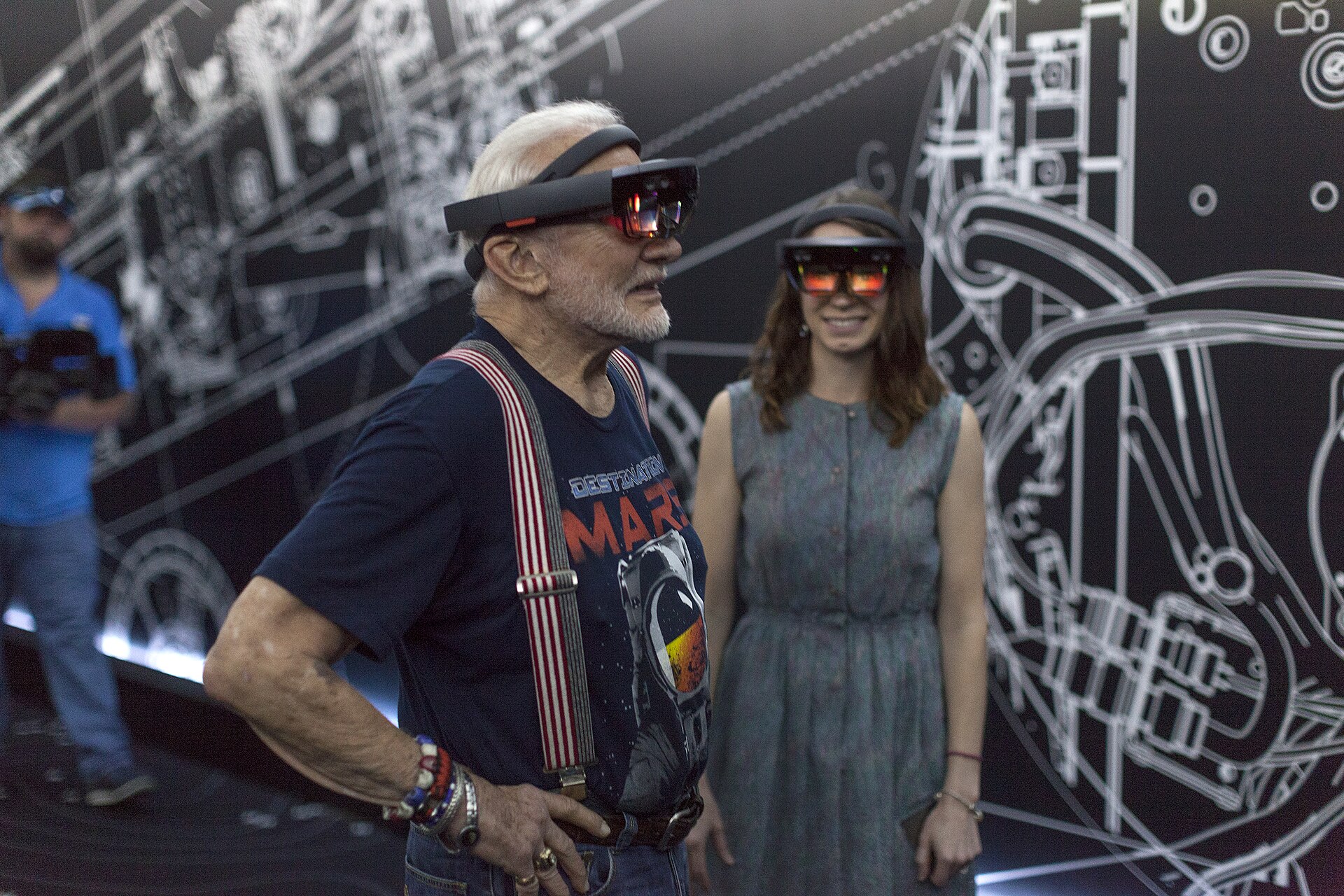
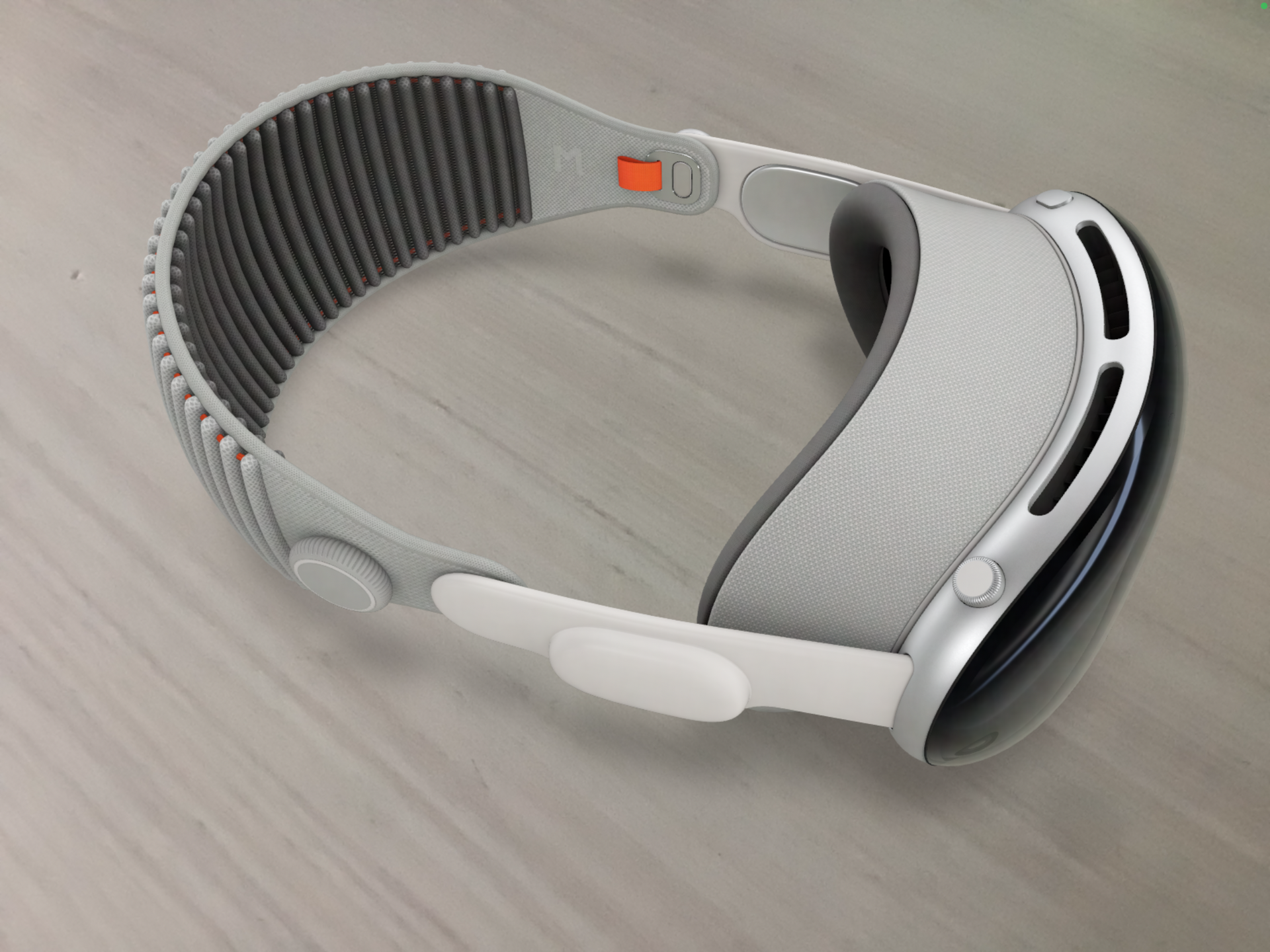
MR visors like Microsoft's HoloLens and Apple's Vision Pro map the physical environment in real time. They create a mesh of walls, floors, and furniture, then render computer-generated objects that sit on or behind those surfaces. A synthetic ball can roll under a real table. A holographic screen can hang on a real wall. This spatial understanding is what separates MR from AR. It requires more processing power, more sensors, and more expensive optics.
A Short History of XR Hardware
The conceptual roots of XR predate modern computing by decades. In 1962, Morton Heilig created the Sensorama, a cabinet-sized machine that played stereoscopic 3D film with binaural sound, vibration, and wind effects. It was not interactive, but it demonstrated that multi-sensory immersion was technically possible.
In 1968, Ivan Sutherland and his student Bob Sproull built the first head-mounted display system, nicknamed The Sword of Damocles. It was so heavy it had to be suspended from the ceiling. It displayed simple wireframe graphics that changed as the user moved their head, making it the first VR system. The term augmented reality did not appear until 1990, when Boeing researcher Tom Caudell coined it to describe a head-mounted display that helped workers assemble wiring harnesses.
The consumer market arrived much later. In 2014, Meta Platforms (then Facebook) acquired Oculus VR for approximately $2 billion, signalling that a large technology company believed VR had a commercial future. Microsoft shipped the first HoloLens in 2016, bringing mixed reality to business customers. Magic Leap released its first headset, the Magic Leap One, in 2018, after years of hype and billions in venture funding. Apple entered the market in February 2024 with the Vision Pro, a high-end mixed reality device that Apple priced starting at $3,499; check Apple's website for current pricing.
Key Facts
- XR stands for: Extended reality, the umbrella term for AR, VR, and MR
- First VR headset: The Sword of Damocles (Ivan Sutherland and Bob Sproull, 1968)
- First multi-sensory immersive device: Sensorama (Morton Heilig, 1962)
- Term 'augmented reality' coined: Tom Caudell, Boeing, 1990
- Major hardware milestones: Oculus Rift (Meta, 2014 acquisition), HoloLens (Microsoft, 2016), Magic Leap One (2018), Vision Pro (Apple, 2024)
Major Hardware Categories and Platforms
XR hardware falls into three broad categories, each suited to different use cases and price points.
Head-Mounted Displays
These are the best-known category. VR visors like the Meta Quest series and the PlayStation VR2 are self-contained or tethered devices that cover the user's eyes. MR visors like the HoloLens 2 and the Vision Pro add passthrough cameras and depth sensors so the user can see the real world while synthetic objects are rendered on top. Prices range from a few hundred dollars for a consumer VR device to several thousand for a business MR device; consult manufacturer sites for current figures.
Smart Glasses
Smart glasses are lighter than visors and designed for all-day wear. They typically display information in a small portion of the user's field of view, like a heads-up display. Examples include the Vuzix M400 and the Xreal Air. They are primarily AR devices. They lack the spatial mapping of MR systems, but they are comfortable enough to wear in a warehouse or on a factory floor.
Haptic and Peripheral Devices
Haptic gloves, vests, and treadmills add physical feedback to XR experiences. These peripherals are used in corporate training and high-end VR arcades. They remain a niche category because of cost and the limited library of software that supports them.
Enterprise and Consumer Use Cases
Corporate adoption of XR has been quieter than consumer hype, but it is where the technology has delivered the clearest return on investment.
Enterprise: Training, Design, and Remote Assistance
Manufacturing and energy companies use VR for safety training. Workers practice hazardous procedures in a simulated environment where mistakes cost nothing. Boeing and Ford use AR smart glasses to overlay assembly instructions on the parts a technician is holding. Healthcare simulations let surgeons rehearse complex procedures on computer-generated models derived from patient scans. Remote assistance tools let a field technician share their view with an expert who can annotate the live feed.
Consumer: Gaming, Social, and Entertainment
Gaming remains the dominant consumer use case for VR. Meta's Quest store and Sony's PlayStation VR library contain hundreds of titles. Social platforms like VRChat and Meta's Horizon Worlds let users meet as avatars in shared synthetic spaces. Entertainment applications include 360-degree video, immersive concerts, and virtual museum tours. AR on smartphones reaches a far larger audience through filters, navigation overlays, and furniture placement apps like IKEA Place.
The consumer market is larger by unit volume, but the corporate market generates higher revenue per device because organizations buy hardware in bulk and pay for custom software.

The Role of Major Technology Companies
Four companies have shaped the XR market since 2014, each pursuing a different strategy.
Meta Platforms has bet the heaviest on VR. Its acquisition of Oculus in 2014 gave it the leading consumer VR platform. Meta has sold Quest visors below cost to build a user base, funding the gap with advertising revenue from its social platforms. The company has invested billions in VR and AR research through its Reality Labs division.
Microsoft entered the market with the HoloLens, aimed at corporate customers. The HoloLens 2 is used by the US Army, oil companies, and manufacturers. Microsoft has not released a consumer MR visor.
Magic Leap raised over $2 billion in venture funding before shipping its first product in 2018. The company initially targeted consumers, then pivoted to business. It has struggled to gain market share against Microsoft and Meta.
Apple entered in February 2024 with the Vision Pro. The device is priced far above competing products and uses Apple's own silicon, high-resolution displays, and a novel input system based on eye tracking and hand gestures. Apple has not disclosed sales figures, and the unit is too new to assess its market impact.
Current Limitations and Challenges
XR adoption faces structural barriers that no single company has solved.
Cost is the most obvious. Consumer VR devices start in the low hundreds of dollars; check retailer listings for current pricing. A high-end MR visor like the Vision Pro launched at $3,499, and corporate units with custom software licenses can run to five figures per seat. At those levels, XR remains a niche purchase for most individuals and a departmental budget item for most companies.
Comfort and form factor are the second barrier. Current devices are heavy. The Vision Pro weighs roughly 600 to 650 grams. The HoloLens 2 weighs approximately 566 grams. Users report neck strain and discomfort after 30 to 60 minutes. Battery life is short, typically one to three hours for a fully wireless device. Smart glasses are lighter but offer less capability.
Content availability is the third barrier. VR has a few hundred commercially viable titles, compared to tens of thousands for console and PC gaming. Business software is custom-built for each client, which limits the addressable market. Without a large installed base, developers are reluctant to invest in XR content, which in turn limits the incentive for consumers to buy hardware.
As of March 2025, these challenges remain unresolved. The market has not reached the scale that would drive down costs and increase content investment.
XR and the Metaverse
The relationship between XR and the metaverse is often confused in press coverage. They are not the same thing.
The metaverse is a concept for a persistent, shared synthetic space where users interact through avatars. It does not require XR hardware. A user can access a metaverse platform from a laptop or phone. Roblox and Fortnite are metaverse-like platforms that run on ordinary screens.
XR hardware is one way to access these shared worlds, but it is not the only way, and it may not be the primary way. VR visors provide the most immersive experience, but they are expensive and isolating. AR and MR visors could overlay metaverse elements onto the real world, but the technology is not yet light enough or cheap enough for mass adoption.
Meta has tied its corporate strategy to both XR and the metaverse, renaming itself from Facebook in 2021 to signal that bet. Apple has avoided the term metaverse entirely, positioning the Vision Pro as a spatial computer rather than a portal to a simulated realm. As of March 2025, no company has demonstrated a metaverse that attracts a mass audience through XR hardware, and the two concepts remain more aspirational than operational.
Frequently Asked Questions
What is the difference between AR and MR?
Augmented reality overlays information on the user's view of the real world without understanding the geometry of the room. Mixed reality maps the physical environment in real time and anchors synthetic objects to surfaces, allowing interaction between real and computer-generated elements.
Do I need a headset to experience XR?
No. AR experiences can run on a smartphone. VR and MR require a headset. The term XR covers all three, so the hardware depends on which technology you are using.
Is the metaverse the same as XR?
No. The metaverse is a concept for a persistent shared synthetic space. XR is a set of technologies that can be used to access that space. A user can access metaverse platforms like Roblox or Fortnite without any XR hardware.