In August 2019, Toyota Motor Corporation and Suzuki Motor Corporation finalized a cross-shareholding that had been in discussion since October 2016. Toyota paid roughly96 billion yen for a4.94% stake in Suzuki. Suzuki paid about48 billion yen for a smaller reciprocal stake in Toyota. The capital tie-up let two Japanese competitors pool resources on next-generation systems while keeping their corporate identities separate.
The operational core of the deal was a supply pact for India. Suzuki agreed to provide Toyota with compact vehicles on an original equipment manufacturer basis. Two rebadged models resulted: the Toyota Glanza, a version of the Suzuki Baleno, and the Toyota Urban Cruiser, a version of the Suzuki Vitara Brezza. Both cars went on sale through Toyota Kirloskar Motor's dealership network.
The alliance also covered joint development of electrified powertrains and self-driving systems. Suzuki needed access to capabilities it could not develop alone at a competitive cost. Toyota needed a stronger position in India, where Suzuki controlled roughly half the passenger vehicle market through its subsidiary Maruti Suzuki India Limited.

Financial Structure of the Cross-Shareholding
Asymmetric stakes
The capital arrangement was reciprocal but asymmetric. Toyota's4.94% stake in Suzuki cost roughly96 billion yen. Suzuki's stake in Toyota cost about48 billion yen. The difference reflected the relative market capitalizations of the two automakers. Toyota was and remains the larger by revenue and global sales volume.
Regulatory path
The deal required approval from multiple regulators, including the Competition Commission of India, which reviewed whether the alliance would reduce competition in India's car market. The commission cleared the deal in2019. The firms had signed a memorandum of understanding in February2017, more than two years before the share transfers were executed. That gap was consumed by the need to define the scope of partnership and to obtain clearances in each jurisdiction where both operated.
Leadership and boundaries
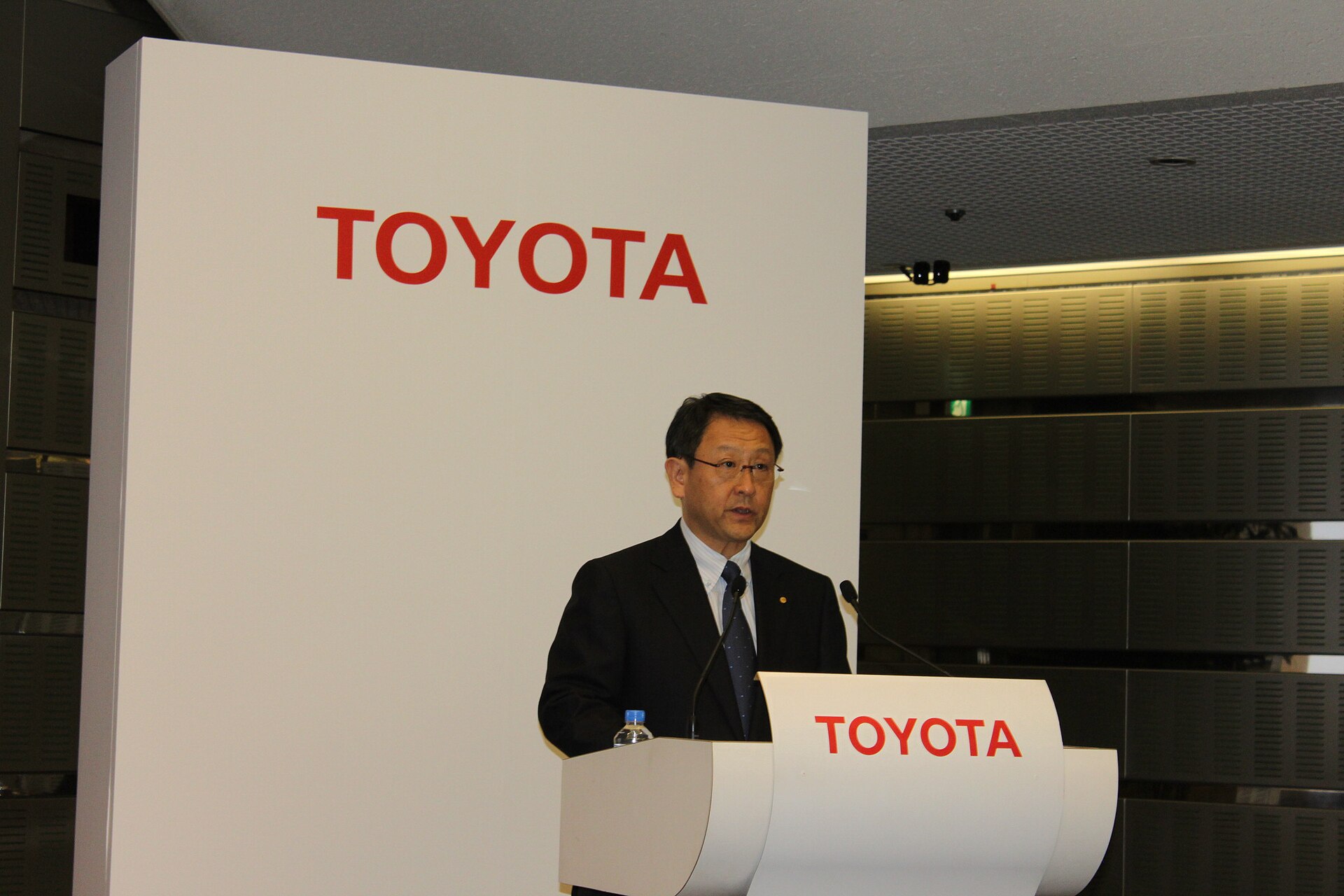
Akio Toyoda, then president of Toyota, and Osamu Suzuki, chairman of Suzuki, jointly announced the framework in2017. Both executives emphasized that the partnership was not a merger. Each firm would continue to compete independently in markets outside the agreed joint projects.
India Compact Vehicle Supply Agreement
Badge-engineering the bestsellers
The most tangible output of the alliance was the badge-engineering arrangement for India. Suzuki's Maruti Suzuki subsidiary produces the Baleno, a premium hatchback, and the Vitara Brezza, a compact SUV. Both models were already segment leaders. Under the OEM pact, Toyota began selling the Glanza (a Baleno with Toyota badging and minor styling changes) and the Urban Cruiser (a rebadged Vitara Brezza).
Factory utilization and dealer reach
The arrangement let Toyota expand its lineup without investing in new manufacturing capacity or developing models from scratch. Suzuki gained additional production volume for its factories, improving plant utilization. Toyota Kirloskar Motor sold the rebadged vehicles through its own dealerships, giving Suzuki indirect access to Toyota's customer base for service and parts.
The supply agreement was limited to India. Neither automaker extended the badge-engineering to other markets as part of the initial deal. The models were positioned below Toyota's existing India offerings, which at the time included the Corolla, Camry, and Innova, all priced above the compact segment where Suzuki dominates.
Technology Collaboration: Electrification and Autonomous Driving
Pooling powertrain investment
Beyond the vehicle supply pact, the alliance covered joint development of systems neither firm could efficiently pursue alone. Suzuki committed to working with Toyota on electrified powertrains, including hybrid systems, battery electric vehicles, and fuel cell stacks. Toyota had already invested heavily in hybrid tech through the Prius and had begun developing dedicated battery electric platforms.
Self-driving research for emerging roads
On self-driving, the firms agreed to share research and development work. Toyota had established Toyota Research Institute in2015 and was developing its Guardian and Chauffeur autonomous systems. Suzuki had no comparable in-house program. The partnership allowed Suzuki to access Toyota's sensor suites, control software, and testing data without the prohibitive licensing fees a smaller manufacturer would otherwise face.
The technology sharing was structured as a series of joint projects rather than a single integrated program. Each project had defined deliverables and cost-sharing arrangements. The firms stated that the work would focus on technologies for emerging markets, where road conditions, infrastructure, and price sensitivity differ from the developed markets where most self-driving vehicle testing was concentrated.
Strategic Rationale and Competitive Context
Two pressures, one answer
The alliance was a response to two pressures. The first was the capital cost of developing electrified and self-driving vehicle tech, which was rising faster than revenue growth for most automakers. Suzuki, with annual global sales of roughly3 million vehicles, could not match the R&D budgets of Toyota, Volkswagen, or the major Chinese manufacturers. A technology partnership reduced the per-firm cost.
India's market math
The second pressure was specific to India. Suzuki through Maruti Suzuki held about50% of the Indian passenger vehicle market by2019, but that position was under threat from new entrants and from tightening emissions regulations. Suzuki had limited experience with hybrid and electric powertrains at scale. Toyota had the technology but only a3-4% market share in India, constrained by a product lineup that was too large and expensive for the mass market. The alliance combined Suzuki's distribution and manufacturing with Toyota's electrification portfolio.
Competing while cooperating
Both automakers remained competitors in markets such as Japan and Europe, where they sell directly competing models. The partnership was governed by a steering committee that reviewed each project to ensure it did not violate competition law. The cross-shareholding was designed to align long-term incentives without creating the integration risks of a full merger.
Key Facts
- Announcement date: October2016 (proposal); February2017 (memorandum of understanding)
- Finalization date: August2019
- Toyota stake in Suzuki: 4.94% for approximately96 billion yen
- Suzuki stake in Toyota: Reciprocal stake for approximately48 billion yen
- Regulatory approval: Competition Commission of India clearance obtained in2019
- Rebadged models for India: Toyota Glanza (Suzuki Baleno), Toyota Urban Cruiser (Suzuki Vitara Brezza)
- Technology focus: Electrification (hybrid, battery electric, fuel cell) and self-driving
Rebadged Models Under the OEM Agreement
| Toyota model name | Suzuki source model | Segment | Market |
|---|---|---|---|
| Toyota Glanza | Suzuki Baleno | Premium hatchback | India |
| Toyota Urban Cruiser | Suzuki Vitara Brezza | Compact SUV | India |
Frequently Asked Questions
Did Toyota and Suzuki merge?
No. The alliance was a cross-shareholding and operational partnership. Both firms remain independent and compete in markets outside the agreed collaboration areas.
What vehicles did Suzuki supply to Toyota?
Suzuki supplied the Baleno and Vitara Brezza, which Toyota sold in India as the Glanza and Urban Cruiser respectively.
Why did Toyota need Suzuki for India?
Toyota had only a small share of the Indian market. Suzuki through Maruti Suzuki controlled about half of it. The OEM deal let Toyota enter the compact segment without developing new models.
What technology did Suzuki gain from Toyota?
Access to Toyota's electrified powertrains (hybrid, battery electric, fuel cell) and self-driving systems, which Suzuki could not develop alone at competitive cost.