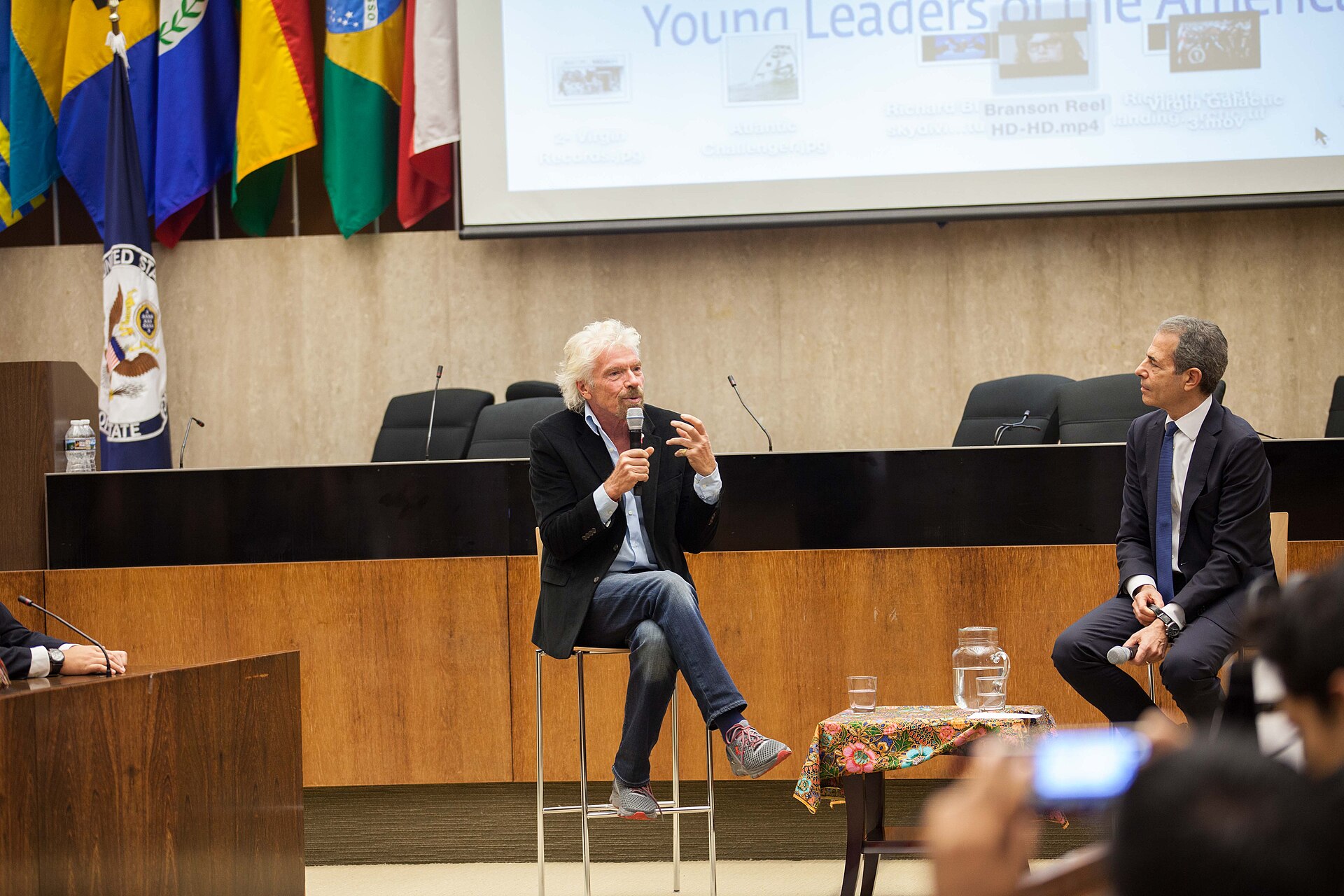
In November 2018, Richard Branson launched a competition to reinvent residential air conditioning. The Global Cooling Prize, backed by a coalition that included the Indian government and research partners, offered more than $3 million for a cooling system with one fifth the climate impact of a standard unit. The prize concluded in April 2021, when two winners split the purse after proving their designs worked in extreme summer heat in Delhi.
The target was not incremental. Standard residential air conditioners use refrigerants with high global warming potential and consume large amounts of electricity, often from coal-fired grids. The prize required a fivefold reduction in climate impact, measured across both direct refrigerant emissions and indirect emissions from electricity use. That meant designing a unit that was radically more efficient and used a low-impact working fluid, all while remaining affordable enough for mass adoption in developing countries.
The outcome is settled. Gree Electric Appliances of China and Daikin Airconditioning India, working with Tsinghua University and Nikken Sekkei respectively, each demonstrated the required performance. Whether their designs have reached commercial production at scale is not established here. The contest itself is over.

The coalition behind the prize
Branson was the public face, but the prize was administered by Rocky Mountain Institute, now known as RMI. Co-sponsors included the Government of India's Department of Science and Technology and Mission Innovation, a global initiative to accelerate clean energy innovation. The partnership was deliberate. India was expected to account for a large share of the coming surge in air conditioning demand, and any solution that worked there would have relevance across the tropics.
The total prize purse exceeded $3 million. The administrators set the amount to cover development costs and provide an incentive for a technology that, if successful, would face a long path to commercialisation. For the official breakdown, see the prize’s final report on the RMI website.
The competition timeline
From 2,000 entrants to eight finalists
The contest opened for registrations in late 2018. Over 2,000 teams from 96 countries expressed initial interest. That number was winnowed through a series of design reviews and feasibility assessments. In November 2019, eight finalists were announced. Each received funding and support to build a working model.
The Delhi summer trials
Testing was conducted in a real residential setting in Delhi during the summer of 2020, when outdoor temperatures regularly exceeded 40 degrees Celsius.
The location was chosen because it represents the conditions under which the technology would need to perform in the fastest-growing AC markets. The test units were installed in actual homes and monitored for cooling performance, energy consumption, and leakage over the hottest months.
The winning technologies
Gree Electric Appliances, working with Tsinghua University, developed a unit that combined a high-efficiency compressor with a low-global-warming-potential refrigerant. Daikin Airconditioning India, partnered with Nikken Sekkei, produced a system that integrated advanced heat exchange and inverter technology to cut power draw while maintaining cooling capacity.
Both test units achieved the fivefold reduction in climate impact under the Delhi summer conditions. The metric accounted for the full lifecycle, including the choice of working fluid and the carbon intensity of the Indian electricity grid. The prize administrators confirmed that the units met the threshold without sacrificing cooling performance or affordability targets.
What happened after the prize
The contest concluded in April 2021 with the winners receiving their prize money. Gree and Daikin each announced plans to commercialise their designs. Gree said it would bring a version of its unit to market in China and other emerging economies. Daikin indicated it would produce its winning design in India, leveraging its existing manufacturing base there.
As of April 2024, this brief does not establish whether either unit has reached mass-market availability or what the retail price point is. The prize succeeded on its own terms: it produced working models that met the technical target. Whether those models become the basis for a new generation of air conditioners depends on manufacturing scale, supply chains, and consumer demand, not on the contest itself.

Why the prize mattered
Residential air conditioning is a major and growing source of greenhouse gas emissions. The International Energy Agency has projected that the global stock of air conditioners will rise from about 1.6 billion units in 2018 to 5.6 billion by 2050. Most of that growth will occur in India, China, and other developing countries. If those units use conventional technology, the emissions impact would be enormous.
The Global Cooling Prize was one attempt to change that trajectory. It did not require governments to pass regulations or consumers to change behaviour. It simply created a financial incentive for engineers to solve a hard technical problem. The prize format is a well-known tool in innovation policy, used for everything from spaceflight to vaccine development. In this case, it produced two viable solutions. Whether those solutions scale is a separate question, but the prize itself demonstrated that a fivefold improvement is possible.
Limits of the prize approach
A contest can reward invention, but it cannot compel adoption. The winning units were test models, not products. They were built under special conditions and tested in a controlled setting. Moving from a one-off build to mass production requires investment in manufacturing lines, supply chains, and service networks. It also requires that the units be affordable for the households that need them most. The prize did not solve those problems.
Branson's involvement drew attention to the issue, but the Virgin Group has not publicly announced a continuing partnership with either manufacturer. The prize's legacy is the technical proof that a radically more efficient air conditioner is feasible. The work of turning that proof into a product that people can buy falls to the manufacturers and to the policy environment in which they operate.
Key facts
- Launch date: November 2018
- Prize purse: More than $3 million USD
- Climate impact target: 5 times less than standard units
- Initial registrations: Over 2,000 teams from 96 countries
- Finalists announced: November 2019
- Testing location: Delhi, India (summer 2020)
- Winners announced: April 2021
- Winning teams: Gree Electric Appliances (China) and Daikin Airconditioning India (Japan/India)
- Collaborating institutions: Tsinghua University (with Gree), Nikken Sekkei (with Daikin)
- Administering body: Rocky Mountain Institute (RMI)
- Co-sponsors: Government of India Department of Science and Technology, Mission Innovation
Frequently asked questions
Did the Global Cooling Prize winners actually achieve the fivefold reduction?
Yes. Both Gree and Daikin demonstrated the required fivefold reduction in climate impact during real-world testing in Delhi, India, in summer 2020.
Are the winning air conditioners available for purchase?
The brief does not establish whether either unit has reached mass-market commercial availability as of April 2024.
Who sponsored the prize alongside Richard Branson?
The prize was co-sponsored by the Government of India's Department of Science and Technology and Mission Innovation, and was administered by Rocky Mountain Institute (RMI).
How much prize money was awarded?
The total prize purse was over $3 million USD, split between the two winning teams.
Where were the test units tested?
The test units were tested in residential homes in Delhi, India, during the extreme heat of summer 2020.