The hyperloop industry defined by Elon Musk's 2013 vision of passenger pods racing through low-pressure tubes failed to produce a single commercial system. Virgin Hyperloop, the sector's most heavily financed company, shut down in December 2023 after pivoting to freight. No revenue route was ever built or approved for carrying people. Remaining entities such as Hardt Hyperloop and TransPod continue research and testing but have not reached commercial operations.
This account traces every company that tried to build Musk's idea: their technological approaches, test infrastructure, backers, and current status. It covers Virgin Hyperloop, Hyperloop Transportation Technologies, Hardt Hyperloop, Zeleros, TransPod, and the adjacent work of SpaceX and The Boring Company. The hyperloop story is one of enormous hype followed by a quiet end, with billions of dollars in investment and zero paying riders.

The Original Vision and the Companies That Chased It
Elon Musk published a white paper titled 'Hyperloop Alpha' in August 2013, proposing a system of capsules traveling through low-pressure tubes at speeds exceeding 700 miles per hour. Musk said he was too busy with Tesla and SpaceX to build it himself, an invitation that a generation of entrepreneurs took literally.
Two companies emerged directly from Musk's paper. Hyperloop Technologies, later renamed Hyperloop One and then Virgin Hyperloop, was incorporated in 2014. Hyperloop Transportation Technologies (HTT) formed around the same time, using a crowdsourced engineering model. A third firm, TransPod, was established in Canada in 2015. European entrants Hardt Hyperloop and Zeleros appeared in 2016 and 2017 respectively.
SpaceX, Musk's rocket company, hosted annual Hyperloop Pod Competition events from 2015 to 2019 at its Hawthorne, California test track. These competitions gave student teams a platform to build small-scale pods and kept the concept in the news. SpaceX itself never built a hyperloop. The Boring Company, started by Musk in 2016, is a separate entity focused on tunnel construction. It built the 'Vegas Loop' using Tesla vehicles, not hyperloop pods, and is often confused with hyperloop development.
Virgin Hyperloop: The Most Funded, the Most Visible, and the First to Fail
Virgin Hyperloop began as Hyperloop Technologies in 2014, co-founded by Shervin Pishevar and others. The company rebranded to Hyperloop One in 2016 and then to Virgin Hyperloop after Richard Branson's Virgin Group invested in 2017. It was the most visible hyperloop company, with Branson as chairman and a parade of high-profile partnerships.
The company built the DevLoop test track in Las Vegas, Nevada. DevLoop was 500 meters long, roughly one-sixth of a mile, far shorter than the miles-long tubes needed for real service. In November 2020, Virgin Hyperloop conducted its first passenger test with occupants on that track. Two employees rode a pod for a few seconds at speeds the company did not disclose in detail. The event generated enormous press coverage and was the peak of hyperloop hype.
Behind the scenes, the company struggled. Building a full route required regulatory approval, land acquisition, and capital spending measured in billions of dollars per mile. No government committed to financing a route. In February 2022, Virgin Hyperloop laid off approximately half its staff and pivoted from moving people to moving freight. In December 2023, the company ceased operations entirely.
Hyperloop Transportation Technologies: Crowdsourced and Quietly Defunct
Hyperloop Transportation Technologies (HTT) was established in 2013, shortly after Musk's white paper. It used a crowdsourced engineering model, recruiting part-time contributors who received stock options instead of cash pay. HTT claimed to have thousands of contributors worldwide, though the company never released audited headcounts.
HTT signed memoranda of understanding with governments in South Korea, India, Ukraine, and the United Arab Emirates. It announced plans for a test track in Toulouse, France, and a route between Bratislava and Vienna. None of these projects advanced to construction. The company's technology used passive magnetic levitation, which it said was cheaper than active systems. HTT never built a test track and never carried a traveler.
The company is widely considered defunct, though no formal closure announcement was made. Its website stopped updating in 2022. HTT raised an undisclosed amount of capital, mostly through its contributor model and smaller venture rounds. It never released audited financial statements.
European Contenders: Hardt Hyperloop, Zeleros, and the European Hyperloop Center
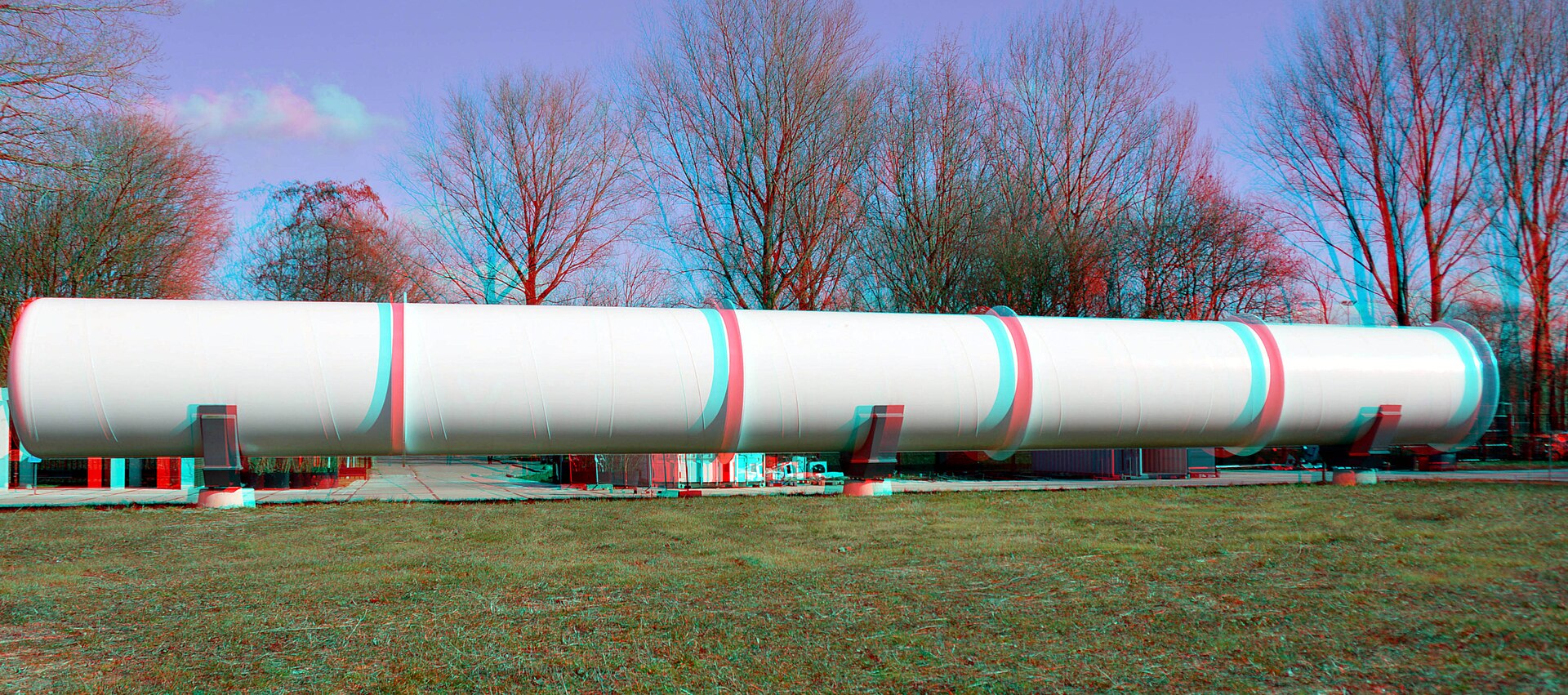
Hardt Hyperloop is a Dutch company that built a 30-meter test facility in Delft and opened the European Hyperloop Center in Groningen in 2024. The European Hyperloop Center is a tube that can test pod subsystems and low-speed operations. Hardt has received backing from the Dutch government and European Union grants, though total figures are not public.
Zeleros is a Spanish hyperloop company established in 2016. It developed a technology that combines magnetic levitation with a partial vacuum system that it claimed reduced infrastructure costs. Zeleros partnered with the Spanish government and the Port of Valencia for a proposed freight route. It has not built a test track.
Both companies continue research and testing as of May 2025, but neither has achieved commercial operations. The European Hyperloop Center is a research facility, not a revenue route. Hardt and Zeleros have not announced firm plans for passenger service.

TransPod: Canadian Ambitions With No Track
TransPod is a Canadian hyperloop company established in 2015. It announced plans for a test track in Alberta and a proposed route between Calgary and Edmonton. The company claimed its technology could reach speeds of 1,000 kilometers per hour and that it would use a linear induction motor with air bearings.
TransPod signed a memorandum of understanding with the Alberta government in 2020. The agreement was a feasibility study, not a construction contract. TransPod said it would build a test track outside Edmonton, but as of May 2025, no track has been built. The company has not conducted a passenger test with occupants.
TransPod continues to operate as a development-stage company. It has not released audited financial statements or disclosed its total backing. The Alberta government has not committed public money to construction.
Key Facts: Hyperloop Companies
- First company founded: Hyperloop Transportation Technologies (2013)
- Most funded company: Virgin Hyperloop (formerly Hyperloop One)
- Only passenger test with occupants: Virgin Hyperloop, November 2020, DevLoop track
- Length of DevLoop test track: 500 meters
- Largest test facility: European Hyperloop Center (2024)
- Commercial passenger systems built: Zero
- Virgin Hyperloop ceased operations: December 2023
Hyperloop Companies: Technology, Test Facilities, and Status
| Company | Technology | Test facility | Funding source | Status as of May 2025 |
|---|---|---|---|---|
| Virgin Hyperloop | Magnetic levitation, passenger then cargo | DevLoop, 500m, Las Vegas | Virgin Group, venture capital | Ceased operations December 2023 |
| Hyperloop Transportation Technologies | Passive magnetic levitation | None built | Crowdsourced equity, venture capital | Defunct (no formal closure) |
| Hardt Hyperloop | Magnetic levitation | 30m Delft, European Hyperloop Center | Dutch government, EU grants | Active, research only |
| Zeleros | Magnetic levitation with partial vacuum | None built | Spanish government, EU grants | Active, research only |
| TransPod | Linear induction motor, air bearings | None built | Undisclosed | Active, development stage |
The Hype Cycle: Partnerships, Board Appointments, and Public Demonstrations
The hyperloop industry's peak of hype ran from roughly 2016 to 2020. Virgin Hyperloop signed agreements with DP World, the Dubai port operator, for a freight hyperloop. It appointed Richard Branson as chairman in 2017. The company announced routes in India, Saudi Arabia, and the United Arab Emirates. None advanced beyond feasibility studies.
HTT signed agreements with the governments of South Korea and India. It announced a partnership with the French rail company SNCF and appointed former Obama administration officials to its board. TransPod signed its Alberta agreement. Hardt and Zeleros received European Union grants.
The November 2020 passenger test was the industry's highest-profile moment. Virgin Hyperloop streamed the event live. Major news outlets covered it. But the test was a few seconds on a 500-meter track. The company never disclosed the speed. It was a demonstration of a concept, not a working transportation system.
Why No Commercial Hyperloop Was Ever Built
The hyperloop concept faced fundamental problems that no company solved. First, the cost. A hyperloop route requires a continuous low-pressure tube, which must be elevated or buried, and must maintain a near-vacuum over miles. Engineers estimated costs comparable to high-speed rail but with no proven technology. Check the latest per-mile estimates published by the European Hyperloop Center for the most current figures.
Second, the regulatory problem. No country had a regulatory framework for a hyperloop. Safety certification for a new mode of transport carrying travelers at 700 miles per hour in a sealed tube is a multi-year process. No company began that process.
Third, the land problem. A hyperloop route requires a continuous, straight corridor free of obstacles. In dense regions, acquiring that land is politically and financially impossible. In empty regions, the business case collapses. The industry promised to solve all three problems through innovation and government partnerships. In the end, it solved none of them.

What Remains: Research Facilities and the Boring Company Confusion
The European Hyperloop Center in Groningen is the only major test facility still operating as of May 2025. It is a research center, not a revenue route. Hardt Hyperloop uses it to test pod subsystems. The center is backed by Dutch and EU grants, not private investment for a commercial service.
The Boring Company, often confused with hyperloop development, is a separate effort. It builds tunnels for electric vehicles. Its Vegas Loop uses Tesla cars on conventional roads in tunnels. The Boring Company has not built a hyperloop tube or a low-pressure system. Musk himself has not spoken publicly about hyperloop since 2017.
Zeleros and TransPod continue to operate as development-stage companies. Neither has announced a timeline for a revenue route. No company has filed for regulatory approval of a passenger hyperloop anywhere in the world.
The Outcome: An Industry That Did Not Deliver
The hyperloop industry, as defined by the original 2013 vision of high-speed passenger pods in low-pressure tubes, failed to produce a single commercial system. Virgin Hyperloop, the sector's most heavily financed company, shut down in December 2023 after pivoting to freight. No revenue route was ever built or approved for carrying people. Remaining entities such as Hardt Hyperloop and TransPod continue research and testing but have not achieved commercial operations.
Total investment in the sector is difficult to calculate precisely because several companies did not disclose their backing. What is clear is that no paying rider ever traveled on a hyperloop. The technology may eventually find use in cargo or in shorter corridors, but the vision Musk laid out in 2013 of a new mode of intercity passenger transport has not been realized. The hyperloop industry, as a commercial venture, is over.
Frequently Asked Questions
Did Elon Musk build a hyperloop?
No. Musk published the 'Hyperloop Alpha' white paper in 2013 but did not build a hyperloop. SpaceX hosted pod competitions. The Boring Company builds tunnels for Tesla vehicles, not hyperloop pods.
What happened to Virgin Hyperloop?
Virgin Hyperloop ceased operations in December 2023. It laid off half its staff in February 2022 and pivoted to cargo before shutting down.
Is the hyperloop dead?
No commercial hyperloop system was ever built. Research continues at the European Hyperloop Center and at companies like Hardt Hyperloop and TransPod, but no passenger route has been approved.
How much did hyperloop companies raise?
Exact totals are not public for all companies. Virgin Hyperloop was the most funded, with investment from Virgin Group and venture capital. Smaller companies like Zeleros and TransPod did not disclose their full backing.