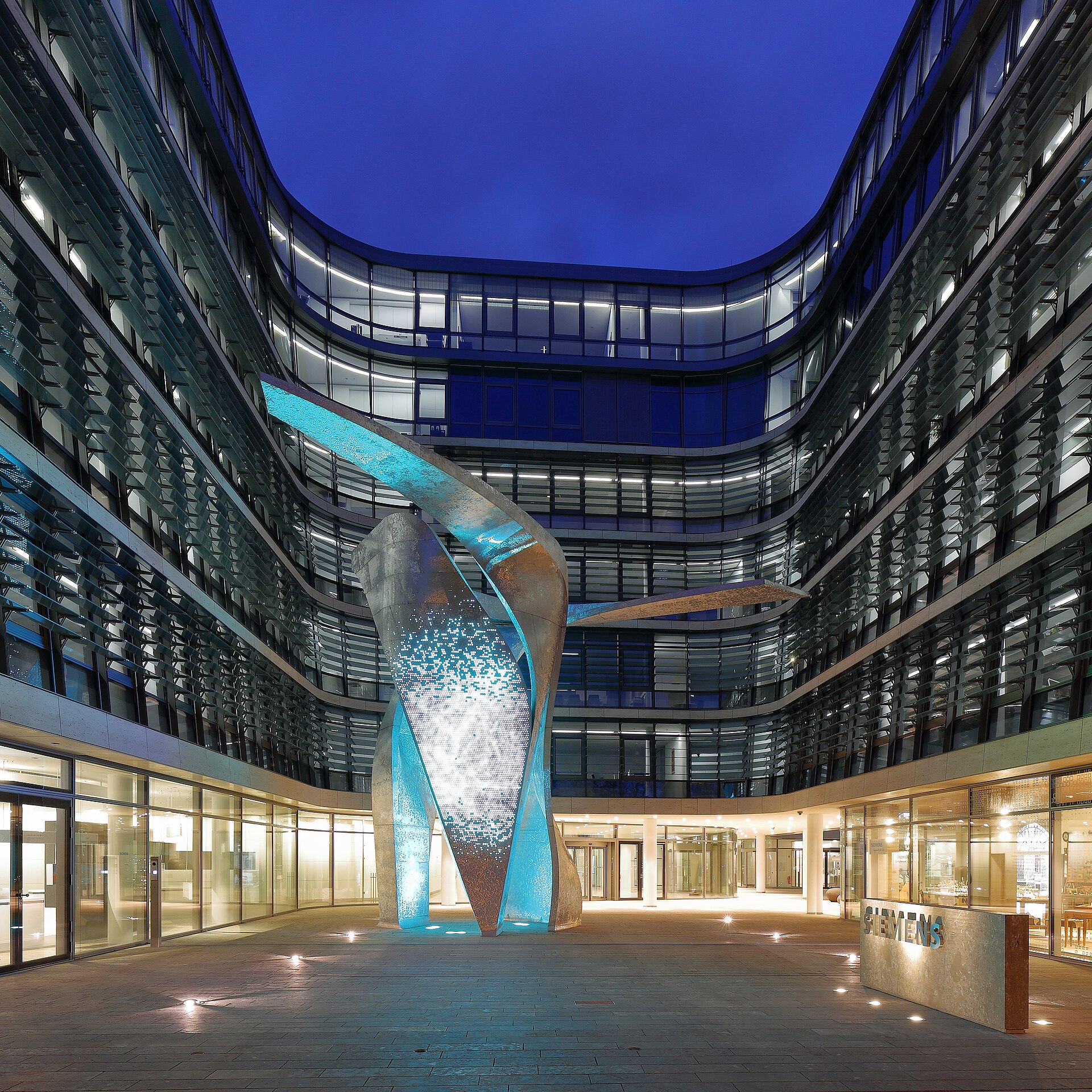
In September 2015, Siemens set a target to cut its global carbon output by 50 percent by 2020 and to become carbon neutral by 2030. The industrial group reached that 2030 goal seven years early. In 2023, Siemens announced that it had achieved carbon-neutral operations in its own facilities, with the operational changes forced by the COVID-19 crisis cited as an accelerating factor. The upheaval did not just delay the plan. It stress-tested the digital tools Siemens sells to other organizations, validated the business case for its own environmental portfolio, and turned hundreds of thousands of employees into a living laboratory for climate-neutral operations.
The Munich-based conglomerate, listed on the Frankfurt Stock Exchange under ticker SIE, used the disruption to pull forward investments in smart buildings, industrial IoT platforms, and remote collaboration tools. The result was a drop in business travel and commuting that persisted beyond lockdowns, a reallocation of savings into renewable-energy projects, and a go-to-market narrative that linked resilience directly to sustainability.

The 2030 Target and the Pandemic Pivot
Siemens announced its carbon-neutrality goal in September 2015, the same year the Paris Agreement was signed. The plan called for a 50 percent cut in pollution by 2020 and full carbon neutrality in the firm's own operations by 2030. By 2019, Siemens had already slashed its footprint by more than half, largely through energy-efficiency upgrades, on-site renewable generation, and power-purchase agreements.
When the coronavirus hit in early 2020, Siemens CEO Joe Kaeser and his successor Roland Busch, who took over in February 2021, did not pause the climate program. Instead, they used the crisis as a catalyst. The enterprise launched a global remote-working mandate that affected hundreds of thousands of employees. That mandate emptied office towers in Munich, factory floors in Erlangen, and research labs in Princeton. The question was whether the digital infrastructure Siemens had built could maintain productivity while slashing energy use.
Quantified Reductions in Travel and Commuting
The Immediate Impact on Flights
The most immediate impact was on business travel. Siemens had long been a heavy user of intercontinental flights, with executives and engineers regularly shuttling between Europe, Asia, and the Americas. In 2020, that stopped. The firm's internal data showed a steep drop in flights compared with the pre-crisis baseline. Although Siemens has not released the exact euro amount saved in fiscal year 2020 versus fiscal year 2019, the drop in travel-related pollution was substantial enough to move the needle on the company's Scope 3 targets.
Empty Campuses and Collapsed Commuting
Employee commuting, another large source of greenhouse gases, also collapsed. Siemens' major campuses in Munich, Berlin, and Nuremberg saw occupancy fall to single-digit percentages for much of 2020. The energy required to heat, cool, and light those structures dropped in lockstep. Siemens estimated that the combined effect of reduced travel and lower building occupancy contributed significantly to the accelerated timeline for achieving carbon neutrality, though the company has not attributed a precise percentage to the crisis versus long-term efficiency measures.
Smart-Building Platforms in Empty Facilities
Remote Control of Vacant Real Estate
Managing empty or partially occupied facilities at scale required the very systems Siemens sells to its customers. The Smart Infrastructure division, which sells building automation, fire safety, and energy-management systems, deployed its Desigo CC building-management platform across Siemens' own global real estate portfolio. Desigo CC allowed facility managers to monitor and control heating, ventilation, air conditioning, and lighting remotely, adjusting setpoints based on actual occupancy rather than fixed schedules.
Analytics and the Factory Floor
The Navigator platform, another Smart Infrastructure product, provided real-time energy analytics and benchmarking. It identified structures that were wasting power even when empty and automated the shift to low-power modes. On the factory side, Siemens' Digital Industries division used the MindSphere industrial IoT platform to monitor production equipment in plants that were running at reduced capacity. MindSphere collected data on energy consumption per unit of output, allowing managers to shut down non-critical machinery without affecting supply chains. The effect was a dramatic drop in energy intensity across Siemens' own operations.
Energy Consumption at Major Campuses and Factories
A Shift in Energy Profiles
The shift to remote work did not eliminate energy use, but it changed its profile. At Siemens' main campus in Munich, where thousands of employees normally worked, the building-management systems dialed back HVAC and lighting to minimum levels. The company's factories, many of which remained open for essential production, saw a different pattern. Energy consumption per square meter fell in office buildings but held steady or rose in data centers and R&D labs, which had to support a fully remote workforce.
Persistent Savings, Faster Investment
Siemens reported that the net effect was a meaningful decline in total operational energy consumption during 2020 and 2021. The precise drop in Scope 1 and Scope 2 pollution specifically attributable to lockdowns versus long-term efficiency measures has not been broken out by the enterprise. But the pattern was clear: the global health crisis proved that large organizations could operate with far less physical presence, and the energy savings were real and persistent. Siemens used those savings to justify faster investment in on-site solar arrays and power-purchase agreements, effectively recycling operational cost reductions into capital projects that locked in lower pollution for the long term.

Reinvestment of Savings and Division Performance
From Travel Cuts to Solar Panels
The money Siemens saved on travel and office energy did not simply fall to the bottom line. The firm directed a portion of those savings into renewable-energy projects. Siemens expanded its on-site solar capacity at factories in Germany, India, and the United States, and signed additional virtual power-purchase agreements for wind and solar farms. The company has not disclosed the exact share of travel savings that was reinvested, but the timing of the investments aligns with the crisis period.
Divisions Prove the Thesis
The financial performance of Siemens' Smart Infrastructure and Digital Industries divisions during the pandemic quarters reinforced the internal logic. Smart Infrastructure, which includes building automation and energy management, reported resilient revenue through 2020 and 2021 as customers sought to reduce energy costs in their own empty properties. Digital Industries, home to MindSphere, saw increased demand for remote monitoring and predictive maintenance. The divisions' products were not just being used inside Siemens. They were being sold to the same industrial clients who were also struggling to manage remote workforces and cut energy bills. The disruption made Siemens' own experience a referenceable case study for its customers.
Leadership Statements and the New Sales Narrative
Executives Connect Resilience and Decarbonization
Siemens executives explicitly connected the pandemic response to the climate strategy. Chief Sustainability Officer Judith Wiese said in 2021 that the crisis had shown the company could accelerate its decarbonization timeline without sacrificing productivity. CEO Roland Busch, who took over in February 2021, framed digitalization as the enabler of both resilience and sustainability, a message that resonated with industrial clients facing supply-chain disruptions and energy price volatility.
A Living Laboratory for Customers
The experience reshaped Siemens' go-to-market narrative. Before the outbreak, the firm sold digitalization-as-a-service primarily as a productivity and efficiency play. After 2020, the pitch added resilience and carbon cuts as equal pillars. The message was that the same tools that allowed Siemens to operate its own structures and factories with minimal energy use and near-zero travel could do the same for its customers. The health emergency had turned Siemens' own operations into a living laboratory, and the results were measurable: carbon neutrality achieved ahead of schedule, with the crisis as a catalyst rather than a setback.
Key Facts
- Headquarters: Munich, Germany
- Original carbon-neutrality target: 2030 (announced September 2015)
- Achieved carbon neutrality: 2023, ahead of schedule
- Pandemic-era remote-working mandate: Affected hundreds of thousands of employees
- Key smart-building platform: Desigo CC (Smart Infrastructure division)
- Key IoT platform: MindSphere (Digital Industries division)
- Stock exchange listing: Frankfurt Stock Exchange, ticker SIE
Siemens Divisions and Their Pandemic-Relevant Products
| Division | Product/Platform | Function |
|---|---|---|
| Smart Infrastructure | Desigo CC | Building automation, HVAC, lighting control |
| Smart Infrastructure | Navigator | Energy analytics and benchmarking |
| Digital Industries | MindSphere | Industrial IoT, remote monitoring, predictive maintenance |
FAQ
When did Siemens originally plan to become carbon neutral?
Siemens set a target in September 2015 to become carbon neutral in its own operations by 2030.
Did Siemens achieve carbon neutrality early?
Yes. Siemens announced in 2023 that it had reached carbon-neutral operations ahead of the 2030 target.
What role did the COVID-19 pandemic play?
The pandemic reduced business travel and commuting, validated Siemens' own smart-building and IoT platforms, and accelerated investments in renewable energy and efficiency measures.