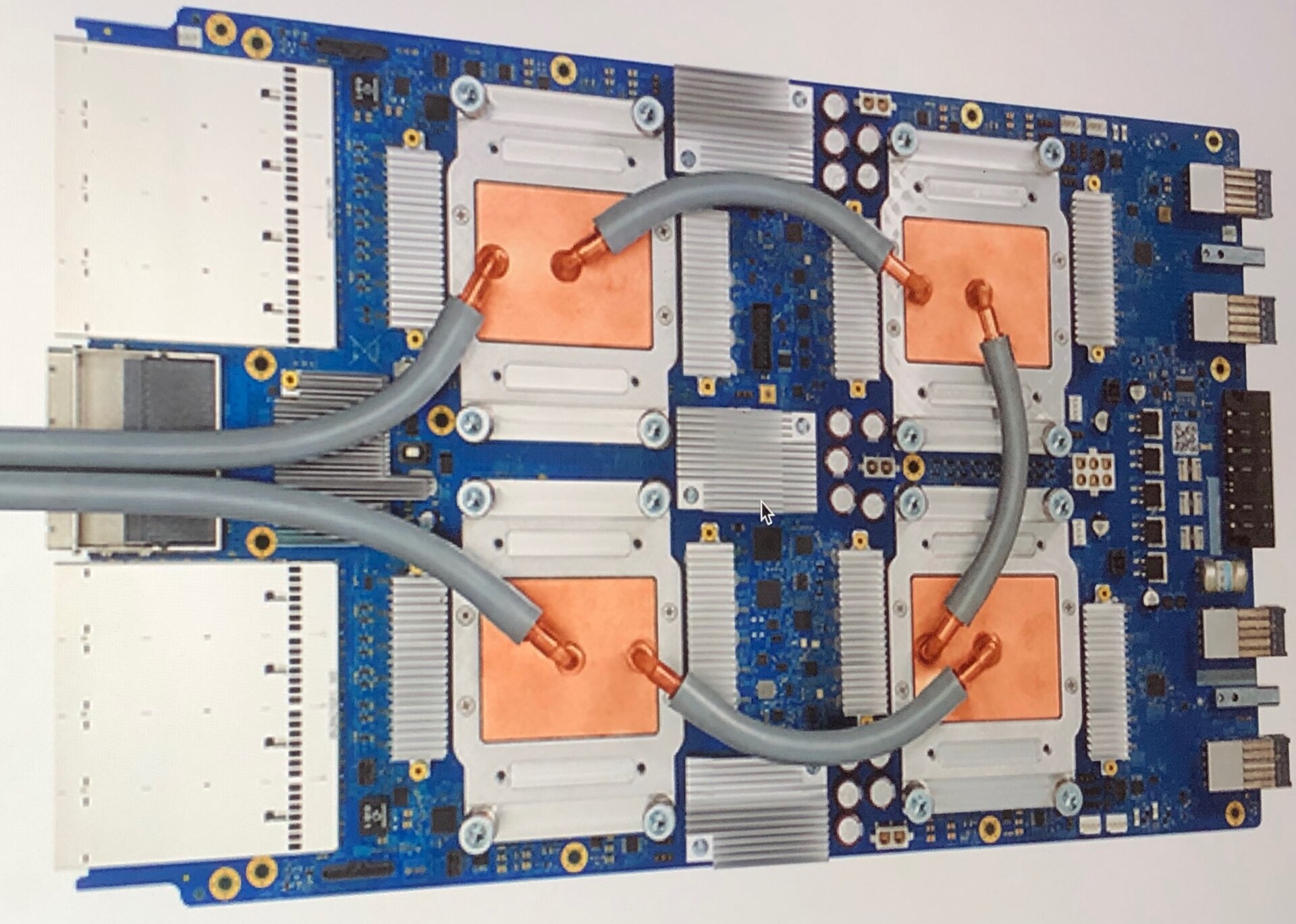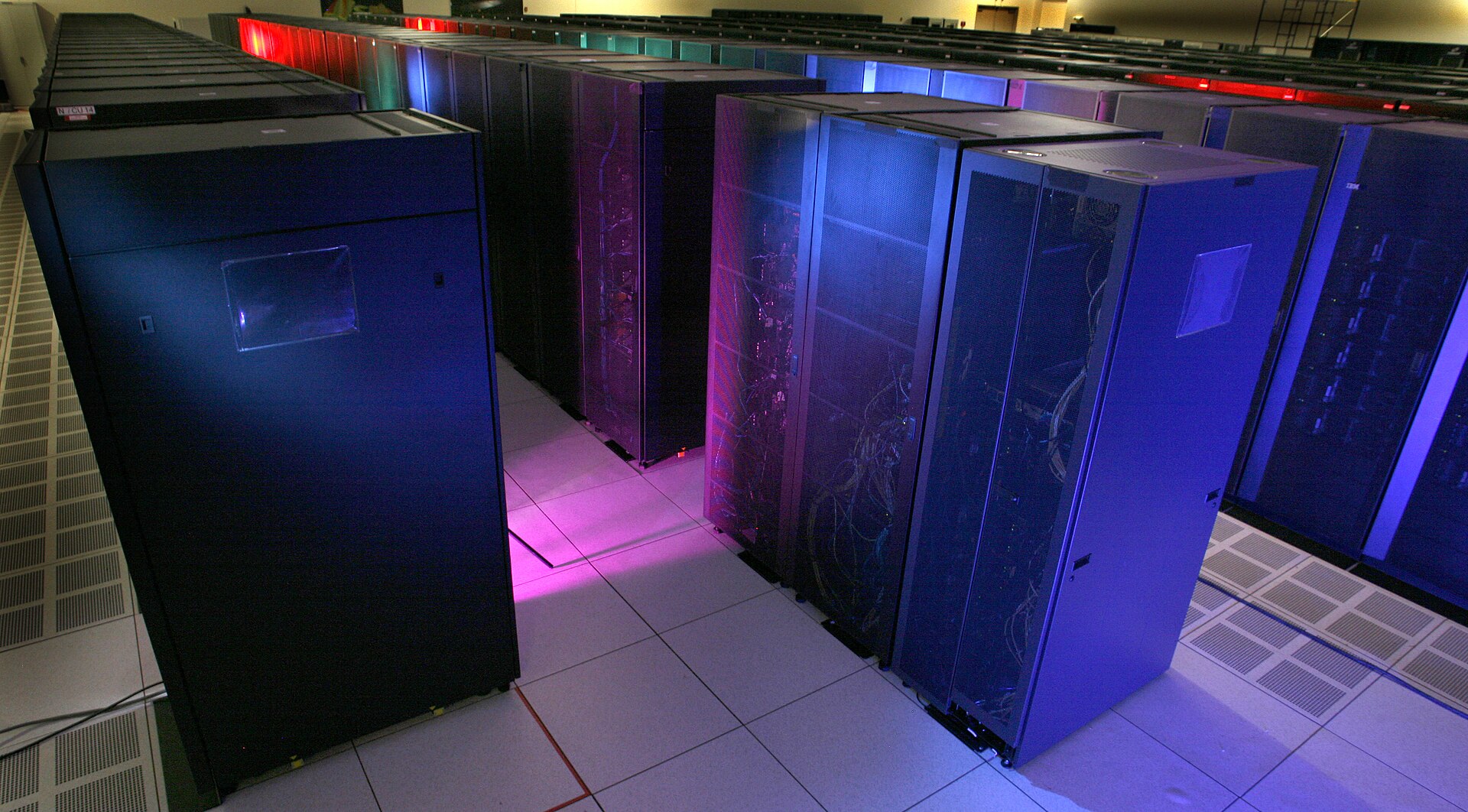
In October 2019, Google published a paper in the journal Nature claiming that its 53-qubit Sycamore processor had achieved quantum supremacy. The claim rested on a single computation: a random circuit sampling task that Sycamore completed in 200 seconds. Google estimated that the same task would take the world's fastest conventional supercomputer, Summit at Oak Ridge National Laboratory, about 10,000 years. The paper was a landmark, but it did not go unchallenged. IBM, Google's main rival in quantum computing, issued a public rebuttal before the Nature paper was officially published, arguing that the same task could be simulated on a classical system in 2.5 days using a different technique that relied on disk storage. The disagreement never led to a retraction or a formal resolution. Google's claim of achieving quantum supremacy stands as a widely recognized experimental milestone, despite IBM's technical critique. The episode highlighted how differently the two companies defined the supremacy threshold and set the terms for the next phase of the quantum computing race.
The Computation: Random Circuit Sampling
The specific task Sycamore performed was a random circuit sampling problem. In this type of computation, a quantum processor applies a sequence of random gates to its qubits, then measures the output. The result is a probability distribution over all possible bitstrings. For a classical computer to simulate this, it must track the quantum state of the system, which grows exponentially with the number of qubits. For 53 qubits, the state space is a vector of 2 to the power of 53 complex numbers, far beyond what any conventional machine can hold in memory. Google chose this problem because it is hard for classical computers but naturally suited to quantum processors. The random circuit sampling task had no practical application; it was a benchmark designed to demonstrate a capability. Google's claim was that Sycamore had performed a computation that no classical computer could replicate in a reasonable time.

Google's Time Estimate and the Sycamore Processor
Google estimated that Summit, the IBM-built supercomputer at Oak Ridge National Laboratory, would take 10,000 years to simulate the Sycamore experiment. That estimate assumed an ideal classical simulation that tracked the full quantum state. Google argued that even with advances in classical algorithms and hardware, the gap between quantum and classical performance was so large that it constituted a crossover point. The Sycamore processor had 53 operational qubits, though the chip itself contained 54. One qubit was non-functional, a common issue in early quantum processors. The processor used superconducting transmon qubits, the same technology IBM employed in its own quantum chips. John Martinis, who led Google's quantum hardware group at the time, described the experiment as a proof of principle: a quantum system outperforming a classical one on a well-defined task.
IBM's Rebuttal: 2.5 Days, Not 10,000 Years
On October 21, 2019, before the Nature paper was officially published, IBM published a blog post and a technical note contesting Google's claim. IBM argued that Google's estimate of 10,000 years was based on an outdated classical simulation method. IBM proposed an alternative approach that used disk storage to supplement memory, allowing the classical simulation to handle the full quantum state. With that technique, IBM estimated that the same task could be simulated on Summit in 2.5 days. The 2.5-day figure did not mean the task was easy, but it changed the narrative. Google had claimed a computation that would take millennia; IBM said it would take a weekend. Dario Gil, then IBM Research director, argued that the threshold for quantum supremacy should require a task that is demonstrably beyond the reach of any classical method, not just beyond the reach of a particular simulation technique.
Defining Quantum Supremacy
Preskill's Coinage and Two Interpretations
Quantum supremacy is the point at which a quantum computer can perform a computation that no classical computer can perform in a feasible amount of time. The term was coined by John Preskill in 2012. In practice, the definition is contested. Google's interpretation was that supremacy is achieved when a quantum processor outperforms the best known classical algorithm on a specific task. IBM's interpretation required that the classical simulation be impossible even with novel techniques.
What the Argument Was Really About
The disagreement over Sycamore was not about whether the quantum processor worked; it was about what qualified as a fair comparison. Google used a classical simulation method that did not use disk storage. IBM said that was an arbitrary limitation. The broader quantum computing community accepted that Sycamore had demonstrated a significant speedup, but the exact magnitude of that speedup remained a matter of debate.
Why the Milestone Mattered Despite the Dispute
A First for Public Demonstration
The quantum computing community treated Google's experiment as a milestone for several reasons. It was the first time a quantum processor had been publicly shown to outperform a classical supercomputer on a well-defined task, even if the margin was smaller than claimed.
Hardware Credibility at Scale
The experiment demonstrated that superconducting qubit technology could scale to 53 qubits with sufficiently low error rates to run a nontrivial computation. The Nature paper passed peer review, which gave the claim institutional credibility.
A Productive Clash
The controversy itself was productive: it forced both companies to clarify their assumptions and methods. IBM's rebuttal prompted Google to refine its classical simulation estimates in later work. The episode also drew public and investor attention to quantum computing, accelerating funding and research efforts across the industry.

Implications for the Commercial Quantum Computing Race
Hardened Positions and Diverging Narratives
The supremacy claim had immediate commercial implications. Google and IBM were already the two most visible players in quantum computing, and the clash hardened their positions. Google used the Nature paper to argue that it had reached a milestone that IBM had not. IBM countered by emphasizing that quantum computers would need to demonstrate practical utility, not just supremacy on a synthetic benchmark.
Roadmaps After Sycamore
Both companies continued advancing their roadmaps. Google moved toward larger processors and error correction. IBM focused on building modular systems and expanding its cloud quantum service. The argument did not slow either company's investment. By October 2023, both had announced plans for processors with more than 1,000 qubits. The Sycamore experiment, even with the controversy, set a benchmark that every quantum computing company now measures itself against.
Key Facts
- Processor: Sycamore, 53 operational qubits
- Task: Random circuit sampling
- Google's claim: 200 seconds on Sycamore vs 10,000 years on Summit
- IBM's rebuttal: 2.5 days on Summit using disk storage
- Publication: Nature, October 2019
- Outcome: Claim stands as a milestone; no retraction or resolution
- Key figures: John Martinis (Google), Dario Gil (IBM)
Comparison of Google's and IBM's Positions
| Dimension | IBM | |
|---|---|---|
| Classical simulation time | 10,000 years | 2.5 days |
| Simulation method | Full state in memory | Disk-assisted simulation |
| Definition of supremacy | Outperforming best known classical algorithm | Outperforming any possible classical method |
| Task practical value | None (benchmark only) | None (benchmark only) |
| Outcome of dispute | Paper published, claim stands | Critique published, no retraction |
Frequently Asked Questions
Did Google's Sycamore processor actually achieve quantum supremacy?
The claim is widely recognized as a milestone, but IBM's critique showed that the margin of supremacy was smaller than Google initially claimed. The dispute was never formally resolved.
What was the random circuit sampling task?
A benchmark computation where a quantum processor applies random gates to its qubits and measures the output. The task has no practical application but is hard for classical computers to simulate.
Why did IBM say the task could be done in 2.5 days?
IBM used a simulation technique that stored parts of the quantum state on disk rather than in memory, allowing a classical supercomputer to handle the full state space more efficiently than Google's method assumed.
Does the dispute mean quantum supremacy is not real?
No. The dispute was about the exact threshold, not about whether quantum processors can outperform classical ones. Most researchers agree that Sycamore demonstrated a meaningful speedup.