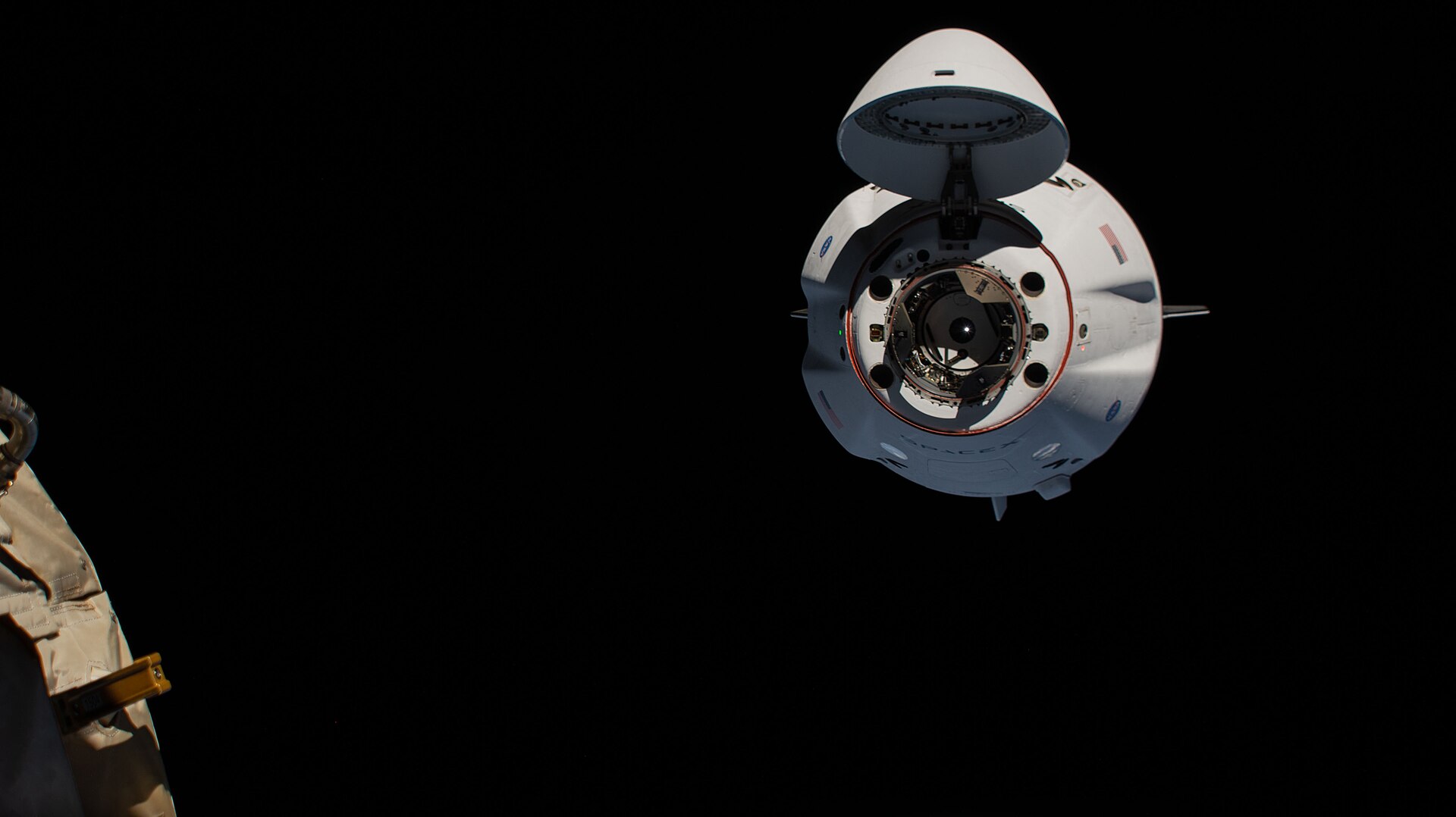
In 2011, NASA had no way to get its own astronauts to the International Space Station. The Space Shuttle had retired, and the agency was buying seats on Russia's Soyuz spacecraft at roughly $80 million per person. By November 2020, SpaceX's Crew Dragon was carrying NASA crews from American soil under a deal that cost less than the Soyuz seat price. The change came from a deliberate shift in how NASA pays for space hardware. Instead of designing and owning the vehicles itself, the agency became a customer buying flights from private companies.
The Commercial Crew program reached operational status, ending U.S. reliance on Russian Soyuz spacecraft for astronaut transport. Multiple private space station concepts are in the design and module-testing phase, with Axiom Space's first module launch planned for the late 2020s. The transition from the ISS to commercial outposts is not yet complete, and the exact timeline depends on the readiness of private replacements.
This examination covers the specific NASA programs, the companies that won agreements, the financial structures that made the shift possible, and the strategic logic of an agency that decided to become an anchor tenant rather than a sole operator in low-Earth orbit.

From COTS to Commercial Crew: How Fixed-Price Deals Replaced Cost-Plus
NASA's Commercial Orbital Transportation Services (COTS) program, initiated in 2006, was the first serious experiment in buying space transportation as a service. The agency provided seed funding for private development of cargo vehicles but did not own the designs. SpaceX used COTS funding to develop the Falcon 9 rocket and the Dragon capsule. When those vehicles proved reliable, NASA moved to Commercial Resupply Services (CRS), a procurement model in which it paid for delivered cargo, not for development hours.
The same logic applied to crew transport. In 2014, NASA awarded Commercial Crew agreements to Boeing for $4.2 billion and to SpaceX for $2.6 billion. The difference in price reflected different vehicle designs and development approaches, but both were firm-fixed-price awards. Under the old cost-plus model, NASA would have paid whatever the contractor spent plus a guaranteed fee. Under a firm-fixed structure, the contractor bore the cost overruns. Boeing eventually took more than $1 billion in charges on Starliner. SpaceX finished Crew Dragon on budget.
The mechanism matters more than the adjectives. Firm-fixed awards transferred development risk to the companies. That forced them to control costs and iterate faster than they would under a cost-plus regime where delays meant more billable hours.
The Companies Building the Next Generation of Orbital Outposts
With the International Space Station officially funded through 2030 and scheduled for a controlled deorbit shortly after, NASA needs replacements. In December 2021, the agency awarded Commercial LEO Destinations (CLD) funded Space Act Agreements to three companies. The publicly announced values were $130 million for Blue Origin, $160 million for Nanoracks, and $125.6 million for Northrop Grumman. These agreements are not full procurement pacts. They fund design work and risk reduction, with the expectation that NASA will later buy services from whichever outposts reach orbit.
Axiom Space took a different path. It contracted directly with NASA to attach commercial modules to the ISS starting in the 2020s. Those modules will eventually detach to form a free-flying commercial facility. Axiom is not a CLD awardee but is arguably the furthest along toward a physical destination in orbit.
The competitive landscape includes Sierra Space, which partnered with Blue Origin on the Orbital Reef concept, and Nanoracks, which later partnered with Voyager Space on the Starlab design. Northrop Grumman initially pursued its own outpost but by 2023 had joined the Starlab partnership. The market is fluid, and the number of platforms that actually reach orbit will depend on whether NASA and other customers commit to long-term service agreements.
Beyond Low-Earth Orbit: The Artemis Human Landing System
NASA's commercial strategy extends beyond low-Earth orbit. The Artemis program, which aims to return humans to the Moon, includes the Human Landing System (HLS) contract. In April 2021, NASA awarded the initial HLS contract to SpaceX for $2.89 billion. The award was for a single company, a departure from the multi-award approach used in CLD. Blue Origin protested the decision, and litigation delayed the program, but NASA ultimately stood by the SpaceX selection.
The HLS contract uses the same firm-fixed logic as Commercial Crew. SpaceX is responsible for developing the Starship lunar lander and demonstrating a landing before NASA pays for operational missions. The financial risk of development delays falls on SpaceX, not the taxpayer. This structure is now the default for NASA's major human spaceflight procurements.
The strategic rationale is consistent across both LEO and lunar programs. NASA wants to be one customer among many, not the only customer. If commercial lunar landers and orbital habitats can serve multiple clients, the cost per mission drops, and NASA's budget goes further.
The Cost Per Kilogram Problem and How Commercial Technology Solved It
Falcon 9's price breakthrough
The shift to commercial services produced measurable cost improvements. SpaceX's Falcon 9, developed under COTS and CRS funding, reduced the cost per kilogram to low-Earth orbit to roughly $2,700, compared to the Space Shuttle's estimated $54,000 per kilogram. The Shuttle could carry large payloads but was expensive to operate. Falcon 9 was designed from the start for reusability, and the cost savings from landing and reusing the first stage drove the price down.
New markets unlocked
Those savings enabled new markets. Companies that could not afford a dedicated Shuttle launch could now fly experiments, small satellites, and manufacturing payloads on a Falcon 9 rideshare. NASA itself benefited because it could launch more science per dollar. The agency's transition from owning rockets to buying launches effectively doubled its purchasing power for cargo and crew missions.
Fixed-price does not guarantee low cost
Not every commercial vehicle achieved the same cost profile. Boeing's Starliner, developed under the same Commercial Crew program, has not yet flown an operational crew mission as of January 2024, and its development cost exceeded SpaceX's. The lesson is that firm-fixed awards do not guarantee low costs. They guarantee that the contractor, not the government, pays for overruns. The final cost to the government is fixed at the contract signing.

Certifying Private Spacecraft for Human Spaceflight
The certification gauntlet
Human spaceflight certification is the hardest regulatory and technical barrier that commercial companies face. NASA's Commercial Crew program required each contractor to demonstrate that its vehicle met hundreds of specific requirements covering structural integrity, life support, abort systems, and emergency egress. The certification process took years and involved dozens of design reviews, tests, and simulations.
Divergent paths to approval
SpaceX completed certification for Crew Dragon in November 2020, just before the Crew-1 mission. Boeing's Starliner attempted an uncrewed orbital flight test in December 2019 but suffered software errors that prevented it from docking with the ISS. A second uncrewed test in May 2022 succeeded. As of January 2024, Boeing had not yet flown a crewed operational mission under the Commercial Crew contract.
The safety-cost tension
The certification process revealed a tension in the firm-fixed model. NASA still holds the authority to require design changes for safety, and those changes can be expensive. When the contractor bears the cost, there is an incentive to resist changes that are not strictly required. NASA must balance its safety oversight with the commercial imperative to keep costs predictable. The agency resolved this tension by setting clear certification standards upfront and enforcing them, but not adding new requirements mid-development.
Why NASA Chose to Be an Anchor Tenant Rather Than a Landlord
Buying a ticket, not the airline
The strategic rationale for NASA's commercial approach is often described as buying a ticket rather than owning the airline. The agency's budget is not large enough to build and operate every system it needs. By becoming an anchor tenant in low-Earth orbit, NASA ensures it has access to transportation and habitat offerings while leaving the capital investment and operational risk to private companies.
The need for other customers
This model depends on the existence of other customers. If NASA is the only buyer of commercial crew transportation or commercial station capacity, the market does not exist. The agency addressed this by designing programs that allow companies to sell offerings to other government agencies, private researchers, and international partners. The CLD program explicitly requires awardees to develop a business plan that includes non-NASA revenue.
The 2030 deadline
As of January 2024, the market for commercial outposts beyond NASA is unproven. No private company has yet demonstrated that it can operate a profitable platform without NASA as the primary customer. The ISS deorbit date of 2030 creates a hard deadline. If the commercial replacements are not ready, NASA faces a gap in its ability to conduct microgravity research. The agency's strategy is a bet that the private sector can deliver on time. If the bet fails, NASA will have to reconsider whether it needs to build its own replacement.
Key Facts
- COTS program initiated: 2006
- Commercial Crew contracts awarded: 2014 (Boeing $4.2B, SpaceX $2.6B)
- First operational Commercial Crew mission (Crew-1): November 15, 2020
- CLD funded Space Act Agreements awarded: December 2021 (Blue Origin $130M, Nanoracks $160M, Northrop Grumman $125.6M)
- Artemis HLS contract awarded to SpaceX: April 2021 ($2.89 billion)
- ISS funded through: 2030, with planned controlled deorbit shortly after
- Status of transition to commercial stations: Ongoing as of January 2024; Axiom first module planned for late 2020s
Major NASA Commercial Programs and Awardees
| Program | Start Year | Primary Awardees | Contract Type | Status as of Jan 2024 |
|---|---|---|---|---|
| COTS | 2006 | SpaceX, Orbital Sciences (now Northrop Grumman) | Fixed-price milestone payments | Completed; led to CRS |
| Commercial Resupply Services (CRS) | 2008 | SpaceX, Northrop Grumman | Fixed-price service contracts | Ongoing; SpaceX and Northrop Grumman flying regularly |
| Commercial Crew | 2014 | Boeing ($4.2B), SpaceX ($2.6B) | Fixed-price development + service | SpaceX operational; Boeing Starliner not yet crewed |
| Commercial LEO Destinations (CLD) | 2021 | Blue Origin ($130M), Nanoracks ($160M), Northrop Grumman ($125.6M) | Funded Space Act Agreements (design phase) | Design and module-testing phase |
| Human Landing System (HLS) | 2021 | SpaceX ($2.89B) | Fixed-price development + demonstration | In development; Starship lunar lander under construction |
Frequently Asked Questions
What was the main outcome of NASA's Commercial Crew program?
The program achieved operational status, ending U.S. reliance on Russian Soyuz spacecraft for astronaut transport. SpaceX's Crew Dragon began flying operational missions in November 2020.
Are the private space stations ready to replace the ISS?
Not yet. Multiple private station concepts are in design and module-testing phases. Axiom Space's first module is planned for the late 2020s. The ISS is funded through 2030, and the transition timeline depends on the readiness of commercial replacements.
How do fixed-price contracts differ from cost-plus contracts?
Under fixed-price contracts, the contractor bears the cost of overruns. Under cost-plus, the government pays whatever the contractor spends plus a fee. Fixed-price transfers development risk to the company and creates an incentive to control costs.
Which companies are building commercial space stations?
Axiom Space is attaching modules to the ISS that will later form a free-flying station. Blue Origin, Nanoracks, and Northrop Grumman received CLD awards for station design. Sierra Space and Voyager Space are also involved in station concepts.
What happens to the ISS after 2030?
The ISS is officially funded through 2030, with a planned controlled deorbit shortly after. NASA is working to ensure commercial stations are ready to replace it before that date.