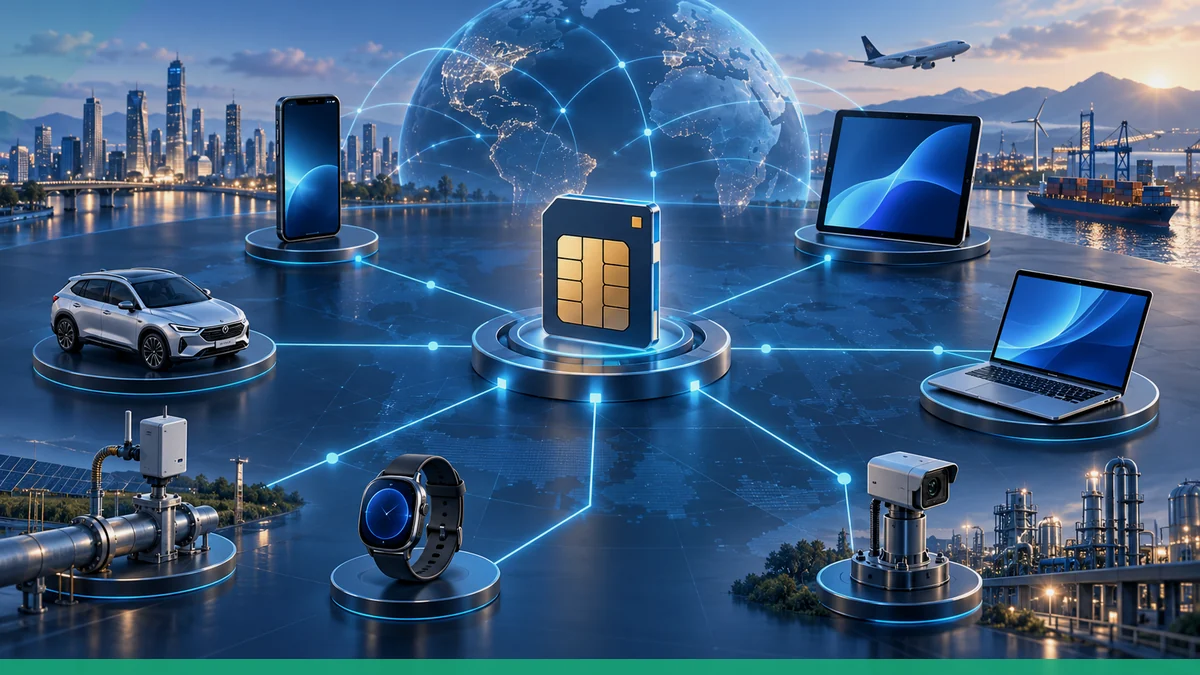
In November 2022, the Connectivity Standards Alliance launched the Matter smart home interoperability standard, backed by Amazon, Apple, Google, and Samsung SmartThings. The promise was straightforward: a light bulb from any brand would work with any hub, any voice assistant, and any app, without the user checking compatibility logos. By early 2024, that promise had been partially delivered and partially deferred. The smart home of the future still looked a lot like the smart home of 2020, just with fewer cables and more software updates.
Matter 1.0 supported a deliberately narrow set of product types: lights and switches, plugs, locks, thermostats, blinds, and sensors. It ran locally over Thread and Wi-Fi, not through cloud bridges. That meant faster response times and less dependence on internet connectivity. But the standard did not cover robot vacuums, home appliances, or energy management features, which were the segments where consumers actually spent money. The gap between what Matter enabled and what households wanted was the central tension of the smart home market in the mid-2020s.
This survey examines the state of play as of April 2024: the competitive strategies of the ecosystem holders, the actual adoption trajectory, and the unresolved questions about privacy, monetisation, and what 'ambient computing' really means when the invisible, responsive home still requires a phone app to set up.

What Matter Actually Changed
Before Matter, a smart home was a collection of silos. A Philips Hue light worked with Alexa but not always with Google Assistant in the same way. A Yale lock that paired with Apple HomeKit would not talk to Samsung SmartThings without a separate bridge. Each ecosystem had its own certification programme, its own radio protocol preferences, and its own idea of what a 'smart home' should be. The consumer paid for this fragmentation in complexity and in gear that stopped working when a company discontinued its cloud service.
Matter replaced that model with a single, royalty-free IP-based protocol. A product certified for Matter carried a logo that guaranteed it would work with any Matter controller, regardless of which company made the controller. The standard used Thread for low-power mesh networking and Wi-Fi for higher-bandwidth hardware, with Bluetooth Low Energy reserved for initial commissioning. The technical design was sound. The Alliance published a rigorous certification process, and the founding members committed to shipping Matter-compatible products.
But the standard's scope was the constraint. Matter 1.0 omitted the segments that drove the smart home's early revenue: security cameras, video doorbells, robot vacuums, and major appliances. A household could buy a Matter-certified light switch and a Matter-certified smart lock, but the camera that watched the front door and the robot that vacuumed the living room still required their own apps and their own cloud accounts. The unification was real, but it was incomplete.
The Platform Holders and Their Conflicting Incentives
Amazon, Google, Apple, and Samsung all sat on the CSA board and all shipped Matter support in their hubs and apps. But their enthusiasm for a truly open standard was tempered by commercial reality. Each company had spent years building a moat around its own ecosystem, and Matter threatened to turn that moat into a shallow ditch.
Amazon
Amazon's Alexa division was reported to be on track to lose $10 billion in 2022, leading to significant layoffs by early 2023. The smart speaker was a loss leader. Amazon made money when users bought things through Alexa, not when they bought the speaker itself. A fully interoperable standard meant a user could control a Matter-certified lock with Google Assistant just as easily as with Alexa, which diluted the value of owning an Echo. Amazon's incentive was to support Matter enough to keep the Alliance credible, but to differentiate through services, routines, and the sheer installed base of Alexa skills.
Google redesigned its Google Home app with Matter support rolling out in late 2022 and into 2023. Google's play was data and services: the more gadgets a user connected to Google Home, the more behavioural data the company could collect for advertising and personalisation. Google had less to fear from interoperability than Amazon did, since Google's revenue model did not depend on hardware margins. Its risk was that a multi-assistant world with no friction between ecosystems would reduce the stickiness of its own.
Apple
Apple updated its HomeKit architecture in iOS 16 to serve as the underlying framework for Matter. Apple's approach was privacy-first: HomeKit products communicated locally and Apple did not collect usage data. That was a selling point for privacy-conscious users, but it also limited Apple's ability to offer the kind of predictive, data-rich automation that Google and Amazon could build. Apple's smart home play remained a premium, narrow one.
Samsung SmartThings
Samsung SmartThings hubs and Android units began receiving Matter controller updates in late 2022. Samsung had the most to gain from interoperability, since its smart home hardware business was smaller than its rivals'. A standard that made any gadget work with SmartThings could grow Samsung's user base without requiring Samsung to build its own light bulbs and locks.
Adoption Beyond the Early Adopter
By early 2024, smart home adoption had grown but remained concentrated in a few segments. Smart speakers and smart displays were the most common entry point, with the Amazon Echo and Google Nest lines dominating. Smart lights, particularly from Philips Hue and the cheaper Matter-compatible alternatives, were the second-most-popular product type. Smart thermostats and smart locks had significant but smaller installed bases. Robot vacuums were a fast-growing segment, but they remained outside the Matter umbrella.
The typical smart home owner in 2024 owned three to five connected products, usually from two different ecosystems. The fragmentation that Matter was supposed to solve persisted in practice because most households did not buy only Matter-certified gear. They bought a Nest thermostat because their HVAC contractor recommended it, a Ring doorbell because Amazon promoted it, and a Philips Hue starter kit because a friend had one. Each of those products had its own app, its own account, and its own integration quirks.
The Matter certification was not visible enough to drive purchase decisions. Consumers did not walk into a Best Buy looking for the Matter logo. They walked in looking for a specific brand or a specific price point. The standard's success depended on manufacturers making Matter support the default, not the premium feature. By April 2024, that was happening, but slowly.
Privacy and Security as a Drag on Mass Adoption
The smart home collects data that most households consider sensitive: when people arrive and leave, which rooms they occupy, when they sleep, what they watch, what they say to voice assistants. That data is valuable to ecosystem holders for advertising, product recommendations, and service personalisation. It is also valuable to attackers. A compromised smart lock or camera can expose a household's daily rhythms in ways that a compromised laptop cannot.
Consumer surveys in the mid-2020s consistently showed that privacy concerns were a major reason non-adopters gave for not buying smart home products. The concern was not abstract. Incidents of Ring cameras being accessed without authorisation, of smart speakers recording conversations they should not have, and of cloud-based automation services suffering data breaches were well publicised. The Matter standard addressed some of these concerns by mandating local operation over Thread and Wi-Fi for many functions, reducing reliance on cloud servers. But Matter did not mandate end-to-end encryption for all data paths, and it did not prevent a hardware maker from sending telemetry to its own cloud.
The tension between convenience and privacy was structural. A truly proactive home that adjusted lighting, temperature, and music based on occupancy and preference required continuous data collection. The more data a system collected, the more useful it became, and the more privacy risk it introduced. No ecosystem holder had solved this trade-off by early 2024.

The Ambient Computing Vision Versus the Routine Reality
The marketing vision for the smart home of the future was pervasive computing: a home that anticipated needs, adjusted itself without explicit commands, and faded into the background. Amazon talked about 'ambient intelligence'. Google described 'helpful, proactive assistance'. Apple's HomeKit vision was one of silent, secure coordination. The reality in 2024 was more prosaic. Most smart home automations were simple routines triggered by time, sensor input, or voice command. Lights turned on at sunset. The thermostat lowered at bedtime. The door lock engaged when the last person left.
True proactive automation required machine learning models that could predict behaviour based on historical patterns. Those models existed, but they were limited by data volume and by the heterogeneity of household routines. A family with two children and a dog, a single person who worked nights, and a retired couple who travelled frequently had very different patterns. Training a model that worked well for all three required a lot of data, and collecting that data raised the privacy concerns discussed above.
The economic viability of invisible computing was also unproven. The smart speaker business was loss-making for Amazon and barely profitable for Google. The smart home hub was a low-margin product. The revenue came from services, but the services that users actually paid for were limited: cloud video storage for cameras, package detection for doorbells, and a few premium skills. The responsive home generated a lot of data but not a lot of direct revenue.
What Comes Next
As of April 2024, the smart home market was in a holding pattern. The Matter standard had delivered a solid technical foundation, but it had not yet expanded to the product segments that would drive mass adoption. The ecosystem holders were committed to interoperability in public but cautious about it in practice, since a truly open standard reduced their ability to lock users into their environments. Consumer adoption was growing, but it remained concentrated in early adopter segments and in a few product types.
The unresolved question was whether the smart home would ever become a coherent system rather than a collection of gadgets. The answer depended on three variables: whether Matter expanded to cover high-volume segments like cameras and appliances; whether the ecosystem holders found a business model for pervasive computing that did not rely on data harvesting; and whether consumers decided that the convenience of a unified smart home was worth the privacy risk and the upfront cost. None of those questions had a clear answer in 2024. The smart home of the future was still in the future.
Key Facts
- Standard launched: Matter 1.0, November 2022, by the Connectivity Standards Alliance (CSA)
- Founding members: Amazon, Apple, Google, Samsung SmartThings
- Supported device types (Matter 1.0): Light bulbs and switches, smart plugs, smart locks, thermostats, blinds/shades, sensors
- Network protocols: Thread and Wi-Fi (local); Bluetooth LE for commissioning
- Amazon Alexa division: Reported on track to lose $10 billion in 2022; significant layoffs by early 2023
- Google Home app: Redesigned with Matter support rolling out late 2022 into 2023
- Apple HomeKit: Architecture updated in iOS 16 to serve as Matter framework
- Samsung SmartThings: Hubs and Android units received Matter controller updates in late 2022
- Status as of: April 2024: ongoing; fragmentation not solved; Matter scope limited
Platform Holder Strategies Compared
| Company | Primary smart home hardware | Revenue model | Matter support status | Privacy stance |
|---|---|---|---|---|
| Amazon | Echo speakers, Ring doorbells, Alexa | Commerce via voice, skills, services | Matter controller via Echo products (late 2022) | Collects usage data for advertising; cloud-dependent |
| Nest speakers, Nest Hub, Nest thermostat | Data for advertising, services | Matter controller via Google Home app (2023) | Collects usage data; cloud-dependent | |
| Apple | HomePod, Apple TV, HomeKit accessories | Hardware margin, services (iCloud+) | Matter framework via iOS 16 (2022) | Local processing; minimal data collection |
| Samsung | SmartThings Hub, SmartThings-compatible products | Hardware margin, ecosystem lock-in | Matter controller via SmartThings hub (late 2022) | Collects usage data; cloud-dependent |
Frequently Asked Questions
Does Matter mean any smart home device will work with any assistant?
Matter guarantees interoperability at the protocol level. A Matter-certified product will pair with any Matter controller, including Amazon Alexa, Google Home, Apple HomeKit, and Samsung SmartThings. But the product's full feature set may not be available across all environments, since each environment supports different command sets and automation capabilities.
Why do smart home devices still need separate apps after Matter?
Matter handles connectivity and basic control. Product-specific features such as colour temperature tuning, custom schedules, or firmware updates are still managed through the manufacturer's own app. Matter does not mandate that all features be exposed through every environment.
Is the smart home market profitable for the big ecosystem companies?
Amazon's Alexa division was reported to be on track to lose $10 billion in 2022, leading to layoffs. Google and Apple do not break out smart home financials separately. Hardware margins on speakers and hubs are thin. The profitability of the smart home depends on services revenue, which remains modest relative to the investment.