In early 2021, Hitachi Rail acquired Perpetuum, a UK company that makes wireless, energy-harvesting condition-monitoring modules for railway bogies. The deal closed as planned later that year. Perpetuum was integrated into Hitachi Rail's digital business unit, and its technology now sits at the centre of Hitachi's predictive maintenance offering, still marketed under the Perpetuum brand.
Perpetuum was spun out of the University of Southampton. Its devices are self-powered: they scavenge energy from the motion of a moving train, so they need no battery changes and no wired power supply. The modules transmit data continuously from the bogie, the frame underneath a rail car that holds the wheelsets, bearings and gearboxes. That data feeds an edge analytics platform and a digital twin that models the mechanical condition of each component over time.
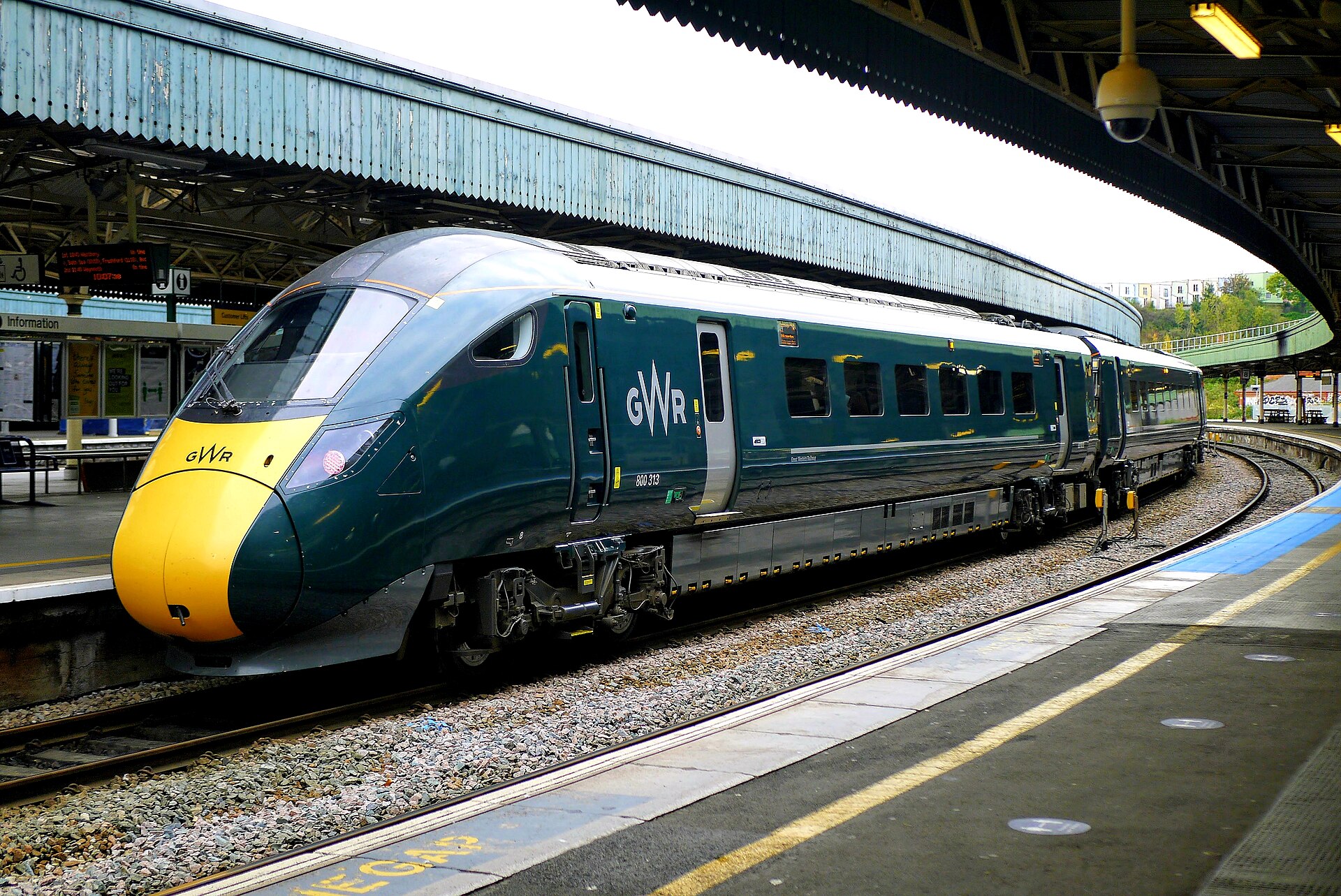
Before the acquisition, Perpetuum had contracts with several UK train operating companies, including South Western Railway and Great Western Railway. Hitachi Rail had already fitted Perpetuum hardware on some of its own fleets, notably the Class 800/801/802 Intercity Express Programme trains. The acquisition converted a supplier relationship into an in-house capability.

What the sensors measure and how they are installed
Vibration signatures and fault detection
The modules attach to the bogie and measure oscillation in three axes. Repeated readings over time create a signature for each component: a wheelset, a bearing, a gearbox. When the vibration pattern shifts in a characteristic way, the system flags an early-stage mechanical fault before it becomes a failure that could cause a derailment or a service delay.
Energy-harvesting design
The energy-harvesting design is the key engineering detail. A typical rail bogie sees constant mechanical excitation during service. The module contains a piezoelectric generator that converts that motion into electrical energy, which is stored in a small capacitor and used to power the measurement and wireless transmission circuits. No wired power connection is required, and no primary battery that would need replacement every few years. That dramatically reduces the installation cost and the maintenance burden on the device itself.
Data pipeline and digital twin
Data is transmitted wirelessly to a gateway on the train or at the depot, then uploaded to a cloud-based analytics platform. The platform compares each reading against historical baselines and fleet-wide models. When it detects an anomaly, it generates a maintenance alert with a recommended intervention window. The digital twin is a virtual replica of the physical asset that updates in near-real time, allowing engineers to simulate the effect of running a component for another service interval versus replacing it immediately.
Why Hitachi Rail bought an IoT sensor company
Buying instead of building
Hitachi Rail is a subsidiary of Hitachi Ltd, headquartered in Tokyo. The parent company has been pushing a digital services strategy under the brand name Lumada, which covers IoT, analytics and artificial intelligence offerings aimed at industrial customers. For Hitachi Rail, buying Perpetuum was a way to acquire a working, deployed monitoring platform rather than building one from scratch or licensing the capability from a third party.
Strategic logic
The strategic logic had several parts. Predictive maintenance reduces unplanned downtime for train operators, a direct cost saving and a reliability improvement that can be priced into a service contract. The data creates a lock-in effect: once an operator's fleet is fitted with Perpetuum modules and the digital twin is calibrated, switching to a competing maintenance system is expensive and disruptive. The acquisition gave Hitachi Rail a differentiated offering for new train sales. A train with embedded condition monitoring is more valuable than one without, and the operator does not need to run a separate procurement for the monitoring system.
Existing relationship
Hitachi Rail had already been using Perpetuum hardware on its Class 800/801/802 IEP trains before the deal. That pre-existing relationship meant the acquisition was an integration of a known supplier, not a leap into unfamiliar territory.
Regulatory and competition dimension
No regulatory intervention
The deal was not called in for review by the UK Competition and Markets Authority. No competition authority intervention was publicly reported. The transaction was small enough in value and market share that it did not trigger a mandatory notification threshold, and Hitachi Rail did not voluntarily seek clearance.
A fragmented market
The absence of regulatory scrutiny is notable because the rail sector in the UK and Europe is highly regulated on safety and interoperability, but the market for condition-monitoring hardware was still fragmented at the time. Perpetuum was one of several small suppliers. The acquisition removed an independent player from the market, but the CMA did not consider that a risk to competition. The likely reasoning was that Hitachi Rail would continue selling the technology to other train operators, including those that compete with Hitachi's own train manufacturing business, and that other hardware suppliers remained available.
Deal closure
The deal closed as planned, with no reported conditions or undertakings. Perpetuum was absorbed into Hitachi Rail's digital business unit and its staff and technology were retained.

Effect on existing Perpetuum customers
Continuity for operators
Perpetuum had contracts with South Western Railway and Great Western Railway before the acquisition. Those contracts continued after the deal closed. Hitachi Rail did not terminate them or force renegotiation. The company stated that the Perpetuum brand would be retained and that the existing customer relationships would be managed by the same team that had handled them before the acquisition.
Day-to-day operations unchanged
For the train operators, the change of ownership did not affect the day-to-day operation of the monitoring hardware or the delivery of maintenance alerts. The data pipeline remained the same, and the same technical staff were available for support. The long-term risk for operators was that Hitachi Rail might deprioritise third-party fleet support in favour of its own new-build trains, but no evidence of that emerged in the period after the deal. As of early 2025, Perpetuum-branded modules continued to be sold to operators running non-Hitachi rolling stock.
Competitive implications
The acquisition also meant that Perpetuum's technology was no longer available to Hitachi's competitors as a standalone product from an independent supplier. A train manufacturer competing with Hitachi could still buy condition-monitoring gear from another vendor, but could not buy the same Perpetuum system that Hitachi was embedding in its own trains.
Integration: absorbed but branded
Corporate structure
The integration plan was not to run Perpetuum as a separate subsidiary. The company was folded into Hitachi Rail's digital business unit, which sits inside the larger Hitachi organisation under the Lumada brand. The Perpetuum name was kept as a product brand, so the technology is still called Perpetuum and sold as such, but the legal entity was dissolved and the employees became Hitachi Rail staff.
Industrial IoT playbook
This is a common pattern in industrial IoT acquisitions. The buyer wants the technology and the installed base, but it does not want the overhead of a separate corporate structure. Keeping the product brand preserves the recognition that Perpetuum had built among UK and European rail operators. Absorbing the entity eliminates duplication in finance, HR and legal functions.
Undisclosed terms
The exact purchase price was never publicly disclosed. No valuation figure appeared in the announcement or in any subsequent regulatory filing. Perpetuum's revenue and headcount at the time of sale were also not disclosed. The deal was not large enough to require separate disclosure in Hitachi Ltd's financial statements.
Role in Hitachi's Lumada digital services portfolio
A flagship rail offering
Lumada is Hitachi's umbrella brand for digital solutions, covering IoT, analytics and AI across the group's industrial businesses. For Hitachi Rail, the Perpetuum technology became a flagship Lumada offering in the rail sector. It is sold as a standalone predictive maintenance service and also bundled with new train sales.
Digital twin alignment
The digital twin platform that Perpetuum developed is the part that aligns most closely with Lumada's architecture. Hitachi's broader Lumada strategy is about collecting operational data from physical assets, analysing it, and feeding insights back into the asset management cycle. Perpetuum's system does exactly that for rail bogies. It was a natural fit, which is why Hitachi Rail had already been using the hardware before deciding to buy the company.
Commercial impact
The commercial implications for UK and European operators were straightforward. An operator that bought Hitachi trains with Perpetuum modules embedded would pay a higher upfront price but would get a lower total cost of ownership over the life of the train, because maintenance intervals could be extended and emergency repairs reduced. Operators that already had Perpetuum hardware on non-Hitachi trains continued to get the same service, now backed by Hitachi Rail's balance sheet and service network.