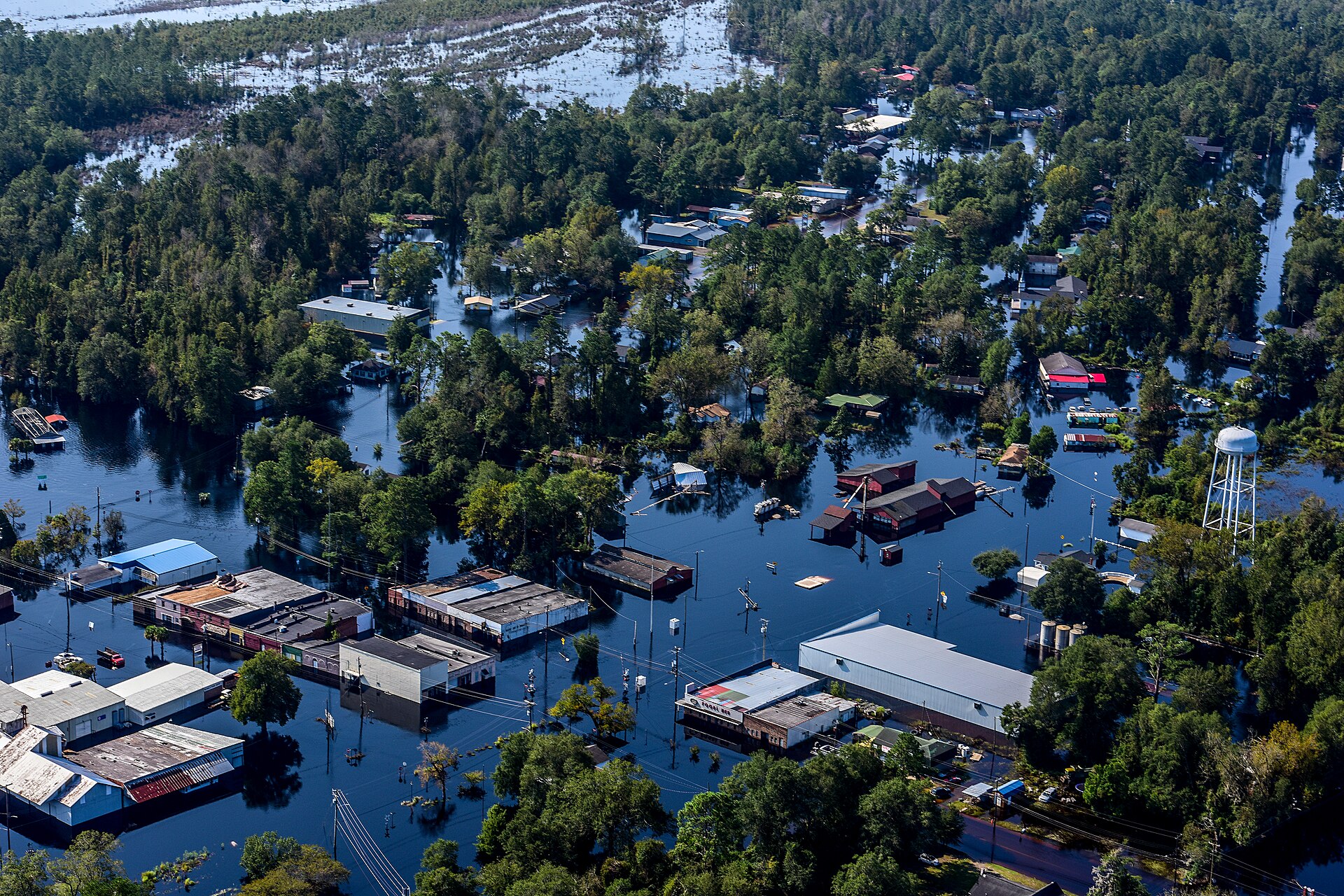
Hurricane Florence made landfall near Wrightsville Beach, North Carolina, on September 14, 2018, then stalled over the Carolinas and dumped catastrophic rainfall. Moody's Analytics put the total cost between $38 billion and $50 billion. Water, not wind, did most of the harm. The storm's slow crawl flooded the Port of Wilmington for five days, closed long stretches of Interstate 95 and Interstate 40, and killed millions of farm animals. Freight movement seized up for weeks, costing businesses far more than the physical damage to roads and bridges.
The Port of Wilmington resumed commercial traffic on September 19. Interstate fixes finished within weeks, though work on backroads and farm-to-market routes dragged on for months. The losses were eventually absorbed, but the event accelerated arguments for hardening transportation infrastructure against extreme weather. What follows quantifies the damage to roads, ports and freight movement, and traces how those failures cascaded through regional and national supply chains.

The Port of Wilmington: Five Days That Disrupted a Supply Chain
The Port of Wilmington handles containerized cargo, bulk commodities and manufactured goods for the East Coast. When Florence hit, the port closed to all vessel traffic from September 14 to September 19.
That shutdown idled more than dockworkers. Ships stacked up waiting to berth. Time-sensitive imports such as automotive parts and pharmaceuticals sat offshore. Exporters of North Carolina goods had to hold inventory or reroute through other ports at a premium.
The closure compounded the wider logistics crisis. Trucks that would have picked up containers stayed parked. Rail operators serving the port, CSX among them, suspended service. No single line item in the Moody's estimate isolates the port's economic toll, but it fed directly into the supply chain snarls that hit manufacturers and retailers across the Southeast for weeks afterward.
I-95 and I-40: Two Critical Corridors Cut
Interstate 95 and Interstate 40 both flooded and closed across North Carolina. I-95 is the primary north-south trucking route on the Eastern Seaboard. I-40 connects the coast to Raleigh, Greensboro and points west, linking the Port of Wilmington to inland markets. When both corridors went under simultaneously, trucking companies faced a stark choice: wait for the water to recede, or take detours that added hours and hundreds of dollars in fuel per trip.
The North Carolina Department of Transportation tallied damage to thousands of road segments. The storm did not demolish the interstates the way a hurricane can shear a bridge from its pilings. Instead, floodwater undermined roadbeds, eroded shoulders and washed out culverts. The destruction was widespread but not catastrophic to the mainline pavement. That is why work on the major interstates wrapped up within weeks.
Why secondary routes stayed closed for months
Backroads, especially those in rural and agricultural areas, took months to restore. They carried lower priority and had suffered deeper scour damage. Every washed-out farm road meant another severed link in the supply chain.
Agriculture: The Invisible Supply Chain Break
Hurricane Florence's agricultural losses were enormous and largely absent from national freight statistics. North Carolina's farm sector absorbed a staggering blow: millions of poultry and hogs dead, floodwaters inundating factory farms and open fields alike. Unharvested tobacco, cotton and sweet potatoes rotted in standing water.
The losses were not just a tragedy for growers. They broke the supply chains that move feed, fertilizer and livestock to and from the region. Road closures meant feed trucks could not reach farms. Animals died from drowning, starvation and exposure in the days after the storm. The cascade was brutal: flooded roads stopped trucks, stranded trucks stopped deliveries, and stopped deliveries killed livestock. The cost sits inside the Moody's estimate, but it underscores a hard truth. Supply chain resilience is not only about ports and highways. It is also about the last-mile roads that connect farms to markets.
Trucking and Rail: The Logistics Squeeze
The flooding hit trucking and rail hard, and it hit them at the same time. Carriers that depended on I-95 and I-40 saw transit times double or triple. Some loads were cancelled outright. CSX and Norfolk Southern suspended service across the affected areas. Rail lines that run alongside rivers and through floodplains were submerged or damaged.
The double blow meant shippers could not simply switch freight from one mode to the other. Both were compromised.
A regional bottleneck with no quick fix
The result was a logistics bottleneck that lasted for weeks. Warehouses in the Carolinas could not receive inbound shipments. Manufacturers could not ship finished goods. Retailers restocked slowly or not at all. The economic loss from these delays is not separately quantified in the Moody's estimate, but it formed a significant piece of the storm's cost. Businesses that operated on thin inventory margins, grocery chains and automotive parts distributors among them, were hit hardest.

The Cost of Repair and the Federal Response
The federal government allocated emergency relief funding for highway work through the Federal Highway Administration. The exact final dollar figure for total economic losses varies between government and private sources. Moody's range of $38 billion to $50 billion captures direct physical damage, business interruption and lost output. FHWA money covered repairs to federally aided highways, but the state bore much of the cost for backroads.
Thousands of road segments, one hard lesson
The North Carolina Department of Transportation faced a massive repair program. Thousands of road segments needed assessment, design and reconstruction. The state prioritized major interstates and primary routes, which is why I-95 and I-40 reopened within weeks. Secondary roads took months. The cost of those fixes, plus the economic losses from the closures, reinforced a lesson transportation planners had heard before but rarely acted on: infrastructure built to historical weather patterns is not resilient to the storms now arriving.
Long-Term Implications: What Florence Taught About Resilience
Companies that depended on just-in-time delivery from the Port of Wilmington or warehouses along I-95 and I-40 faced weeks of disruption. Some relocated inventory. Others invested in backup logistics plans. But the larger lesson was about infrastructure. The event accelerated arguments for hardening transportation networks against extreme weather, though concrete action has been uneven.
As of January 2024, the precise timeline for completing every backroad fix is not established here. The current operational status of every specific rail line mentioned in older reports is also not confirmed. What is clear is that Hurricane Florence was not a one-off. It was a preview of the kind of storm that will hit the region again. The economic losses were ultimately absorbed. The question that remains is whether the transportation network will be better prepared the next time.
Key Facts
- Landfall date: September 14, 2018, near Wrightsville Beach, North Carolina
- Port of Wilmington closure: Five days, September 14 to September 19, 2018
- Total estimated economic cost: $38 billion to $50 billion (Moody's Analytics)
- Major highways flooded: Interstate 95 and Interstate 40 in North Carolina
- Interstate repair timeline: Completed within weeks
- Secondary road repair timeline: Took months
- Federal relief mechanism: Emergency relief funding through the Federal Highway Administration (FHWA)
- Agricultural impact: Major losses including millions of poultry and hog deaths
Frequently Asked Questions
How long was the Port of Wilmington closed after Hurricane Florence?
The Port of Wilmington was closed to all vessel traffic from September 14 to September 19, 2018, a five-day closure. It reopened to commercial traffic on September 19.
What was the total economic cost of Hurricane Florence?
Moody's Analytics estimated the total economic cost at between $38 billion and $50 billion. The exact final figure varies between government and private sources.
Which major highways were flooded and how long did repairs take?
Interstate 95 and Interstate 40 experienced significant flooding and closures. Repairs to these major interstates were completed within weeks, but secondary road repairs took months.
How did the storm affect agriculture in North Carolina?
North Carolina's agricultural sector suffered major losses, including millions of poultry and hog deaths. Floodwaters also destroyed crops such as tobacco, cotton, and sweet potatoes.
\nRelated reading: Heathrow Third Runway: Supreme Court Reinstates ANPS in 2020, HSR boosts economies: growth, property, productivity, and Did Tottenham's Stadium Deliver on Its Economic Promises?.