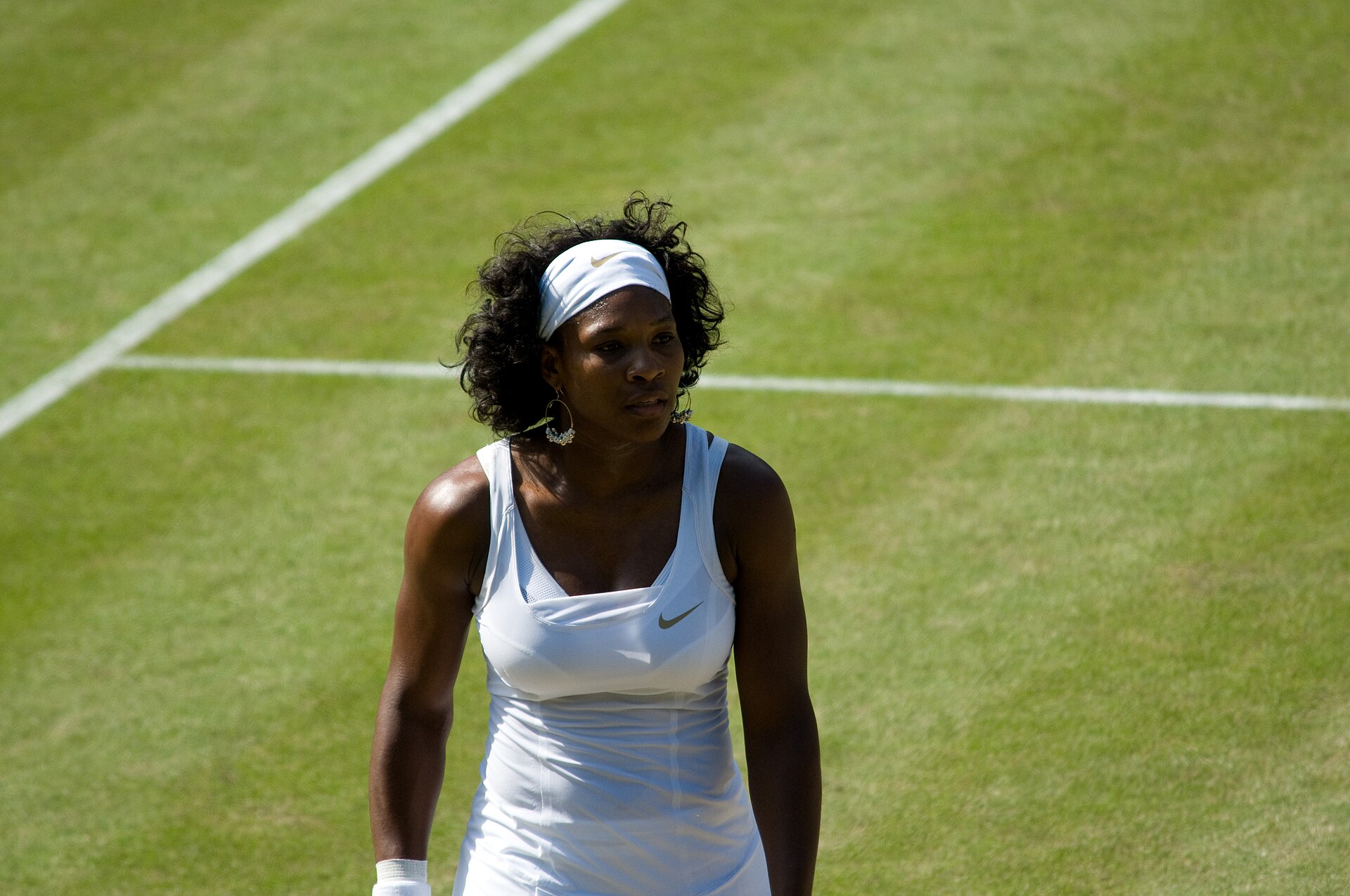
Professional tennis players who lift a trophy at Wimbledon walk away with more than silverware and a cheque. They leave with a brand, a roster of wealthy contacts, and a schedule that grants roughly 10 weeks a year for anything beyond training and travel. A growing number have parlayed those assets into operating companies, investment portfolios and design firms, often while still contesting Grand Slams.
The pattern is not new. Andre Agassi won Wimbledon in 1992 and later assembled a real estate portfolio and a chain of charter schools. But the scale and range of today's ventures has widened. Serena Williams, a seven-time Wimbledon champion, launched Serena Ventures in 2014 and has backed more than 60 startups. Venus Williams, who holds five Wimbledon trophies, created EleVen activewear and V Starr interior design. Maria Sharapova, who won the Championships as a 17-year-old in 2004, built Sugarpova, a premium candy brand, in 2012. Novak Djokovic and Andy Murray have placed bets across tech and hospitality. Roger Federer backed On, the Swiss running-shoe firm, before its public listing.
The ambitions and outcomes vary. Serena Ventures operates as an institutional venture firm. Others are lifestyle brands tied closely to the athlete's persona. The common thread: Wimbledon prize money and sponsorship income supplied the seed funding, and the rigour of elite tennis shaped how these founders approached building an enterprise.

Prize money as seed capital and the limits of a tennis bankroll
Wimbledon prize money has climbed sharply. The 2023 singles champions each took home £2.35 million. Across an entire career, top players accumulate tens of millions in on-court earnings, before adding sponsorship. Serena Williams surpassed $94 million in career prize money. That pool let her write early cheques for Serena Ventures without needing outside limited partners right away. Venus Williams drew on her own winnings to self-fund V Starr and EleVen through their early years.
Prize money, however, is finite. Most players ranked outside the top 50 scarcely break even after coaching, travel and physiotherapy costs. The athlete-entrepreneurs who appear in the financial pages are almost uniformly Grand Slam champions or steady top-10 fixtures. Their seed funding came from winning, not merely from competing. Maria Sharapova reportedly invested half a million dollars of her own money to launch Sugarpova, a commitment impossible for anyone outside the sport's elite.
Sponsorship income extends the runway. Endorsement contracts for Wimbledon finalists frequently carry performance bonuses and equity components. Roger Federer's arrangement with On, for instance, was structured as a partnership that included a stake worth hundreds of millions when the business listed in 2021. That kind of deal is scarce and depends on a player with Federer's global pull.
Equity-for-endorsement models are now being copied by younger players. But without a Grand Slam pedigree, negotiating stock instead of cash remains difficult. The gap between the top tier and the rest of the tour is visible not just in rankings but in cap tables.
The network effect: how player contacts become deal flow
The two-week London conference
Wimbledon draws a congregation of investors, bankers and corporate executives who hold debenture tickets and fill the hospitality suites. Players cross paths with them in the locker room, at the player restaurant and during tournament-sponsored events. Serena Williams has noted that many of her early introductions to Silicon Valley investors came through fellow competitors and their families at tournaments.
The travelling ecosystem
The ATP and WTA tours create a mobile community. Players spend 30 to 40 weeks a year in the same hotels, on the same practice courts and queuing at the same airport gates. Investment conversations happen between matches, during rain delays and on long-haul flights. Novak Djokovic has backed several tech startups alongside other players. Andy Murray has co-founded a tennis coaching platform and a data analytics firm, drawing on relationships forged across years on tour.
Board seats after the final set
Retired Wimbledon champions also activate these webs for directorships and advisory posts. Andre Agassi has served on the board of several education-technology firms, leaning on contacts made during his playing days. Venus Williams sits on the board of the women's sports media company Togethxr, itself founded by other elite female athletes. The Wimbledon network, concentrated in London for a fortnight each summer, behaves like an annual deal-making summit.
Why some ventures succeed and others struggle
What tennis teaches a founder
The discipline of elite tennis translates cleanly to commerce. Players are drilled in repetitive practice, data-driven performance review and high-stakes decisions under pressure. They understand brand construction intuitively. Serena Williams and Venus Williams have both remarked that the mental toughness needed to recover from match point down applies equally to negotiating a term sheet or managing a product recall.
The structural drag of the calendar
Tennis also imposes structural frictions. The calendar is unforgiving. The grass-court season, anchored by Wimbledon, spans mid-June to mid-July. For the rest of the year, players rotate through different cities each week. Board meetings, product launches and investor calls must squeeze around training blocks and travel logistics. Maria Sharapova has said that running Sugarpova while still competing was operationally gruelling, and she leaned heavily on a trusted CEO for day-to-day management.
What sinks the ventures that sink
Not every venture thrives. Sugarpova faced fierce competition in the premium confectionery segment and distribution headaches. V Starr has remained a boutique practice rather than scaling into a large firm. The failure rate of athlete-backed businesses lacks systematic tracking, yet the pattern mirrors celebrity ventures broadly: those that solve a genuine market need and install professional management tend to endure; those built chiefly on a famous name often dim after retirement.
How tennis compares with other sports and what comes next
A shorter runway, a personal brand
Professional tennis players face a shorter career arc than golfers or basketball players. Most elite tennis competitors retire by their early-to-mid-30s, while golfers can contend into their 40s and 50s. That gives tennis players less time to stockpile funds and build enterprises while still active. The compensating advantage: tennis is an individual pursuit, and the brand belongs to the player alone, not shared with a franchise. A Wimbledon champion can license their name and likeness without negotiating with a league or union.
Where tennis money flows
Basketball players frequently invest in property and tech startups via collective vehicles such as those run by the National Basketball Players Association. Golfers have constructed equipment labels and course-design practices. Tennis players have gravitated toward consumer goods and venture portfolios, perhaps because the global itinerary of the tour exposes them to multiple consumer markets. Serena Ventures places bets across industries, yet a notable slice of its portfolio sits in consumer tech and health. Venus Williams's V Starr concentrates on commercial interior design, a niche that mobilises her personal aesthetic and her roster of affluent clients.
The next generation
As of March 2025, the line continues. Younger players study business coursework while still touring. The WTA and ATP have both introduced educational programmes on financial literacy and entrepreneurship. Wimbledon itself runs no formal incubator, but the density of wealth and influence at the All England Club each summer guarantees that the link between tennis and commerce stays tight. The open question is not whether players will start a firm, but which ones will construct durable institutions beyond their own playing years.
Key facts
- First Wimbledon tournament: 1877
- Surface: Grass
- Serena Williams Wimbledon singles titles: 7
- Venus Williams Wimbledon singles titles: 5
- Serena Ventures launched: 2014
- Sugarpova launched: 2012
- Novak Djokovic Wimbledon singles titles (as of 2023): 7
- Andy Murray Wimbledon singles titles: 2 (2013, 2016)
- Roger Federer Wimbledon singles titles: 8
- Maria Sharapova Wimbledon singles title: 2004
- Andre Agassi Wimbledon singles title: 1992
Wimbledon champions and their business ventures
| Player | Wimbledon titles | Venture | Sector | Launched |
|---|---|---|---|---|
| Serena Williams | 7 | Serena Ventures | Venture capital | 2014 |
| Venus Williams | 5 | EleVen, V Starr | Activewear, interior design | EleVen 2007, V Starr 2002 |
| Maria Sharapova | 1 (2004) | Sugarpova | Premium candy | 2012 |
| Roger Federer | 8 | On (equity stake) | Running shoes and apparel | Partnership 2019 |
| Novak Djokovic | 7 (as of 2023) | Various tech investments | Technology | Ongoing |
| Andy Murray | 2 | Coaching platform, data analytics | Sports tech | Ongoing |
| Andre Agassi | 1 (1992) | Real estate, charter schools | Education, property | 1990s onward |
Frequently asked questions
Which Wimbledon champion founded a venture capital firm?
Serena Williams launched Serena Ventures in 2014. The firm has invested in more than 60 startups.
What business did Maria Sharapova start after winning Wimbledon?
Maria Sharapova created Sugarpova, a premium candy brand, in 2012.
How does the professional tennis schedule affect players' ability to run businesses?
The ATP and WTA tours require 30 to 40 weeks of travel per year. The grass-court season around Wimbledon is a concentrated period in London, but players have limited time for board meetings and operations during the rest of the year.
Do tennis players use their own prize money to fund their businesses?
Yes, many Grand Slam champions use prize money and sponsorship income as seed funding. Serena Williams and Venus Williams both self-funded their ventures initially.
How does tennis compare with other sports for athlete entrepreneurship?
Tennis players have shorter careers than golfers but own their individual brand, unlike team-sport athletes. They tend to invest in consumer goods and venture capital, while basketball and golf players often focus on property and equipment brands.