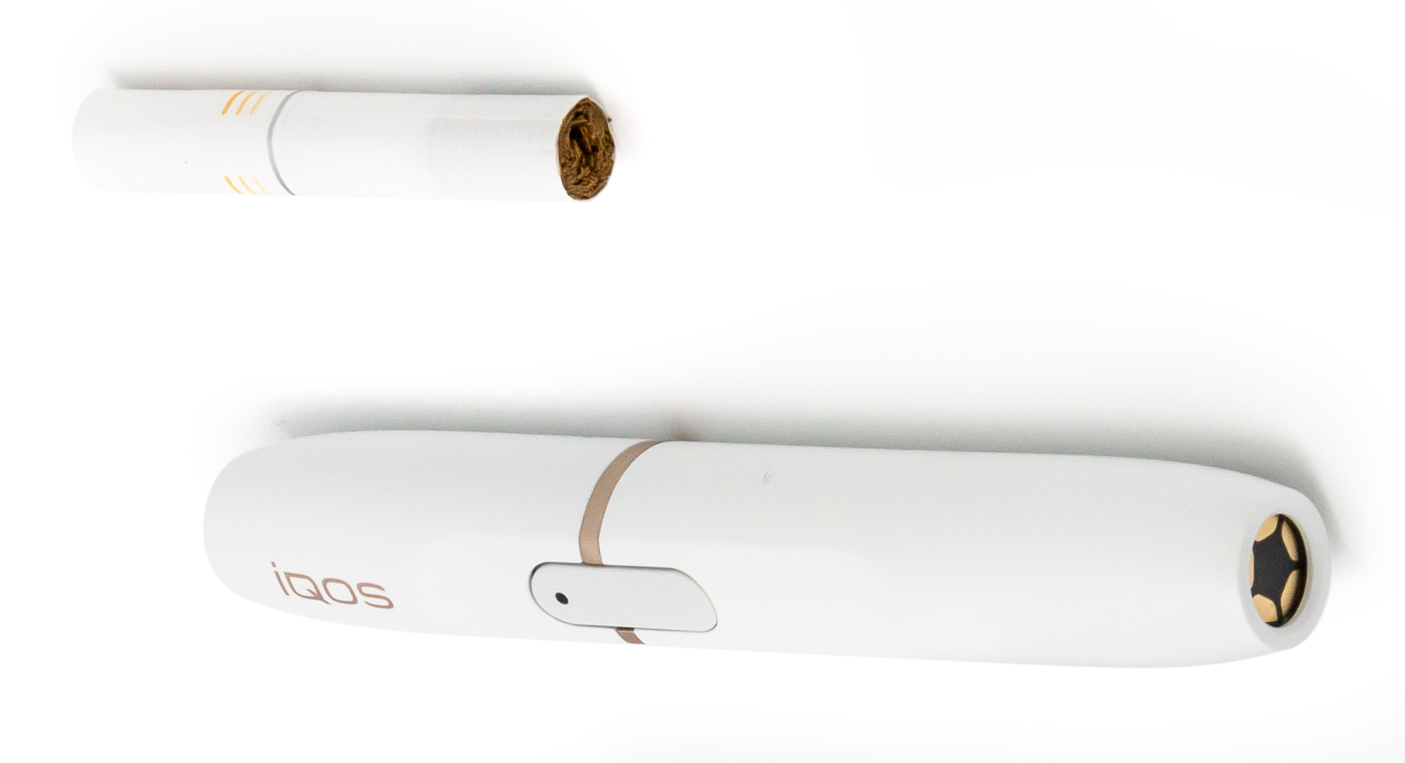
Philip Morris International launched IQOS in Nagoya, Japan, in 2014. The bet was that a device which heats rather than burns tobacco could keep smokers loyal while defusing the health and regulatory pressure that had made combustible cigarettes a declining asset. A decade later, every major tobacco company sells some version of a reduced-risk offering: heated tobacco, e-cigarettes, or modern oral pouches. The question is whether the science supports the harm-reduction label, or whether the industry is simply securing a new market under a cleaner brand.
The answer depends on who is measuring. The U.S. Food and Drug Administration authorized PMI to market IQOS as a modified-risk tobacco product in July 2020, allowing claims that switching reduces exposure to harmful chemicals. That was a landmark. But the same agency has not granted full modified-risk status to any major vaping device, and the World Health Organization has consistently refused to endorse heated tobacco as a harm-reduction tool. The gap between regulatory permission and public-health consensus defines the industry's transformation.

How Heated Tobacco and Vaping Actually Work
The combustion threshold
A combustible cigarette burns tobacco at roughly 800 degrees Celsius, producing thousands of chemicals, dozens of which are known carcinogens. Heated tobacco devices from PMI and British American Tobacco heat processed tobacco below the combustion threshold. The resulting aerosol contains fewer toxicants than cigarette smoke, though not zero.
Liquid versus leaf
Electronic nicotine delivery systems, or ENDS, such as Juul, do not use tobacco leaf at all. They heat a liquid containing the stimulant, propylene glycol, glycerin, and flavorings to create an inhalable vapor. The technological distinction matters because regulators treat each category differently. The FDA's Deeming Rule, effective August 8, 2016, gave the Center for Tobacco Products authority over all tobacco items including e-cigarettes.
The missing long-term data
The scientific question is whether the reduced toxicant profile translates into reduced disease risk. That requires long-term studies of exclusive users, and those studies are not yet complete. The industry points to biomarker data showing lower exposure to certain carcinogens. Independent researchers note that the absence of data on cardiovascular and pulmonary outcomes after a decade of use means the risk-reduction claim remains a projection.
The Regulatory Battleground: FDA and the MRTP Path
A landmark, not a blanket endorsement
The FDA's July 2020 authorization of IQOS as a modified-risk tobacco product was the first such approval for a heated tobacco device. It allowed PMI to state that switching completely from cigarettes to IQOS reduces exposure to harmful chemicals. The decision was not a blanket endorsement. The FDA restricted the language PMI could use, required post-market surveillance, and made clear that the authorization did not mean IQOS was safe. It meant the company had provided enough evidence to claim reduced exposure, not reduced harm.
Vaping's harder road
No major e-cigarette has received a similar modified-risk order. Juul Labs applied for premarket tobacco product applications but faced a different reality. In September 2022, Juul agreed to a multi-state settlement over marketing practices that targeted youth, with payments structured across multiple years and states; the full terms are detailed in the official consent decrees published by the settling attorneys general. That settlement, combined with the FDA's initial denial of Juul's applications in June 2022, shaped an environment where vaping companies face intense scrutiny over youth access while heated tobacco devices have navigated a slightly easier path. The difference reflects both the evidence submitted and the political climate around adolescent vaping.
The $12.8 Billion Bet: Acquisitions and Patent Strategies
Altria Group invested $12.8 billion for a 35 percent stake in Juul Labs in December 2018, a bet that the dominant U.S. cigarette company could own the vaping transition. That investment has since been written down dramatically. But it illustrates the scale of capital the industry is willing to deploy.
The deal was not about technology alone. It was about securing access to a distribution network, a patent portfolio, and a consumer base that had already rejected cigarettes. PMI and BAT have pursued similar strategies through internal R&D and licensing agreements for nicotine-delivery patents and pharmaceutical expertise. The patent landscape matters because the next-generation market is still being defined. Companies that control the intellectual property around nicotine salts, heating elements, and aerosol formulations can block competitors or demand licensing fees. The race is not just about which device tastes better. It is about whose patents will govern the category for the next decade. The industry is building a technological moat around an offering it insists is a public-health improvement.
Synthetic Nicotine and the Regulatory Loophole
A classification problem
Synthetic nicotine, produced in a lab rather than extracted from tobacco leaf, emerged as a way for some e-liquid manufacturers to argue that their offerings fell outside the FDA's definition of a tobacco item. The argument: if the stimulant did not come from tobacco, the FDA lacked authority. That loophole was closed by federal legislation in 2022, but the episode revealed a weakness in the regulatory framework. The lab-made version is chemically identical to tobacco-derived nicotine, yet its production does not involve the plant, which creates a classification problem.
What the loophole signaled
For the major tobacco companies, synthetic nicotine is less of a direct threat and more of a signal. PMI and BAT have invested in the tobacco-derived compound because they own the supply chain and the agricultural relationships. But the existence of a synthetic alternative means new entrants can bypass traditional tobacco controls. The episode demonstrated that the industry's transformation is not limited to the established players. The next generation of delivery could come from chemical companies, not tobacco farms.

The Foundation for a Smoke Free World: Messaging or Science?
In September 2017, PMI established the Foundation for a Smoke Free World, pledging nearly $1 billion over 12 years. The foundation's stated mission is to accelerate the end of smoking. Its critics, including the World Health Organization, argued that it was a public-relations vehicle designed to launder PMI's reputation and fund research that would support the company's offerings. The foundation later rebranded to Global Action to End Smoking, but the question of independence has never fully resolved.
PMI's investment is part of a broader messaging strategy that positions reduced-risk goods as a solution to the smoking epidemic. The company argues it is transforming itself, that its future revenue will come from items less harmful than cigarettes. Public-health groups counter that the same industrial infrastructure, the same marketing muscle, and the same addiction model are being repurposed for a new generation of users. The foundation's research grants have produced studies that tend to support the harm-reduction narrative. Independent researchers have pointed out that the funding structure creates an inherent conflict of interest, regardless of the legal separation between the foundation and PMI.
What the Evidence Actually Shows and What It Does Not
The biomarker ceiling
The scientific evidence for reduced-risk offerings is strongest for biomarkers of exposure. Studies funded by PMI and BAT show that exclusive users of heated tobacco have lower levels of certain carcinogens in their urine and blood than cigarette smokers. The same studies show that these levels are still higher than in people who do not use any nicotine. The unanswered question is whether the reduction in exposure translates into a reduction in disease. That requires epidemiological studies that follow users for decades, and those data do not yet exist.
The dual-use problem
Independent reviews by the National Academies of Sciences and the Cochrane Collaboration have found that e-cigarettes are likely less harmful than combustible cigarettes, but the evidence is limited by the short time frame and the high rate of dual use, where people both vape and smoke. The public-health community remains divided. Some argue that any reduction in harm is worth promoting as a cessation tool. Others warn that the industry's narrative of transformation is a strategy to maintain addiction at scale.
The outcome of this debate will determine not only which offerings survive, but whether the tobacco industry can reinvent itself as a health company. As of May 2024, the position is not established here.
Key Facts
- IQOS launch: Nagoya, Japan, 2014
- FDA MRTP authorization for IQOS: July 2020
- Altria stake in Juul: $12.8 billion for 35% in December 2018
- Foundation for a Smoke-Free World pledge: Nearly $1 billion over 12 years, announced September 2017
- BAT glo launch: 2016
- FDA Deeming Rule effective date: August 8, 2016
- Juul multi-state settlement: Multi-year payout structure; see official consent decrees published by settling state attorneys general, September 2022
Product Category Comparison
| Feature | Combustible Cigarette | Heated Tobacco (e.g., IQOS, glo) | E-Cigarette (e.g., Juul) |
|---|---|---|---|
| Temperature | Roughly 800 C | Below combustion threshold | Roughly 150-250 C |
| Material | Tobacco leaf | Processed tobacco | Nicotine liquid |
| Combustion | Yes | No | No |
| FDA MRTP status | Not applicable | Authorized for IQOS (July 2020) | None for major products |
| Key health claim | None | Reduced exposure to harmful chemicals | Reduced harm (contested) |
Frequently Asked Questions
Is IQOS safer than smoking?
The FDA authorized PMI to claim that switching completely from cigarettes to IQOS reduces exposure to harmful chemicals. The long-term health outcomes for exclusive users are not yet established.
Why did the FDA deny Juul's marketing applications?
The FDA initially denied Juul's applications in June 2022, citing insufficient evidence on toxicological risks and concerns about youth use. The company has since pursued further review.
What is synthetic nicotine and why does it matter?
Synthetic nicotine is produced in a lab rather than extracted from tobacco. Some manufacturers used it to argue their offerings were not tobacco items, a loophole closed by federal legislation in 2022.
Does the Foundation for a Smoke-Free World operate independently from PMI?
PMI pledged nearly $1 billion to the foundation. Critics argue the funding creates a conflict of interest. The foundation has rebranded to Global Action to End Smoking, but questions about independence persist.