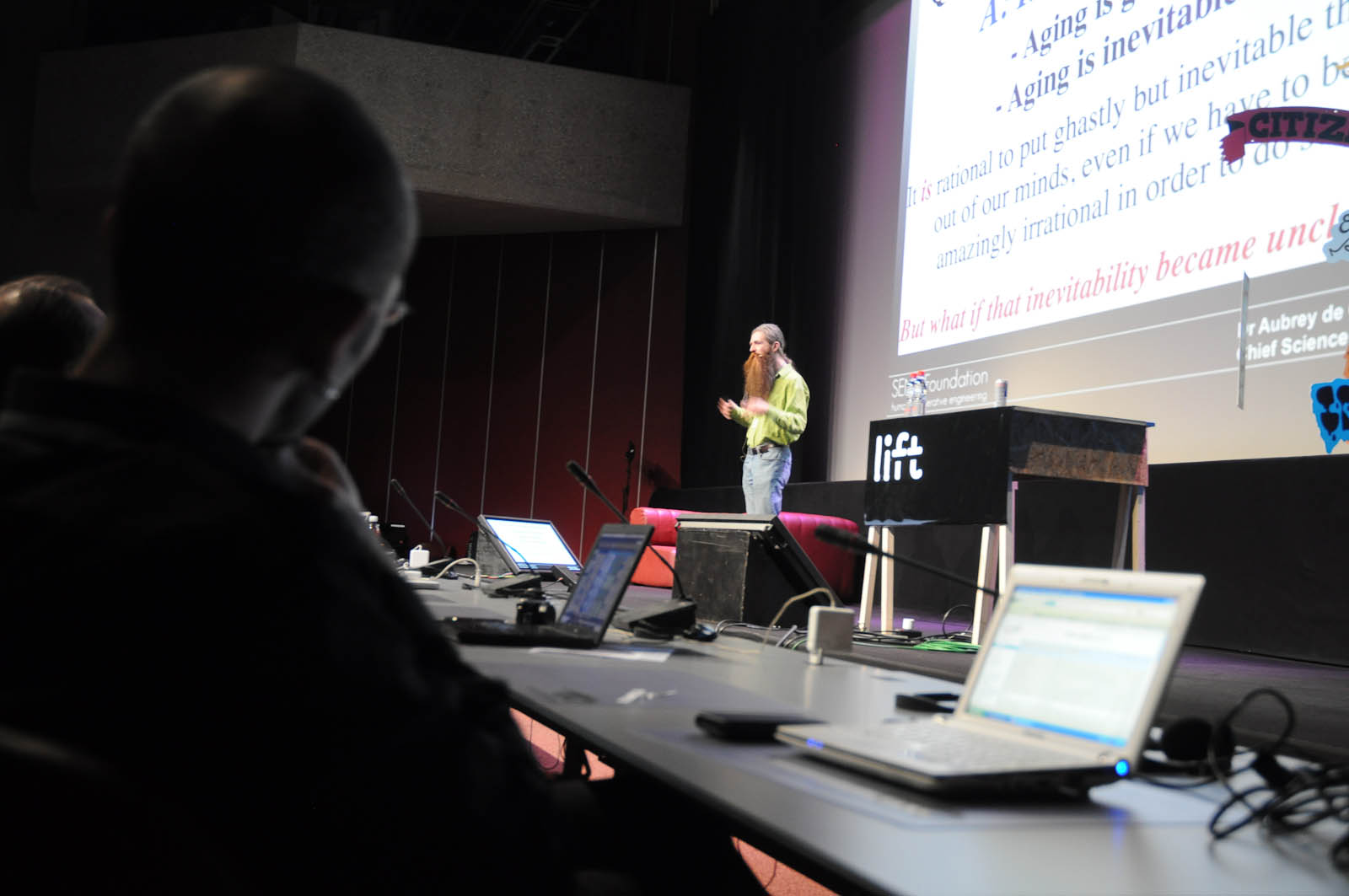
The radical longevity movement makes a single, arresting claim: ageing is a medical condition, not a natural inevitability, and it can be slowed, halted, or reversed within decades. The people driving this argument are a small group of futurists and biologists whose timelines are aggressive and whose war chests are enormous. Their evidence base is still thin.
Aubrey de Grey, who co-founded the SENS Research Foundation in 2009 and merged it with the Forever Healthy Foundation in 2022 to form the Longevity Escape Velocity Foundation, argues that the first person to live to 1,000 is alive today. David Sinclair, a Harvard geneticist and author of the 2019 book 'Lifespan: Why We Age, and Why We Don't Have To,' contends that ageing is a treatable disease. Ray Kurzweil, the futurist and engineer, has long predicted that humans will achieve 'longevity escape velocity,' the point at which science adds more than a year of life expectancy for every year that passes. These claims rest on a single premise: the biological mechanisms of ageing are knowable, targetable, and modifiable.

The Biological Targets of Longevity Medicine
The Geroscience Hypothesis
The geroscience hypothesis holds that ageing is driven by a set of fundamental processes, each of which can be addressed pharmacologically. The most cited mechanisms include cellular senescence, where cells stop dividing and secrete inflammatory signals, and telomere attrition, the shortening of protective caps on chromosomes. Epigenetic changes that alter gene expression over time are another core target.
Therapies Nearing the Clinic
The therapies closest to clinical application attack these mechanisms directly. Senolytics clear senescent cells from tissues; early human trials show promise in idiopathic pulmonary fibrosis and osteoarthritis. NAD+ precursors such as nicotinamide riboside aim to restore levels of a coenzyme that declines with age, supporting mitochondrial function. Epigenetic reprogramming, derived from Shinya Yamanaka's work on induced pluripotent stem cells, attempts to reset the epigenetic clock of aged cells. None has been approved by the FDA for the indication of ageing itself. The scientific consensus acknowledges that the preclinical signals are intriguing, but human data are limited to small trials with surrogate endpoints.
Big Money, Big Claims: The Longevity Startup Landscape
The Capital Flood
Venture capital has poured into longevity biotechnology at a scale that would have been unthinkable a decade ago. Calico, the California Life Company, launched inside Google in September 2013 with a capital commitment that was not publicly capped but was described as significant. Altos Labs arrived in January 2022 with $3 billion from backers including Jeff Bezos and Yuri Milner. Both companies operate with unusual secrecy, publishing little peer-reviewed data relative to their budgets.
What the Billions Have Bought
The scale of these investments reflects a bet that ageing is a tractable engineering problem. It also raises a pointed question about what the money has bought. Altos Labs has recruited prominent scientists including Shinya Yamanaka and Juan Carlos Izpisua Belmonte, but the company has not yet published clinical results. Calico has produced research on the biology of ageing in model organisms but has not brought a drug to market. The gulf between capital deployed and clinical output is large enough that some observers describe the field as long on ambition and short on proof.
The Regulatory Pathway and the TAME Trial
No Indication for Ageing
A major obstacle is that regulators do not recognise ageing as a medical condition. The FDA has no approved indication for it. Drugs that target age-related diseases must be tested against those specific diseases, not against the underlying process.
The TAME Trial's Precedent
The TAME trial, proposed by Nir Barzilai, is designed to change that. TAME stands for Targeting Aging with Metformin. The trial aims to show that metformin, a cheap diabetes drug, can delay the onset of multiple age-related diseases: cardiovascular disease, cancer, and cognitive decline. Success would provide data that ageing itself can be treated and would create a regulatory precedent for approving drugs that target ageing as a primary endpoint. The World Health Organization took a step in this direction in 2022 when it included 'ageing-related' as an extension code in the International Classification of Diseases, ICD-11. That change does not classify ageing as a disease, but it makes it codable, a prerequisite for clinical trials and reimbursement.
The Ethical Objections and the Evidence Gap
The Practical and Moral Critiques
Critics of radical life extension raise objections that are both practical and moral. Overpopulation is the most common concern: if lives stretch far beyond current norms, resource depletion and environmental strain could accelerate. The counterargument from longevity advocates is that older populations tend to have fewer children, and that a world with longer lives would also be a world with lower birth rates. A second objection is inequality. If anti-ageing therapies are expensive, they could bifurcate society, giving the rich decades of additional life. The TAME trial uses metformin, which costs pennies per dose, but the therapies in development at Altos Labs and Calico are unlikely to be cheap.
The Missing Clinical Data
The largest objection, however, is the evidence gap. The timelines proposed by de Grey, Sinclair, and Kurzweil are not supported by any human trial showing that ageing can be slowed in a statistically significant way. No therapy has extended human maximum lifespan. The most successful interventions in model organisms, such as rapamycin in mice, have not translated into comparable human results. As of May 2025, the field of radical longevity remains a promissory note, backed by large sums of money and strong biological plausibility, but without the clinical data that would turn a futurist prediction into a medical reality.
Key Facts
- Calico launch: September 2013, by Google, with a significant capital commitment
- Altos Labs launch: January 2022, with $3 billion from investors including Jeff Bezos and Yuri Milner
- SENS Research Foundation: Co-founded by Aubrey de Grey in 2009, merged with the Forever Healthy Foundation in 2022 to form the Longevity Escape Velocity Foundation
- David Sinclair book: 'Lifespan: Why We Age, and Why We Don't Have To', published 2019
- TAME trial proposer: Nir Barzilai
- ICD-11 ageing-related code: Included by the World Health Organization in 2022
Frequently Asked Questions
Has any therapy been approved by the FDA to treat ageing itself?
No. As of May 2025, no therapy has received FDA approval for the indication of ageing. The TAME trial is designed to create a regulatory pathway for such an approval, but it has not yet reported results.
What is longevity escape velocity?
The term, popularised by Aubrey de Grey and Ray Kurzweil, describes a hypothetical point at which medical advances add more than one year of life expectancy for every year that passes, effectively making ageing reversible. No data suggests that this point has been reached.
How much venture capital has been invested in longevity biotechnology?
The exact amount in the most recent fiscal year is not established here. However, individual companies such as Altos Labs have raised $3 billion, and Calico launched with a significant but undisclosed capital commitment from Google.