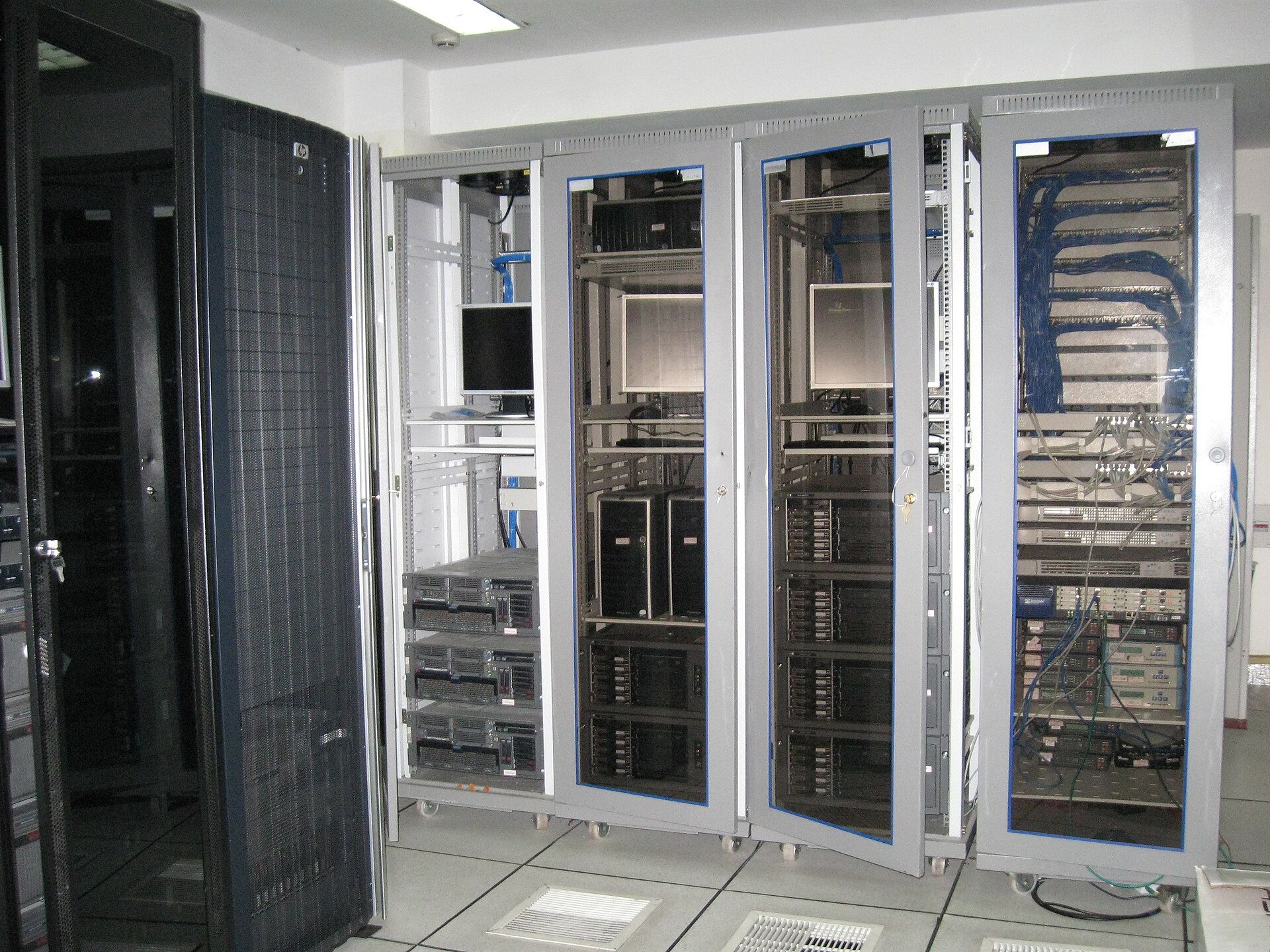
The General Data Protection Regulation took effect on May 25, 2018, designed to protect personal privacy. It has also, unintentionally, become one of the most effective environmental rules in the technology sector. The mechanism is simple: less data requires less electricity to store, less cooling to keep machines from overheating, and less hardware to hold it all. Before GDPR, firms had little incentive to delete anything. Storage was cheap, and data hoarding was standard practice.
Veritas Technologies published a study in 2018 estimating that up to 85 percent of stored data was Redundant, Obsolete, or Trivial. That data sat on powered machines, drawing energy, generating heat, and creating electronic waste when hardware eventually failed. GDPR changed the economics. When keeping data became a legal liability, deletion became a regulatory requirement. The environmental savings followed.

Data Minimization Cuts the Storage Load
Collect less, store less
Article 5(1)(c) of the GDPR establishes the principle of data minimization. It requires that personal data be adequate, relevant, and limited to what is necessary. Before GDPR, a company might collect a customer's date of birth, home address, phone number, and browsing history when all it needed was an email address. That extra data had to be stored, backed up, and protected. It consumed energy at every stage.
Under GDPR, organizations must justify every field in a data collection form. If the data is not needed, collecting it is a violation. This forced companies to redesign intake practices. The direct effect is a smaller volume of data entering the system. Less data ingested means less data held. Less data held means fewer spinning disks and solid-state drives in operation.
The multiplier effect
The indirect effect is larger. Data minimization does not just reduce the initial footprint. It reduces the energy required for backup cycles, replication across facilities, and eventual removal. Each copy of unnecessary data multiplies the waste. By stopping unnecessary data at the point of collection, GDPR prevents that multiplication from happening at all.
Storage Limitation Forces Deletion of Digital Waste
Scheduled removal becomes mandatory
Article 5(1)(e) requires that personal data be kept in a form which permits identification of data subjects for no longer than is necessary. This is the storage limitation principle. In practice, it means firms must set retention periods and delete data when those periods expire.
Before GDPR, most organizations had no systematic deletion process. Data accumulated indefinitely. The Veritas study estimated that 85 percent of stored data was ROT. That data occupied capacity that required constant power. The energy cost was real, but invisible because it was spread across thousands of machines and decades of accumulated files.
Petabytes deleted
GDPR forced organizations to audit their stored data, classify it, and schedule its removal. Large-scale cleanup projects became common in the months before the regulation took effect. These projects deleted petabytes. Every byte removed reduced the energy required for storage and cooling. The environmental benefit was a direct consequence of a legal requirement that had nothing to do with the environment.
Retiring Non-Compliant Hardware Reduces E-Waste
GDPR did not only affect software and data policies. It also affected physical hardware. Firms that could not demonstrate compliance with the regulation's security and handling requirements had to decommission the machines that held non-compliant data. Some of this hardware was old and inefficient, consuming more power per terabyte than modern equipment. Retiring it reduced energy consumption directly.
Some hardware was still functional but could not be brought into compliance without extensive reconfiguration. In those cases, firms chose to replace it with newer, more efficient systems. The replacement cycle accelerated the transition to modern infrastructure. The reduction in server sprawl also cut electronic waste in the long term. Fewer physical machines meant fewer components that would eventually need disposal. The primary benefit is the energy saved by not powering and cooling those systems during their operational lifetime.
Virtualization and Consolidation as a Compliance Strategy
Fewer machines, tighter control
Many organizations responded to GDPR by consolidating their data processing onto fewer, more tightly controlled systems. This consolidation often took the form of data center virtualization. Instead of running multiple physical servers for different business units, each with its own storage and processing, organizations virtualized those workloads onto shared infrastructure.
Virtualization reduces the number of physical machines required. Fewer machines mean less electricity for power and cooling. It also simplifies regulatory obligations because the data is concentrated in fewer locations, making it easier to apply access controls, encryption, and deletion policies.
Utilization rates jump
A virtualized data center can achieve server utilization rates of 80 percent or higher, compared to 15 to 20 percent for non-virtualized environments. GDPR did not mandate virtualization. But the regulation created strong incentives for businesses to centralize and simplify their data processing. Virtualization was the most practical way to achieve that. The energy savings are a side effect, but they are real and measurable.

The Compliance Bureaucracy Has Its Own Footprint
GDPR compliance requires resources. Organizations must employ data protection officers, conduct data protection impact assessments, maintain records of processing activities, and respond to data subject access requests. These activities have their own environmental cost. Legal teams work in offices that require heating and cooling. Officers travel to meetings. The documentation required by the regulation is stored digitally, consuming capacity and energy.
The counter-argument is that the compliance bureaucracy itself generates a carbon footprint that offsets some of the savings from data removal and hardware retirement. This is a valid concern. No comprehensive study has yet quantified the net environmental impact of GDPR. The European Data Protection Board has not published an official environmental impact assessment. The net calculation remains unknown.
However, the scale of the savings from deletion is large. The Veritas estimate that 85 percent of stored data was ROT suggests that the majority of data center capacity was wasted. Even a partial cleanup of that waste would save far more energy than the additional administrative activities consume. The compliance bureaucracy is a fixed cost. The deletion savings scale with the size of the enterprise. For large businesses, the net effect is almost certainly positive.
GDPR as an Accidental Climate Policy
The environmental benefits of GDPR are not an accident of implementation. They are a structural consequence of the regulation's design. By requiring businesses to justify every piece of personal data they hold, GDPR creates a direct financial and legal incentive to minimize data. That incentive is stronger than any voluntary green IT program.
The regulation's impact on energy consumption and electronic waste is not its primary purpose. But it is a significant side effect. As of January 2024, the regulation continues to shape how companies manage data. The data minimization and storage limitation principles remain in effect. Businesses that comply with them will continue to reduce their energy consumption and hardware requirements.
Policymakers considering new environmental regulations for the technology sector should study GDPR's accidental success. The regulation achieved environmental outcomes that dedicated green IT policies have struggled to deliver. It did so by making data hoarding a legal liability rather than a technical inefficiency. That is a lesson worth applying elsewhere.
Key Facts
- Regulation effective date: May 25, 2018
- Data minimization legal basis: Article 5(1)(c) of the GDPR
- Storage limitation legal basis: Article 5(1)(e) of the GDPR
- Estimated ROT data (Veritas, 2018): Up to 85% of stored data
- Data center share of global electricity demand: Approximately 1-2% (late 2010s estimate)
- Status of net environmental impact calculation: Not established by any official body as of January 2024
Frequently Asked Questions
Is GDPR primarily an environmental regulation?
No. GDPR is a data protection and privacy regulation. Its environmental benefits are unintended side effects of its data minimization and storage limitation requirements.
Has the European Data Protection Board assessed GDPR's environmental impact?
The EDPB has not published an official environmental impact assessment of the regulation as of January 2024.
What percentage of stored data is estimated to be redundant, obsolete, or trivial?
Veritas Technologies published a study in 2018 estimating that up to 85 percent of stored data was Redundant, Obsolete, or Trivial.
Does the compliance bureaucracy of GDPR offset its environmental savings?
The net environmental impact of GDPR compliance administration versus data deletion savings has not been calculated. However, the scale of potential savings from deleting ROT data is large enough that the net effect is likely positive for most organizations.