The North West Hydrogen Alliance was born in 2018 when four organisations pooled the assets they each controlled: gas pipes, chemical plants, waste sites, and engineering research. Its core argument is that North West England and North Wales can become Britain's first large-scale low-carbon hydrogen economy not because the technology is novel but because the infrastructure, geology, and industrial demand are already in place. The UK government validated that argument in October 2021, awarding HyNet North West Track-1 status and reserving it a slot in the first wave of state-backed decarbonisation clusters.
Cadent operates the region's gas distribution network. INOVYN, an INEOS subsidiary, turns out hydrogen as a by-product at its Runcorn chlor-alkali site. Peel Environmental owns the Protos energy park near Ellesmere Port. And the University of Chester houses the area's hydrogen engineering research group. Each founder contributed something the others lacked: Cadent could repurpose existing pipes for hydrogen blends and had drafted a dedicated pipeline spine; INOVYN brought manufacturing experience and a ready supply of carbon dioxide for early capture trials; Peel Environmental held the land and planning permissions for new process units; the university supplied modelling and workforce training.

What HyNet actually involves
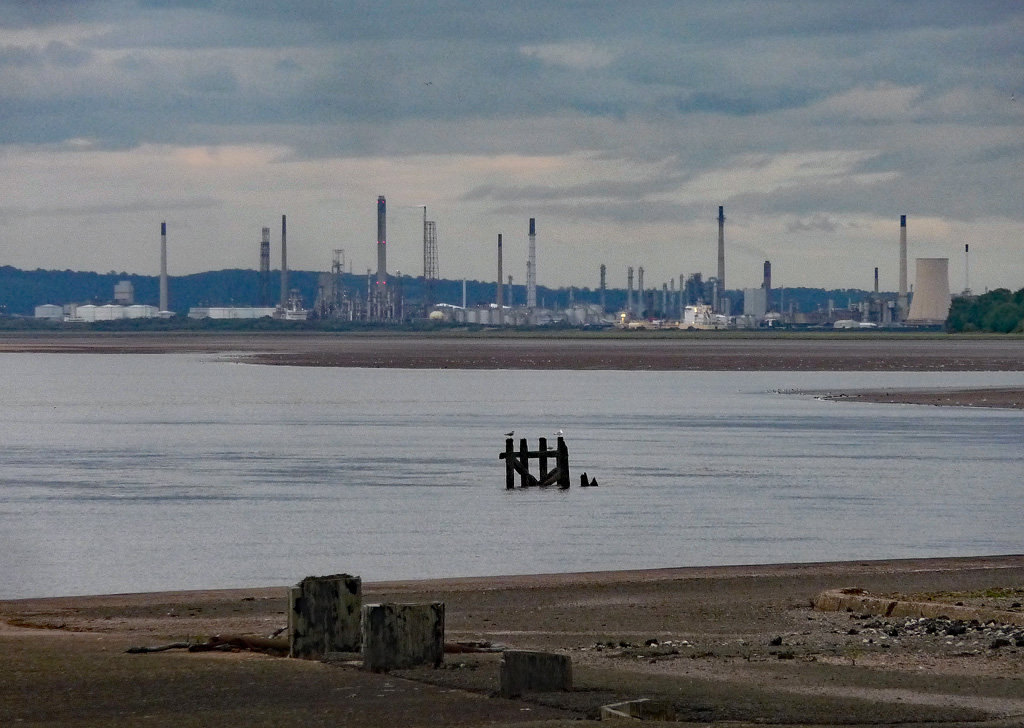
HyNet is a cluster of projects, not a single plant. At its centre sits a scheme to manufacture hydrogen from natural gas at the Stanlow refinery complex, operated by Essar Oil UK. The hydrogen would be made using autothermal reforming with carbon capture, a process that strips out the carbon dioxide before the gas is burned. That carbon dioxide would then be piped to depleted gas fields in Liverpool Bay, operated by Eni, and locked away offshore. The remaining hydrogen would feed industrial users around Stanlow and be pushed through a new pipeline network Cadent has proposed to build across the region.
Scale and the government's 5 GW target
The UK Government's Ten Point Plan, published in November 2020, set a national goal of 5 GW of low-carbon hydrogen capacity by 2030. HyNet alone is intended to deliver a significant slice of that total. The alliance's own publications contend the North West can reach 10 GW of installed generation capacity by the mid-2030s, though that number rests on final investment decisions still pending as of late 2024.
The economic logic: jobs and staying power
The business case rests on two figures the alliance repeats consistently: jobs and retained industrial output. Without hydrogen, the argument runs, the region's chemicals and refining sectors would face either closure or a costly offshoring of carbon-intensive activity.
Why the geography matters
North West England is one of the few places in Britain where three conditions converge. First, existing gas manufacture. Local industry already makes and uses roughly 200,000 tonnes of hydrogen a year, almost entirely as a chemical feedstock. That means a baseline of operational experience and a workforce that handles the molecule daily. Second, permanent sequestration capacity. The depleted fields under Liverpool Bay possess the geology required for long-term CO2 containment, and Eni already runs the subsea hardware there. Third, a concentrated industrial customer base. The Stanlow refinery, the INOVYN chlor-alkali facility, and the cluster of glass, paper, and food manufacturers around Ellesmere Port and Runcorn sit within a few kilometres of one another and of the proposed pipeline route.
Density and the cost-per-tonne argument
That compactness matters because hydrogen is expensive to move. A network serving a dozen large offtakers in a tight area carries a far lower capital expense per tonne of CO2 avoided than one stretched across a county. The alliance presses this geographic edge in its pitch to government, arguing that public money spent on hydrogen infrastructure in the North West will decarbonise more manufacturing output per pound than equivalent spending in a region lacking the same concentration of heavy industry.
Policy asks and the Track-1 process
The NWHA does not design hydrogen plants. It lobbies. Its core ask of Westminster has stayed consistent since 2019: a revenue support mechanism for low-carbon generation, analogous to the Contracts for Difference model used for offshore wind; accelerated planning and permitting for carbon storage licences in Liverpool Bay; and a mandate for gas grid operators to prepare for hydrogen blending, which would create guaranteed offtake before dedicated industrial customers come online.
The cluster sequencing pipeline
Track-1 status, conferred in autumn 2021, gave HyNet a formal place in the government's cluster sequencing process, the mechanism through which the Department for Energy Security and Net Zero allocates capital grants and revenue support to decarbonisation clusters.
Endorsement versus execution
By late autumn 2024, HyNet's hydrogen production units had not reached a final investment decision. The alliance had expanded to more than 30 member bodies spanning utilities, engineering contractors, equipment suppliers, and local authorities. Its annual conference in Chester had become a fixture in the UK hydrogen calendar. But the gap between endorsement and deployment remained the central challenge.
Status at late 2024
By the end of 2024, the NWHA was an established advocacy body with a track record of shaping policy but no operational generating assets in the ground. The HyNet cluster carried government backing at the highest level, yet the final investment decision for the first production plant at Stanlow remained unannounced. The Carbon Capture and Storage business model, which sets the price the government will pay for captured CO2, was still under negotiation between the Treasury and project developers.
The next 12 to 18 months
The alliance's continuing relevance hangs on whether the gap between policy support and financial close narrows over the next year to year-and-a-half. If HyNet reaches first generation, the NWHA will have earned its standing as the organiser behind the effort. If the business model talks stall, the alliance must hold the political and industrial coalition together until the economics line up.
One durable proof point
Either way, the group has already demonstrated something that matters for other clusters. It locked in a decade of industrial demand before any hydrogen molecule was generated, a sequence that set HyNet apart from clusters that built supply first and went looking for customers second.
Key facts
- Founded: 2018
- Founding members: Cadent, INOVYN (INEOS), Peel Environmental, University of Chester
- Flagship project: HyNet North West
- Track-1 status awarded: October 2021
- National hydrogen target (2030): 5 GW from the UK Government's Ten Point Plan (November 2020)
- CO2 storage site: Depleted gas fields in Liverpool Bay, operated by Eni
- Hydrogen production site: Stanlow refinery, operated by Essar Oil UK
- Membership at late 2024: Over 30 organisations