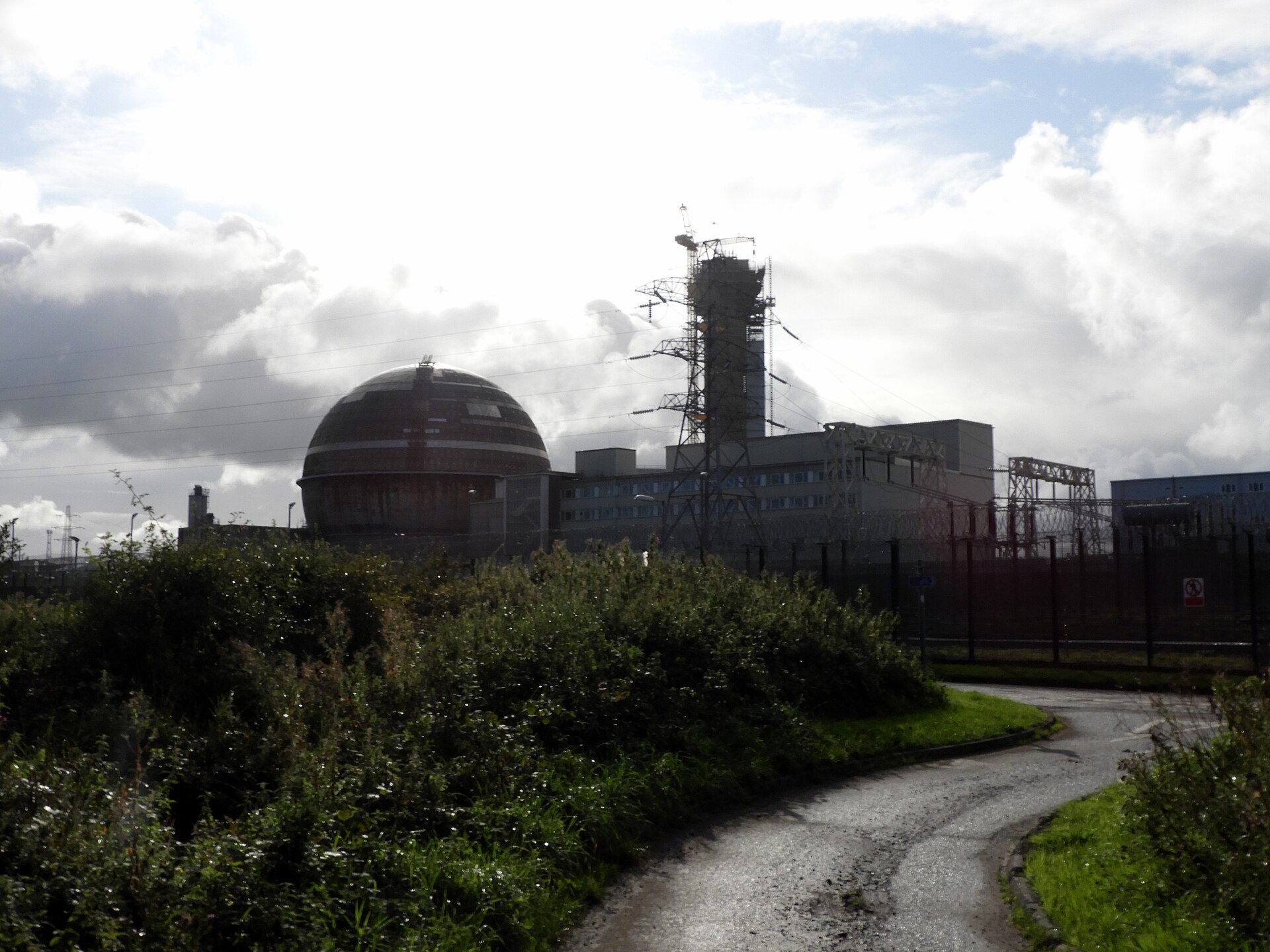
The Moorside nuclear power station was a proposed 3.8 gigawatt plant near Sellafield in Cumbria. Toshiba, its owner, cancelled the scheme after failing to find a buyer and dissolved the development company in January 2019. Work never reached the construction phase. The Nuclear Decommissioning Authority took control of the land and later designated it for a different venture based on Small Modular Reactors.
The original backer was NuGeneration, a consortium known as NuGen. The group intended to install three AP1000 units designed by Westinghouse Electric Company. Toshiba bought a majority stake in 2014 and later acquired the whole entity. The venture unravelled when Westinghouse filed for Chapter 11 protection in March 2017 and Toshiba decided to stop building nuclear capacity overseas.

Planned Capacity and Reactor Design
NuGen intended to deploy up to 3.8 GW of generating capacity at Moorside, using three AP1000 pressurised water units.
Why the AP1000 mattered
Westinghouse marketed the AP1000 as its flagship Generation III+ design. The company had already installed four units in China and was attempting to build two sites in the United States, where mounting overruns later drove Westinghouse into insolvency.
Choosing the AP1000 was a bold move for the UK. No such unit had ever been built in Europe, and the design had not yet secured regulatory approval from the Office for Nuclear Regulation when NuGen formed. At full scale, Moorside would have become one of the country's largest nuclear stations, comparable to Hinkley Point C's 3.2 GW capacity, though Hinkley Point C relies on a different design, the EPR.
Ownership Changes and Consortium Breakdown
NuGen began as a joint venture. Toshiba acquired a majority stake in 2014 and eventually took full ownership.
Vertical integration that snapped
The acquisition gave Toshiba control over both the developer and the reactor supplier, since it owned Westinghouse at the time. That vertical integration proved brittle.
Westinghouse collapses
Westinghouse Electric Company filed for Chapter 11 protection in the United States in March 2017. Cost overruns at the Vogtle and Summer AP1000 builds in the US largely triggered the filing. Westinghouse’s financial breakdown removed the reactor supplier from Moorside and exposed Toshiba to massive losses.
The failed search for a buyer
Toshiba announced its withdrawal from Moorside in November 2018. It tried to sell NuGen, listing Korea Electric Power Corporation as a potential buyer, but no deal materialised. Toshiba wound up NuGen in January 2019.
Government Response and Project Cancellation
The UK government confirmed in 2019 that the Moorside scheme NuGen had proposed would not proceed. The Nuclear Decommissioning Authority took custody of the land that year.
A decade of planning with no dig
No construction had ever started, so the cancellation erased a venture that had been in planning for roughly a decade without any concrete advance.
The government’s assessment was straightforward: without a developer and without a reactor vendor, the effort could not be salvaged. Toshiba had already written down billions of dollars across its nuclear businesses globally, and no other company stepped in to acquire NuGen on terms that would allow the Moorside plan to continue. The location near Sellafield, which already hosts waste processing and decommissioning activities, made the land a logical place for future nuclear development, but not for the AP1000 proposal that had collapsed.
Repurposing the Site and Broader Nuclear Strategy
In 2020, the UK government declared that the Moorside site would host advanced nuclear technologies, including Small Modular Reactors.
SMRs: a different breed
SMRs are smaller than conventional units, typically under 300 MW per module, and are designed to be factory-built and assembled on site. The shift from a 3.8 GW AP1000 plant to an SMR deployment represents a fundamental change in scale and technology, not a continuation of the original plan.
A pattern of exit
Moorside’s failure fit a pattern. Hitachi deserted the Wylfa Newydd project in Anglesey in 2019 for similar reasons: the developer could not secure financing and the government declined to take an equity stake. Hinkley Point C, the only new nuclear plant under construction in the UK, has faced repeated delays and cost increases.
Great British Nuclear shifts the approach
The UK government has since pursued a different tack, creating a public-private vehicle called Great British Nuclear to champion SMRs and other technologies. Moorside became a site for that new strategy rather than a monument to the old one.
Key Facts
- Location: Near Sellafield, Cumbria, England
- Planned capacity: Up to 3.8 GW
- Reactor design: Three AP1000 units (Westinghouse)
- Original developer: NuGeneration (NuGen)
- Owner at cancellation: Toshiba (full ownership after 2014 majority stake)
- Key trigger for collapse: Westinghouse Chapter 11 filing (March 2017)
- Toshiba exit announced: November 2018
- NuGen wound up: January 2019
- Government confirmation of cancellation: 2019
- Site transferred to: Nuclear Decommissioning Authority (2019)
- Subsequent use announced: Advanced nuclear technologies including SMRs (2020)
Frequently Asked Questions
Why was Moorside cancelled?
Toshiba withdrew from the venture in November 2018 after Westinghouse, the reactor vendor and a Toshiba subsidiary, filed for Chapter 11 protection in March 2017. Toshiba failed to locate a buyer for NuGen and dissolved the company in January 2019. The UK government confirmed the scheme would not proceed later that year.
Did any construction actually happen at Moorside?
No. The site never advanced beyond planning. No building work began.
What is happening at the Moorside site now?
The Nuclear Decommissioning Authority assumed control of the land in 2019. In 2020, the UK government announced the site would accommodate advanced nuclear technologies, including Small Modular Reactors. As of December 2023, the specific reactor vendor and build status for the SMR programme were not settled.
How does Moorside compare to other cancelled UK nuclear projects?
Hitachi deserted the Wylfa Newydd project in Anglesey in 2019 for similar reasons: the developer could not secure financing and the government declined to take an equity stake. Both ventures were large-scale, single-vendor plants that collapsed when their backers exited the UK market. Hinkley Point C, the only new nuclear plant under construction in the UK, has faced repeated delays and cost overruns.