Retail robots are not science fiction. Nor are they a revolution that landed in 2024. A narrow set of tasks has become genuinely automated. Everything else hinges on a merchant's appetite to invest in a sector that multiple analyst firms pegged at roughly $7 billion globally two years ago, and that still struggles to justify itself beyond three or four use cases.
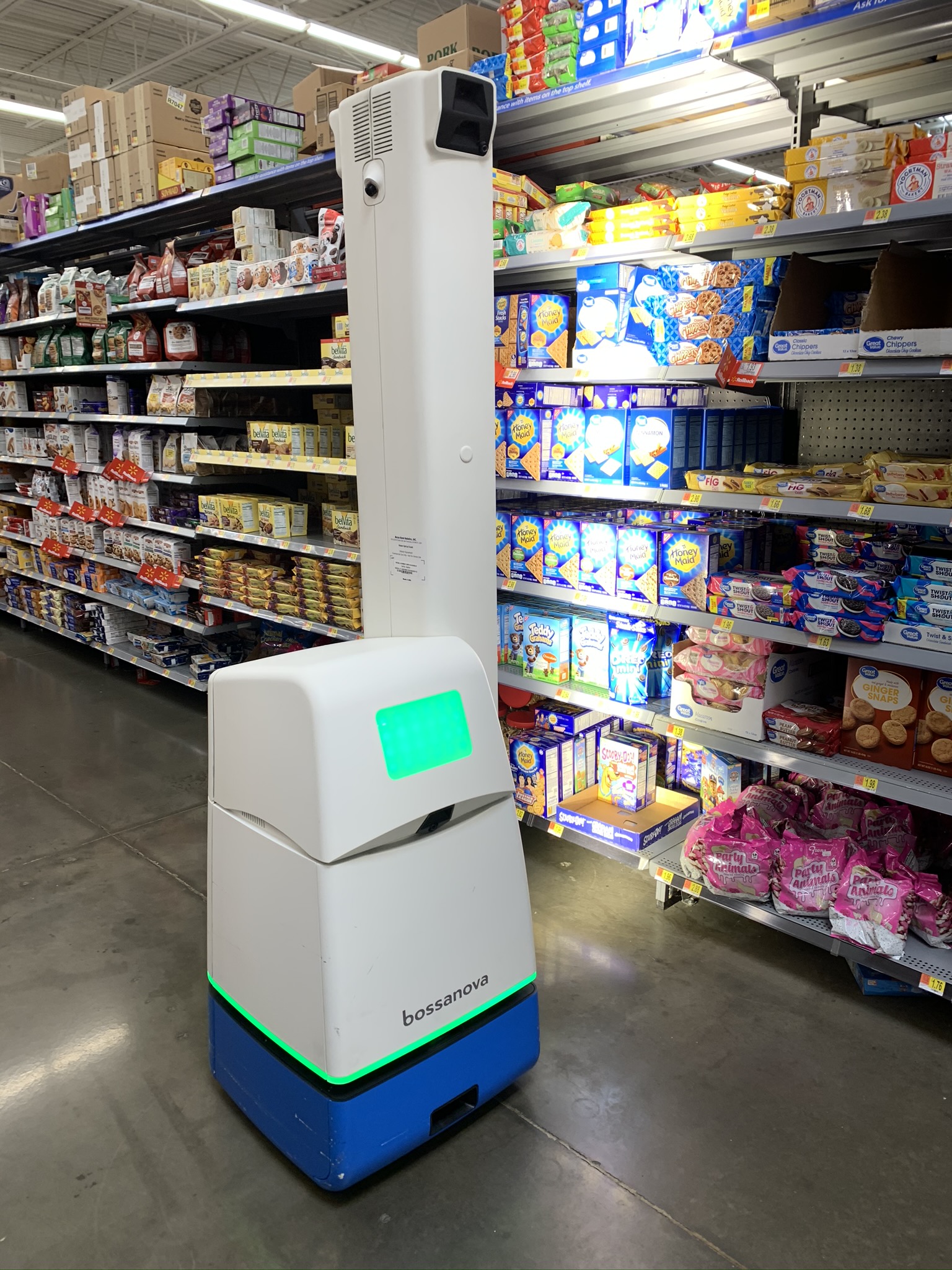
The most visible rollouts involve stock scanning. Simbe Robotics' Tally unit roams aisles at Schnucks and Giant Eagle, checking shelf levels and flagging misplaced items. Bossa Nova Robotics ran a comparable system across 500 Walmart locations before the retailer ended the contract in 2020, a move that exposed the limits of early-generation hardware. Floor care is another area where several hundred Walmart stores received autonomous scrubbers, though Walmart also pulled back on multiple robotics initiatives that same year. The work these machines handle is repetitive and low-variance. That is precisely what makes it automatable, and precisely what lets chains point to a clear if narrow return.

The Economic Case for Robots in Retail
The economic drivers behind retail robotics are straightforward on paper. Labor costs climb. Minimum-wage increases in many states squeeze margins at large grocers. The same stores face shortages of workers willing to do overnight restocking or the monotonous walk of a shelf audit. A robot that works three shifts without breaks, health insurance, or overtime pay addresses that gap.
What the Numbers Actually Show
Public figures on ROI remain scarce. Retailers rarely disclose payback periods or per-store savings from a specific machine. The $7 billion global market figure from 2022 includes warehouse automation and fulfillment robotics, not just in-store units, so the portion spent on customer-facing devices is smaller. Amazon's acquisition of Kiva Systems in 2012, which the company priced at $775 million in its regulatory filings, transformed warehouse picking, but that system operates in strictly controlled environments. The economics of a store aisle with unpredictable shoppers, fallen merchandise, and variable lighting are different. They demand more expensive sensors and software with diminishing returns for each unexpected scenario the unit encounters.
What Robots Actually Do Inside a Store
Inside a physical store, a robot's job must be narrow or it fails. Tally scans shelf labels and gaps in stock. It does not handle produce, assist shoppers, or restock. It patrols at hours when foot traffic is low. Ocado's automated fulfillment centers use hundreds of bots on a grid system that shuttles totes to picking stations, but those machines never encounter a human shopper. The distinction matters. The device that works alongside people in a grocery aisle has harder constraints than one in a dedicated warehouse.
Cleaning and Sanitizing
Floor-cleaning robots made inroads after the COVID-19 pandemic began in 2020, when sanitation became a visible priority. Walmart's autonomous scrubbers were among the earliest large-scale deployments. The pandemic also pushed merchants toward contactless operations, which created openings for machines that could move through a store without human guidance. Yet even these units require human oversight for refilling water tanks, changing pads, and handling spills that exceed their detection capabilities.
Technology Barriers That Keep Robots in Pilot Mode
Three technical problems explain why retail robots have not proliferated beyond shelf scanning and floor care. First, navigation in crowded aisles. A robot must distinguish a shopper from a display, a child from a cart, and a temporary blockage from a permanent fixture. The sensor fusion needed to do this reliably across a thousand different store layouts is expensive. Second, grasping varied objects remains hard. A machine that picks up a cereal box cannot necessarily pick up a bag of potatoes or a bunch of bananas. So order fulfillment in grocery stores still relies on people. Third, integration with legacy IT systems is slow. A retailer's stock database, point-of-sale system, and labor-scheduling software were not built to feed data to a roaming unit. Getting them to talk to one another costs more than the hardware.
SoftBank Robotics' Pepper exemplified these limits. Pepper, a humanoid trialed in retail settings, was designed to greet shoppers and answer questions. Production was paused in 2021 due to weak demand. The robot could not reliably understand speech in a noisy environment or navigate a store without bumping into displays. It was interesting but not useful enough to justify a hardware purchase.
How the Workforce Changes, Not Just Shrinks
The dominant narrative about retail robots is job destruction. The more accurate description is task substitution with new roles appearing alongside it. A store that deploys shelf-scanning machines does not fire its night crew. Instead, the workers who formerly walked aisles counting boxes move to tasks the robot cannot do. They handle customer service, restock high-turnover items, and manage the exceptions that the unit flags. The shift changes the skill mix. A retailer needs someone who can maintain the robot, troubleshoot its navigation software, and interpret the stock data it generates.
These new roles are not created in large numbers. A chain with 500 stores might hire a small central team of robot technicians and data analysts rather than one per location. But the roles are real and they pay more than stock-clerk wages on average. The workers who lose out are those in the most repetitive, lowest-paid positions that get fully automated away. Overnight shelf auditing is one of them.

Key Facts
- Global retail robotics market value (2022): Approximately $7 billion, per multiple analyst estimates
- Amazon's acquisition of Kiva Systems (2012): $775 million, as reported in Amazon's SEC filing
- Bossa Nova Robotics deployment peak: 500 Walmart stores, contract ended 2020
- SoftBank Robotics Pepper production pause: 2021 due to weak demand
- COVID-19 pandemic's effect: Accelerated interest in sanitation and contactless automation starting 2020
Vendors, Retailers, and the Market Landscape
The retail robotics market divides into two camps. Large technology vendors with established logistics businesses, such as Amazon Robotics, and startups that target specific in-store tasks. Amazon's advantage is scale and a closed environment. Its machines operate in fulfillment centers that the company designs and controls. The Kiva acquisition in 2012 gave Amazon a decade head start on warehouse automation that its retail competitors cannot easily copy. Startups like Simbe and the former Bossa Nova sell to those competitors. Their challenge is that each new retail client requires integration work, store mapping, and convincing store managers that the machine will not get in the way.
Ocado occupies a hybrid position. It builds automated warehouses for grocery chains outside the United States. Those warehouses use hundreds of its grid robots for picking. The technology works well, but it is a capital investment on the order of tens of millions of dollars per facility. Grocers must decide whether to build that infrastructure or stick with manual picking. Most have chosen manual so far.
Consumer Reception, Privacy, and Safety
Shopper reactions to retail robots vary by generation and by the robot's purpose. Shelf scanners and floor cleaners generate little resistance because they do not interact with people. Humanoid robots like Pepper drew curiosity but also unease. Shoppers reported feeling watched by a machine that was essentially a camera on wheels. Privacy concerns surfaced around data collection. A shelf-scanning unit photographs stock labels, not shoppers, but the camera is pointed at the same space where shoppers stand. Retailers who deploy these systems typically negotiate data-use policies with their vendors and post signage in stores.
Safety regulation for autonomous systems operating around the public is fragmented. The United States has no federal retail robotics safety standards as of mid-2024. The Occupational Safety and Health Administration covers workplace safety but has not issued specific guidance for robots in retail. The European Union has stricter rules around autonomous vehicles, but those apply more to public roads than store aisles. Retailers set their own operating rules. Most require a human attendant nearby during the robot's first weeks in a store, then allow it to operate unsupervised at night.
Retail Robot Types: Current Deployment and Timeline
| Task | Example Deployment | Technology Readiness | Likely Mainstream Adoption |
|---|---|---|---|
| Shelf scanning / stock audit | Simbe Tally at Schnucks, Giant Eagle | Mature. Commercially deployed in hundreds of stores. | Already mainstream for large grocers. |
| Floor cleaning | Walmart autonomous scrubbers | Mature. Well understood technology from industrial cleaning. | Already mainstream where labor cost justifies it. |
| Warehouse order fulfillment (pick and pack) | Ocado grid robots, Amazon Robotics | Mature and economical in high-volume facilities. | Mainstream for large automated warehouses. Not for small stores. |
| In-store customer assistance / humanoid | SoftBank Pepper | Low. Limited natural language and navigation. | 5 to 10 years away, if ever. Demand is weak. |
| General item picking in store aisles | No large-scale deployment | Low. Grasping varied objects in mixed environments unsolved. | 10 years or more away. |
Frequently Asked Questions
Are retail robots replacing human workers?
In some narrow tasks, yes. Shelf auditing and certain types of cleaning are being automated. But the numbers are small relative to total retail employment. More often, workers shift to tasks the robot cannot do, and new roles open up in maintenance and data analysis. The Bureau of Labor Statistics has not reported a significant job loss attributable to in-store robots as of 2024.
Do customers like having robots in stores?
Reception is neutral to positive for cleaning and scanning robots. Shoppers rarely interact with them. Humanoid robots have generated negative reactions in some pilots due to privacy concerns and performance issues.
How much does a retail robot cost?
Vendors rarely disclose pricing publicly. For a shelf-scanning unit, the cost includes hardware, software, integration, and ongoing support. Multi-year leases are common. Analysts estimate the total cost of ownership for a single robot at tens of thousands of dollars per year, but the figure depends on the store and the vendor contract. Check the manufacturer's latest quote for current pricing.