Biometric security splits into two families. Physiological systems measure a physical trait: a ridge pattern, a face, an iris. Behavioral systems measure how a person moves or speaks: voice cadence, gait, keystroke rhythm. The physiological group dominates consumer and enterprise rollouts today because the sensors are cheap and fast. The behavioral group is harder to spoof at scale but harder to engineer reliably, so it appears mostly in continuous verification products for high-security environments.
The question that matters for operators and policy people is not whether biometrics are more convenient than passwords. They are. The question is whether they are more secure, and the evidence so far is mixed. A biometric trait is not a secret. A face is visible. A print is left on every surface a person touches. Compromise is permanent: no user can revoke a ridge pattern or iris structure and issue a new one the way they can with a password. That asymmetry rewrites the threat model.
This piece traces how the major biometric technologies actually work, the documented spoofs that have bypassed them, the regulatory frameworks that treat biometric data differently from other personal data, and why standards bodies such as the FIDO Alliance insist that matching must happen on the local endpoint, not in the cloud.

How Fingerprint, Facial, Iris and Voice Systems Work
Fingerprint Capture and Matching
Fingerprint sensors in modern handsets and access readers use either optical or capacitive imaging. An optical sensor photographs the ridge pattern. A capacitive sensor detects the electrical difference between ridges and valleys. Neither stores a full picture. Instead, the sensor extracts a mathematical representation of minutiae points, the locations where ridges end or fork, and stores that template. When a user authenticates, the live scan is compared against the stored template. If the match exceeds a threshold, access is granted.
Face Depth Mapping
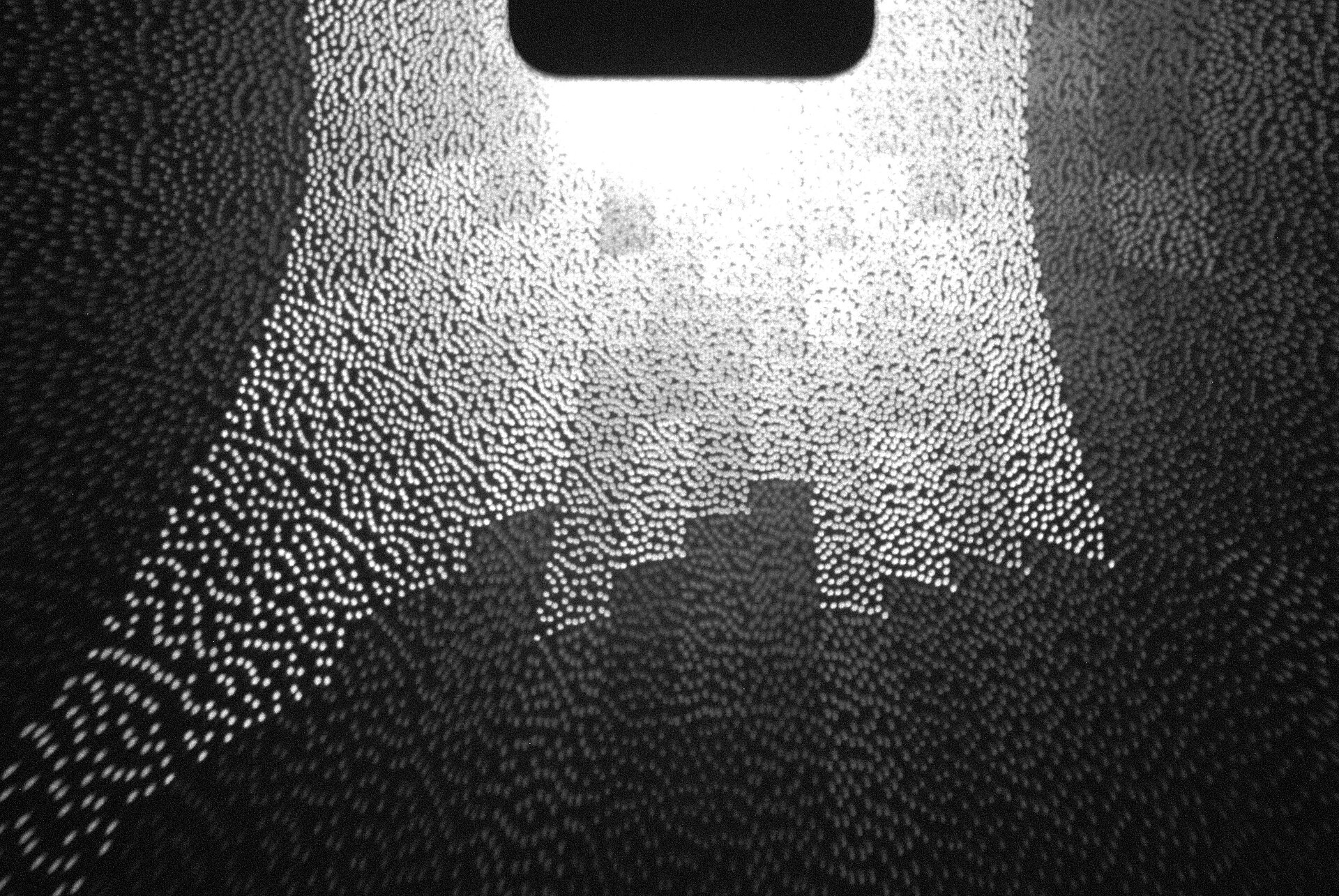
Apple's Face ID arrived with the iPhone X in 2017. It uses a structured-light sensor that projects more than 30,000 infrared dots onto the user's face and reads the distortion pattern to build a depth map. The facial geometry data stays locked inside the Secure Enclave, a hardware component isolated from the main processor and the operating system. No facial data ever leaves the handset, and Apple does not upload it to its servers.
Iris Recognition and Voice Verification
Iris recognition, deployed by Samsung in the Galaxy S8 and by enterprise access systems, uses a near-infrared camera to image the colored ring around the pupil and map its crypts, furrows and rings. Voice verification, a behavioral modality, analyzes the sound of the voice plus the shape of the vocal tract and speaking mannerisms. It is rare in consumer hardware and common in telephone banking and call-center verification.
Documented Spoofs and Their Methods
Iris and Camera-Only Face Bypasses
Every major biometric modality has been spoofed in public demonstrations. In 2017, researchers from the Chaos Computer Club defeated the Galaxy S8 iris scanner by placing a contact lens on a printed picture of an eye. The contact lens simulated the natural curve and reflection of a real eye, enough to fool the infrared sensor. Earlier Samsung facial-recognition builds, which relied on a standard front-facing camera rather than a depth sensor, fell to a photograph.
Voice verification has been defeated with recorded audio, and more recently with deepfake voice synthesis. In 2019, a journalist for The Verge demonstrated that he could bypass his own bank's voice check by playing a recording of his own speech from a laptop. Banks later added liveness detection, such as prompting the user to say a random phrase. Deepfake audio that can generate any utterance from a short sample makes that countermeasure fragile.
Fingerprint and Structured-Light Attacks
Apple's Touch ID was broken in 2013 by the Chaos Computer Club using a high-resolution image of a print lifted from a glass surface and printed onto a transparent film. The method required a clean lift and a good picture but no expensive equipment. Apple's Face ID has not been publicly spoofed with a photograph or mask in a published peer-reviewed demonstration as of January 2024, though the company warns that identical twins or very close family members may get past the same handset's lock.
The BioStar 2 Breach and the Danger of Centralized Storage
What the BioStar 2 Incident Exposed
In August 2019, researchers Noam Rotem and Ran Locar discovered an unsecured repository belonging to Suprema's BioStar 2 platform. The repository exposed the prints and facial recognition data of more than 1 million people, along with unencrypted username-password combinations. The platform was used by the UK Metropolitan Police, defense contractors, and banks. The breach was not a sophisticated hack. The collection of files was left open on the internet without a password, accessible to anyone who knew the IP address.
Why On-Device Matching Removes the Cloud Risk
The BioStar 2 incident illustrates the central risk of cloud-based biometric archives. When templates sit on a remote server, a single misconfiguration can expose the biometric data of every user in the system. Unlike a password store, which can be reset by forcing all users to create new credentials, a biometric archive cannot be reset. The affected users cannot change their ridge patterns. The FIDO Alliance standards specify that biometric data should never leave a user's personal endpoint. Matching should happen on the endpoint, and the only thing transmitted should be a cryptographic key that proves the match succeeded.
Match-on-chip architecture, where the biometric sensor includes a dedicated processor that performs the comparison and never releases the template, eliminates the cloud storage risk entirely. Apple's Secure Enclave and equivalent Android implementations using dedicated trusted execution environments follow this model. The trade-off is that the endpoint becomes the single point of failure: if the unit is lost, the biometric credential is unavailable until the user authenticates with a backup method.
Legal Frameworks: BIPA, GDPR and the Fifth Amendment
Illinois BIPA and Informed Consent
The Illinois Biometric Information Privacy Act (BIPA), enacted in 2008, requires private entities to obtain informed consent before collecting biometric identifiers. It has produced multi-million-dollar settlements, including a Facebook class-action settlement in 2020 that reached a range of $550 million to $650 million as approved by the court; the final per-claimant payout depends on the claims rate. Visit the official court-authorized settlement site for current distribution figures. BIPA applies to any company that collects biometric data from Illinois residents, regardless of where the company is based, and it provides a private right of action, meaning individuals can sue for violations and need not wait for a regulator to act.
GDPR and Special-Category Data Rules
The European Union's General Data Protection Regulation, effective from May 2018, classifies biometric data used for identification as a special category of personal data. Processing such data requires explicit consent, and the regulation imposes strict conditions on storage and retention. The UK's post-Brexit version of GDPR retains the same classification. Companies operating in the EU or handling data of EU residents must conduct a data protection impact assessment before deploying biometric systems.
The Fifth Amendment's Physical-Evidence Distinction
An open legal question: is biometric data shielded by the Fifth Amendment in the United States, which protects individuals from being compelled to testify against themselves? Courts have generally held that a person can be compelled to provide a sample, such as a ridge scan or a face scan, to open a locked endpoint, because it is physical evidence rather than a communication of knowledge. A passcode, by contrast, is a mental fact that the Fifth Amendment protects. This distinction governs law enforcement access: a suspect can be forced to place a finger on a sensor or look at a camera, but cannot be compelled to reveal a passcode.
Key Facts
- BioStar 2 breach date: August 2019
- People exposed in BioStar 2 breach: Over 1 million
- Apple Face ID introduction: 2017, with iPhone X
- Infrared dots projected by Face ID: Over 30,000
- BIPA enactment year: 2008
- Facebook BIPA settlement range: $550, $650 million (court-approved 2020)
- GDPR effective date: May 2018
- FBI NGI facial recognition database size: Over 641 million face images (2020 GAO report)
- Galaxy S8 iris scanner spoof: Demonstrated by Chaos Computer Club, 2017
Biometric Modalities Compared
| Modality | Type | Common Use | Known Spoof Method | On-Device Matching Typical? |
|---|---|---|---|---|
| Fingerprint | Physiological | Phone unlock, access control | Lifted print on film | Yes (Touch ID, most Android) |
| Face (2D camera) | Physiological | Phone unlock (older models) | Photograph | Yes |
| Face (depth sensor) | Physiological | Phone unlock (Face ID) | Not publicly demonstrated as of Jan 2024 | Yes (Secure Enclave) |
| Iris | Physiological | Phone unlock, enterprise | Contact lens on printed eye | Yes |
| Voice | Behavioral | Phone banking, call centers | Recorded audio, deepfake synthesis | No (usually server-side) |
Frequently Asked Questions
Can biometric data be changed if compromised?
No. Unlike a password, a ridge pattern, face or iris cannot be reset. This is why the FIDO Alliance and security engineers recommend that biometrics serve only as a convenience factor in multi-factor authentication, not as the sole credential.
Is it legal for companies to store my face or fingerprint in the cloud?
It depends on jurisdiction. Under GDPR and BIPA, storing biometric data requires explicit consent and strict security measures. Many companies choose on-device matching to avoid regulatory risk entirely, though the BioStar 2 breach showed that not all do.
Can police force me to unlock my phone with my face or fingerprint?
In the United States, courts have generally held yes. The Fifth Amendment protects against compelled testimony, but a biometric scan is considered physical evidence, not a communication. A passcode, by contrast, is a mental fact and may be protected.
Do liveness detection systems solve the spoofing problem?
Liveness detection raises the cost of spoofing but does not eliminate it. Good liveness detectors can reject photographs, videos and simple masks, but researchers have demonstrated bypasses using high-quality silicone masks and deepfake video in controlled settings. The stronger protection is on-device matching, which removes the cloud breach surface entirely.