On-body devices moved from lab curiosities to everyday products through a series of product launches, sensor breakthroughs, and deep integration with the smartphone. The market eventually assembled around Apple, Google (via Fitbit), Samsung, and a handful of other platform owners. Early independents such as Pebble were bought and switched off.
Pebble raised over $10 million on Kickstarter in 2012, a record at the time, and shipped a smartwatch that paired with iOS and Android. Fitbit bought the company in December 2016 for a sum the two parties disclosed as less than $40 million, and Pebble hardware was discontinued immediately afterward. Fitbit itself was founded in 2007 and shipped its first clip-on tracker two years later. Google announced its deal for Fitbit in November 2019 at $2.1 billion. The European Commission opened an in-depth investigation in August 2020, greenlit the tie-up in December 2020 subject to binding commitments, and the purchase closed the following month.
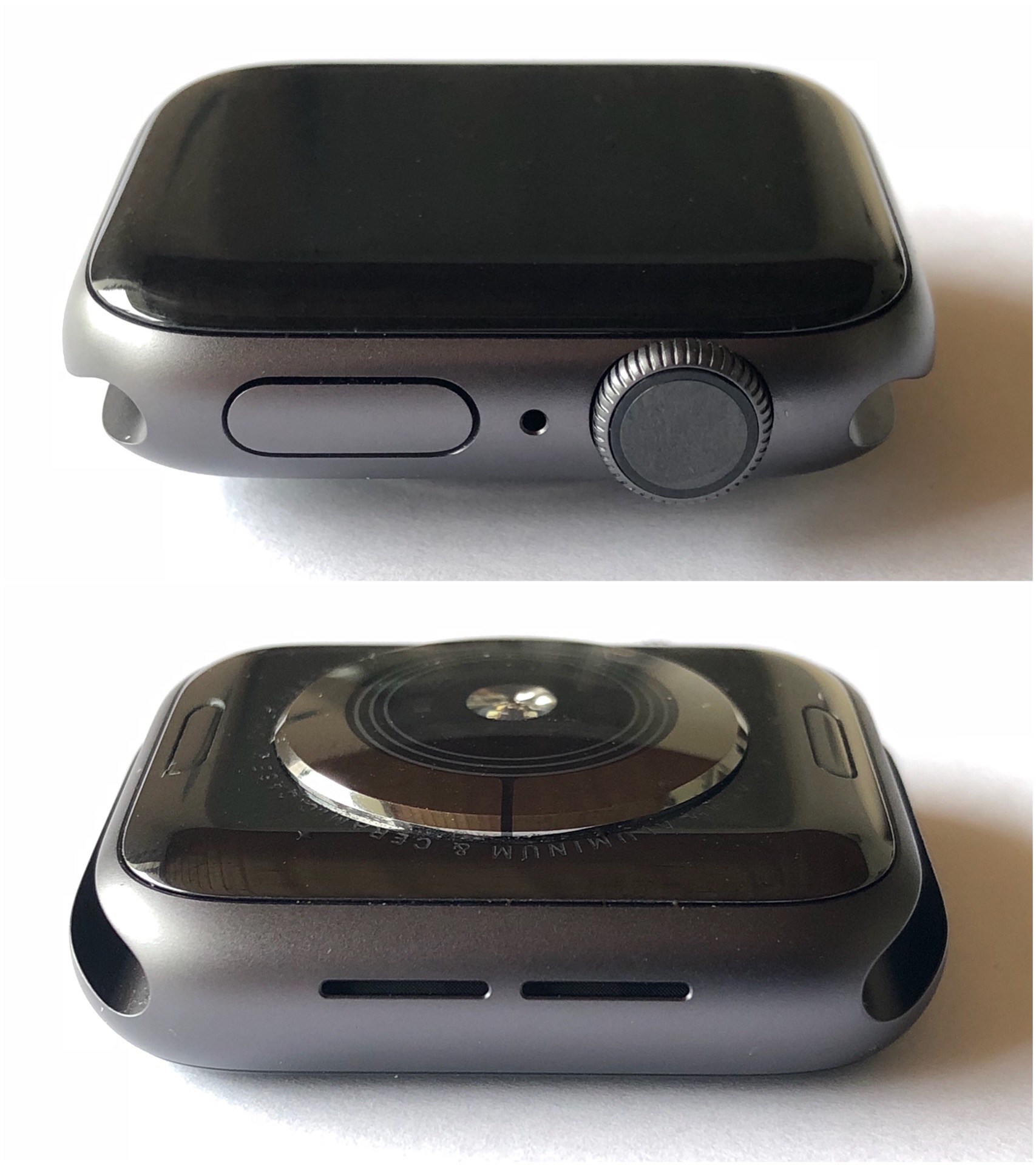
The Apple Watch, announced in September 2014 and released in April 2015, accelerated mainstream uptake. By 2018 the Apple Watch Series 4 earned FDA clearance for its ECG feature, a milestone that recast on-body electronics as regulated medical hardware. The market today is dominated by platforms, not standalone hardware companies.

Sensor Miniaturization and Battery Life Made Devices Wearable
The earliest fitness trackers were thick, ran down quickly, and gathered sparse data. Fitbit's 2009 tracker counted steps and estimated distance with a simple accelerometer. Users clipped it to a belt or waistband and accepted the bulk because the utility felt new.
Smaller sensors, longer endurance
Advances in micro-electromechanical systems (MEMS) let manufacturers fit accelerometers, gyroscopes, and altimeters into watch-sized enclosures. Battery chemistry improved more slowly, but low-power Bluetooth 4.0, introduced around 2010, allowed a device to stay coupled to a phone without draining its cell. The Apple Watch arrived targeting a full-day runtime, which hardened into the baseline expectation. Once an on-body device could last a waking day on a charge and look like something a non-enthusiast would wear, the barrier to daily adoption collapsed.
Smartphone Ecosystems Turned Wearables into Accessories, Not Gadgets
Early wrist-worn products operated as standalone units. Pebble pulled notifications from a phone, but the interaction was narrow. The genuine pivot occurred when Apple and Google baked wearable platforms into their mobile operating systems. Apple Watch demanded an iPhone. Android Wear, later renamed Wear OS, demanded an Android handset. That locked in users but also bequeathed the body-worn screen the phone's app roster, alerts, and messaging pipes.
Consequently, these devices stopped being niche curiosities and became phone accessories. A customer who strapped on an Apple Watch was unlikely to defect to a Samsung handset. That ecosystem grip fueled the market contraction that followed, because independent hardware makers unable to supply a full stack either paired with a platform or were absorbed. Pebble's purchase by Fitbit and Fitbit's purchase by Google are the starkest proofs of that rule.
Medical Validation Opened a New Market
For years, wrist-worn electronics were gym tools. They counted steps, logged sleep, and approximated calorie burn. None of those metrics carried clinical weight. That changed in September 2018, when the Apple Watch Series 4 obtained FDA clearance for its single-lead electrocardiogram. The regulatory nod meant the product could generate a waveform a user could show a physician. It was not a diagnostic instrument, but it was the first time a consumer on-body device crossed into regulated medical hardware.
The clearance reset public perception. Body-worn tech was no longer confined to runners and early adopters; it became a tool for older adults, people managing chronic conditions, and anyone alert to heart health. Rivals followed. Samsung secured ECG clearance for its Galaxy Watch family. Fitbit, before the Google deal closed, pursued its own authorization for ECG and atrial fibrillation detection. Medical validation supplied a job that a step counter could not substitute.
Privacy, Data Security, and the Regulatory Response
The stream of information that made body-worn products valuable also made them contentious. Step totals, pulse readings, sleep stages, and location trails are intimate data. The European Commission's probe of the Google-Fitbit transaction concentrated on whether Google would feed Fitbit health data into its ad-targeting machinery. The binding commitments imposed in December 2020 required Google to wall off Fitbit user data from Google's advertising stack, to hand users control over their information, and to let third-party device makers continue accessing Android without penalty.
That investigation, plus the remedies it produced, established a precedent: body-derived data is treated separately from other consumer information in the EU. In the United States, no equivalent federal structure exists, and data from on-body products escapes HIPAA unless a covered healthcare entity collects it. That regulatory vacuum remains as of January 2024. Companies that harvest health signals through these devices face rising scrutiny from privacy campaigners and regulators, but the rules splinter by jurisdiction.
Key Milestones in Wearable Technology Adoption
- Fitbit founded: 2007
- First Fitbit tracker shipped: 2009
- Pebble Kickstarter record: Over $10 million raised in 2012
- Google Glass announced: 2012 (developer release in 2013)
- Apple Watch announced: September 2014
- Apple Watch launched: April 2015
- Fitbit IPO valuation: Approximately $4.1 billion (June 2015)
- Pebble acquired by Fitbit: December 2016 for less than $40 million, as jointly reported by the companies
- Apple Watch Series 4 FDA clearance: September 2018 (ECG feature)
- Google announces Fitbit acquisition: November 2019 for $2.1 billion, as jointly reported by the companies
- EU opens in-depth investigation: August 2020
- EU approves acquisition with commitments: December 2020
- Acquisition closes: January 2021
Major Wearable Product Launches and Outcomes
| Device / Company | Launch / Key Date | Outcome |
|---|---|---|
| Pebble smartwatch | Kickstarter 2012, shipped 2013 | Bought by Fitbit Dec 2016 for less than $40 million, as jointly reported; hardware discontinued |
| Apple Watch (original) | Announced Sep 2014, launched Apr 2015 | Mass-market success; Series 4 earned FDA clearance in 2018 |
| Fitbit (first tracker) | Shipped 2009 | IPO at $4.1B in 2015; bought by Google for $2.1B, as jointly reported, closing Jan 2021 |
| Google Glass | Announced 2012, developer release 2013 | Did not reach consumer adoption; pivoted to enterprise |
Frequently Asked Questions
What happened to Pebble?
Pebble was bought by Fitbit in December 2016 for less than $40 million, as jointly reported at the time. Its hardware was discontinued and the company's intellectual property was absorbed into Fitbit.
Did the Google-Fitbit acquisition face regulatory hurdles?
Yes. The European Commission opened an in-depth investigation in August 2020 and approved the deal in December 2020 only after Google agreed to binding commitments on how it would handle Fitbit user data.
When did the Apple Watch get FDA clearance?
The Apple Watch Series 4 received FDA clearance for its ECG feature in September 2018.
Which companies dominate the wearable market today?
Apple, Google (via Fitbit), Samsung, and a handful of other major platform owners. The market consolidated around firms that could pair on-body devices with smartphone ecosystems.