Digital identity verification is shifting from an occasional passport scan to a system where a phone holds a government-issued attestation that can be presented offline, shared selectively, and reused across services. The technical backbone for mobile driving licences is ISO 18013-5, a standard published in 2021 that specifies how an mDL lives on a device, how it authenticates to a verifier, and which data fields can be disclosed. The European Union's eIDAS 2.0 regulation, in force since May 2024, obliges member states to offer EU Digital Identity Wallets by 2026. Apple added mDL capabilities to Apple Wallet in 2021, with initial rollouts in Arizona, Maryland, Colorado, and Georgia. Google followed for Android in 2022. The identity-verification vendor market includes Jumio, Onfido, Socure, and ID.me, and consolidation is underway: Entrust Corp. agreed to acquire Onfido in February 2024 for a price the companies described as above $400 million; neither has disclosed the final figure, and the parties direct inquiries to their respective investor-relations contacts. The US Transportation Security Administration has accepted mDLs at select airport checkpoints since 2022. Australia rebranded its myGovID system to myID in 2024. None of this means the world has switched to digital IDs. The shift is real but uneven, and the hardest questions are about privacy, interoperability, and who controls the attestation after it is issued.
ISO 18013-5 and the Technical Basis for Mobile Driving Licences
What the standard covers
The ISO 18013-5 standard, published in 2021, defines how a mobile driving licence is issued, stored, and presented. It specifies a data model that mirrors the plastic card but adds cryptographic signing, device binding, and the ability to share only the fields a verifier needs. A bar can ask for proof of age over 21 and get a yes or no without seeing the holder's name or address. The standard also defines how the mDL communicates with a verifier's terminal, using near-field communication or a QR code, and how the issuing authority signs the attestation so it cannot be forged.
Why a standard matters more than a product
The standard matters because it is a set of requirements that any vendor, government, or phone maker can implement. Apple and Google both built their wallet mDL features around ISO 18013-5, which means a licence issued by a state motor vehicle agency can in principle work with either wallet. In practice, the early US deployments are limited to a few states and a narrow set of use cases, mostly TSA checkpoints. The TSA began accepting mDLs at select airports in 2022, but the program is not national and the agency still demands a plastic ID as backup.

Government Programs: eIDAS 2.0 and National Schemes
The EU mandate
The European Union's eIDAS 2.0 regulation entered into force in May 2024 and obliges every member state to issue an EU Digital Identity Wallet to citizens and residents by 2026. The wallet is meant to hold identity data, driving licences, diplomas, and payment credentials, and to work across borders. The regulation is notable because it mandates acceptance by large online platforms, not just government services. It also imposes rules on privacy: the wallet must allow selective disclosure and cannot let issuers or verifiers track transactions.
Readiness gap
As of mid-2024, no member state has a production-ready wallet. Several pilot projects are running, but the 2026 deadline is tight and the technical specifications are still being finalized. Outside the EU, national digital ID schemes exist in various forms. Australia rebranded its myGovID system to myID in 2024, moving toward an attestation that can be used for both government and private-sector services. The scheme is voluntary and has not replaced paper and plastic documents. The pattern across most countries is the same: a government-led digital ID exists alongside physical cards, and adoption is measured in single-digit percentages of the population.
Apple, Google, and the Device Wallet as Identity Hub
What the wallet integrations do
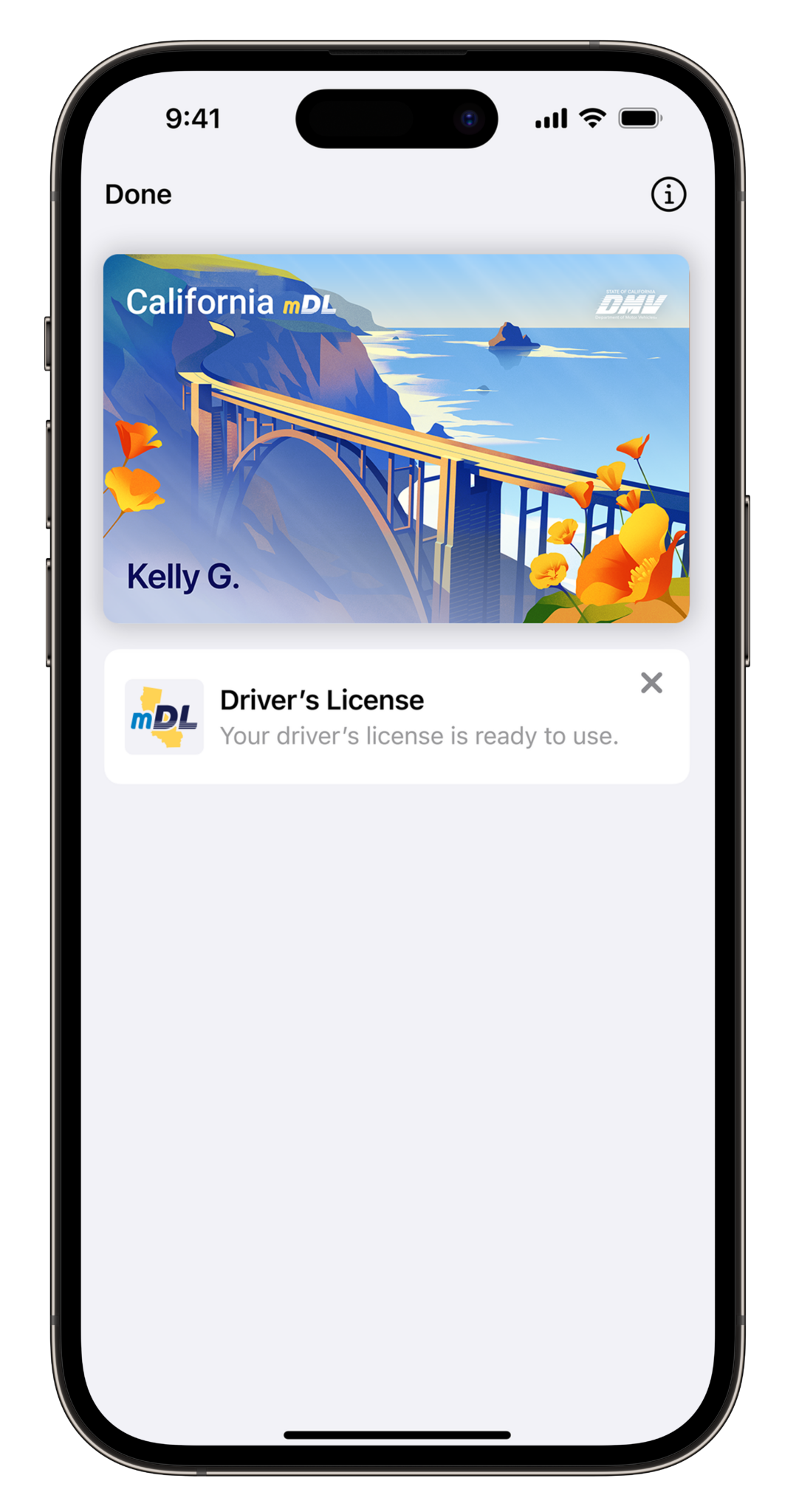
Apple announced support for storing mobile driving licences in Apple Wallet in 2021, and the feature went live in Arizona, Maryland, Colorado, and Georgia. Google announced similar support for Google Wallet on Android in 2022. In both cases, the state motor vehicle agency issues the attestation and it is stored on the device. The phone communicates with a verifier's terminal using the ISO 18013-5 protocol. The user authenticates with Face ID or a PIN before the attestation is shared.
Convenience versus lock-in
The device-wallet approach puts a familiar interface in front of a complex attestation, which helps adoption. But it ties the attestation to a specific hardware platform and a single company's policies. A user who switches from iPhone to Android cannot move an mDL with them; they must reissue it from the state. The early US deployments are limited to TSA checkpoints and a small number of retail age-verification pilots. No state has yet made the mDL a genuine substitute for the plastic licence. The TSA still insists on a physical ID as the primary document, with the mDL accepted only as an added convenience.
Vendor Market and Consolidation: The Onfido Acquisition
Who sells identity checks today
The identity verification market includes vendors that specialize in remote onboarding, document authentication, and biometric matching. Major names include Jumio, Onfido, Socure, and ID.me. These companies sell to banks, fintechs, gig economy platforms, and government agencies. Their core product is a one-time identity check for remote use: a user takes a photo of a passport or driving licence and a selfie, and the vendor's software checks that the document is genuine and that the face matches.
Verification is not a reusable credential
Most IDV vendors do not issue reusable attestations. They verify an identity at a single point in time and return a pass or fail. The reusable attestation, like an mDL or an EU Digital Identity Wallet, is a separate layer that sits on top of verification.
Entrust moves for Onfido
Consolidation in the vendor market is underway. In February 2024, Entrust Corp., a company that sells encryption and certificate management, agreed to acquire Onfido for a price the parties described as above $400 million. The exact sum and current status of regulatory approvals have not been made public; the companies refer queries to their official investor-relations channels. The deal signals a broader trend: identity verification is becoming a feature of larger security and trust platforms rather than a standalone market.
Key Facts
- ISO 18013-5 published: 2021
- eIDAS 2.0 in force: May 2024
- EU Digital Identity Wallet deadline: 2026
- Apple Wallet mDL support announced: 2021
- Google Wallet mDL support announced: 2022
- TSA mDL acceptance began: 2022
- Entrust-Onfido acquisition announced: February 2024
- Australia myGovID rebranded to myID: 2024
Major Digital Identity Wallet Initiatives Compared
| Initiative | Governing Body | Standard | Status as of mid-2024 |
|---|---|---|---|
| Apple Wallet mDL | Apple / US states | ISO 18013-5 | Live in 4 states, limited use cases |
| Google Wallet mDL | Google / US states | ISO 18013-5 | Announced 2022, limited deployments |
| EU Digital Identity Wallet | European Union | eIDAS 2.0 | Mandated by 2026, no production deployments yet |
| myID (Australia) | Australian Government | National scheme | Rebranded 2024, voluntary adoption |
Frequently Asked Questions
What is the difference between identity verification and a digital ID wallet?
Identity verification is a one-time check that a person is who they claim to be, usually by scanning a document and a selfie. A digital ID wallet stores a reusable attestation, like a mobile driving licence, that can be presented multiple times without re-verifying.
Can I use my phone's digital ID everywhere?
No. Mobile driving licences are accepted only at select TSA checkpoints and a small number of retail locations in the US. The EU Digital Identity Wallet is not yet deployed. Most services still demand a plastic ID.
Is the Entrust-Onfido acquisition complete?
The deal was announced in February 2024. The parties have not publicly confirmed whether all regulatory approvals were received or that the transaction formally closed.
Does the EU Digital Identity Wallet exist yet?
No. The regulation obliges member states to offer wallets by 2026. As of mid-2024, no production-ready deployments exist.