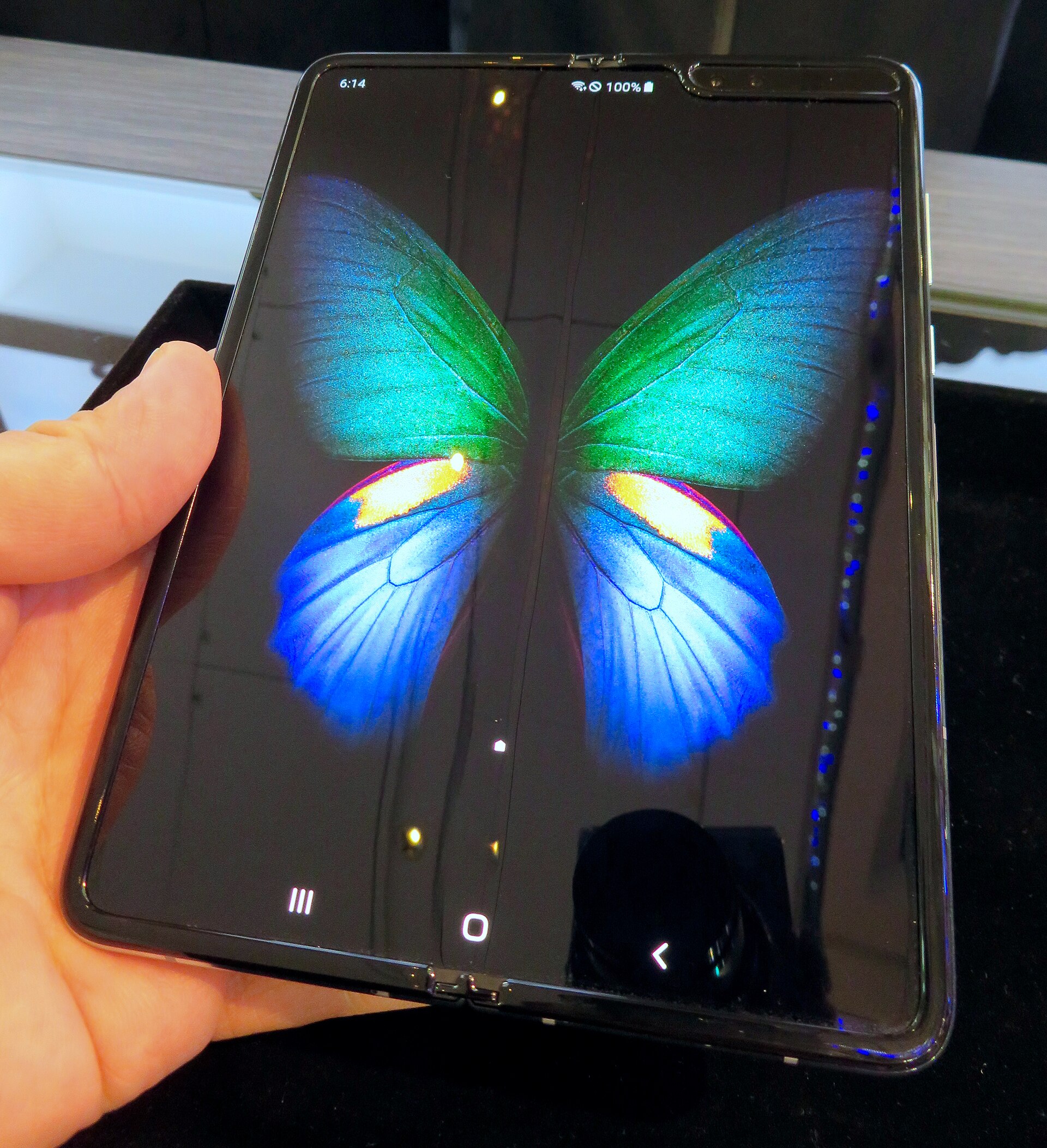
In late 2018, analysts and industry watchers published their annual outlook for consumer technology in the year ahead. The projections for 2019 covered 5G networks, foldable smartphones, a reshaped streaming landscape, and the continued expansion of smart speakers and voice assistants. The year has now concluded, and the outcomes are known. Samsung shipped the Galaxy Fold in 2019 after a delayed introduction. Apple brought Apple TV+ and Apple Arcade to market in 2019. 5G networks began rolling out in limited areas, but consumer adoption remained minimal through the year. What follows measures those expectations against what actually happened.
The outlook pieces were published before CES 2019, the period when companies signal their priorities for the next twelve months. The editorial team identified seven areas that would define the consumer technology market. Some calls held up well. Others overstated the speed of change or underestimated the friction that regulation, manufacturing complexity, and consumer indifference would introduce.

5G Network Deployment and Device Availability
The rollout matched the timeline
The expectation for 5G in 2019 was that network operators would begin commercial deployments in a handful of cities and that the first 5G smartphones would reach consumers before the middle of the year. That projection was broadly accurate. Verizon, AT&T, and T-Mobile all activated mobile 5G services in select US cities during the first half of 2019. Samsung, LG, and OnePlus shipped 5G variants of their flagship phones. By the end of 2019, more than thirty 5G devices were on the market globally.
Coverage was a street-corner affair
What the outlook missed was how narrow the initial use case would be. Early 5G networks relied on millimeter-wave spectrum, which offered high speeds but poor building penetration and very limited coverage areas. Consumers who bought a 5G phone in 2019 often found that they could only connect to the new network on specific street corners. The promise of ubiquitous low-latency connectivity remained a 2020 story. The call was directionally correct but overstated the consumer impact.
Foldable and Flexible Smartphones
Hype collided with hardware reality
The foldable smartphone was the most hyped hardware category heading into 2019. Samsung announced the Galaxy Fold in February 2019, and Huawei unveiled the Mate X at Mobile World Congress. The expectation was that foldable devices would be the premium form factor of the year, selling in the low millions and establishing a new product category. That did not happen.
Delays defined the debut year
Samsung delayed the Galaxy Fold after early review units broke within days. The company redesigned the hinge and display protection and reintroduced the phone in September 2019. Huawei delayed the Mate X until November 2019. Combined global sales of foldable phones for the year reached the hundreds of thousands, not millions. The outlook was too optimistic about both the manufacturing readiness and the consumer appetite for a phone Samsung priced around USD 1,980 at launch, a figure confirmed by the company's own storefront. The category survived, but 2019 was a testing year, not a breakout one.
Streaming Services and New Entrants
Fragmentation arrived on schedule
The expectation for streaming in 2019 was that the market would fragment. Apple was expected to introduce a subscription video service. Disney was preparing Disney+ for a November arrival. The outlook anticipated that the era of a single Netflix subscription being sufficient was ending. That call was correct.
A bundling war nobody saw coming
Apple brought Apple TV+ to market in November 2019 with a small library of original shows, priced at USD 4.99 per month according to Apple's published rate. Apple Arcade, a game subscription service, arrived at the same time. Disney+ opened on November 12, 2019, with a much larger catalog and attracted 10 million subscribers on day one. The outlook did not anticipate the intensity of the bundling war. Apple offered a year of Apple TV+ free with device purchases, and Disney offered three-year discounts. By the end of 2019, the average US household subscribed to three streaming services, up from two at the start of the year.
Smart Speakers and Voice Assistant Market Share
Amazon held its ground
The outlook for smart speakers in 2019 was that Amazon and Google would continue to dominate, with Amazon maintaining a lead in installed base while Google grew faster. Apple was expected to remain a distant third with the HomePod. That projection was accurate in direction but understated Amazon's staying power.
Screens became the surprise growth driver
Amazon held roughly 70 percent of the US smart speaker market at the start of 2019 and ended the year with a similar share, according to industry estimates. Google held most of the remainder. Apple's HomePod, hampered by its high price and limited Siri functionality, captured only a low single digit percentage of the market. The outlook also missed the rise of smart displays. Amazon's Echo Show and Google's Nest Hub became the fastest growing subcategory, adding a visual layer to voice interactions that the projections did not anticipate. Smart speaker adoption in US households crossed 25 percent by the end of 2019, slightly ahead of most estimates.

Augmented Reality and Virtual Reality Consumer Hardware
Standalone VR found its footing
The outlook for AR and VR in 2019 was that consumer hardware would improve but remain a niche. Standalone headsets, not requiring a phone or PC, were expected to drive modest growth. The projection was largely correct.
Enterprise AR stayed out of consumer reach
Facebook shipped the Oculus Quest in May 2019, a standalone VR headset that offered six degrees of freedom tracking without external sensors. It was the first VR device that worked well enough for a mainstream audience. Sales were estimated in the hundreds of thousands, not millions. On the AR side, consumer hardware remained absent. Microsoft's HoloLens 2 was announced in February 2019 but priced at USD 3,500 as listed on Microsoft's enterprise store, aimed squarely at business customers. Apple had not yet introduced an AR headset. The outlook did not foresee the Quest's critical success, but it correctly judged that neither AR nor VR would become a mass market category in 2019. The technology was still waiting for a lighter, cheaper device.
Data Privacy Regulation and Impact on Tech Companies
Regulatory pressure exceeded expectations
The outlook for data protection in 2019 was that regulation would tighten and that large technology companies would face increased scrutiny and fines. The projection was accurate and, if anything, understated the pace of regulatory action.
Compliance became a competitive weapon
The California Consumer Privacy Act (CCPA) was signed into law in 2018 and took effect on January 1, 2020, meaning 2019 was the year companies scrambled to comply. The Federal Trade Commission fined Facebook USD 5 billion in July 2019 over the Cambridge Analytica scandal, the largest data-protection penalty ever imposed. The European Union continued to enforce the General Data Protection Regulation (GDPR), which had come into effect in May 2018. French regulators fined Google EUR 50 million in January 2019 for lack of transparency in consent, a penalty publicly confirmed by the CNIL. The outlook correctly identified that data safeguards would move from a compliance issue to a product differentiator. Apple began marketing confidentiality as a core feature of its services, a shift that would intensify in later years. The regulatory trend was stronger than most observers had expected.
Wireless Earbuds and the Decline of the Headphone Jack
The cord-cutting accelerated
The outlook for wireless earbuds in 2019 was that the category would grow rapidly and that the headphone jack would continue its disappearance from flagship smartphones. Both calls were correct.
AirPods led a faster-than-expected shift
Apple's AirPods dominated the market, with estimates suggesting that Apple shipped around 60 million units of all AirPods models in 2019. Samsung and Google shipped their own true wireless earbuds, the Galaxy Buds and Pixel Buds. The segment grew by more than 200 percent year over year. Meanwhile, the headphone jack was removed from the Samsung Galaxy S10 series, the OnePlus 7 Pro, and the Google Pixel 4. By the end of 2019, only a handful of flagship Android phones retained the 3.5 mm port. The outlook underestimated the speed of the transition. In early 2018, wired headphones were still standard. By late 2019, they were becoming a niche accessory. The shift was driven by the removal of the jack, improvements in Bluetooth latency and battery life, and the convenience of charging cases.
Key Facts
- Year of predictions: 2019
- 5G rollout: Limited city-level deployment; minimal consumer adoption
- Galaxy Fold release: September 2019, after a four-month delay
- Apple TV+ launch: November 2019, at USD 4.99 per month per Apple's published pricing
- Apple Arcade launch: November 2019
- Oculus Quest release: May 2019
- CCPA effective date: January 1, 2020
- Facebook FTC fine: USD 5 billion, July 2019