A technology shift is not a product launch or a vendor catchphrase. It is a structural change in how work gets done, one that alters cost curves, decision rights, or the sequence of steps in a workflow. The nine shifts described here meet that bar. They are the forces that have moved cloud spending past on-premises budgets, pushed AI adoption beyond the pilot phase, and put more connected devices in the field than there are people on earth. Each one alters a specific lever: speed, unit cost, auditability, or span of control. Taken together, they redraw the boundaries of what a business can steer in real time.
Operators, investors, and policy people need a durable framework, not a prediction of next quarter's hype cycle. The sections that follow explain what is structurally different about how companies run now compared with a decade ago, and why those differences compound when multiple shifts converge in the same factory, warehouse, or logistics network.
How artificial intelligence and machine learning became operational infrastructure
From pilot to embedded system
In 2017, about 20 percent of firms surveyed by McKinsey reported embedding AI into at least one business activity. By 2022, that figure had more than doubled. The shift is not about chatbots. It is about routing decisions, inventory allocation, predictive maintenance, and fraud detection moving from human judgment to models that improve with every transaction.
Inside the workflow, not beside it
The change matters because AI now sits inside the workflow, not alongside it. A warehouse management system that uses machine learning to assign pick paths is not a pilot project. It is the system. The question for operators is no longer whether to adopt AI but how to manage the exceptions the model cannot handle, and how to audit decisions when the model's reasoning is not transparent.
Cloud computing as the foundational layer
The crossover that rewrote the economics of compute
In 2020, global spending on cloud infrastructure passed spending on on-premises data centers for the first time, according to IDC. That crossover point marks a permanent shift. Companies no longer build capacity for peak demand. They rent it, and they can scale it down just as fast.
Every other shift depends on it
Cloud is the foundation because every other shift in this list depends on it. IoT devices send data to cloud back ends. AI models train on cloud GPUs. Blockchain networks run on cloud-hosted nodes. Without cloud, the marginal cost of experimenting with a new technology is prohibitive. With it, a team can spin up a proof of concept in hours and kill it in minutes if it does not work. The operational consequence is that the barrier to trying something new has collapsed, which changes how businesses evaluate risk and allocate capital.
Edge computing and IoT: decisions move closer to the action
The data deluge shifts location
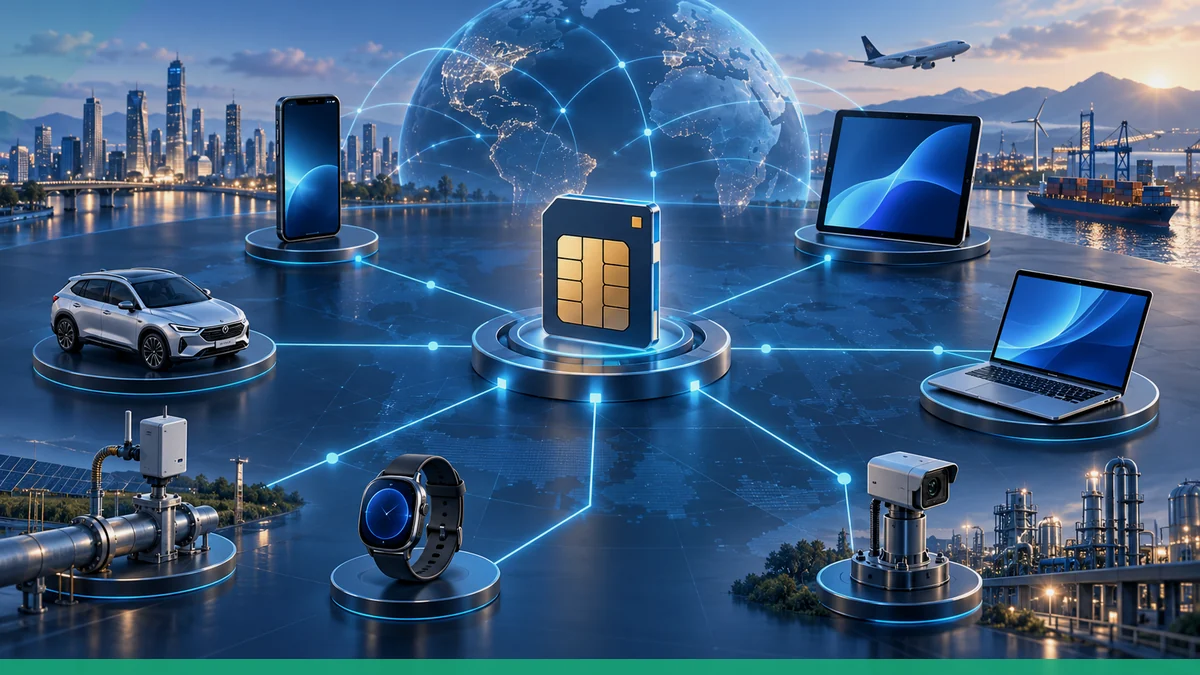
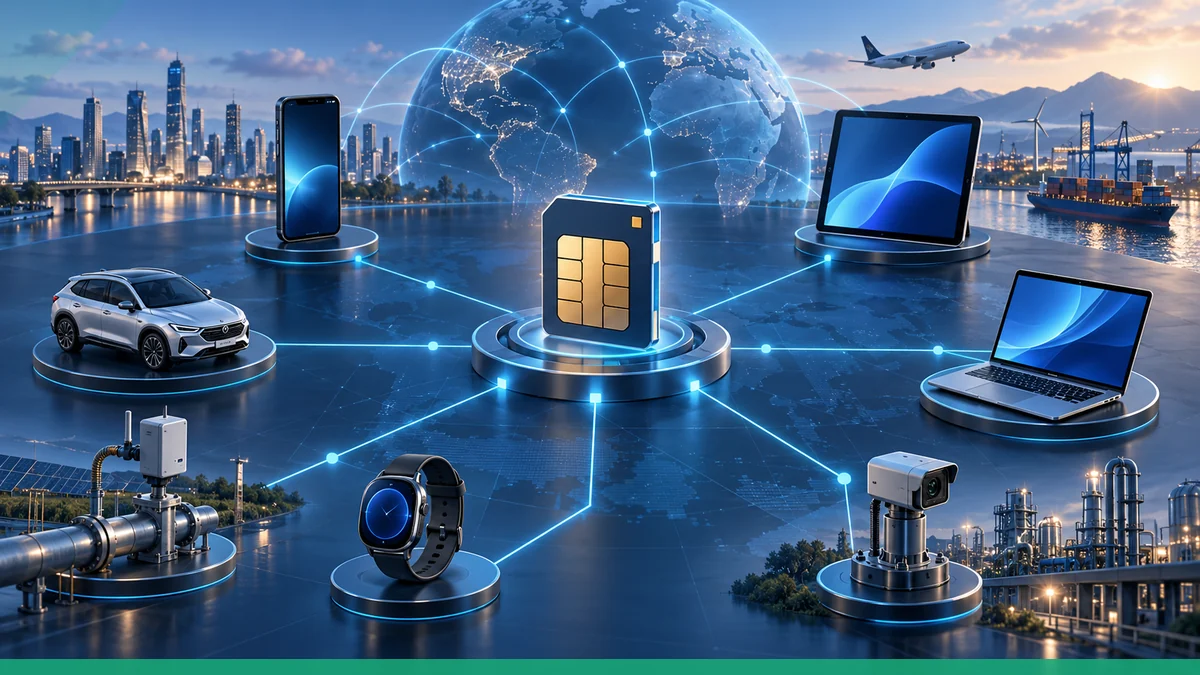
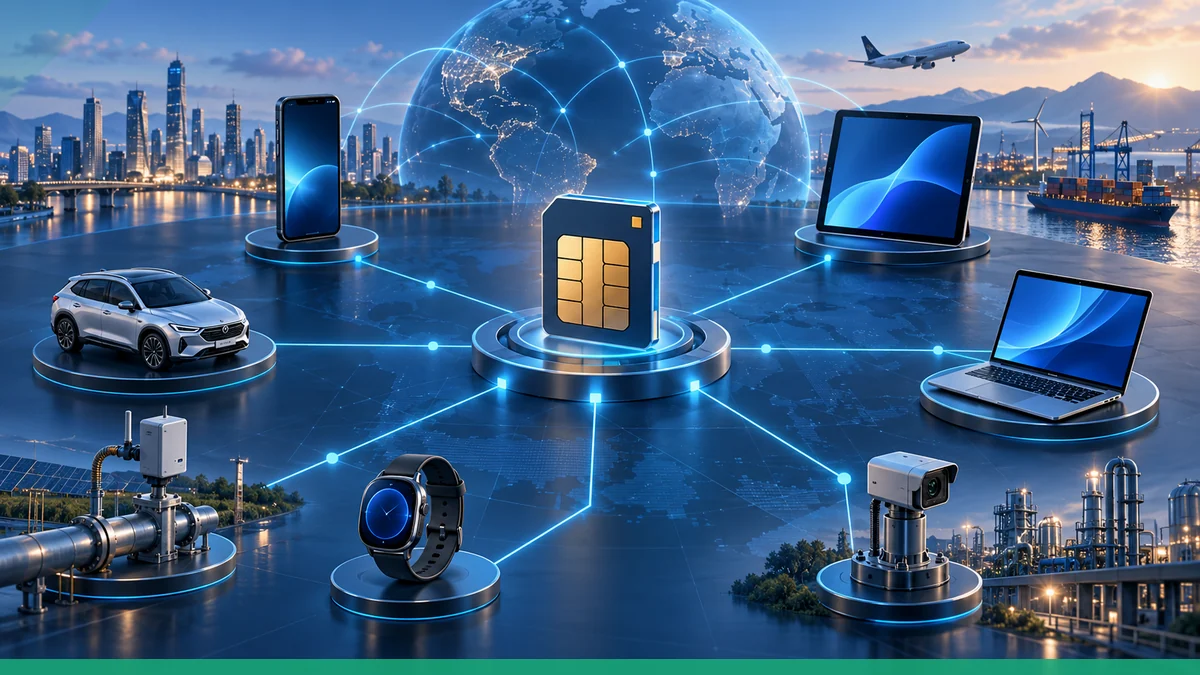
The number of connected IoT devices worldwide exceeded 15 billion in 2023, per IoT Analytics. Each one generates data. The question is where that data gets turned into a decision. Sending everything to the cloud introduces latency, consumes bandwidth, and exposes operations to network failures.
Processing at the source
Edge computing solves that by running analysis close to the device. A camera on a production line does not stream video to a data center. It runs a local model that flags defects in milliseconds and sends only the exception to the cloud. Gartner estimated that by 2025 over half of enterprise-managed data would be created and processed outside traditional data centers or cloud. That means the center of gravity for daily work is shifting from the server room to the factory floor, the delivery truck, and the retail shelf. The people managing those environments need tools that work with intermittent connectivity and limited power, not just faster connections to headquarters.
Automation and robotics: redefining process design and exception handling
Beyond repetitive tasks
Automation is not new. What has changed is the scope. Earlier generations of robotics handled repetitive tasks in controlled environments. Current systems, combining sensors, vision, and AI, can handle variability. A robot arm that sorts parcels of different shapes and sizes does not require a fixed conveyor layout. It adapts.
Designing for the common case
That flexibility changes workflow design. Instead of engineering a sequence to minimize the number of exceptions, companies can design for the common case and let automation handle the rest. The workforce allocation shifts accordingly. People focus on edge cases, system configuration, and escalation. The challenge becomes less about labor cost and more about exception handling logic. If the automation cannot resolve a situation, how does it escalate? To whom? And what data accompanies the handoff?
Decentralized systems: blockchain for trust in multi-party processes
A single source of truth across company lines
Blockchain and distributed ledger technologies address a specific problem: how multiple entities that do not fully trust each other can share a single source of truth for transactions, provenance, or contract execution. The ISO 23257 standard, published in 2022, provides a reference architecture for these systems in business contexts, signaling that the technology has moved beyond cryptocurrency experiments.
Speed of settlement, not speed of transaction
The value appears in supply chains, trade finance, and multi-party workflows where reconciliation is expensive and slow. A shipment that crosses three borders and changes hands five times generates documents that each party records in its own system. A distributed ledger replaces those five ledgers with one. The gain is not speed of transaction but speed of settlement. The parties no longer need to reconcile at the end of the month because they share the same record in real time.
Connectivity advances: how 5G changes real-time operations in the field
Latency that unlocks remote control
5G networks can deliver latency as low as 1 millisecond under ideal conditions, compared with 30 to 50 milliseconds for 4G LTE. That difference matters for work that involves remote control, real-time video analysis, or coordination of moving equipment. A forklift guided by a remote operator or a drone inspecting a pipeline needs a connection that does not lag.
Density and the new constraint
But latency is only part of the story. Wi-Fi 6, ratified as IEEE 802.11ax in 2021, addresses a different problem: device density. In a warehouse with hundreds of sensors and handheld scanners, older Wi-Fi standards struggled with interference and dropped connections. Wi-Fi 6 handles that density more reliably. The implication is that real-time data from the field is no longer a nice-to-have. It becomes the basis for how work is assigned, tracked, and verified. The constraint shifts from connectivity to the software that makes sense of the data.
Key facts about the nine technology shifts
- Cloud infrastructure spending surpassed on-premises: 2020, per IDC
- Connected IoT devices worldwide: Exceeded 15 billion in 2023, per IoT Analytics
- 5G latency under ideal conditions: As low as 1 millisecond vs. 30-50 ms for 4G LTE
- ISO standard for blockchain in business: ISO 23257, published 2022
- Enterprise data created outside data centers or cloud by 2025: Over 50%, per Gartner
- AI adoption in business operations 2017 to 2022: More than doubled, per McKinsey
- Wi-Fi 6 standard ratification: IEEE 802.11ax, ratified 2021
The compounding effect when multiple shifts converge
Reinforcement, not isolation
The World Economic Forum popularized the term Fourth Industrial Revolution to describe the convergence of physical, digital, and biological systems. That framing is useful because it captures what is different about this moment. Previous industrial revolutions introduced one dominant technology: steam, electricity, computing. This one introduces several at once, and they reinforce each other.
A cold chain in motion
Consider a cold chain logistics operation. IoT sensors in shipping containers report temperature and location. Edge processors on the container run anomaly detection and send only alerts to the cloud. A blockchain ledger records each handoff, creating an audit trail that insurers and regulators trust. A 5G connection in the warehouse updates inventory in real time as pallets move. AI models predict spoilage risk and reroute shipments before the temperature threshold is breached. No single technology delivers that capability. The combination does.
Design for the interactions
The lesson is that companies cannot treat these shifts in isolation. A decision about cloud architecture constrains what is possible with edge computing. A choice of connectivity standard determines what data is available for AI models. The businesses that benefit most are those that design for the interactions, not the components.