Manufacturers are combining private 5G networks, augmented reality visors, and collaborative robots to create a new class of augmented technician on the factory floor. The technical trigger is response time: 5G ultra-reliable low-latency communication, or URLLC, targets 1 millisecond with 99.999% reliability. Wi-Fi 6, the best current alternative, can hit single-digit milliseconds in ideal conditions but cannot guarantee that threshold under load or across a large facility. The difference matters because an AR overlay guiding a technician's hand during a repair, or a cobot that must freeze before crushing a finger, demands deterministic timing, not best-effort delivery.
The three technologies reinforce each other. AR visors stream real-time instructions over 5G. Cobots adjust their speed based on the technician's proximity, a calculation that depends on low-lag sensor fusion. Mobile edge compute, or MEC, keeps that data processing inside the factory walls. The outcome, in deployments that exist as of late 2024, is measurable reductions in assembly time and defect rates, alongside a shift in what a factory technician needs to know.

Why Wi-Fi 6 Falls Short for Real-Time AR and Cobot Control
A technician wearing an AR visor while repairing a machine needs the digital overlay to stay aligned with the physical object. If the device receives positional data 50 milliseconds late, the arrow pointing at a bolt appears several centimeters off. The same problem applies to cobots: a robot arm moving at full speed covers centimeters in milliseconds, and the force-limiting sensors that trigger a stop must communicate with the control loop within a few milliseconds.
5G URLLC was designed for this. The 1 ms target and 99.999% reliability are specifications written for factory automation, not for streaming video. Wi-Fi 6, while an improvement over earlier Wi-Fi standards, suffers from contention in dense environments. A production floor with dozens of metal surfaces, moving equipment, and multiple access points creates interference patterns that make consistent sub-5 ms timing difficult. Private 5G networks operate in licensed or shared spectrum with centralized scheduling, which provides predictable performance. The difference is not marginal. It determines whether an AR overlay is usable or nauseating, and whether a cobot can work at full speed next to a person or must be slowed to a safe crawl.
How an AR Headset Guides a Technician Through a Task
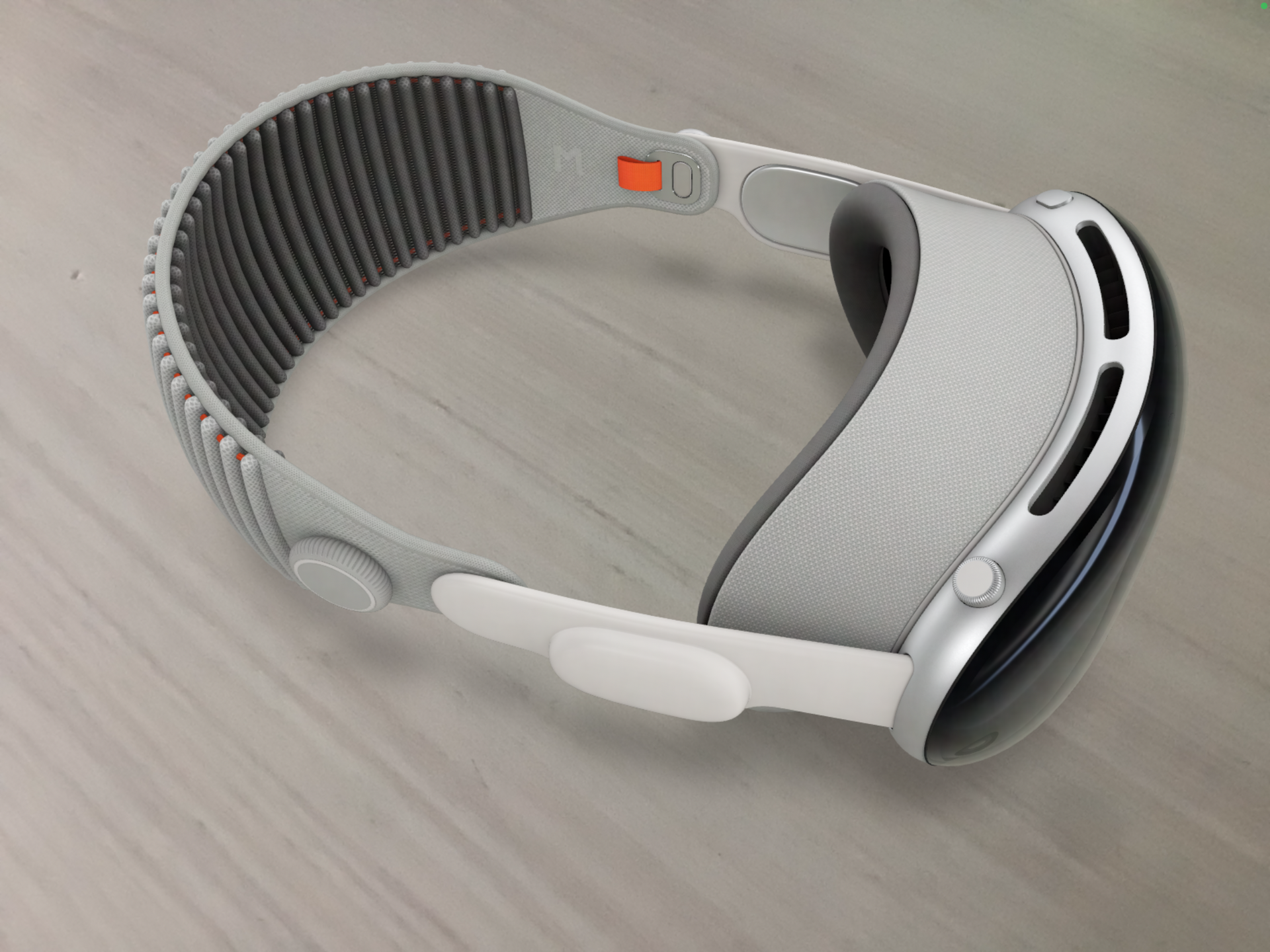
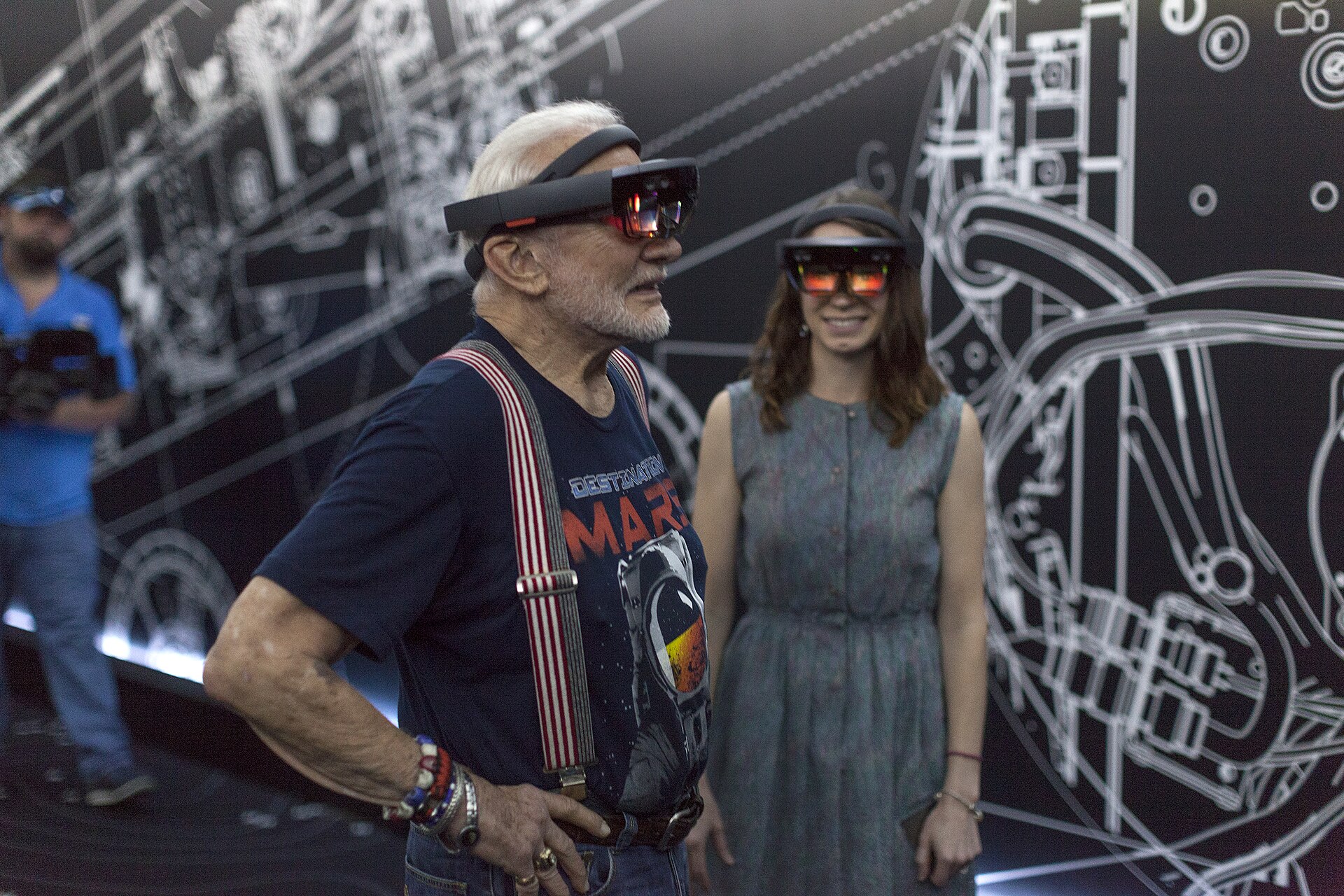
Devices like the Microsoft HoloLens 2 and the RealWear Navigator 500 are designed for industrial use. Both support voice control and are compatible with hard hats. The technician does not touch a screen or consult a paper manual. Instead, the visor displays step-by-step instructions, highlighting the specific component to be adjusted and showing the correct tool. In a 5G-connected factory, the instructions are not stored locally. They stream from a central system that can update the procedure in real time if the part number changes or a new torque specification is issued.
The critical enabler is the 5G uplink. The visor sends video of what the technician sees to a remote expert or an AI-based quality check system. That video stream must arrive with low enough lag that the remote expert can say stop before the technician makes a mistake. MEC handles this by placing the processing server physically on the factory premises. The data never travels to a distant cloud. It goes from the visor to the local 5G base station, then to the MEC server, and back, all within the factory network. That architecture keeps the round trip under the URLLC target.
Cobot Safety Mechanisms That Replace Physical Cages
Traditional factory robots operate inside cages because they cannot sense a human in their path. Cobots are different. They are designed with force-limiting sensors and computer vision that detect unexpected contact and stop or slow down. The safety loop depends on response speed. If the sensor detects a collision but the control system takes 50 ms to respond, the cobot may have already applied enough force to cause injury.
The safety loop's timing requirement
Private 5G enables the sensor data to travel to the control logic with deterministic timing. The cobot's vision system, often mounted on the arm or on a nearby structure, streams depth data to a MEC server that calculates the distance to the nearest human. That calculation must be repeated tens of times per second. If the distance drops below a threshold, the server commands the cobot to reduce speed or stop. The entire cycle, from detection to command, happens within the 1 ms to 10 ms window. Without that low-lag link, the cobot would need to run slower or the human would need to stay farther away, reducing the productivity gain that justifies the investment.
Acquiring Private 5G Spectrum for an Industrial Site
Private 5G networks require access to radio spectrum that is not shared with public mobile users. The mechanism differs by country. In Germany, the Federal Network Agency (Bundesnetzagentur) has set aside the 3.7-3.8 GHz band specifically for factory use. A manufacturer applies for a local license, pays a fee, and operates its own 5G network on that spectrum. In the United States, the Citizens Broadband Radio Service, or CBRS, uses the 3.5 GHz band. The general authorized access, or GAA, tier allows any user to deploy a private network without a license, as long as it does not interfere with higher-priority users such as the Navy. A manufacturer can buy CBRS-compatible equipment from vendors like Nokia, Ericsson, or Samsung and set up a network on its own factory floor.
Lowering the deployment barrier
The process is not trivial. The manufacturer must conduct a site survey, install base stations, and configure the core network. But the barrier is lower than it was five years ago. Vendors now sell integrated private 5G systems that include the radio access network, the core, and the MEC server in a single package. The manufacturer does not need to become a telecom operator. It needs to buy a box, run a cable, and configure the devices.
How the Technology Stack Changes the Technician's Job
The augmented technician does not need to memorize every step of a complex assembly or repair. The AR visor provides the instructions. The cobot handles the heavy lifting and repetitive motions. The technician's role shifts from manual execution to supervision, quality verification, and exception handling. A technician who used to spend 70 percent of the shift performing the same sequence of tasks now spends that time monitoring the cobot, checking the AR overlay for errors, and intervening when the system encounters something it cannot handle.
The new skill set
This changes the required skills. The technician must be comfortable interpreting digital information displayed in a visor, speaking commands to the system, and troubleshooting when the network or the AR application fails. The emphasis moves from physical dexterity to diagnostic reasoning and digital literacy. Manufacturers that deploy these systems report that they need to invest in upskilling programs, not just hardware. The factory floor becomes a place where a technician works alongside software and robots, not just tools and parts.
Measurable Outcomes and the Limits of Current Evidence
Specific numbers from integrated 5G-AR-cobot deployments are scarce because few factories have combined all three technologies in a single production line. As of October 2024, no publicly named factory has fully integrated private 5G, AR for technicians, and cobots in a way that allows attribution of results to the combination alone. What exists are deployments of the individual technologies on 5G networks. For example, manufacturers using AR on Wi-Fi report defect rate reductions and assembly time improvements, but those gains come from the AR software, not from the network. The question that matters for investment decisions is whether 5G adds enough response-time improvement over Wi-Fi 6 to justify the additional cost and complexity.
Where 5G justifies its cost
The answer is likely yes for applications that require sub-5 ms timing, such as real-time cobot speed adjustment based on human proximity. For less demanding tasks, such as displaying a static instruction overlay, Wi-Fi 6 may suffice. The practical implication for operators and investors is that 5G in the factory is not a general upgrade. It is a targeted investment for specific use cases where speed and reliability are the binding constraints. The rest of the factory can stay on wired Ethernet or Wi-Fi. The challenge is identifying which tasks actually need 1 ms and which do not.
Key Facts
- 5G URLLC latency target: 1 ms
- 5G URLLC reliability target: 99.999%
- Germany industrial 5G band: 3.7-3.8 GHz
- US CBRS band (GAA tier): 3.5 GHz
- Industrial AR headsets: Microsoft HoloLens 2, RealWear Navigator 500
- Private 5G network vendors: Nokia, Ericsson, Samsung
- Spectrum regulator (Germany): Federal Network Agency (Bundesnetzagentur)
Frequently Asked Questions
What latency does a cobot safety loop require?
The detection-to-command cycle must complete within 1 ms to 10 ms to allow the cobot to stop before applying injurious force.
Can a manufacturer use Wi-Fi 6 instead of 5G for AR?
For static instruction overlays, Wi-Fi 6 may suffice. For real-time alignment of digital and physical objects, the deterministic latency of 5G is required.
What spectrum does a US manufacturer need for private 5G?
The CBRS band at 3.5 GHz. The GAA tier does not require a license, but the user must accept interference from higher-priority users.
Where is the data processed in a 5G smart factory?
On a mobile edge compute (MEC) server located physically within the factory premises, not in a distant cloud.
Do cobots eliminate the need for factory technicians?
No. The role shifts from manual execution to supervision, quality verification, and exception handling.