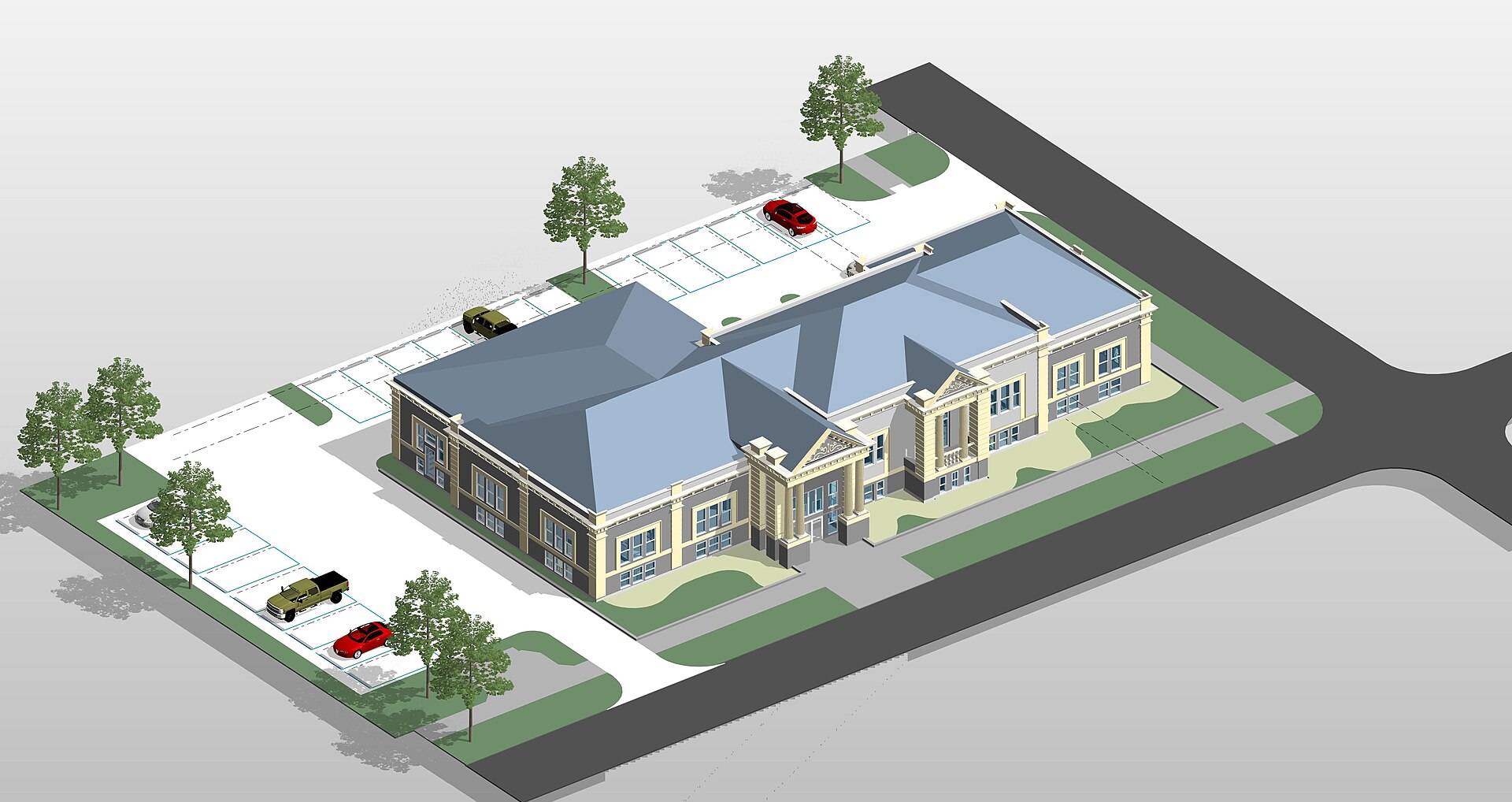
Virtual and augmented reality tools are now established in architecture, engineering, and construction, though not yet universal. They moved from novelty to a standard option for design review and coordination on large-scale projects. The hardware market consolidated around three players, while software platforms deepened integration with existing BIM workflows. The COVID-19 pandemic accelerated remote collaboration, solidifying VR's role for distributed design reviews. By December 2023, these technologies had reshaped how firms visualize, coordinate, and build.
The shift began when Microsoft released the HoloLens in 2016. It became a primary AR device for AEC applications. Around the same time, Autodesk integrated VR capabilities into its Revit platform and launched Autodesk LIVE for interactive visualization. Unity Technologies and Epic Games emerged as the two dominant real-time rendering environments for architectural VR experiences. These tools allowed architects and engineers to step inside their models, rather than viewing them on flat screens or as scale models made of cardboard and foam.
The global VR in construction market was valued at approximately $2.5 billion in 2021. That figure reflected growing investment from major contractors and design firms. Skanska, Mortenson, and Gensler publicly documented their use of VR and AR for project coordination and client presentations. Trimble acquired mixed-reality headset company DAQRI's assets in 2019, specifically targeting AEC applications, signaling that established construction technology companies saw a long-term role for these tools.

Hardware Platforms: Headsets and Smart Glasses for the Jobsite
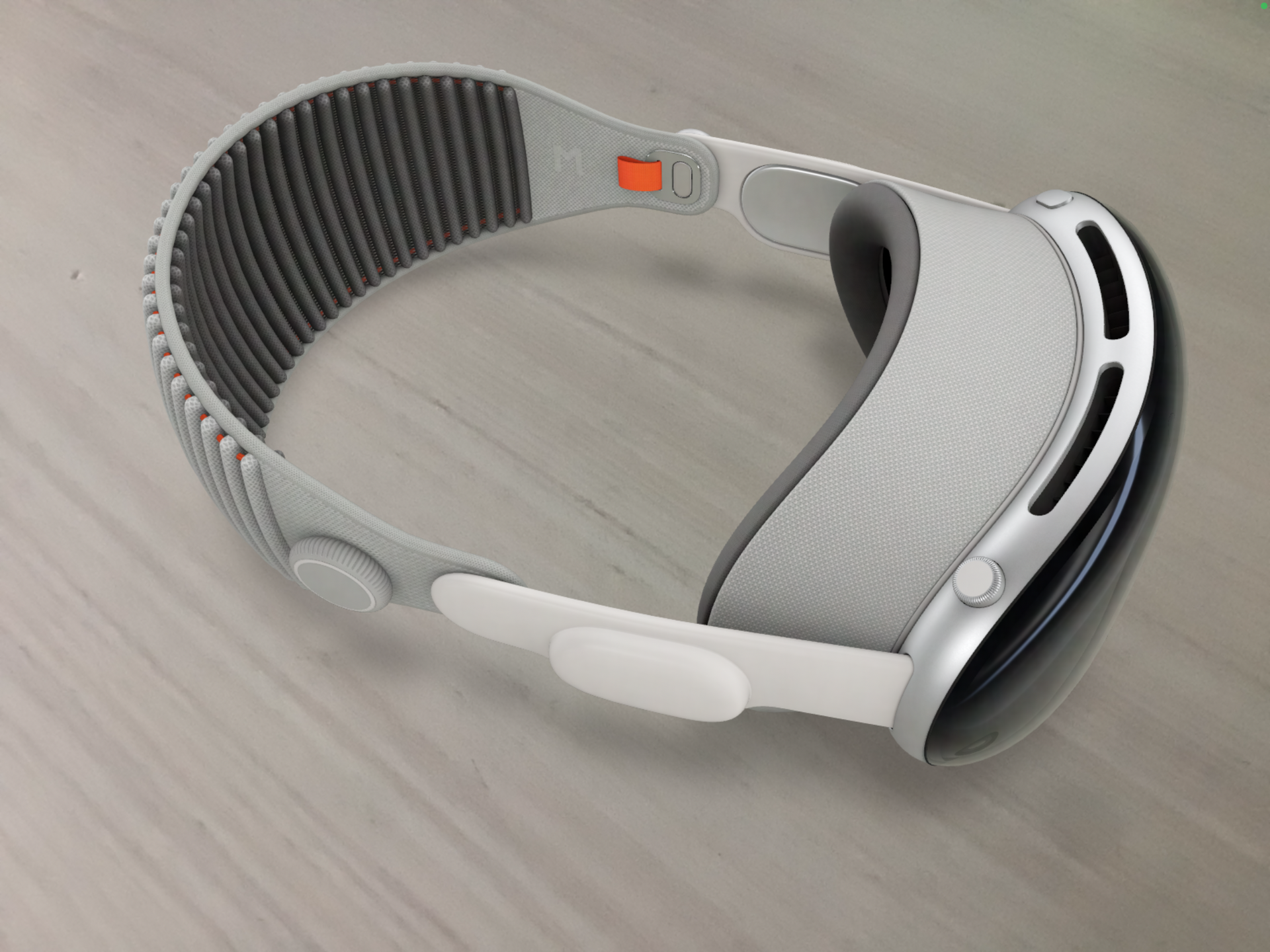
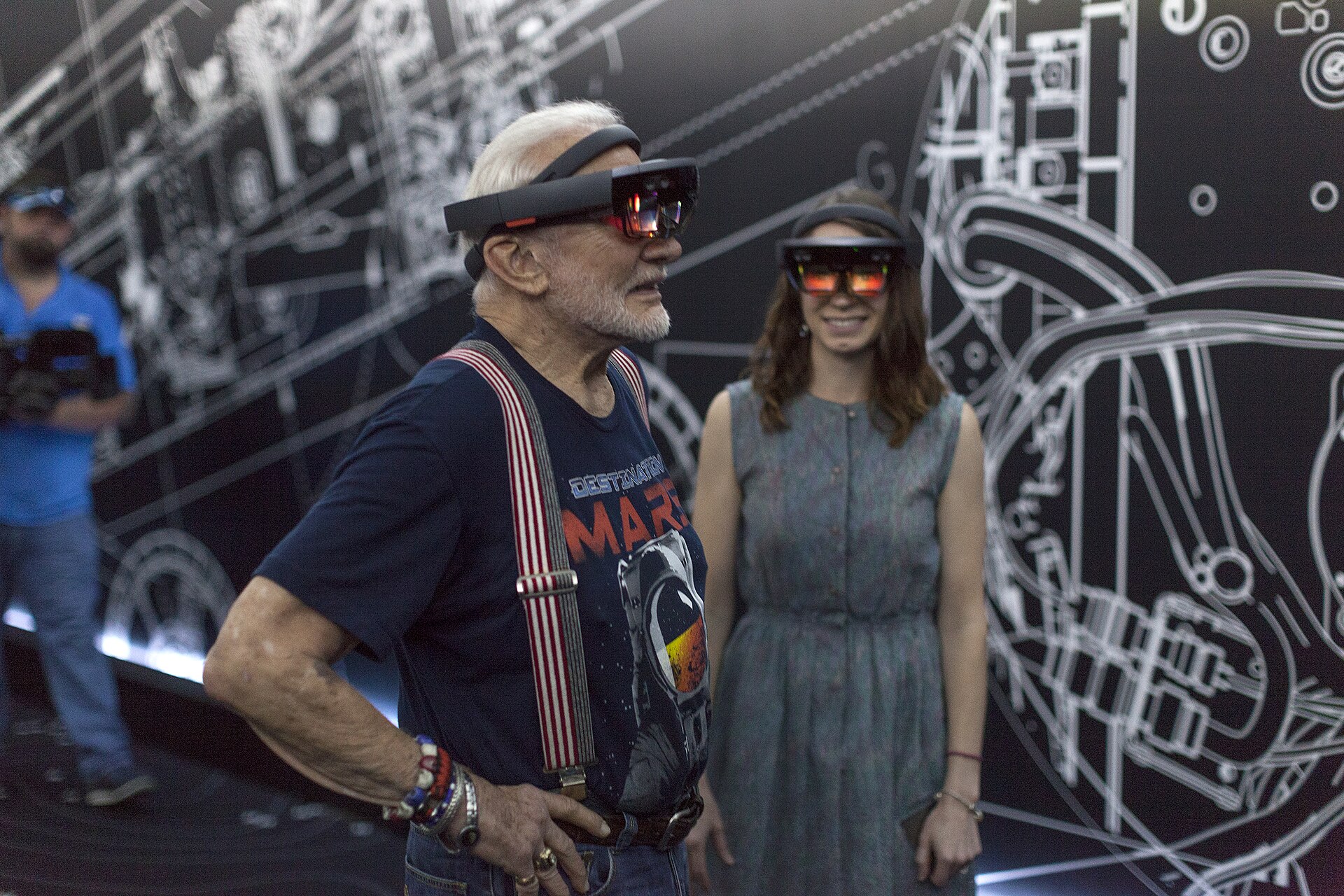
Three hardware families dominated AEC use by 2023. The Meta Quest series provided a standalone, untethered VR experience that made it popular for design reviews and client walkthroughs. The HTC Vive, with its room-scale tracking and high-fidelity visuals, was favored for detailed clash detection and immersive model inspection. The Microsoft HoloLens, an AR headset, allowed users to see holographic building information overlaid on the actual environment, which made it the primary device for on-site construction guidance and quality assurance. Some firms also deployed ruggedized tablets running AR applications for simpler field verification tasks.
Each device had trade-offs. The Quest was cheaper and easier to deploy, but its graphics processing was less powerful than a PC-tethered Vive. The HoloLens required careful calibration and had a limited field of view, yet it enabled hands-free access to BIM data while walking a jobsite. Some firms used multiple devices for different phases: VR for early design and client sign-off, AR for field verification and MEP coordination. The choice depended on project size, budget, and whether the primary use was remote review or on-site overlay.
Software Ecosystems: From BIM to Real-Time Rendering
BIM as the Data Foundation
The software stack for architectural VR and AR draws data from Building Information Modeling, the industry-standard process for creating and managing digital representations of structures. Autodesk Revit is the dominant BIM authoring tool, and its integration with VR capabilities allowed designers to export models directly into immersive environments. Autodesk LIVE provided a simplified path for creating interactive walkthroughs without requiring deep game-engine expertise.
Real-Time Engines Add Interactivity
For more advanced interactivity, firms turned to Unity Technologies and Epic Games' Unreal Engine. These real-time rendering platforms allowed architects to add lighting, material physics, and even live structural analysis to their models. The platforms also supported multi-user sessions, where remote teams could meet inside a virtual building and mark up issues collaboratively. The convergence of BIM data with real-time environments meant that changes made in Revit could be reflected in the VR experience within minutes, reducing the lag between design iteration and review.
VR for Client Walkthroughs and Design Review
From Abstract Approval to Spatial Understanding
The most mature use case for VR in AEC is the design review. Instead of interpreting 2D plans or static renderings, clients and stakeholders can walk through a fully scaled, immersive version of the proposed building. This changes the conversation from abstract approval to concrete spatial understanding. Architects report that clients spot issues such as ceiling heights that feel too low, corridor widths that are too narrow, and sightline obstructions that were invisible on a plan view. These findings occur earlier in the design process, when changes cost less.
Measurable Savings in Time and Money
Quantified benefits have been documented. Firms using VR for design review have reported reductions in rework of 30 to 40 percent, because errors are caught before construction documents are issued. Time spent in review meetings often decreases as well. A single VR session can replace multiple rounds of 2D markups and email chains. Client approval rates improve because the client experiences the design viscerally, leading to faster sign-offs. For large-scale projects, these savings can amount to millions of dollars in avoided change orders and schedule delays.
AR for On-Site Construction Guidance and Quality Assurance
Overlaying BIM Data on the Jobsite
Augmented reality serves a different purpose: overlaying BIM data onto the actual jobsite. Using a HoloLens or a tablet-based AR application, a construction superintendent can see where a steel beam should go, where an MEP riser should penetrate a wall, or whether a concrete pour matches the model. This capability reduces reliance on printed drawings and RFIs for basic spatial verification. The AR view compares the as-built condition to the as-designed model continuously, flagging discrepancies before they become expensive rework.
Clash Detection in the Field
The practical impact is most visible in complex coordination. For example, a mechanical contractor can use AR to verify that the overhead ductwork aligns with the structural slab penetrations shown in the BIM model. If the model says a pipe should be at elevation 12 feet 6 inches, but the AR overlay shows it intersecting a beam, the team can resolve the clash before installing the pipe. This on-site clash detection, combined with traditional digital clash detection during design, has been credited with reducing field rework by up to 30 percent in documented cases from firms like Mortenson and Skanska.

Digital Twins and the Interface Layer
VR and AR as the Window into Living Models
VR and AR serve as the interface layer for digital twins, data-rich models that represent a building's current state and behavior. A digital twin goes beyond a static BIM model by incorporating sensor data, maintenance records, and live environmental readings. VR allows facility managers to walk through the twin and inspect systems virtually before sending a crew to a location. AR overlays live sensor data onto equipment, showing temperature, vibration, or energy consumption directly on the machine itself.
Capturing Existing Conditions
The convergence of VR and AR with LiDAR scanning and photogrammetry has made it easier to capture existing conditions and create accurate twins. A drone or handheld scanner can capture a point cloud of an existing structure, which is then converted into a mesh and imported into the BIM environment. That mesh becomes the context for new design work. On renovation projects, AR can project the new design onto the scanned existing conditions, helping contractors understand exactly how new elements will interface with old ones. This workflow has become standard practice for firms like Gensler, which uses it for tenant improvement and adaptive reuse projects.
Barriers to Adoption and the Path Forward
Cost, Comfort, and Training
Despite the documented benefits, VR and AR have not become universal in AEC. Hardware costs remain a barrier, especially for small and mid-size firms. A single HoloLens 2 unit, at its launch price, was roughly equivalent to the annual software subscription for a small office. The need for high-performance PCs to run VR experiences added further expense. Training also posed a challenge. Architects and construction professionals had to learn new workflows, and not all were comfortable with the technology. Some firms reported that VR headsets caused motion sickness in a subset of users, limiting the length of review sessions.
Data Interoperability Remains a Friction Point
Data interoperability was another persistent issue. While BIM authoring tools and real-time environments improved their integration over time, the pipeline from Revit to Unreal Engine or Unity still required manual cleanup and optimization. Models that were too heavy would crash on mobile VR headsets. Different versions of file formats caused compatibility problems. As of December 2023, these barriers had not been fully resolved, but the trajectory was clear. The technology had moved from experimental to operational for large-scale projects, and the cost of equipment and software continued to decline. The question was no longer whether VR and AR would be used in construction, but how quickly the remaining friction would disappear.
Key Facts
- Primary AR headset for AEC: Microsoft HoloLens, released in 2016
- Dominant real-time engines: Unity Technologies and Epic Games (Unreal Engine)
- Major BIM platform with VR integration: Autodesk Revit, with Autodesk LIVE for visualization
- Global VR in construction market (2021): Approximately $2.5 billion
- Key AEC firms using VR/AR: Skanska, Mortenson, Gensler
- Notable hardware acquisition: Trimble acquired DAQRI's assets in 2019
- Consolidated hardware players: Meta (Oculus), HTC (Vive), Microsoft (HoloLens)
VR vs AR in AEC: Typical Use Cases and Benefits
| Aspect | Virtual Reality (VR) | Augmented Reality (AR) |
|---|---|---|
| Primary use case | Design review, client walkthroughs | On-site construction guidance, quality assurance |
| Typical hardware | Meta Quest, HTC Vive | Microsoft HoloLens, tablet-based AR |
| Data source | BIM model exported to real-time engine | BIM model overlaid on physical jobsite |
| Key benefit | Catch errors before construction docs issued | Verify as-built vs as-designed in real time |
| Reported rework reduction | 30-40% (design phase) | Up to 30% (field phase) |
Frequently Asked Questions
What is the difference between VR and AR in architecture?
VR immerses the user in a fully digital environment, used primarily for design review and client walkthroughs. AR overlays digital information onto the physical world, used for on-site construction guidance and quality assurance.
What hardware is commonly used for architectural VR and AR?
The Meta Quest and HTC Vive are common VR headsets. The Microsoft HoloLens is the primary AR headset for AEC applications. Some firms also use tablet-based AR for simpler tasks.
How does VR and AR integrate with BIM?
VR and AR tools draw data from Building Information Modeling (BIM) software like Autodesk Revit. The BIM model is exported into a real-time engine (Unity or Unreal) for VR, or overlaid onto the physical jobsite for AR.
What are the main barriers to adopting VR and AR in construction?
Hardware costs, training requirements, motion sickness in some users, and data interoperability issues between BIM tools and real-time engines are the primary barriers.