In July 2019, SoftBank Group Corp. announced Vision Fund 2, a planned $108 billion technology investment vehicle meant to replicate the scale of its first $100 billion fund. SoftBank itself committed $38 billion. The fund never raised the outside money it announced. By 2023, SoftBank had largely halted new investments from Vision Fund 2 and shifted focus to the Arm IPO and defensive financial management. The fund operated at a dramatically smaller scale than planned and suffered significant losses during the 2022 tech downturn.
SoftBank structured the announcement around memoranda of understanding with potential backers: Apple, Foxconn, Microsoft, and unnamed Japanese financial institutions. None of these MOU counterparties signed binding agreements. SoftBank funded Vision Fund 2 entirely with its own balance sheet, initially committing $38 billion, far short of the $108 billion target.
The failed launch reflected both the tarnished reputation of the first Vision Fund after the WeWork collapse and the limited appetite among institutional allocators for SoftBank's approach to technology investing.

The $108 Billion Target and SoftBank's Own Stake
The $38 billion anchor commitment
SoftBank said in July 2019 that it intended to invest $38 billion of its own money into Vision Fund 2. The total expected pool was approximately $108 billion. That was closely in line with the first Vision Fund, which closed at roughly $100 billion in 2017.
The $38 billion commitment from SoftBank itself was larger than the amount the company had put into the first fund. In 2017, SoftBank had contributed about $28 billion to the first Vision Fund. The increase reflected the company's larger balance sheet and its desire to signal conviction to potential outside backers.
The gap between MOUs and commitments
The remainder of the $108 billion was supposed to come from external limited partners. But the announcement was built around memoranda of understanding, not binding pledges. The MOU structure let SoftBank announce a large target number without having secured the money. That approach worked for the first Vision Fund, where MOUs with Saudi Arabia's Public Investment Fund and Abu Dhabi's Mubadala Investment Company translated into firm commitments. It did not work the second time.
The MOU Partners Who Did Not Sign
The named counterparties
SoftBank named Apple, Foxconn, Microsoft, and several Japanese financial institutions as potential backers via memoranda of understanding. The MOUs expressed interest but created no binding obligation to commit funds.
Apple had been a minor participant in the first Vision Fund, contributing roughly $1 billion. Foxconn, a major contract manufacturer and longtime SoftBank ally, had also participated at a smaller scale. Microsoft had no prior relationship with the Vision Fund structure. The Japanese financial institutions were not named in the July 2019 announcement.
Why the MOUs never converted
None of these parties ever signed binding agreements to invest in Vision Fund 2. Apple and Microsoft had no strategic need for the exposure and could deploy money more efficiently on their own. Foxconn faced margin pressures. The Japanese banks were constrained by their own regulatory requirements. SoftBank declined to comment on the status of the negotiations after the initial announcement.
The WeWork Shadow and the First Fund's Record
The WeWork collapse
The Vision Fund 2 announcement came months after the failed initial public offering of WeWork, a major portfolio company of the first Vision Fund. WeWork's attempt to go public collapsed in September 2019 after backers balked at its governance, valuation, and business model. SoftBank had invested roughly $10.5 billion in WeWork.
The episode damaged SoftBank's credibility with institutional allocators. The first Vision Fund had generated strong returns from earlier bets on companies like Arm, Uber, and DoorDash. But the fund's overall track record at the time of the July 2019 announcement was mixed. Several portfolio companies had not performed as expected.
Limited partner frustration
Backers in the first fund, particularly Saudi Arabia's Public Investment Fund and Mubadala, had expressed frustration with SoftBank's governance and the speed of deployment. Masayoshi Son, SoftBank's founder and CEO, had personally championed the WeWork investment. His judgment was now under scrutiny. Potential participants in Vision Fund 2 wanted to see changes in how SoftBank managed its portfolio and governed the fund.
Investment Strategy and Target Sectors
The original thesis
Vision Fund 2 was intended to follow the same strategy as the first fund: making large, late-stage bets on technology firms globally. The stated sectors included artificial intelligence, robotics, autonomous vehicles, and other frontier technologies. Son described the fund as a vehicle to invest in the businesses building the future of computing and connectivity.
The fund was supposed to write checks of $100 million or larger into private firms approaching or at unicorn status. That approach had defined the first Vision Fund, which invested in more than 80 businesses including Uber, DoorDash, Slack, and ByteDance. SoftBank saw the strategy as a way to buy concentrated exposure to the next generation of technology leaders.
Reality at a smaller scale
In practice, Vision Fund 2 never deployed money at the scale of its predecessor. SoftBank made investments from its own balance sheet, but the pace was slower and the checks were smaller. The fund's inability to raise outside money limited its capacity to write the oversized tickets that had characterized the first fund.

Governance and Structural Changes
Promised reforms
SoftBank said Vision Fund 2 would include governance improvements compared to the first fund. The first Vision Fund had been criticized for allowing Son to make rapid, large investments with limited oversight from limited partners. The fund's structure gave SoftBank's management broad discretion over deployment decisions.
For Vision Fund 2, SoftBank proposed a smaller investment committee and more formal approval processes for large deals. The company also said it would provide limited partners with more frequent reporting and greater transparency into portfolio company performance. These changes were intended to address the concerns raised by Saudi Arabia's Public Investment Fund and Mubadala.
Why the reforms never mattered
The governance changes never mattered in practice. Without external backers, SoftBank was the sole investor in Vision Fund 2. The governance structure became irrelevant. Son retained full control over deployment decisions, which he exercised until the 2022 tech downturn forced a shift in strategy.
Masayoshi Son's Role and the Fund's Fate
The personal pitch
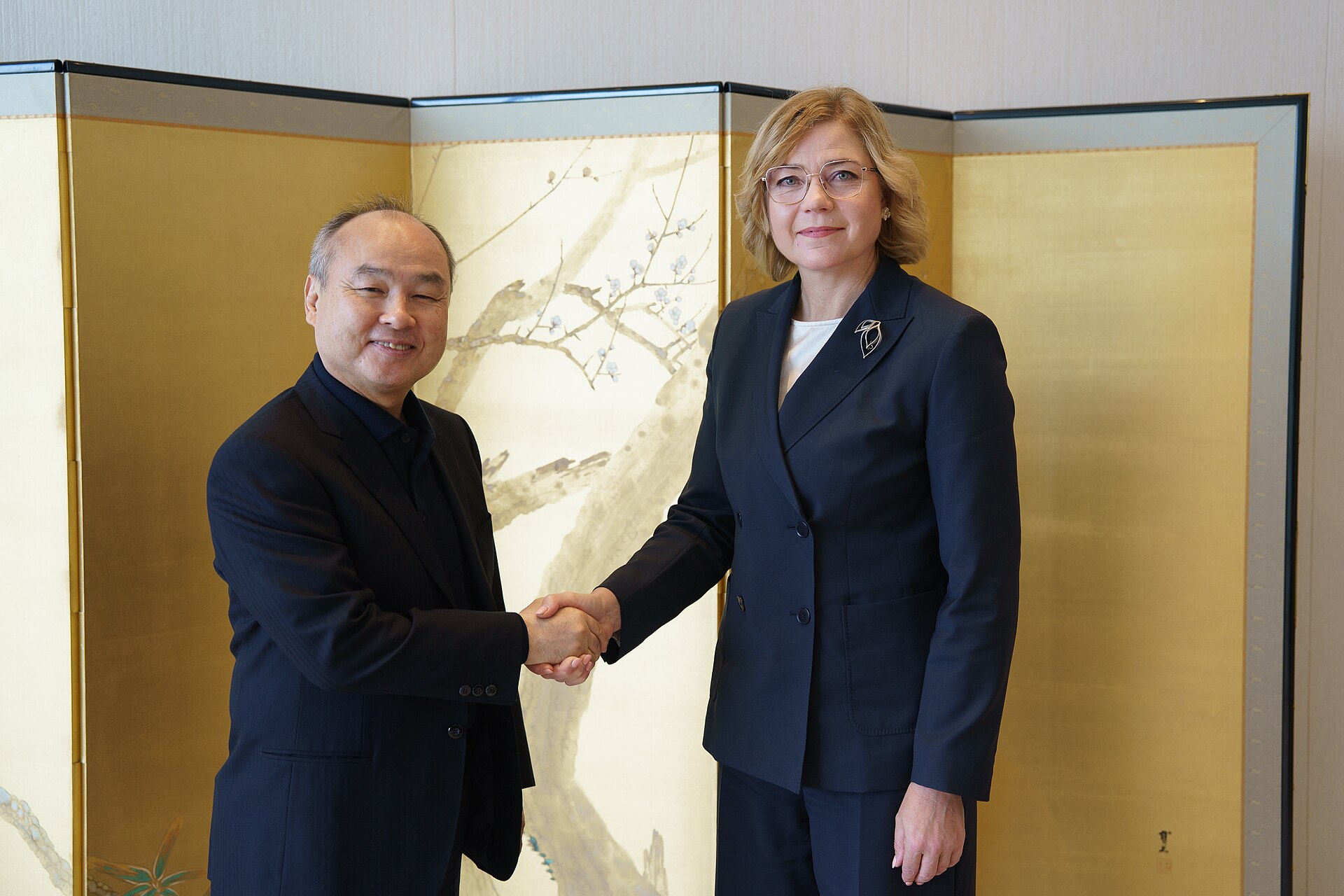
Masayoshi Son personally announced Vision Fund 2 in July 2019. He described the fund as a continuation of his vision to invest in the firms that would define the next era of technology. Son's personal involvement was a feature of the announcement. Backers either trusted his judgment or they did not. The MOU counterparties who declined to sign binding agreements made clear that they did not.
Winding down
By 2023, SoftBank had largely halted new investments from Vision Fund 2. The fund had suffered significant losses during the 2022 tech downturn, when the valuations of many late-stage technology firms fell sharply. SoftBank shifted its focus to the initial public offering of Arm, which had been acquired by the first Vision Fund in 2016, and to managing its existing portfolio defensively.
Vision Fund 2 was not formally closed to new backers. It just operated as a SoftBank-only vehicle, funded with the company's own balance sheet. The $108 billion target was never reached. The fund was a much smaller operation than announced. Its failure to attract outside money signaled that institutional allocators had lost confidence in SoftBank's model of oversized, high-risk technology bets.
Key Facts
- Announcement date: July 2019
- SoftBank's commitment: $38 billion
- Target fund size: $108 billion
- MOU partners named: Apple, Foxconn, Microsoft, Japanese financial institutions
- Outside capital raised: None. SoftBank funded the fund entirely with its own capital.
- First Vision Fund close: 2017, at $100 billion, with Saudi PIF and Mubadala as major LPs
Vision Fund 1 versus Vision Fund 2: Announced vs Actual
| Metric | Vision Fund 1 | Vision Fund 2 |
|---|---|---|
| Announced target | $100 billion | $108 billion |
| SoftBank commitment | $28 billion | $38 billion |
| External capital raised | Saudi PIF ($45B), Mubadala ($15B), others | None |
| Actual total capital deployed | Approximately $100 billion | Significantly less than $108 billion; funded by SoftBank alone |
| Status as of May 2024 | Closed, still managing portfolio | Largely halted new investments, focus on Arm IPO |
Frequently Asked Questions
Why did Vision Fund 2 fail to raise outside capital?
The WeWork IPO collapse in 2019 damaged SoftBank's credibility with institutional investors. Limited partners in the first fund had expressed concerns about governance, deployment speed, and Masayoshi Son's high level of control. The MOU partners never converted their expressions of interest into binding commitments.
Did SoftBank ever formally abandon the effort to raise external capital for Vision Fund 2?
There is no precise date on which SoftBank publicly abandoned the effort. The fund was never formally closed to new investors. It simply operated as a SoftBank-only vehicle from the start.
What happened to Vision Fund 2's investments?
The fund suffered significant losses during the tech downturn of 2022. By 2023, SoftBank had largely halted new investments from Vision Fund 2 and shifted its focus to the Arm IPO and defensive financial management.