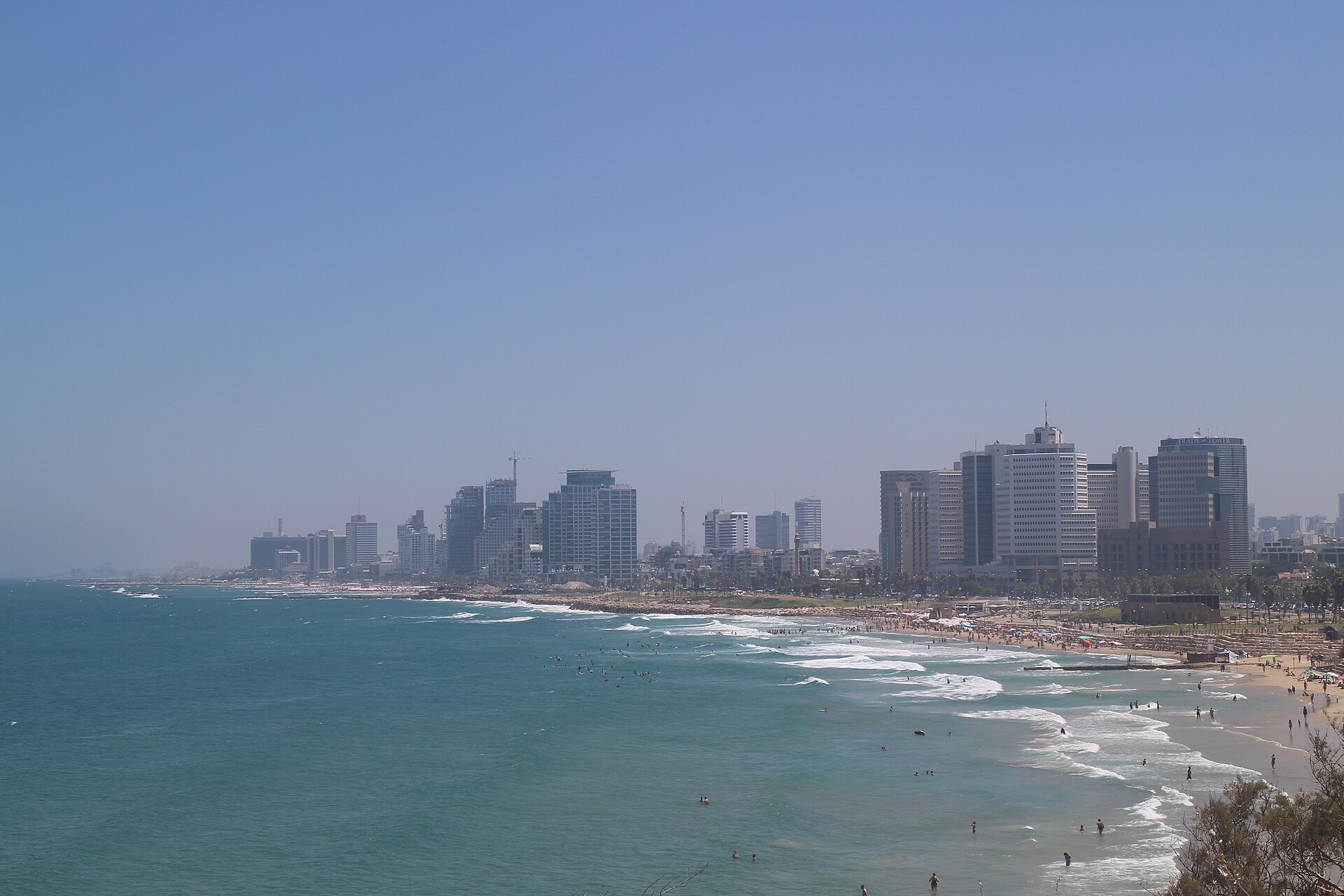
Tel Aviv is home to more than 2,000 active startups as of 2023, a density per capita that exceeds any city outside the San Francisco Bay Area. That concentration did not emerge from low corporate taxes or cheap engineering labor. It was built by a 1990s government program that rewired the country's venture market, a military intelligence unit that functions as a technical university, and a cultural tolerance for failure that most ecosystems only talk about.
In 1993, Israel launched the Yozma program. Yozma offered tax incentives and matching funds to foreign venture firms on the condition that they set up operations in Israel. Within a decade, the program had catalyzed a venture industry where almost none existed. The timing coincided with a wave of immigration from the former Soviet Union, which brought an estimated 1 million people to Israel in the 1990s. Among them were tens of thousands of engineers, mathematicians and scientists. Many lacked local networks but possessed deep technical skills. They became the founding engineers of the first generation of Israeli tech firms.
What turned that raw material into a repeatable engine was Unit 8200, the Israeli Defense Forces' signals intelligence unit. Alumni of Unit 8200 have founded hundreds of technology businesses. The unit selects for analytical ability, problem-solving under pressure, and a willingness to challenge authority. It also produces a network of alumni who later become each other's co-founders, angel backers and first customers. That network effect is the single strongest explanation for why Tel Aviv, a city of roughly 450,000 people, produces more startups per capita than London, Berlin or New York.

The exit engine that recycles talent and capital
The ecosystem's second flywheel is the recycling of talent and funding from large exits. Google acquired Waze, founded in Tel Aviv, for approximately $1.1 billion in 2013. Intel acquired Mobileye, founded in Jerusalem but with major Tel Aviv operations, for $15.3 billion in 2017. Those acquisitions did not remove talent from the ecosystem. In many cases, the opposite occurred. Founders and early employees who cashed out became angel investors, serial founders and board members for the next generation of companies.
The Waze acquisition alone produced dozens of angel backers who seeded mapping, logistics and mobility ventures in Tel Aviv. Mobileye's acquisition by Intel anchored a major R&D center that employs thousands of engineers in the city. Many later leave to start their own firms. This pattern of talent recycling means that a single exit can generate multiple new businesses over a decade.
Multinational R&D centers are now a structural feature of Tel Aviv's tech economy. Google, Intel, Microsoft, Apple, Amazon and Meta all maintain significant engineering offices in the city, often created through acquisitions of local operations. They provide a landing pad for engineers who want the stability of a large firm while remaining in the ecosystem, and a training ground for engineers who later leave to found ventures. The presence of these centers also signals to foreign backers that Tel Aviv firms can be acquired by the largest technology buyers, which reduces perceived risk.
Sectors where Tel Aviv competes at global scale
Cybersecurity
Tel Aviv's startup output is concentrated in a handful of sectors where the city has developed genuine global advantages. Cybersecurity is the most obvious. Israel is the second-largest exporter of cybersecurity products after the United States, and most of those firms are based in the Tel Aviv area. Unit 8200 alumni are disproportionately represented in cybersecurity founding teams, because the unit's signals intelligence work maps directly onto the technical problems that cybersecurity businesses solve.
Fintech and enterprise software
Fintech is the second major sector. Tel Aviv ventures have built payment infrastructure, fraud detection and digital banking platforms that are sold globally. The sector benefits from the same military intelligence talent pool and from Israel's early adoption of digital payments and chip-and-PIN technology. Enterprise software and artificial intelligence round out the top sectors. Many Tel Aviv AI firms emerged from academic research at the Weizmann Institute of Science and the Technion, both within commuting distance of the city.
The 2021 peak
In 2021, Israeli tech businesses raised a record $25.6 billion in venture funding. That figure includes firms across the country, but the majority are headquartered in the Tel Aviv region. The 2021 peak reflected a global environment of low interest rates and high risk appetite. It also reflected the maturation of the Tel Aviv ecosystem. Companies that had been building for a decade reached the scale at which large institutional backers would write nine-figure checks.
The 2023 political crisis and the tech sector's response
In early 2023, the Israeli government proposed a package of judicial reforms that would reduce the power of the Supreme Court and give the governing coalition more control over judicial appointments. The tech sector reacted with near-unanimous opposition. Founders and venture capitalists warned that the reforms would undermine backer confidence and trigger capital flight. Weekly protests in Tel Aviv drew tens of thousands of participants, many of them from tech firms.
The economic consequences were immediate. Foreign venture firms publicly signaled that they would reduce exposure to Israeli startups. Some Israeli founders reported that backers demanded clauses in term sheets allowing them to pull out if the political situation deteriorated further. The shekel depreciated against the dollar. The Tel Aviv Stock Exchange tech index fell. By mid-2023, the rate of new company formations in Tel Aviv had slowed, though the absolute number of active ventures remained above 2,000.
The judicial reform crisis exposed a vulnerability that the ecosystem had not previously faced. Tel Aviv's startup model had been built on the assumption of political stability and strong rule of law. When that assumption was challenged, the response from the global venture community was swift and unambiguous. The Israeli government paused the legislative process in March 2023, but the crisis had already reshaped the relationship between the tech sector and the state. Many founders began exploring dual incorporation structures that would allow them to maintain legal residency outside Israel while keeping engineering teams in Tel Aviv.
October 7 and the mobilization of the tech workforce
On October 7, 2023, Hamas launched attacks on southern Israel that killed approximately 1,200 people and took hundreds of hostages. The Israeli government declared a state of war and ordered a large-scale mobilization of military reservists. An estimated 10 to 15 percent of Israel's tech workforce was called up for reserve duty in the weeks following the attacks. For Tel Aviv ventures, that meant losing key engineers, product managers and executives for an indefinite period.
The response from the tech sector was rapid and organized. Companies activated contingency plans that many had developed during the COVID-19 pandemic. Teams redistributed workloads. Founders and senior managers took on operational roles that junior employees had vacated. Some firms that had been considering layoffs reversed course and retained employees who were called up, paying their salaries while they served. Foreign backers, many of whom had been nervous during the judicial reform crisis, largely signaled that they would support portfolio companies through the disruption.
The war created operational challenges that the ecosystem had not faced before. Unlike the pandemic, which affected all businesses simultaneously and allowed for remote work, the mobilization affected specific roles within each company. A venture that lost its lead backend engineer to reserve duty could not simply hire a replacement. The uncertainty about the duration of the war made planning difficult. Companies reported delays in product launches and fundraising rounds. Few reported existential threats to their businesses as of early 2024.

Funding trends compared with other global hubs
The global contraction
Israeli tech venture funding fell from the 2021 peak of $25.6 billion to an estimated $6-7 billion in 2023, a decline consistent with global venture markets. The United States saw a similar contraction. European tech funding followed the same pattern. The decline in Israel was not uniquely severe when measured as a percentage of peak, but it was compounded by the political and security shocks specific to the country.
Early-stage resilience
What distinguished Tel Aviv from other hubs during this period was the composition of the decline. Early-stage funding in Tel Aviv held up better than late-stage funding. Seed rounds and Series A rounds continued to close, though at lower valuations. Late-stage rounds, which had been driven by large foreign crossover backers in 2021, virtually disappeared in 2023. Those investors had been the first to pull back during the judicial reform crisis and did not return after October 7.
Sector mix as a buffer
Tel Aviv's resilience compared with other hubs is partly a function of its sector mix. Cybersecurity and enterprise software firms, which dominate the Tel Aviv portfolio, tend to have recurring revenue models and long sales cycles that make them less dependent on continuous fundraising than consumer internet businesses. Many Tel Aviv ventures that raised large rounds in 2021 had enough cash to operate through 2024 without raising additional capital. The question that remained unanswered as of May 2024 was whether the pipeline of new companies being formed would be sufficient to sustain the ecosystem's growth once the war ended.
What the next cycle will test
The Tel Aviv startup ecosystem enters the next cycle with its structural advantages intact but its vulnerabilities exposed. The talent pipeline from Unit 8200 continues to produce technically skilled founders. The Yozma-era venture infrastructure remains in place. The multinational R&D centers continue to anchor talent in the city. The recycling of capital and experience from large exits has not stopped.
What has changed is the risk calculation that foreign backers apply to Tel Aviv. Before 2023, the risk premium on Israeli ventures was modest. Founders could raise money from U.S. venture firms on roughly the same terms as U.S.-based founders. After the judicial reform crisis and the October 7 attacks, the risk premium has increased. Investors now demand higher ownership stakes, more board control, and in some cases, dual incorporation structures that allow them to hold equity in a foreign entity rather than an Israeli one.
The ecosystem's ability to adapt to this new risk environment will determine whether Tel Aviv remains a top-tier global hub or settles into a smaller role. The raw materials are still there. The question is whether the city can produce enough returns to justify the higher risk premium that backers now demand. The answer will be visible in the 2024 and 2025 funding data, which as of May 2024 had not yet been published in a form that allows a definitive conclusion.
Key facts about Tel Aviv's startup ecosystem
- Active startups in Tel Aviv: Over 2,000 as of 2023
- Yozma program launch: 1993
- Waze acquisition by Google: $1.1 billion in 2013
- Mobileye acquisition by Intel: $15.3 billion in 2017
- Record Israeli tech venture funding: $25.6 billion in 2021
- Tech workforce mobilized after October 7, 2023: 10-15%
Tel Aviv venture funding in context
| Metric | 2021 | 2023 |
|---|---|---|
| Israeli tech venture funding | $25.6 billion | Est. $6-7 billion |
| U.S. venture funding | Peak year | Sharp contraction |
| European tech funding | Peak year | Contraction consistent with global market |
Frequently asked questions
Why does Tel Aviv have so many startups per capita?
The combination of the Yozma program, which created a venture industry in the 1990s, the talent pipeline from IDF Unit 8200, and a culture that tolerates failure produces a high density of founders. The recycling of talent and capital from large acquisitions like Waze and Mobileye accelerates the cycle.
Did the 2023 judicial reform crisis permanently damage the ecosystem?
As of May 2024, the long-term impact is not established. The crisis increased the risk premium that foreign backers apply to Israeli ventures and prompted some founders to explore dual incorporation structures. However, early-stage funding continued to close, and most firms had enough cash from 2021 raises to operate through 2024.
How did the October 7 attacks affect Tel Aviv startups?
An estimated 10-15% of the tech workforce was called up for military reserve duty. Companies redistributed workloads and activated contingency plans. Product launches and fundraising rounds were delayed, but few businesses reported existential threats as of early 2024.