SoftBank Group Corp., the Japanese holding company founded by Masayoshi Son in 1981, rewrote the rules of global venture capital by writing cheques larger than most startup rounds. It began as a software distributor and publisher, expanded into telecoms, and then became the most aggressive technology investor the world had seen. The experiment ended with a record loss of $27.5 billion for the fiscal year that closed in March 2022, followed by a strategic retreat from the massive startup bets that had defined it.
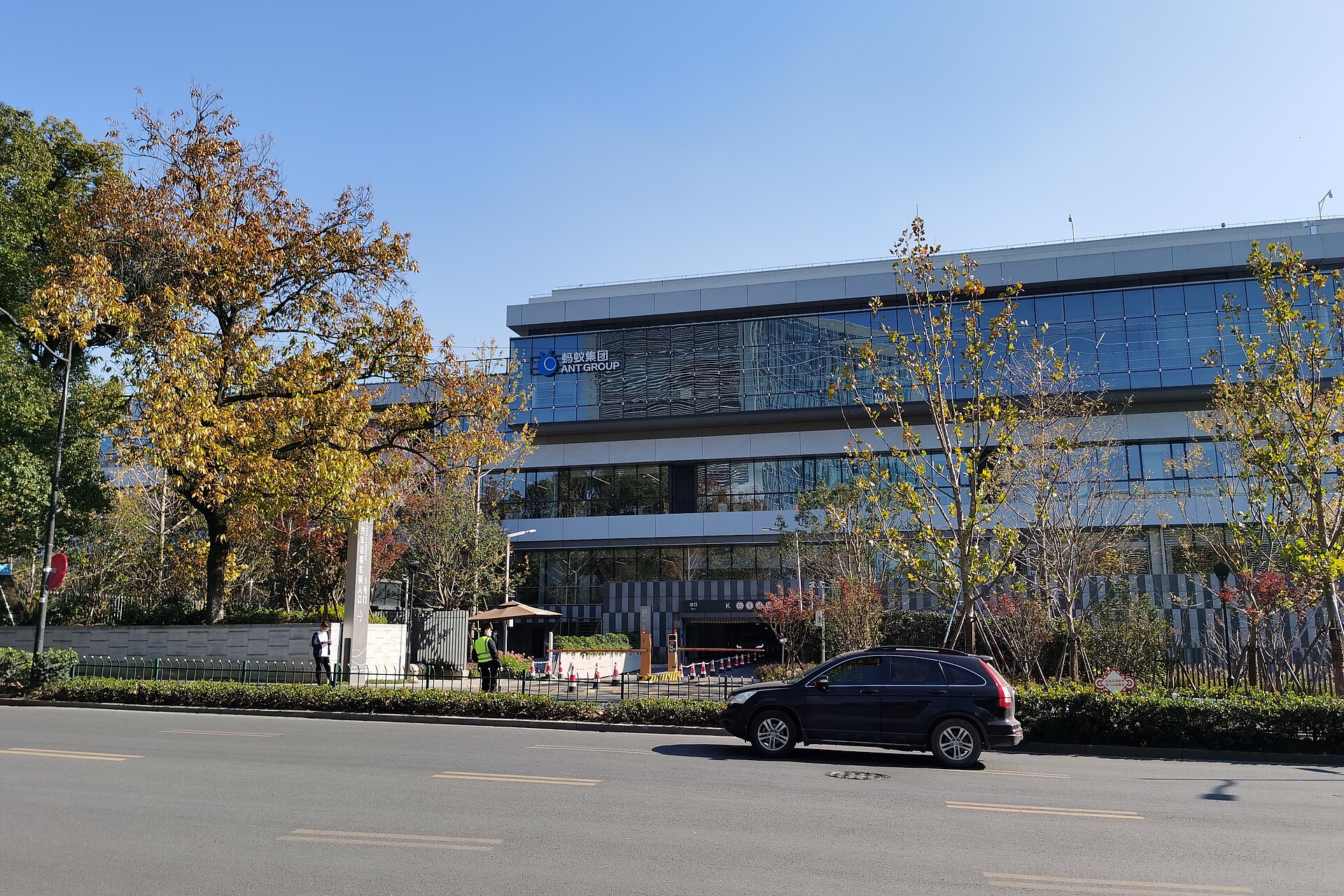
SoftBank's most famous investment came early. In 2000, Son invested $20 million in Alibaba, a Chinese e-commerce company then barely known outside China. That stake grew into one of the most lucrative venture capital returns in history, eventually worth tens of billions of dollars. The Alibaba return gave SoftBank the credibility and the capital to attempt something far larger.

The Vision Fund: A $100 Billion Bet on Acceleration
In 2017, SoftBank launched the first Vision Fund with $100 billion in committed capital, a figure disclosed by the firm at the time. The fund's backers included Saudi Arabia's Public Investment Fund and Abu Dhabi's Mubadala Investment Company. The scale was unprecedented. A typical venture capital fund then raised a few hundred million dollars. The Vision Fund was larger than the entire global venture industry's annual investment volume in most years.
The concentration thesis
The investment thesis was simple: give founders enormous amounts of capital to accelerate growth, dominate a market, and delay competition. SoftBank called this the strategy of placing massive, concentrated bets on tech firms. It invested in everything from ride-hailing (Uber, Didi) to co-working (WeWork) to robotics (Boston Dynamics) to semiconductors (Nvidia). The fund did not diversify in the traditional sense. It concentrated.
The architects
Rajeev Misra, a former Deutsche Bank derivatives trader, was the architect who raised the fund and ran its investment committee. Marcelo Claure, a Bolivian-born telecom executive, became SoftBank's operating chief and the person sent to fix its troubled portfolio firms. Both men would later leave the company.
WeWork: The Bet That Broke the Thesis
WeWork was the defining example of Vision Fund-era excess. SoftBank invested heavily in the co-working business, valuing it at $47 billion at its peak, a valuation set by the firm's own funding rounds. In August 2019, WeWork filed for an initial public offering. The IPO prospectus revealed deep losses, governance problems, and the unusual behaviour of founder Adam Neumann. Investors balked. The IPO was withdrawn.
The bailout
In October 2019, SoftBank took control of WeWork in a bailout that valued the company at roughly $8 billion, a fraction of the earlier figure. SoftBank committed billions more to keep it running. The bet did not recover. WeWork filed for Chapter 11 bankruptcy protection in November 2023, wiping out most of SoftBank's remaining equity.
The core flaw
The WeWork failure became a symbol of the Vision Fund's core flaw: the assumption that growth could outrun governance and that enormous capital could substitute for a viable business model.
Arm Holdings: The Counterweight
Not all of SoftBank's bets failed. In 2016, SoftBank acquired Arm Holdings, a British chip designer, for £24.3 billion. Arm's architecture is used in nearly every smartphone in the world. The acquisition gave SoftBank ownership of a critical piece of the global semiconductor supply chain.
The blocked sale
SoftBank attempted to sell Arm to Nvidia for $40 billion in 2020, a price agreed between the two firms, but the deal was blocked by regulators in 2022. SoftBank then pivoted to taking Arm public. In September 2023, Arm completed an IPO on the Nasdaq, raising $4.87 billion. The listing provided a significant windfall for SoftBank and demonstrated that the company still held assets of real, defensible value.
Two business models
The contrast between Arm and WeWork illustrates SoftBank's range. Arm is a royalty-based business with an entrenched market position and low capital requirements. WeWork was a capital-intensive real estate company that SoftBank tried to treat as a tech firm.
The Retreat and the Future
The record $27.5 billion loss for the fiscal year ended March 2022 forced a change. SoftBank stopped making new, massive startup bets. It sold assets, including much of its Alibaba stake, to raise cash. It shifted to a more defensive posture, focusing on existing portfolio businesses rather than new investments.
Executive departures
The key executives who built the Vision Fund left. Rajeev Misra stepped back from his frontline role to start his own fund. Marcelo Claure departed in 2022 after a dispute over compensation. Masayoshi Son remained chairman and chief executive, but the era of the $100 billion Vision Fund was over.
What remains
SoftBank Group Corp. is still headquartered in Tokyo. It still owns Arm. It still holds stakes in dozens of tech firms. But the strategy of using enormous capital infusions to accelerate growth and dominate markets has been abandoned, at least for now. The question that remains unanswered is whether SoftBank will launch a Vision Fund 3 or whether the model was a one-time experiment that cannot be repeated.
Key Facts
- Founded: 1981 by Masayoshi Son
- Headquarters: Tokyo, Japan
- Vision Fund 1 size: $100 billion in committed capital, disclosed by SoftBank at launch in 2017
- Major Vision Fund backers: Saudi Arabia's Public Investment Fund, Abu Dhabi's Mubadala Investment Company
- Record annual loss: $27.5 billion for the fiscal year ended March 2022, reported by SoftBank
- Arm Holdings acquisition: £24.3 billion in 2016; IPO in September 2023 raised $4.87 billion
- WeWork outcome: SoftBank took control in October 2019 at a valuation of roughly $8 billion; Chapter 11 bankruptcy filed November 2023
- Alibaba investment: $20 million in 2000, invested by SoftBank
Key Executives and Their Roles
| Executive | Role | Status |
|---|---|---|
| Masayoshi Son | Founder, Chairman, and CEO of SoftBank Group | Remains in role |
| Rajeev Misra | Architect of Vision Fund; ran investment committee | Stepped back to start his own fund |
| Marcelo Claure | SoftBank operating chief; managed portfolio companies | Left in 2022 |
Frequently Asked Questions
What is SoftBank Group?
SoftBank Group Corp. is a Japanese multinational investment holding company based in Tokyo. Founded in 1981 by Masayoshi Son as a software distributor and publisher, it later became a telecom operator and, through its Vision Funds, one of the largest technology investors in the world.
What was the SoftBank Vision Fund?
The Vision Fund was a $100 billion investment fund launched in 2017, a figure disclosed by SoftBank. Backed by Saudi Arabia's Public Investment Fund and Abu Dhabi's Mubadala Investment Company, the fund made large, concentrated bets on tech firms, investing in businesses such as Uber, WeWork, and Arm Holdings.
What happened to WeWork?
SoftBank invested heavily in WeWork, valuing it at $47 billion during its funding rounds. After a failed IPO in 2019, SoftBank took control of the company in October 2019 at a much lower valuation. WeWork filed for Chapter 11 bankruptcy protection in November 2023.
Did SoftBank make any successful investments?
Yes. SoftBank invested $20 million in Alibaba in 2000, which became one of the most lucrative venture capital returns in history. It also acquired Arm Holdings for £24.3 billion in 2016, and took the chip designer public again in September 2023 in a successful IPO that raised $4.87 billion.