The global clothing industry accounts for an estimated 2% to 8% of all greenhouse gas emissions, a range that spans a 2018 UNFCCC report and a 2020 World Economic Forum assessment. The gap depends on whether you count only direct manufacturing or the full supply chain from raw material extraction through retail. At the low end, fashion emits roughly as much as aviation. At the high end, it rivals oil and gas. The problem is not just carbon. Textile production consumes approximately 93 billion cubic meters of water every year, as the Ellen MacArthur Foundation reported in 2017. That is enough to fill 37 million Olympic swimming pools. And the water that comes out is often toxic. Dyeing and finishing discharge heavy metals, salts, and organic compounds into rivers, especially in countries with weak environmental regulation.
The mechanism that drives these numbers is fast fashion. The same Ellen MacArthur report found that clothing utilization, the number of times a piece is worn before it is discarded, declined by 36% over the 15 years leading up to 2017. People buy more clothes and wear each piece fewer times. That structural shift turns a durable good into a disposable one, and the environmental math changes completely. The following sections quantify each stage of the lifecycle: raw material production, manufacturing, use, and disposal.

Carbon Emissions Across the Lifecycle
The 2% to 8% range covers the entire value chain. Raw material extraction, fiber processing, fabric manufacturing, garment assembly, transport, retail, use, and end-of-life each contribute a share. The biggest single source is the energy used to produce synthetic fibers. Polyester, which made up about half of all textile fibers by 2017, is made from petroleum. Polymerization and extrusion are energy intensive. For natural fibers like cotton, the carbon footprint comes from farming: fertilizers, irrigation pumps, and harvesting machinery.
Where the emissions concentrate
Fiber production accounts for roughly one third of the industry's total greenhouse gas output. Garment manufacturing, including cutting, sewing, and finishing, adds another quarter. The use phase, which covers washing, drying, and ironing, can be significant depending on consumer behavior. A cotton T-shirt that is washed hot and tumble dried for its entire life can have a use-phase carbon footprint larger than its manufacturing footprint. Transport and retail are smaller contributors, typically under 10% combined.
Water Consumption and Pollution from Textile Production
The 93 billion cubic meters of water used annually by the sector is more than the yearly household consumption of the entire European Union. Cotton cultivation is the largest single draw. Cotton accounts for 2.5% of the world's arable land but uses an estimated 16% of all insecticides, according to the World Wildlife Fund. That concentration of chemical inputs means cotton farming not only consumes water but also contaminates local sources with pesticides and fertilizers.
Dyeing and finishing
Dyeing is the second major source of water impact. Conventional processes require large volumes of water to carry and fix dyes onto fabric. The wastewater contains heavy metals, salts, and organic compounds that are difficult to treat. In many production regions, especially in South and Southeast Asia, untreated or partially treated dye effluent is discharged directly into rivers. This affects drinking water, fisheries, and irrigation downstream.
Microplastic Pollution from Synthetic Fibers
Synthetic textiles are the dominant source of primary microplastics in the ocean. A 2017 IUCN report estimated that washing clothes made from polyester, nylon, and acrylic releases 0.5 million tonnes of microplastic fibers into the ocean each year. The mechanism is physical: every time one of these garments is washed, friction causes tiny fibers to break off and flow out with the wastewater. Treatment plants capture some of these fibers in sludge, but a significant fraction passes through into rivers and eventually the ocean. Unlike cotton or wool, which biodegrade in seawater, man-made fibers persist. They accumulate in marine organisms and move up the food chain. The problem is not limited to washing. Cutting and sewing during manufacturing also sheds fibers, and discarded synthetic textiles release microplastics as they break down in landfills.

The Decline of Clothing Utilization and the Rise of Waste
The Ellen MacArthur Foundation reported in 2017 that clothing utilization had fallen by 36% over the previous 15 years. That means the average garment in 2017 was worn about two thirds as many times as a comparable piece in 2002. The business model behind this decline is fast fashion: rapid production cycles, low prices, and constant newness encourage consumers to treat clothing as disposable. The result is a massive increase in textile waste.
What happens to discarded clothing
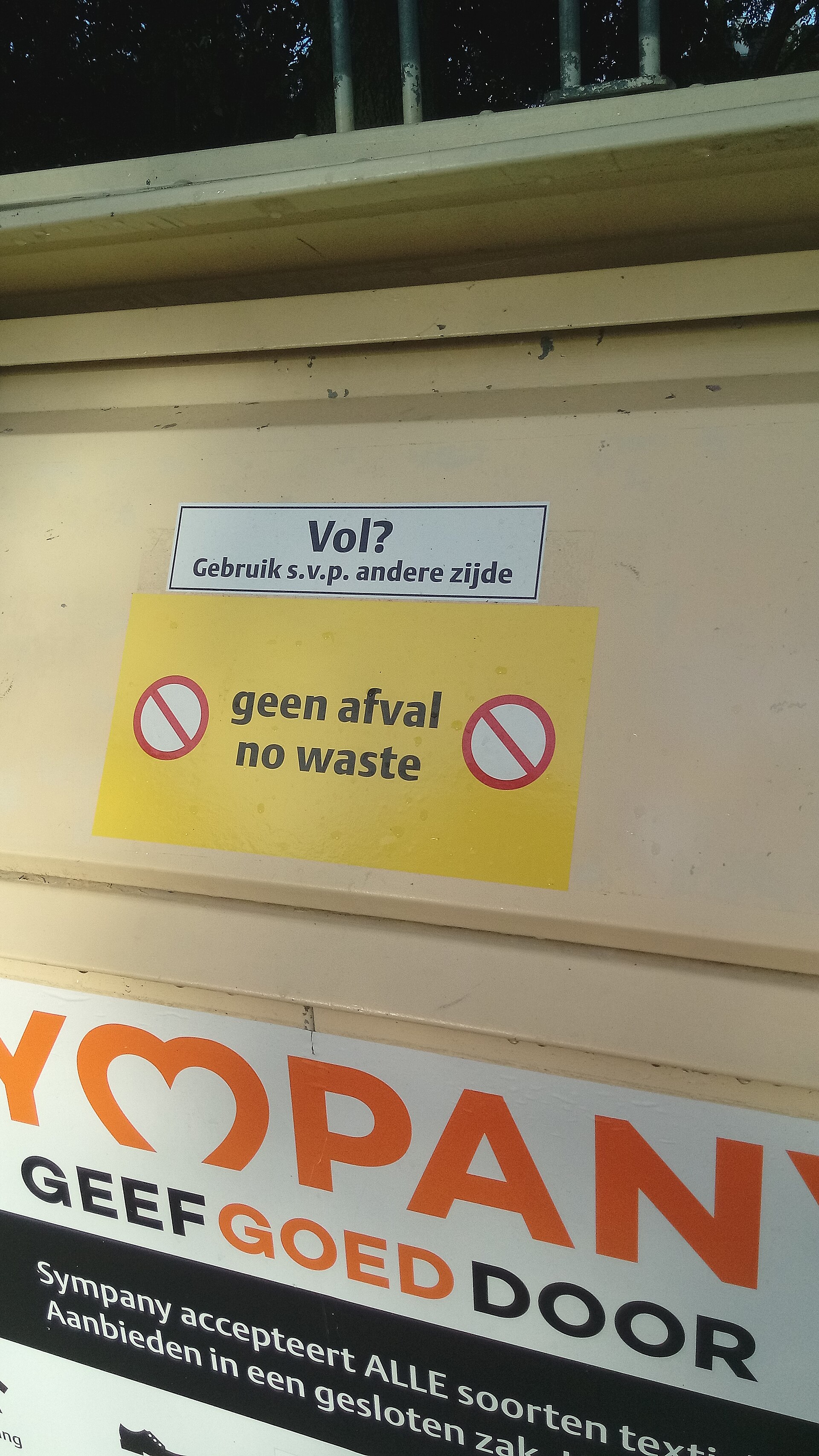
Less than 1% of the material used to produce clothing is recycled into new clothing, according to the same Ellen MacArthur Foundation report. Most discarded textiles go to landfill or incineration. A small fraction is downcycled into insulation, wiping rags, or stuffing. Even donated clothing often ends up exported to developing countries, where much of it is ultimately landfilled. The linear model, take-make-dispose, dominates. The 1% recycling rate means that nearly the entire material flow is virgin input that will never be reused at the same quality level.
Natural Fibers versus Synthetic Fibers: Environmental Trade-offs
Neither natural nor synthetic fibers is clearly superior across all impact categories. Cotton has high water and pesticide impacts. Polyester has high carbon emissions and creates persistent microplastic pollution. Wool has a high carbon footprint from methane emissions by sheep, and requires land that could otherwise support biodiversity. Nylon production releases nitrous oxide, a potent greenhouse gas.
The choice depends on which impact category matters most in a given context. For water-scarce regions, man-made fibers may be preferable to cotton. For marine ecosystems, natural fibers are preferable to synthetics because they biodegrade. The industry is experimenting with lower-impact alternatives such as lyocell, hemp, and recycled fibers, but these materials still represent a tiny share of total output. The regulatory push in the EU, discussed below, aims to make these trade-offs explicit through eco-design requirements that force brands to consider the full lifecycle of a piece before it is put on the market.
Regulatory Proposals in the EU: Extended Producer Responsibility for Textiles
In March 2022, the European Commission proposed a Strategy for Sustainable and Circular Textiles. The strategy includes mandatory eco-design requirements for textiles, which would set minimum standards for durability, repairability, and recyclability. It also includes plans for extended producer responsibility (EPR) schemes. Under an EPR system, clothing brands and manufacturers would be financially responsible for the collection, sorting, and recycling of the textiles they put on the market. The cost would be built into the price of new clothing, which is intended to incentivize design for recyclability and discourage overproduction.
As of March 2022, the proposal had been published but not yet adopted into law in all member states. The precise details of national EPR schemes, including fee structures and collection targets, were still under negotiation. The direction is clear: the EU intends to make textile producers internalize the end-of-life costs that are currently borne by municipalities and the environment. Whether other major markets, such as the United States and China, will follow with similar regulations remains an open question. The outcome for the industry is a gradual shift from linear to circular models, driven by regulation rather than consumer preference.
Key Facts
- Fashion's share of global greenhouse gas emissions: 2% to 8% (2018 UNFCCC, 2020 World Economic Forum)
- Annual water use by textile production: 93 billion cubic meters (Ellen MacArthur Foundation, 2017)
- Microplastic fibers released from washing synthetics each year: 0.5 million tonnes (IUCN, 2017)
- Decline in clothing utilization over 15 years to 2017: 36% (Ellen MacArthur Foundation, 2017)
- Material recycled into new clothing: Less than 1% (Ellen MacArthur Foundation, 2017)
- Cotton's share of global insecticide use: 16% on 2.5% of arable land (WWF)
Related reading: AI's Climate Paradox: Emissions vs. Efficiency Gains.